Why are obese mice more sensitive? CXCL7 and CXCR2 in thalamus
In a twenty-week high-fat-diet model, chemokine signaling links with excitatory PVT–BLA processing; reducing CXCR2 improves mechanical/heat sensitivity and stimulus-associated avoidance.
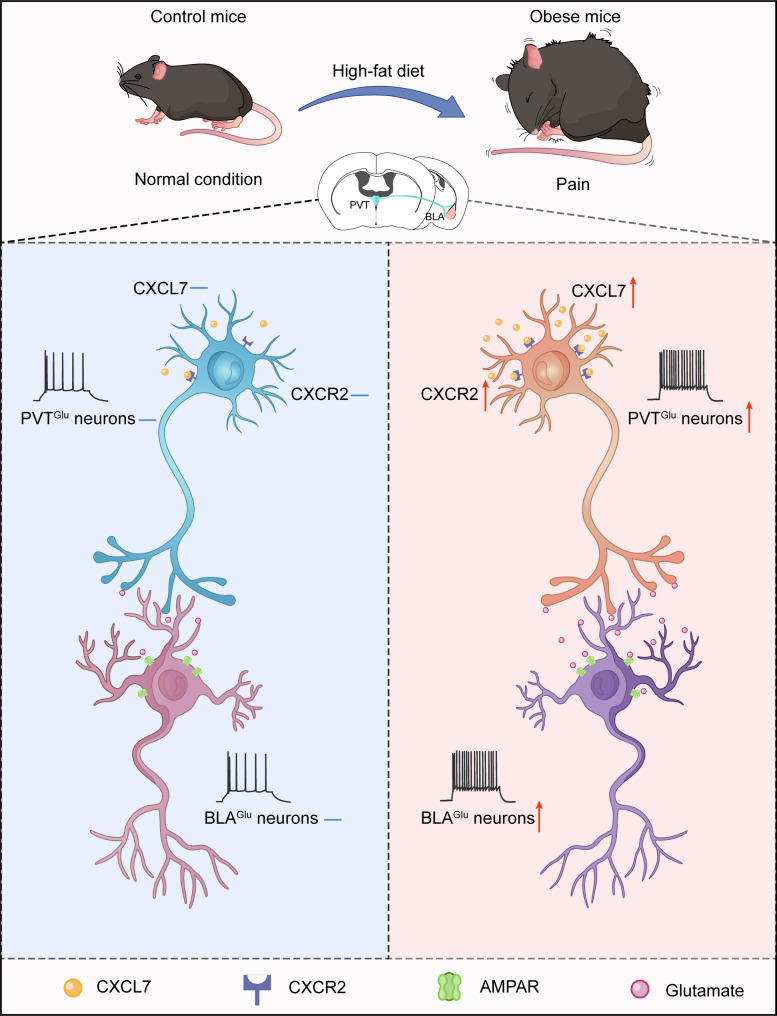
Weight-related pain changes may involve more than joints and local tissue. Metabolic and inflammatory states can also alter central sensory modulation. A Journal of Neuroinflammation study uses a twenty-week high-fat-diet mouse model, finding increased mechanical/heat sensitivity and avoidance of a mechanically stimulated setting. It follows paraventricular thalamus, or PVT, input to basolateral amygdala, or BLA, and examines CXCL7 and its receptor CXCR2.
Local CXCL7 increases PVT excitability and induces hypersensitivity. Reducing PVT CXCR2 or inhibiting PVT–BLA in obese mice improves neural responses, mechanical/heat measures and avoidance.
Contents · 7 sections
Mechanical and heat sensitivity accompany avoidance
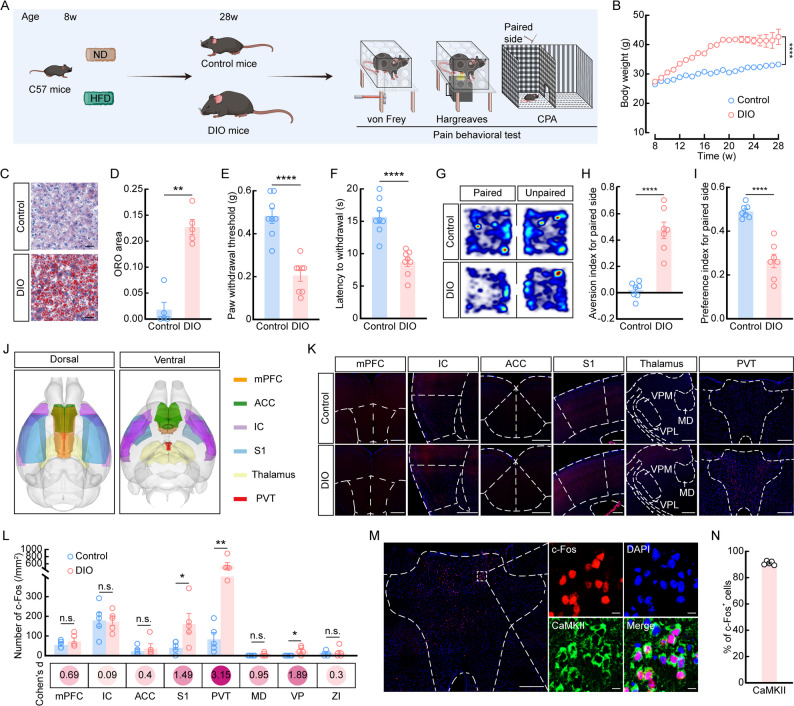
After twenty weeks of high-fat diet, weight and liver fat increase, mechanical thresholds fall, heat-withdrawal latencies shorten and stimulus-associated place avoidance emerges. Tested voluntary locomotion does not significantly change.
Post-stimulus c-Fos changes are especially prominent in PVT; S1 and ventral posterior thalamus also change, while other tested regions do not significantly differ. PVT activity labeling mainly overlaps with CaMKII, focusing attention on glutamatergic-associated cells.
Source: Hu R et al. · Journal of neuroinflammation · CC BY-NC-ND
Original figure and English caption ↗
Lower PVT activity attenuates sensitivity and avoidance
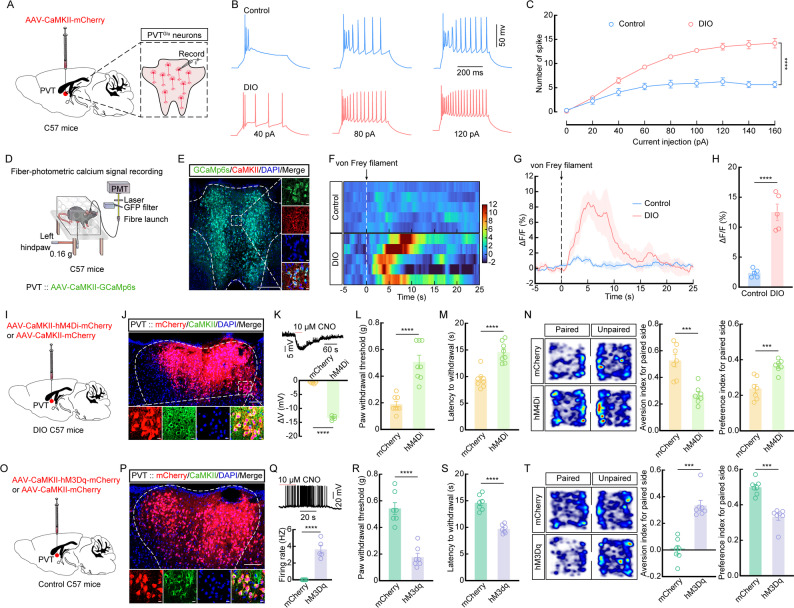
Model PVT cells fire more under comparable current and show stronger mechanically evoked calcium. Inhibition raises thresholds and heat latencies and reduces stimulus-associated avoidance, demonstrating a functional contribution.
Activating PVT cells in normal-diet mice increases mechanical/heat sensitivity and avoidance. Activation and model inhibition provide complementary evidence about induction and expression.
Source: Hu R et al. · Journal of neuroinflammation · CC BY-NC-ND
Original figure and English caption ↗
From human plasma to mouse thalamus
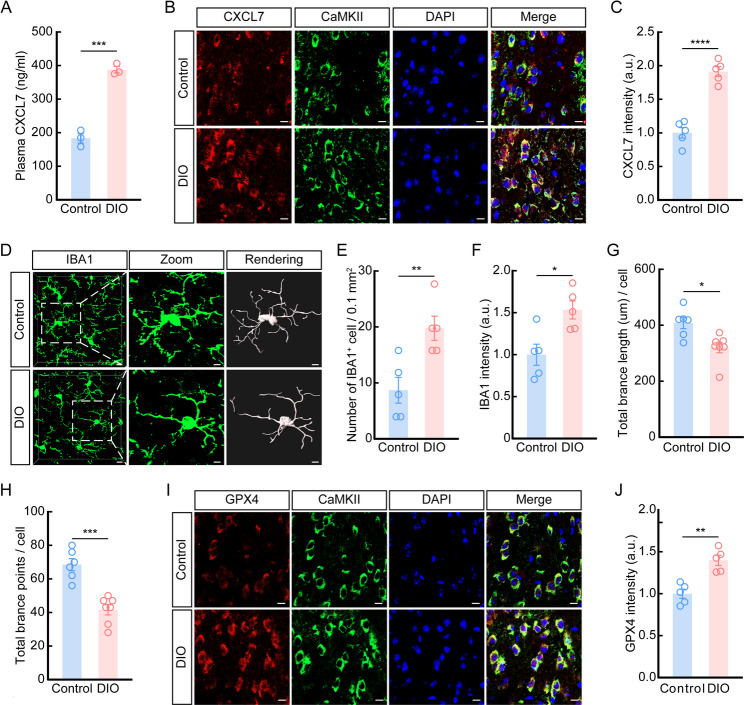
Plasma proteomics in ten obese participants and ten controls identifies elevated PPBP/CXCL7. Model mice also show increased plasma CXCL7 and increased PVT-cell protein and mRNA. Human samples nominate a candidate; mouse experiments test local function.
PVT also shows increased IBA1 labeling with fewer, shorter branches and increased GPX4. Immune-cell morphology and neuronal molecular states change together, placing CXCL7 in a local context.
Source: Hu R et al. · Journal of neuroinflammation · CC BY-NC-ND
Original figure and English caption ↗
Adding CXCL7 induces hypersensitivity
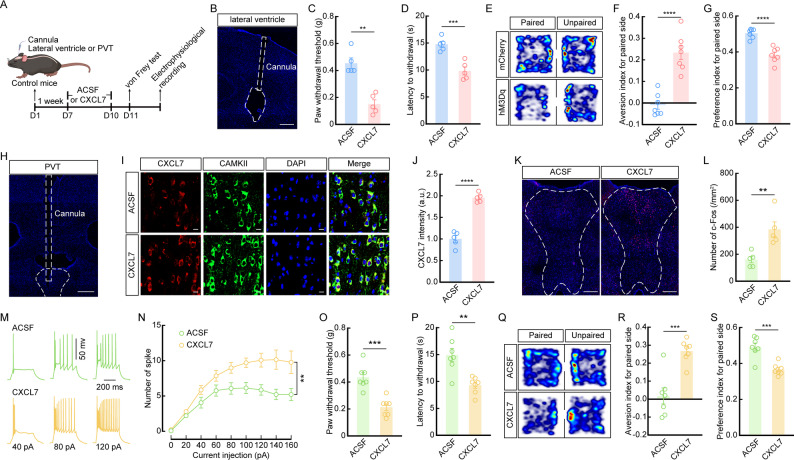
Ventricular or local PVT CXCL7 lowers mechanical thresholds and heat latencies and increases avoidance in normal mice. Local treatment also increases c-Fos and evoked firing, demonstrating functional effects beyond association.
Model PVT cells show increased CXCR2, while CXCR1 does not significantly change. Ligand and receptor findings guide testing of cellular signal reception.
Chemokines participate in cellular communication, while receptors shape which cells receive a signal. Here, both change in a sensory-modulating thalamic population. Testing ligand addition and receptor reduction moves an immune-associated molecule from a correlate to a functional question about neural responsiveness.
Source: Hu R et al. · Journal of neuroinflammation · CC BY-NC-ND
Original figure and English caption ↗
Reducing CXCR2 changes responses and behavior
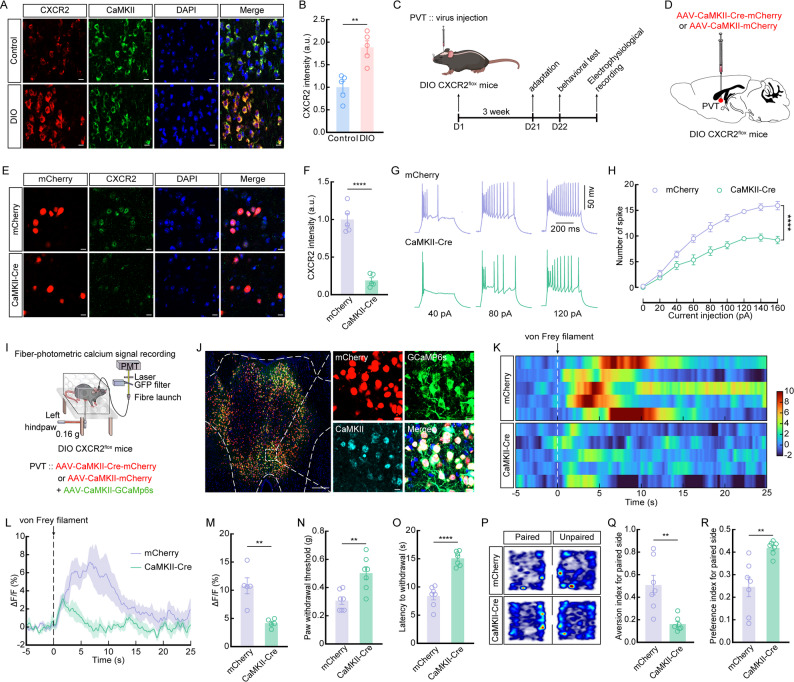
Reducing PVT-cell CXCR2 decreases slice firing and evoked calcium and improves mechanical/heat sensitivity and avoidance. Receptor, neural and behavioral changes align, implicating CXCR2 in the model’s enhanced responsiveness.
The receptor result links molecular state with thalamic activity, motivating a search for downstream cells carrying its influence on sensitivity and avoidance.
Source: Hu R et al. · Journal of neuroinflammation · CC BY-NC-ND
Original figure and English caption ↗
Excitatory PVT signals reach BLA
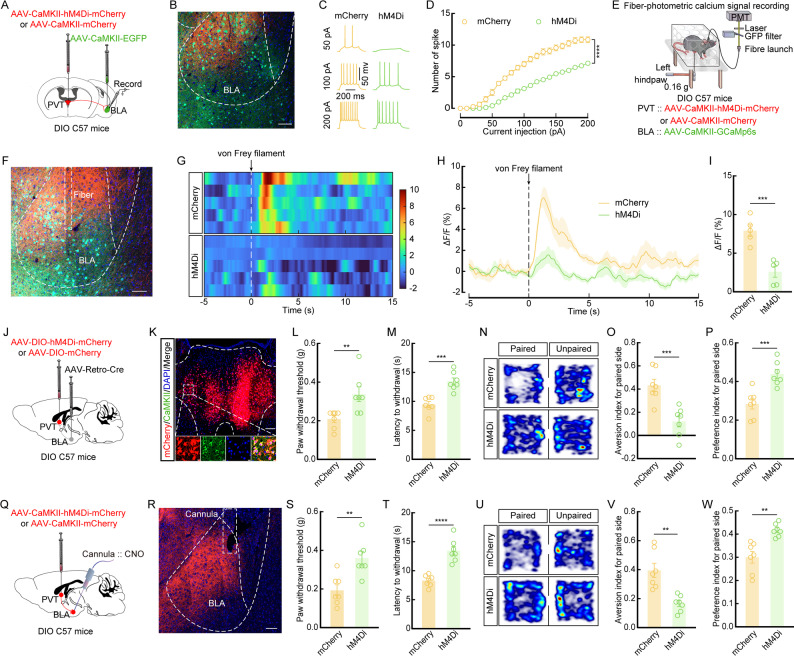
Tracing and synaptic recordings show direct excitatory PVT input to glutamatergic-associated BLA cells. Model BLA firing and calcium increase; PVT inhibition reduces downstream responses, and BLA inhibition improves hypersensitivity and avoidance.
Inhibiting BLA-projecting PVT cells or PVT terminals within BLA improves mechanical, heat and place measures. Projection-level interventions support a functional route contributing to model behavior.
Source: Hu R et al. · Journal of neuroinflammation · CC BY-NC-ND
Original figure and English caption ↗
CXCR2 changes extend to downstream processing
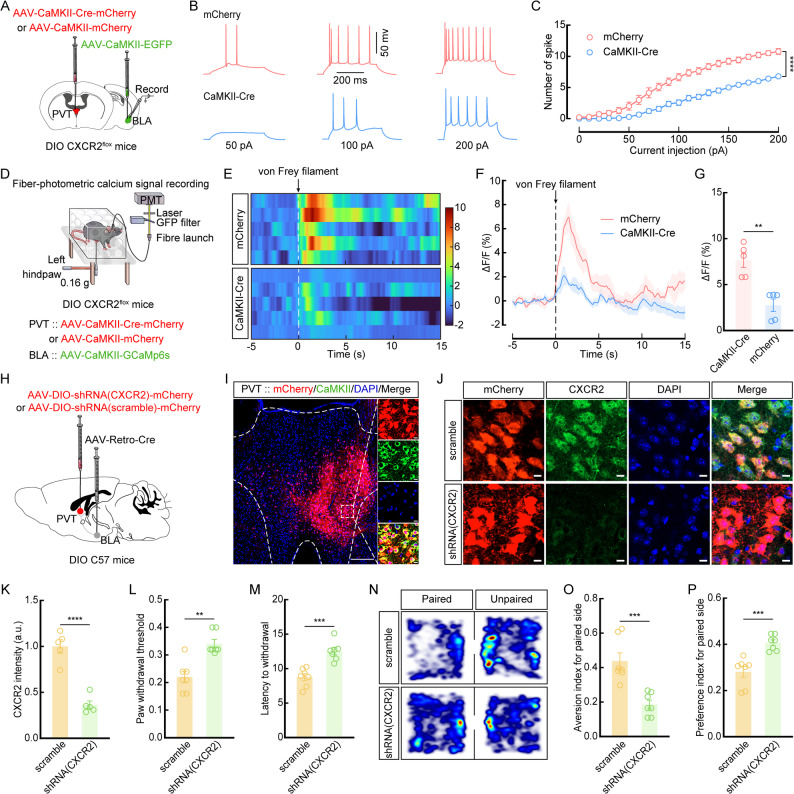
PVT CXCR2 reduction weakens BLA firing and evoked calcium. Receptor reduction in BLA-projecting PVT cells also improves thresholds, heat latencies and avoidance, linking molecular changes with a defined output population.
In this twenty-week high-fat-diet model, hypersensitivity involves chemokine-associated states, thalamic excitability and amygdala input. Beyond weight itself, molecular signal reception contributes to stimulus responses.
Source: Hu R et al. · Journal of neuroinflammation · CC BY-NC-ND
Original figure and English caption ↗