Why early and adult compensation differ for a tic-associated variant
A WWC1-variant mouse model shows altered protein stability, striatal signaling and synaptic balance; early wild-type supplementation improves several phenotypes, while adult molecular changes do not accompany behavioral improvement.
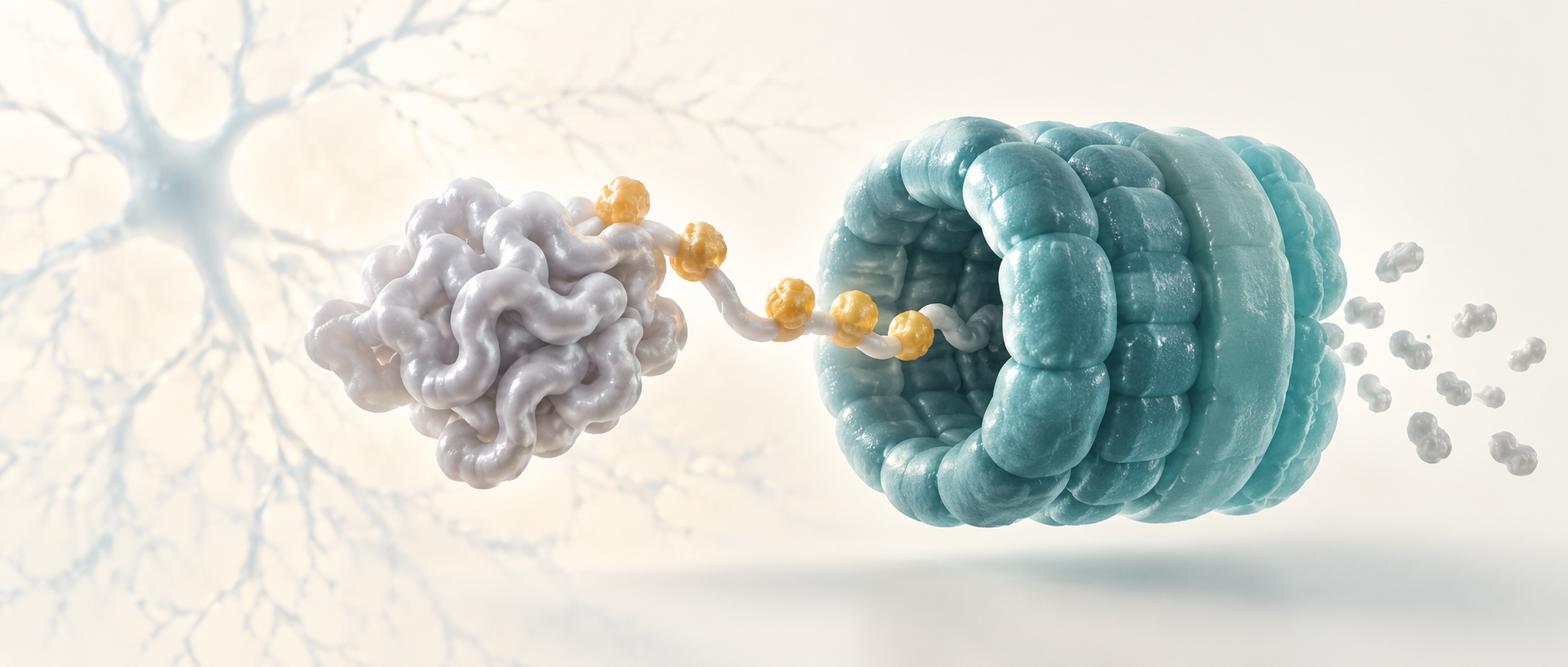
How can a single amino-acid change affect brain development and behavior? A study published on March 28, 2025 in Science Advances introduces into mice the WWC1-W88C variant identified in human Tourette-syndrome research. It follows accelerated KIBRA degradation, altered striatal dopamine signals and imbalanced excitatory and inhibitory inputs. Compensation at different ages yields different outcomes: early wild-type WWC1 supplementation improves several phenotypes, whereas adult molecular changes occur without corresponding behavioral improvement, highlighting developmental timing in this model.
The W88C variant connects protein stability to neurodevelopment-related changes; early compensation and absent adult behavioral improvement together constrain the timing of wild-type WWC1’s effects.
Contents · 7 sections
More repetitive movements and weaker sensorimotor gating
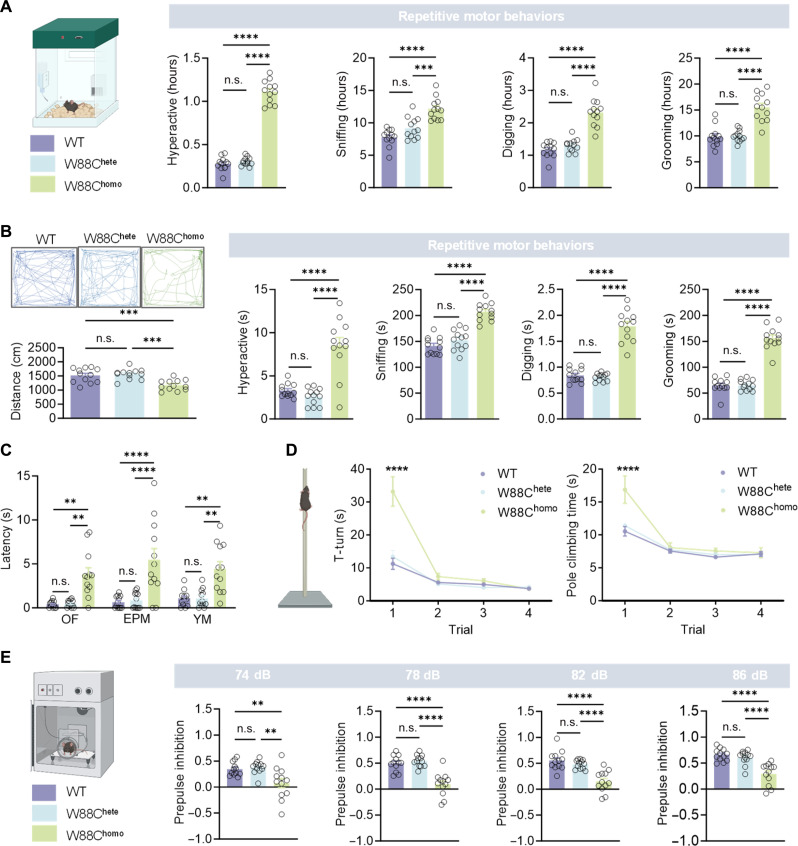
Homozygous W88C male mice show more repetitive head movements, sniffing, digging and grooming in familiar cages. In new environments, they travel less and take longer to begin exploration. A weak cue before a loud sound normally reduces startle, but this prepulse inhibition is weaker in the model while baseline startle remains similar.
Heterozygous mice have subtler baseline phenotypes that become more apparent after stress. Female homozygotes also show milder changes in some repetitive movements and gating measures. The model reflects a particular variant, gene dosage and context rather than every Tourette-syndrome feature; vocal tics are not reproduced.
Source: Lv J et al. · Science advances · CC BY-NC
Original figure and English caption ↗
Stable transcripts, faster protein degradation
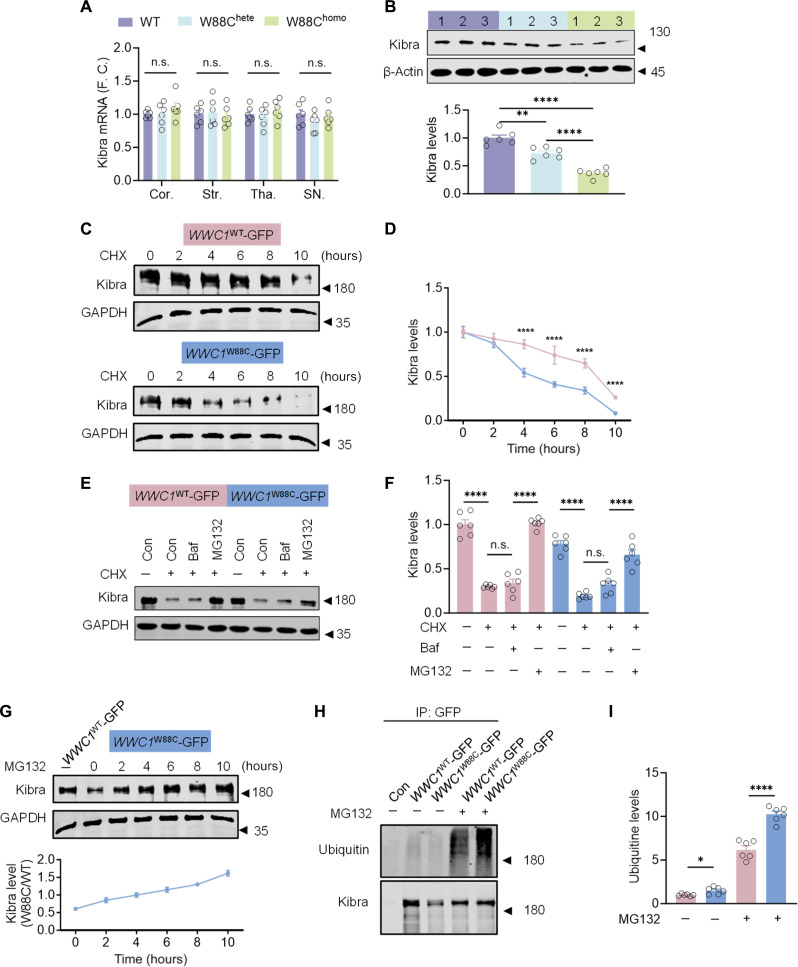
WWC1 encodes KIBRA, a protein involved in cellular signaling and synaptic regulation. Transcripts remain broadly unchanged in variant mice while protein abundance falls, pointing to a post-transcriptional effect. Cellular experiments show faster degradation of W88C protein in both human and mouse constructs.
Suppressing proteasome-associated degradation allows variant protein to accumulate, whereas the tested lysosomal intervention lacks the same protection. Variant-protein ubiquitination also increases, connecting a small amino-acid substitution to protein tagging and degradation.
Source: Lv J et al. · Science advances · CC BY-NC
Original figure and English caption ↗
Different phenotypes respond differently to receptor blockade
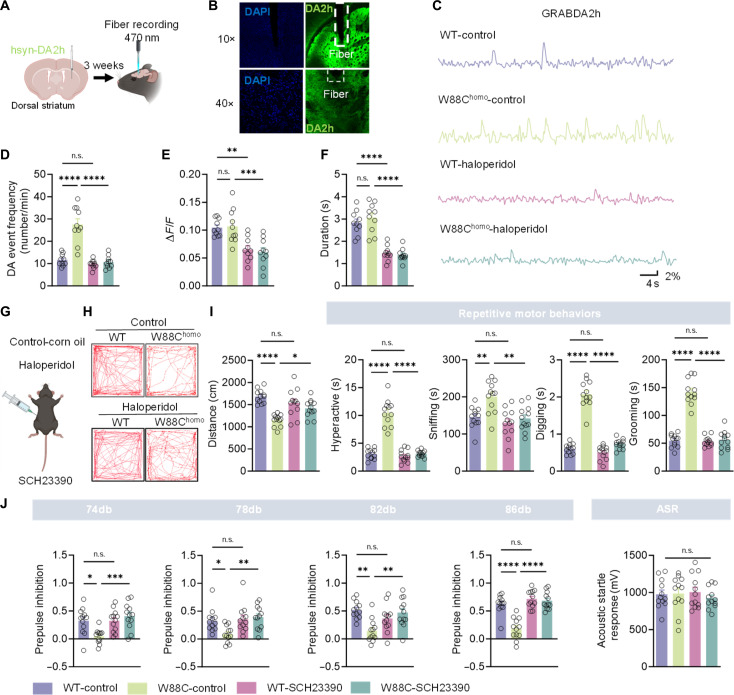
In dorsal-striatal dopamine-sensor recordings, signal peaks occur more frequently in homozygous mice while peak amplitudes remain similar to controls. Another sensor shows larger responses during sound testing. The alterations thus involve spontaneous-event frequency and responses to specific sensory events.
Behavioral tests show that the D2 antagonist haloperidol reduces repetitive movements without improving prepulse inhibition, whereas the D1 antagonist SCH23390 improves the latter. The different responses suggest distinct receptor-associated regulatory contributions to repetitive movements and gating abnormalities.
Source: Lv J et al. · Science advances · CC BY-NC
Original figure and English caption ↗
More excitatory events, fewer inhibitory events
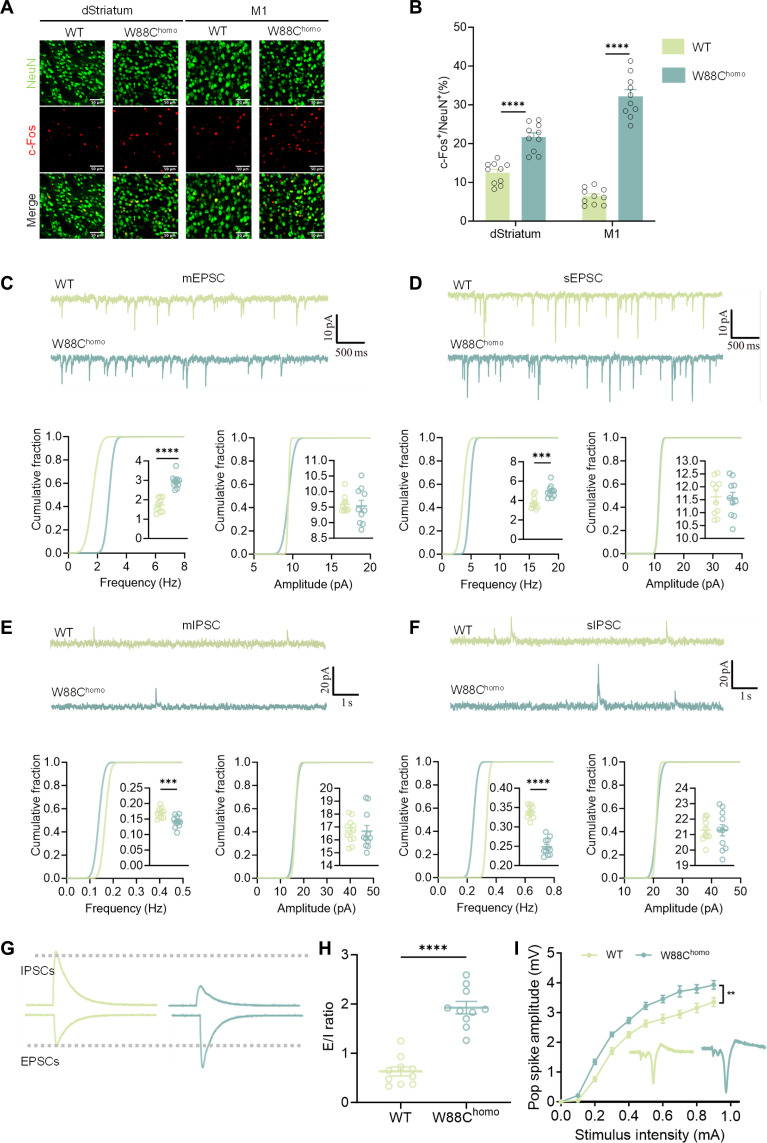
Electrical recordings from striatal medium spiny neurons reveal higher excitatory-event frequency and lower inhibitory-event frequency, without clear amplitude changes. The excitatory-to-inhibitory ratio shifts toward excitation, and cortical–striatal population responses strengthen.
Activity markers increase in dorsal striatum and primary motor cortex, adding regional observations to the synaptic imbalance. Although hippocampal KIBRA also falls, tested synaptic currents and several memory measures remain broadly similar. Changes in the same protein do not produce identical outcomes across regions.
Source: Lv J et al. · Science advances · CC BY-NC
Original figure and English caption ↗
More dendritic branches and altered Hippo-associated modification
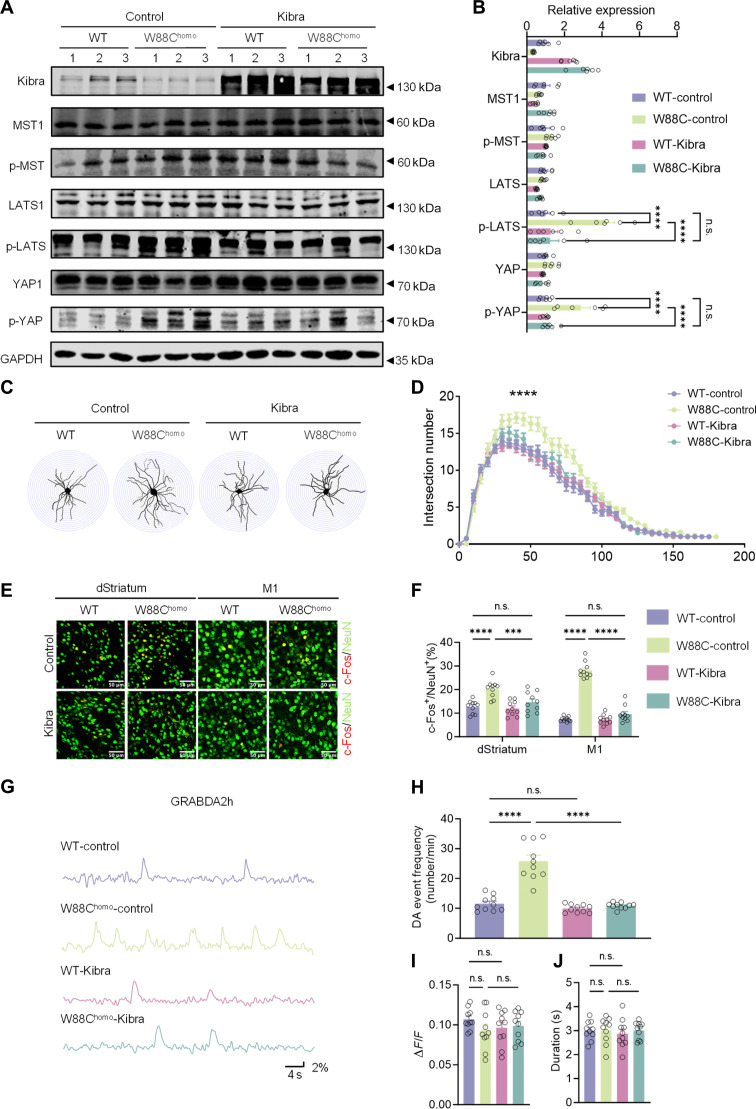
Striatal medium spiny neurons have more complex dendritic branches, without clear changes in spine density or postsynaptic-density size. LATS and YAP phosphorylation increases while total abundance of tested core proteins stays broadly stable, linking morphological changes with altered signaling state.
Early wild-type WWC1 supplementation in brain neurons reverses associated phosphorylation and dendritic-complexity changes, reduces regional activity markers and lowers excessive dopamine-signal peak frequency. Protein, morphology and activity measures shift toward recovery under this early compensation.
Source: Lv J et al. · Science advances · CC BY-NC
Original figure and English caption ↗
Several behaviors improve after early compensation
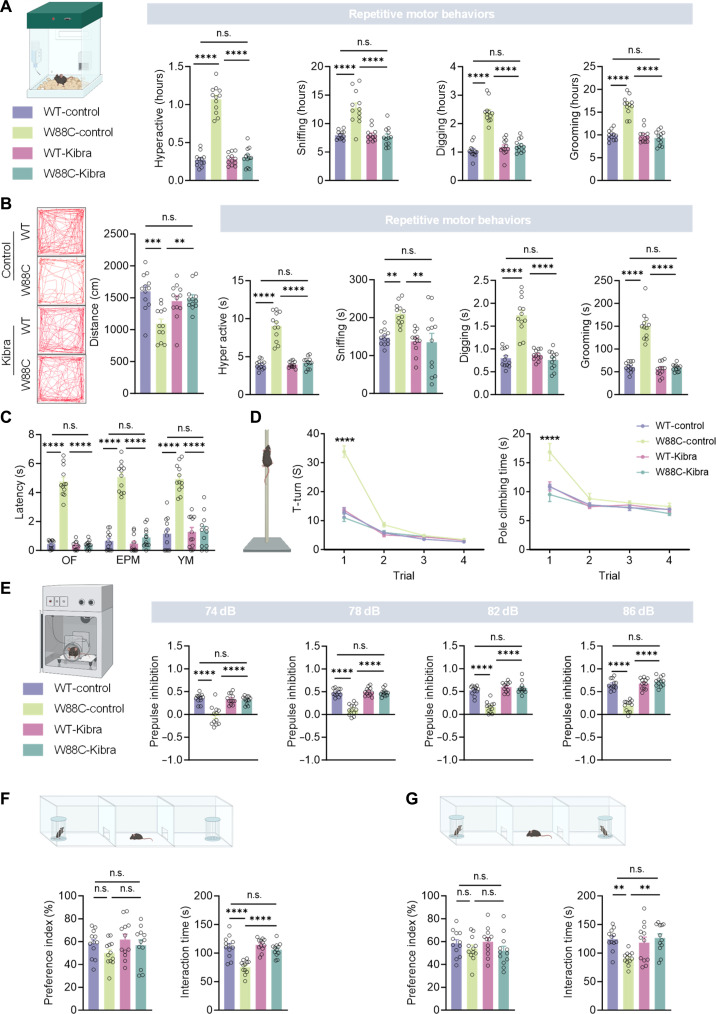
Early supplementation also reduces repetitive movements in male homozygotes, increases exploration distance and shortens delays in exploration and pole-test performance. Prepulse inhibition improves and social-interaction time increases, while wild-type controls do not show comparable clear behavioral changes.
The accompanying molecular and behavioral reversals support the variant’s contribution to these phenotypes. Because supplementation begins early in development, the next question is whether the same result occurs after adulthood, once the related networks are established.
Source: Lv J et al. · Science advances · CC BY-NC
Original figure and English caption ↗
Adult molecular changes occur without behavioral improvement
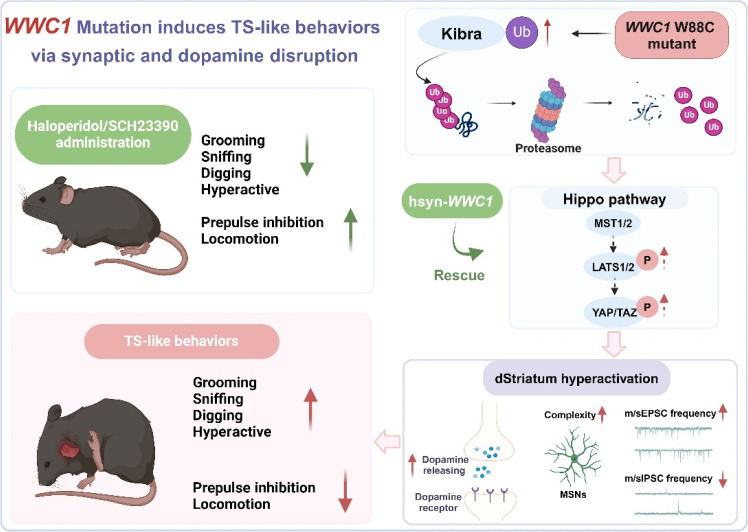
Adult wild-type WWC1 supplementation achieves comparable expression and distribution and lowers LATS and YAP phosphorylation, yet does not clearly improve behavior. Restoration of molecular measures is therefore insufficient to reverse established behavioral phenotypes under the tested conditions, revealing a timing difference in this model.
The study connects protein stability to neural activity around one risk variant while revealing differences in gene dosage, sex and brain region. Distinguishing Hippo regulation from other KIBRA functions, and explaining the adult dissociation, are more specific next questions than restoration of a single measure.
Source: Lv J et al. · Science advances · CC BY-NC
Original figure and English caption ↗