How does fear memory bridge the silence after a sound?
Mice can link a sound to an aversive event across a silent gap. Entorhinal CCK signaling to the amygdala contributes to this learning and to lasting enhancement of auditory responses.
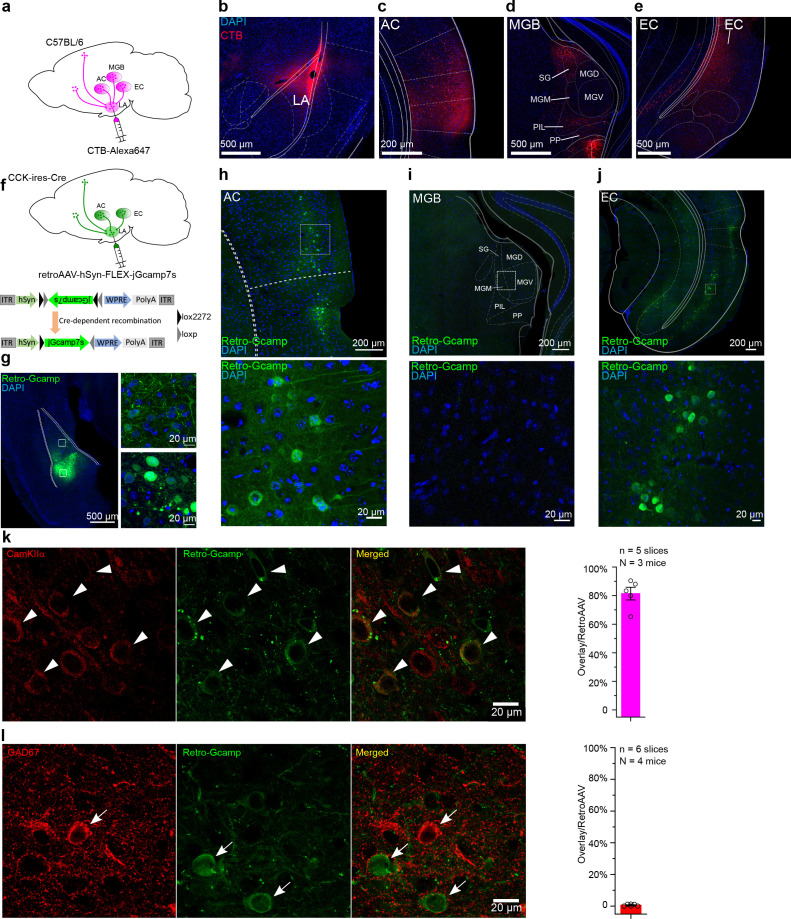
A sound occurs, then an unpleasant event follows later. How does the brain learn what the sound predicts across the intervening silence? A study published in eLife on November 15, 2021 identified a contribution from entorhinal cortex, EC, in mice. CCK-associated cells project to the lateral amygdala, LA, contributing both to trace fear learning and to plasticity of auditory responses. The neuropeptide links temporal separation, sensory signals and later defensive responses.
CCK-deficient mice showed weaker trace fear learning and impaired lasting enhancement of LA auditory responses. CCK-positive EC projections contributed to this plasticity, and inhibiting them during learning reduced subsequent cue-evoked freezing.
Contents · 6 sections
An association must survive after the sound ends
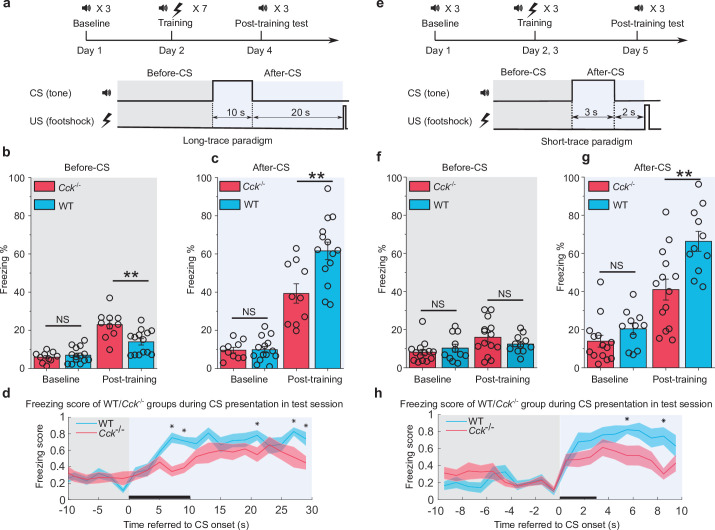
Fear learning gives an initially neutral cue predictive meaning. Trace conditioning separates the sound from the aversive event with a gap, whereas delay conditioning allows them to overlap. Trace learning therefore bridges a period without the sound. Freezing provides a behavioral readout of the learned cue, while the pre-cue period offers a separate reference for more general state changes.
Across two trace intervals, CCK-deficient mice showed less post-training cue-evoked freezing than wild-type mice. Freezing remained present. Both groups showed behavioral changes after learning; CCK loss impaired performance rather than abolishing all defensive responses.
Source: Feng H et al. · eLife · CC BY
Original figure and English caption ↗
Sound responses remain, but lasting enhancement is impaired
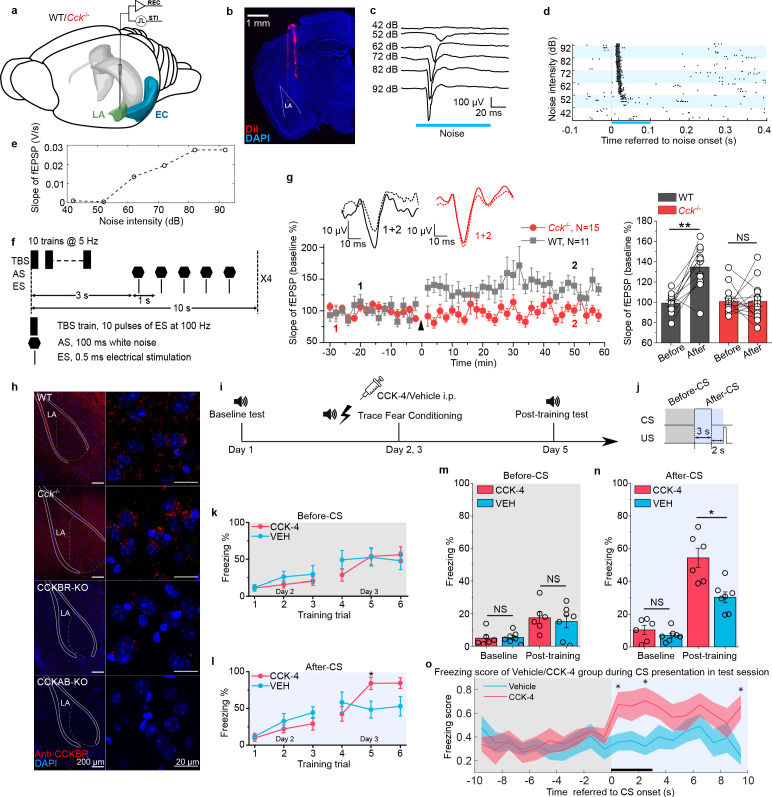
Could the difference reflect impaired hearing or inability to freeze? The deficient mice did not have worse hearing, and innate sound-evoked freezing was not significantly reduced. Attention therefore shifted to forming the association.
LA auditory responses were detectable in both groups. Under plasticity-inducing conditions, response slope increased persistently in wild-type mice but not significantly in deficient mice. A CCK-receptor agonist increased later cue-related freezing relative to vehicle in deficient mice, adding evidence for CCK signaling in learning.
Source: Feng H et al. · eLife · CC BY
Original figure and English caption ↗
Entorhinal cortex supplies a CCK-positive input
Tracing LA inputs identified auditory cortex, thalamic and EC connections. CCK-associated labeling revealed clear LA-projecting EC cells, most bearing an excitatory marker. CCK is a neuropeptide identity here, not a synonym for an inhibitory neuron.
Complementary color-labeling comparisons showed stronger CCK-positive components among labeled EC-to-LA projections. CCK-associated auditory cortical inputs were also present, leaving contributions from other sources open.
Source: Feng H et al. · eLife · CC BY
Original figure and English caption ↗
Learning changes without a general increase in freezing
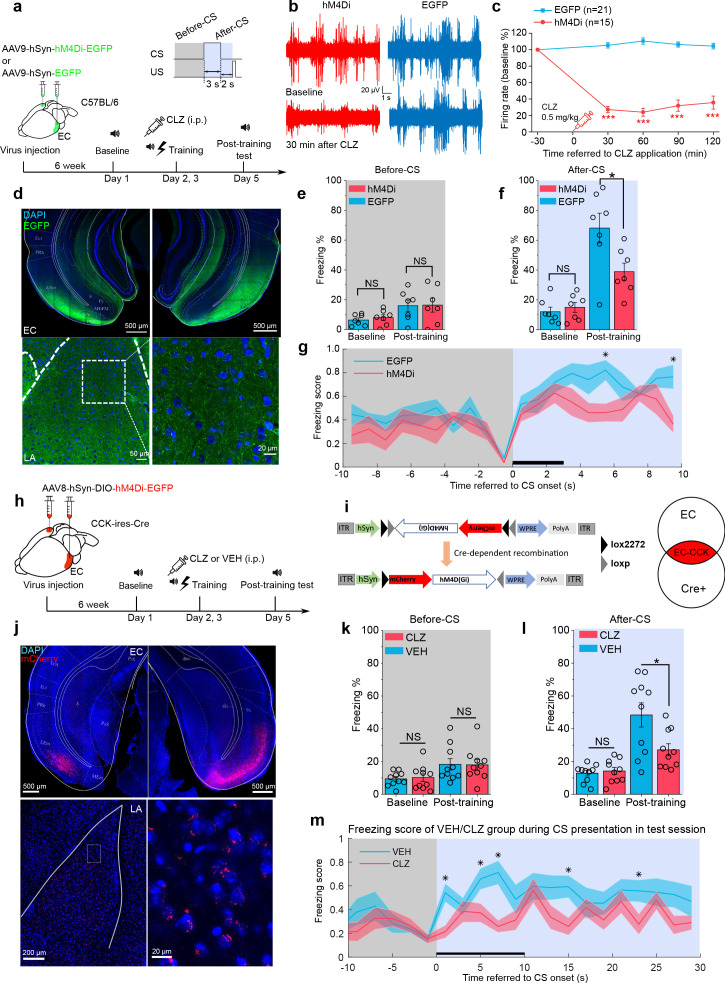
Reducing EC activity, broadly or in its CCK-positive population during learning, weakened later cue-evoked freezing relative to controls. Pre-cue freezing did not differ significantly, and baseline levels were similar, focusing the behavioral result on cue association.
This evidence concerns EC cell populations and may include their connections to other regions. Subsequent projection-terminal and LA-response comparisons brought the analysis closer to the EC–LA connection, linking regional activity, plasticity and learning.
Source: Feng H et al. · eLife · CC BY
Original figure and English caption ↗
CCK contributes to plasticity, which is not a complete memory
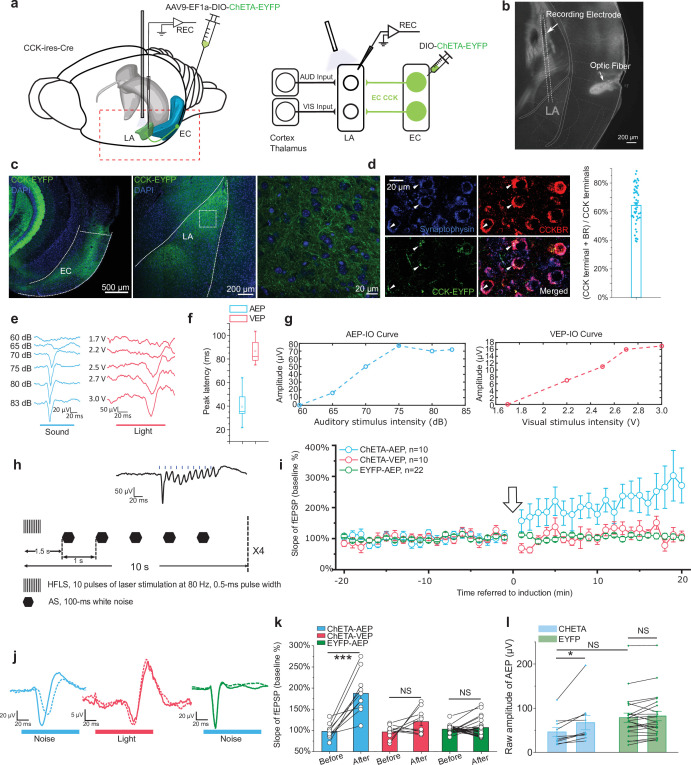
Under the tested pairing conditions, activating CCK-positive EC terminals enabled lasting potentiation of LA auditory-response slope, without significant potentiation of visual-response slope in the same comparison. Reducing EC Cck expression impaired auditory potentiation, supporting a contribution from CCK.
Stronger neural responses provide a plasticity correlate without independently reconstructing a fear memory. How sound information persists across the gap, how inputs cooperate and how other co-released signals contribute remain questions for further study.
Source: Feng H et al. · eLife · CC BY
Original figure and English caption ↗
The input contribution depends on the temporal condition
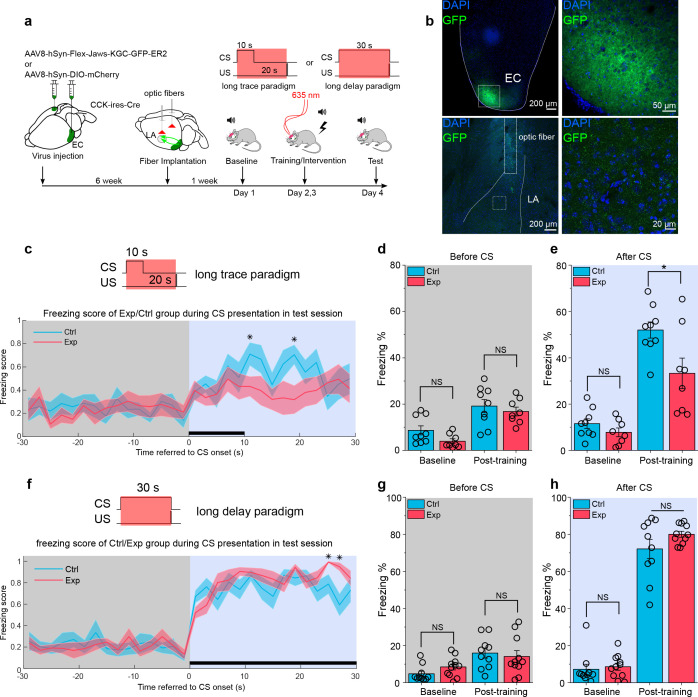
Inhibiting CCK-positive EC projections in LA during learning reduced later freezing after long-trace conditioning. When the sound instead continued to the aversive event without a gap, the corresponding comparison showed no significant impairment. Supplementary short-trace findings also supported involvement.
The mouse study connects CCK with plasticity of auditory responses and memory formation under specific temporal conditions. How EC cooperates with hippocampal and prefrontal networks remains unresolved, and therapeutic relevance to human fear-related disorders requires independent evidence.
Source: Feng H et al. · eLife · CC BY
Original figure and English caption ↗