What happens in the prefrontal cortex when mice run? Cellular clues from CB1 signaling
Running rapidly raises an endocannabinoid signal, and CB1 receptors on GABAergic cells contribute to improved anxiety-related exploration in a mouse study.
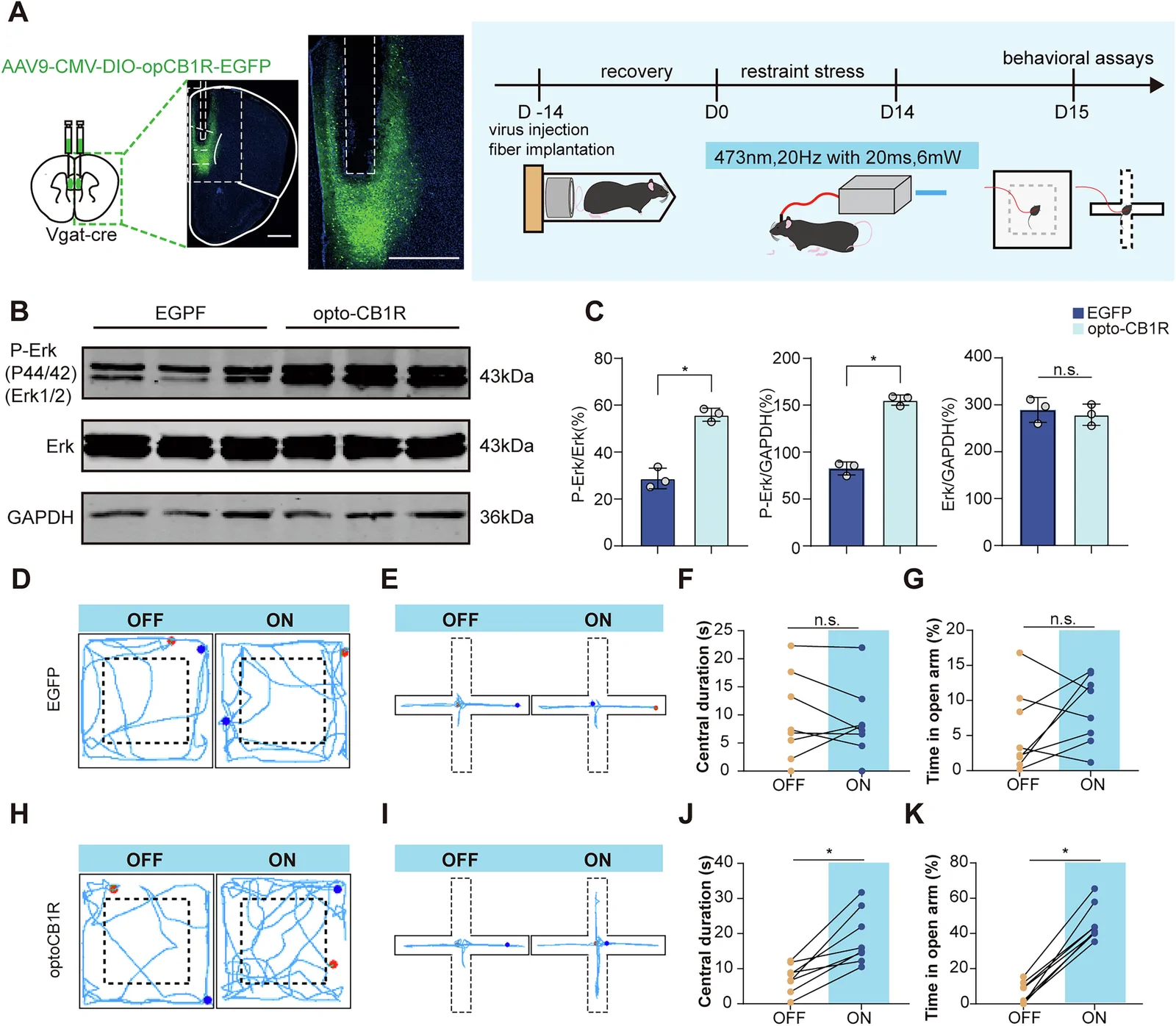
Chronically restrained mice explore open-field centers and elevated-maze open arms less. Treadmill training improves those measures. To understand the brain response, researchers compared exercise intensities, recorded prefrontal endocannabinoid signals and asked which cells carry the relevant CB1 receptors.
Moderate running increases prefrontal endocannabinoid-sensor signals. GABAergic CB1 loss blocks behavioral improvement, receptor activation mimics part of the effect, and glutamatergic-cell manipulations differ.
Contents · 6 sections
Comparing exercise intensities, exploration begins to recover
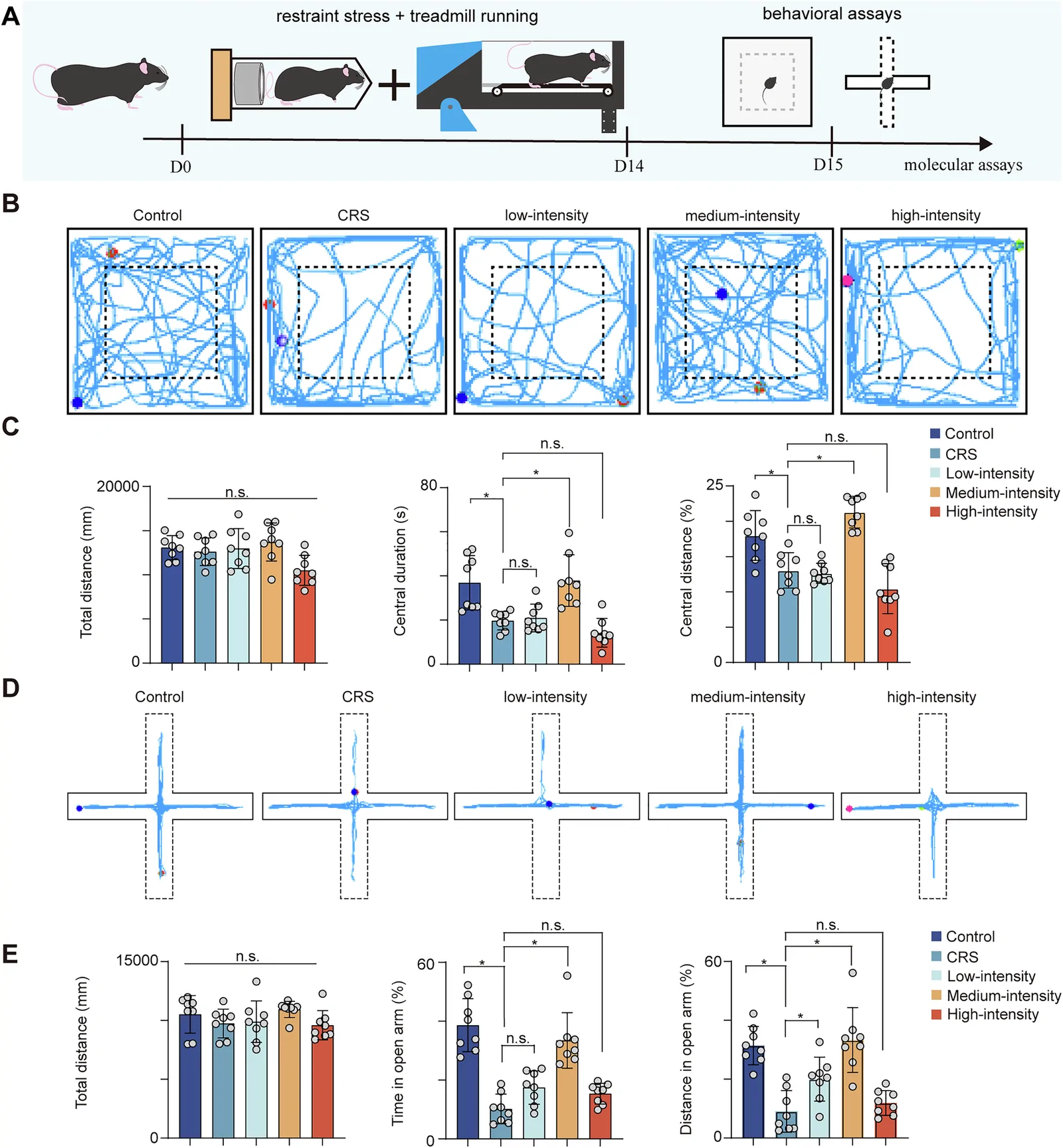
After chronic restraint, exploration of open spaces declined. Across two weeks of treadmill training at different intensities, moderate exercise improved center and open-arm measures most clearly in these comparisons, becoming the focus for the mechanism study.
The stress arrangement did not change suspension/swim measures or markedly reduce motor ability. Supplementary behavioral comparisons found no significant sex difference in improvement, while the main mechanism experiments used males. The study focused on the tested anxiety-related exploration changes.
Source: Li H et al. · Translational psychiatry · CC BY-NC-ND
Original figure and English caption ↗
Looking for the chemical signal behind prefrontal changes
Stress increased prefrontal c-Fos labeling and exercise lowered it. Local chemical lesions changed exploration in normal mice and prevented exercise-related improvement in stressed mice. This highlighted a region containing multiple cell types and potentially distinct regulatory processes.
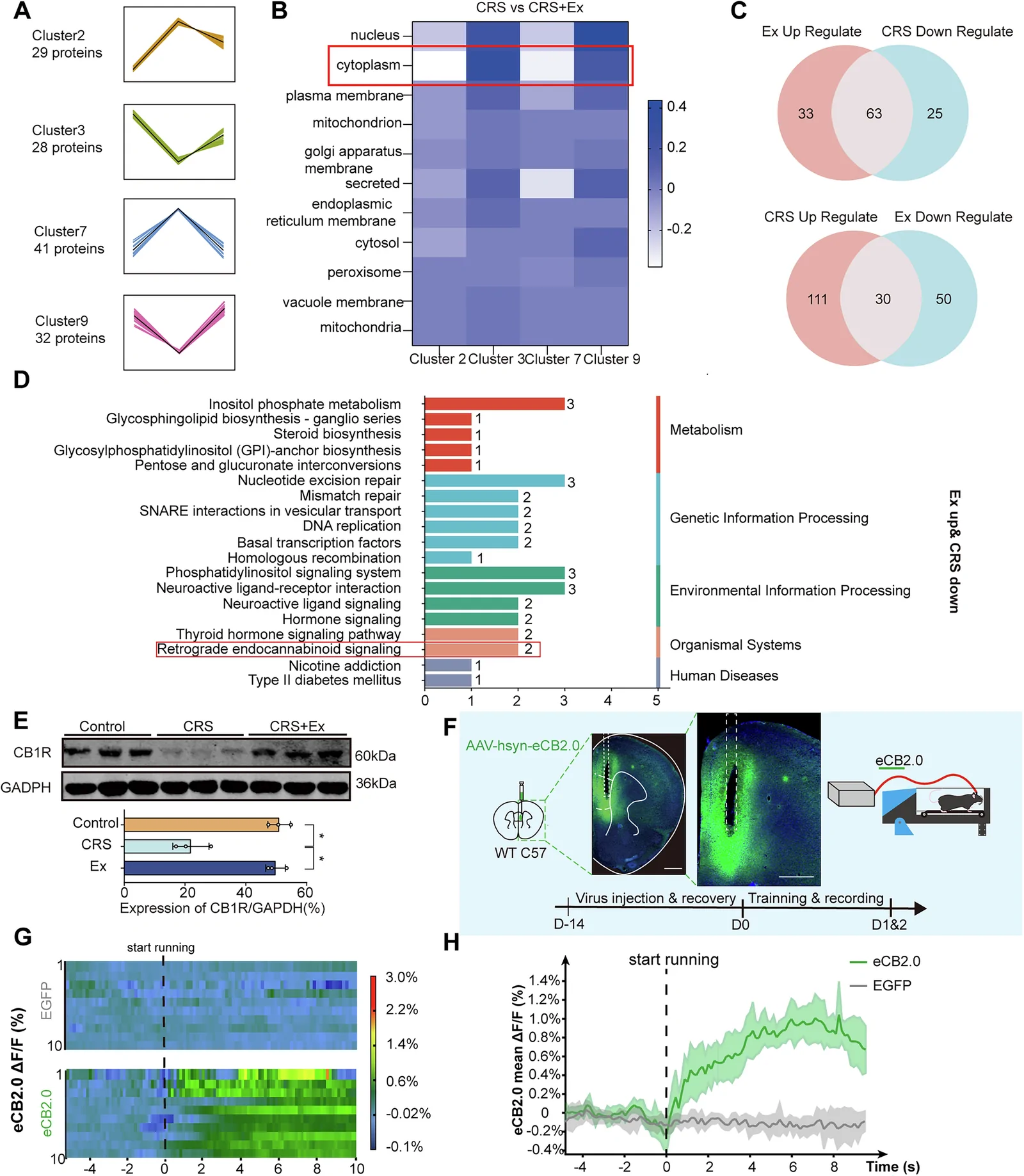
Proteomic comparisons sought candidates lowered by stress and raised by exercise, highlighting endocannabinoid-related pathways. These endogenous signals can regulate synaptic transmission through CB1 receptors, suggesting a chemical route linking running to prefrontal function.
Endocannabinoid signals rise when running begins
Proteins reduced by stress and increased by exercise were enriched for endocannabinoid-related pathways. mPFC CB1 protein followed a similar pattern. At running onset, eCB2.0 fluorescence increased rapidly while EGFP controls did not, connecting chronic receptor abundance with an acute ligand-associated signal.
Alongside receptor abundance, running produced an immediate chemical response. Local CB1 blockade weakened improved exploration, while an agonist mimicked improvement in stressed mice without significantly altering distance. Sensor and pharmacological findings supported a functional receptor contribution.
Source: Li H et al. · Translational psychiatry · CC BY-NC-ND
Original figure and English caption ↗
The same receptor has different effects across cells
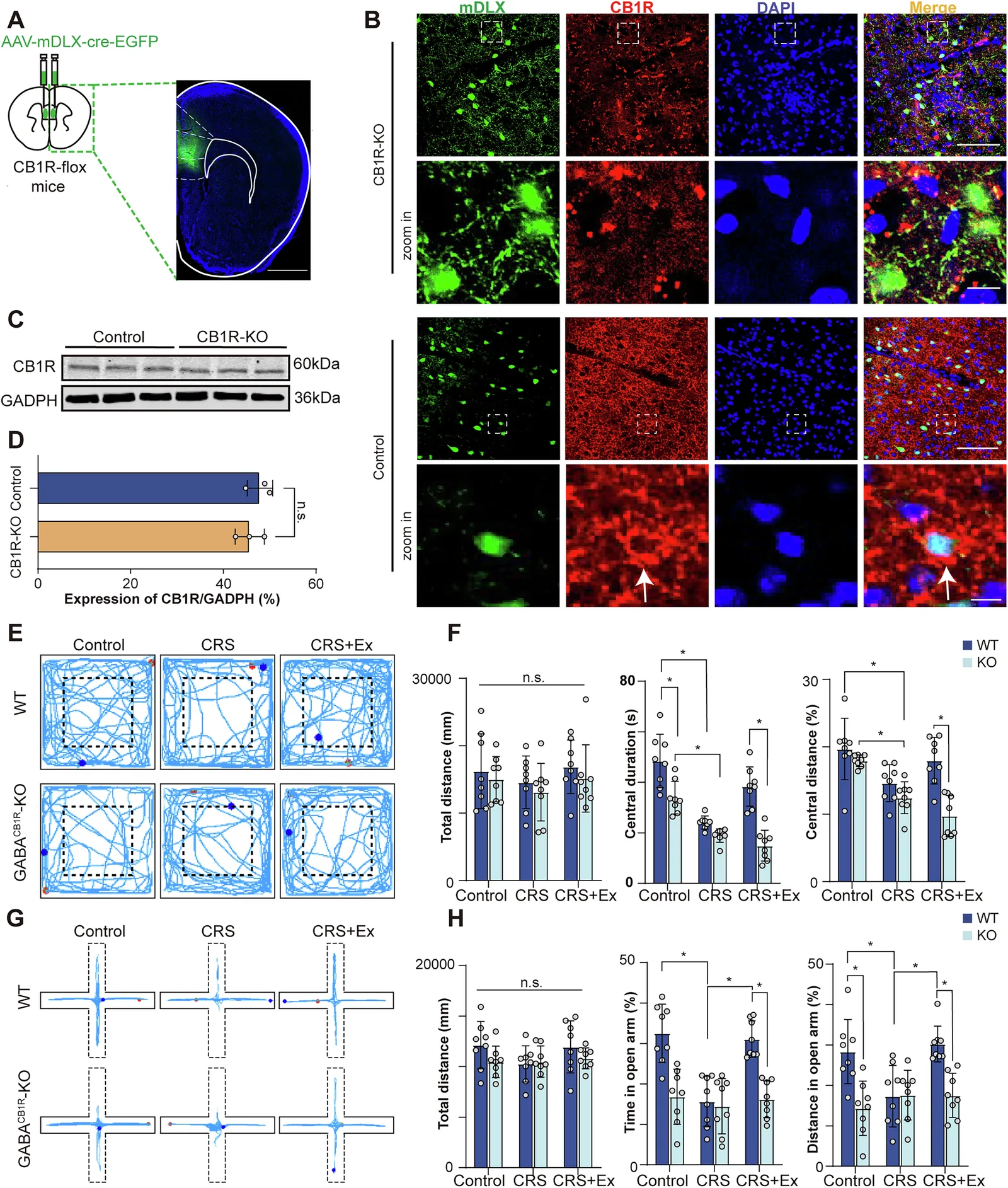
Deleting CB1 in GABAergic cells blocked exercise-related improvements, with comparable baseline movement but altered baseline anxiety-related exploration. Bulk prefrontal CB1 protein was not significantly reduced despite cell-localized loss, showing how functionally relevant changes can be hidden in tissue totals.
In glutamatergic cells, CB1 deletion left exercise improvement intact and optical activation of engineered CB1 did not improve behavior despite verified signaling. Cellular location therefore mattered: receptor manipulation did not have interchangeable effects.
Source: Li H et al. · Translational psychiatry · CC BY-NC-ND
Original figure and English caption ↗
Activating a receptor to modulate synaptic signaling
Optical activation of engineered CB1 on GABAergic cells improved center and open-arm exploration in stressed mice. Receptor activation differs from increasing the cell’s firing; presynaptic CB1 often reduces transmitter release, offering a synaptic explanation.
The authors propose that exercise-evoked endocannabinoids act at GABA-terminal CB1 to reduce inhibition and disinhibit targets. Genetic and behavioral evidence supports receptor involvement, while specific terminals and recipient cells await direct synaptic tests.
Source: Li H et al. · Translational psychiatry · CC BY-NC-ND
Original figure and English caption ↗
Cellular location becomes a key clue to exercise effects
Running, chemical signaling, receptors and cell identity converge in this study. Blocking improvement through GABAergic CB1 loss and mimicking it through receptor activation identifies a cellular entry point; distinct glutamatergic results sharpen the explanation.
GABAergic subgroups, prefrontal subdivisions and distant outputs remain to be resolved. The main mechanism comes from male-mouse treadmill experiments, with human exercise and anxiety requiring independent study. Tracking specific synaptic relays may explain network adjustment.