After social defeat, how does orexin signaling influence avoidance?
Often associated with arousal and feeding, orexin also enters the story of social stress. A mouse study links signaling in the lateral habenula to changes in avoidance and exploration.
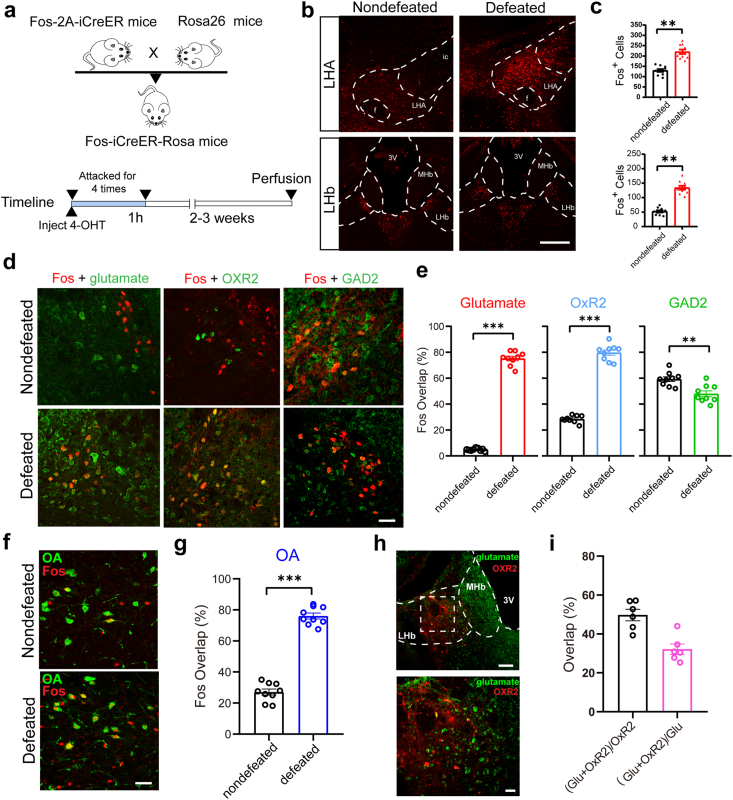
Repeated social stress leaves some mice less willing to approach another animal or explore exposed spaces. Which brain signals contribute? A study published in Neurobiology of Stress on January 30, 2021 examined lateral hypothalamic orexin cells and the lateral habenula. The former are associated with arousal and motivation, the latter with aversion and reward-related processing. Relevant populations in both regions became active during social defeat, while enhancing habenular orexin signaling changed avoidance and selected emotion-related behaviors in susceptible mice.
Enhancing habenular orexin signaling reduced social avoidance in susceptible mice, while local OxR2 blockade worsened selected negative behavioral measures. Activating orexin cells or their habenular terminals increased exploration of exposed areas alongside changes in motor activity.
Contents · 6 sections
Two populations respond during social defeat
Activity-marker comparisons identified higher activated fractions among LHA orexin cells, LHb glutamatergic cells and LHb cells expressing the orexin receptor OxR2 after defeat. These observations brought both regions into the same stress-related picture.
Responses differed across cell types: the corresponding activated fraction among LHb GAD2-labeled cells decreased. OxR2 and glutamatergic markers overlapped only partly, revealing heterogeneous participation beneath the label of an active region.
Source: Wang D et al. · Neurobiology of stress · CC BY-NC-ND
Original figure and English caption ↗
Calcium signals rise when an attack occurs
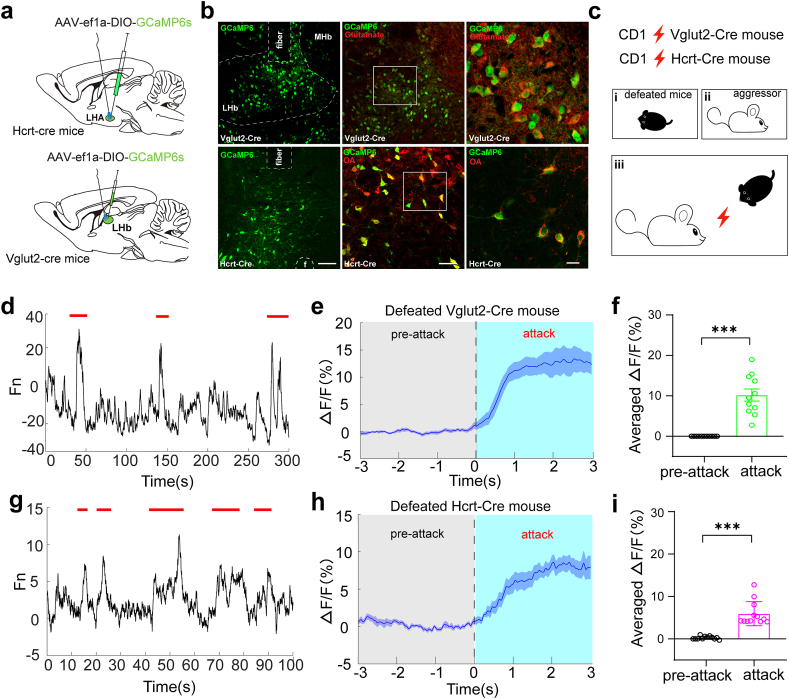
Time-resolved recordings sharpened the observation: attacks rapidly increased population calcium signals in LHA orexin and LHb glutamatergic cells. A supplementary LHb GAD2 comparison did not show the same significant increase, complementing the cell-type differences in activity labeling.
Responses to the same event support participation in stress processing without directly revealing transmission between the populations. The next comparisons therefore examined whether changing orexin signaling within LHb altered behavior.
Source: Wang D et al. · Neurobiology of stress · CC BY-NC-ND
Original figure and English caption ↗
Enhancing local orexin signaling increases approach
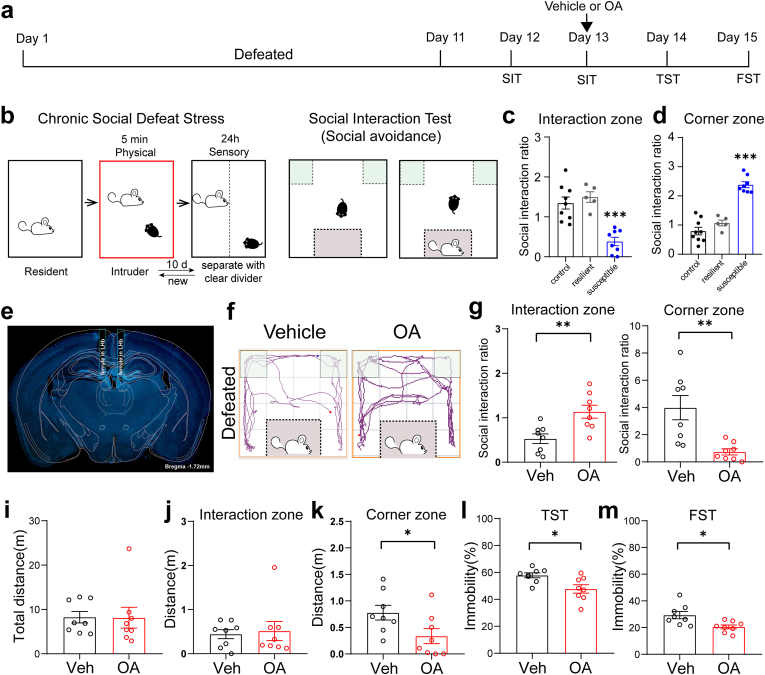
Repeated defeat did not affect every mouse identically. In animals selected for social susceptibility, enhancing orexin A signaling within LHb increased the interaction-zone social ratio and reduced the corner-zone ratio, indicating altered responses to another animal.
Interaction and corner zones capture complementary aspects of approach and avoidance. Ratios compare occupancy with and without another animal, revealing how social context changes choices. Considering both zones shows the shift in spatial allocation after enhanced orexin signaling.
Total travel distance and interaction-zone travel distance did not significantly increase. Immobility fractions also decreased in tail-suspension and swimming comparisons. These results connect local orexin signaling with avoidance and coping-related measures in susceptible male mice.
Source: Wang D et al. · Neurobiology of stress · CC BY-NC-ND
Original figure and English caption ↗
Which measures change in the opposite direction after OxR2 blockade?
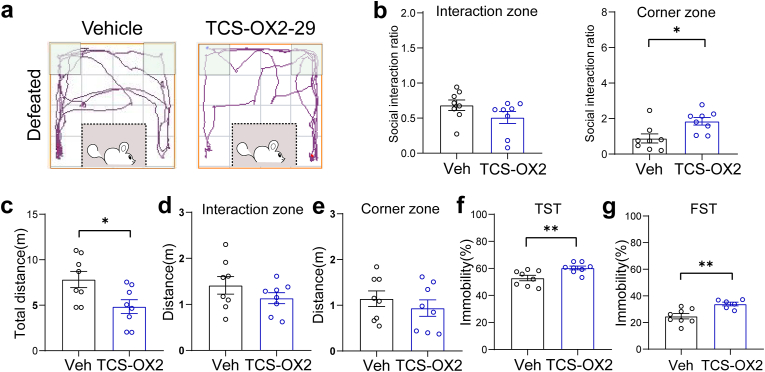
Local OxR2 blockade increased the corner-zone social ratio and immobility in tail suspension and swimming. The interaction-zone social ratio did not change significantly. Enhancement and blockade therefore provided directionally related evidence without producing perfectly symmetric outcomes across measures.
Total travel distance also decreased, while distances within interaction and corner zones did not differ significantly. The motor change belongs alongside avoidance-related measures when interpreting how signaling influences behavior after stress.
Source: Wang D et al. · Neurobiology of stress · CC BY-NC-ND
Original figure and English caption ↗
Cell and terminal activation change exploration
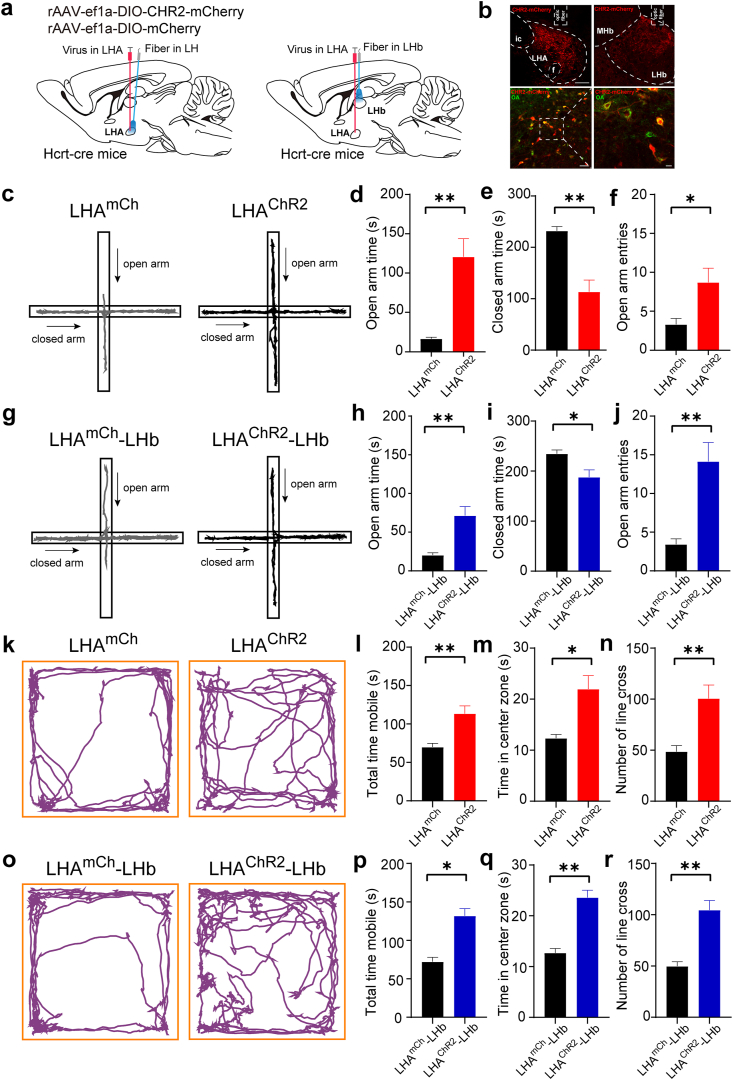
Activating LHA orexin cells or their terminals in LHb increased open-arm entries and time in an elevated maze. In an open arena, center entries and center time increased, indicating altered exploration of exposed spaces.
Total mobile time also increased, providing a motor context for the exploratory changes. These activation experiments directly examined maze and open-arena behavior; social, tail-suspension and swimming findings came from the preceding local pharmacological comparisons.
Source: Wang D et al. · Neurobiology of stress · CC BY-NC-ND
Original figure and English caption ↗
Orexin function depends on region and state
This study provides LHb-level evidence for orexin-related modulation after social stress. Direct anatomical linkage to LHb glutamatergic cells, contributions of local inhibitory cells and relevance to females remain unresolved. A signal commonly associated with arousal can therefore have richer behavioral roles across brain regions and stress states.