Following post-injury immune imbalance from amygdala to marrow
Human samples reveal age-associated shifts in myeloid supply after brain injury. Mouse experiments link amygdala activity, marrow β2-adrenergic receptors and inflammation, with receptor interventions improving selected post-injury outcomes.
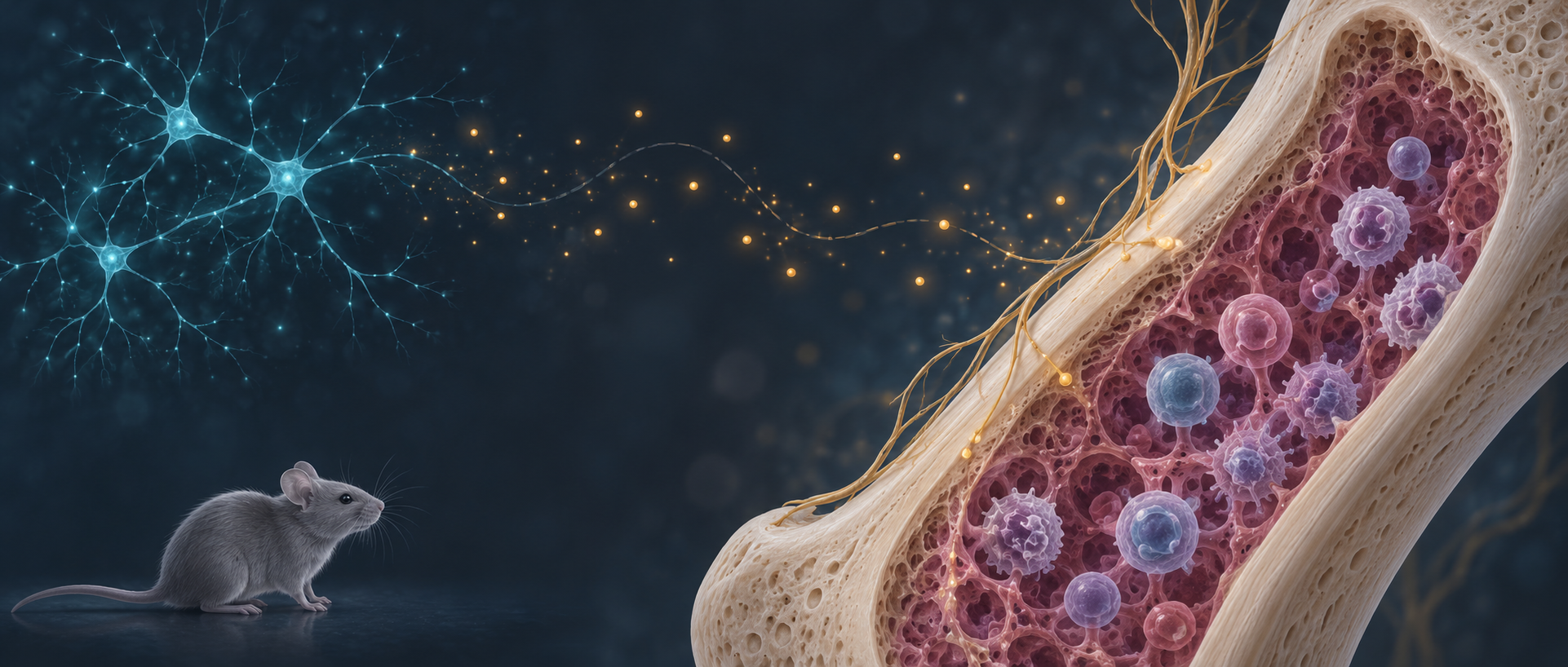
After brain injury, immune cells arrive rapidly and marrow replenishes their supply. More production need not mean better repair: which cells increase and which remain relatively scarce also matters. A 2024 Science Advances study begins with blood, cranial marrow and surgically obtained brain tissue from younger and older patients, then examines mechanisms in mice. It links central amygdala, CeA, activity and sympathetic-related signaling with marrow production, identifying β2-adrenergic receptors as contributors to altered post-injury cell supply.
Older patients and aged model mice show more prominent myeloid shifts. In mice, lowering activity in labeled CeA cells, deleting β2 receptors or pharmacological blockade alters cell composition and improves selected outcomes. Pharmacological lesion-proportion changes are nonsignificant in young mice but lower in aged mice.
Contents · 7 sections
Age-associated differences concern the composition of supply
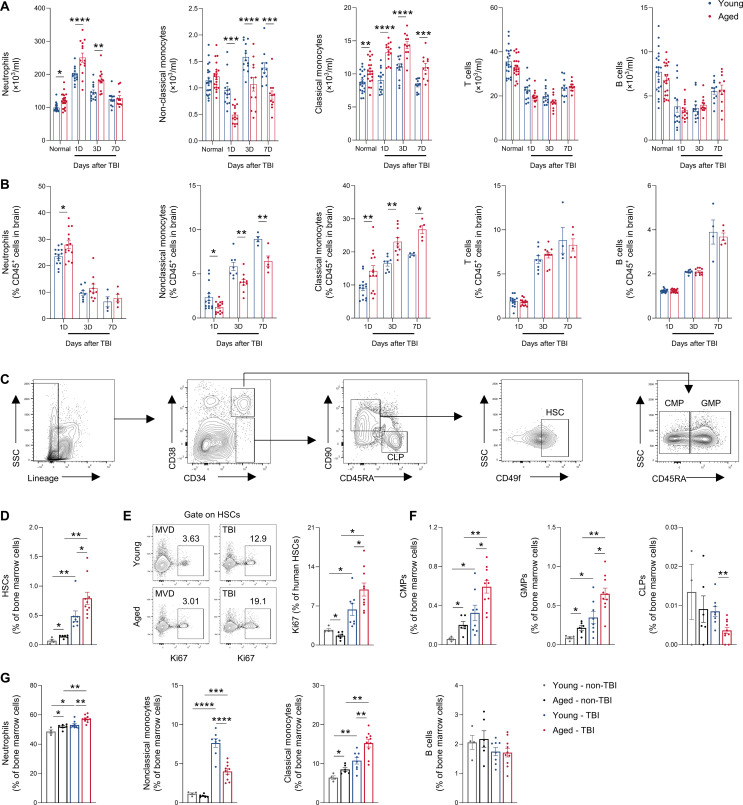
Younger and older patients are aged eighteen to forty-five and over sixty-five, respectively. During the acute phase, older patients have more circulating neutrophils and classical monocytes and fewer nonclassical monocytes. Surgically obtained brain tissue also shows corresponding compositional differences.
Cranial marrow from older injured patients shows higher stem-cell and Ki67-positive proportions, increased myeloid progenitor proportions and lower lymphoid progenitor proportions. Human observations direct attention to the source of supply: post-injury shifts are also observed in the cellular supply structure within marrow.
Source: Jiang R et al. · Science advances · CC BY-NC
Original figure and English caption ↗
Some cells expand while another response lags
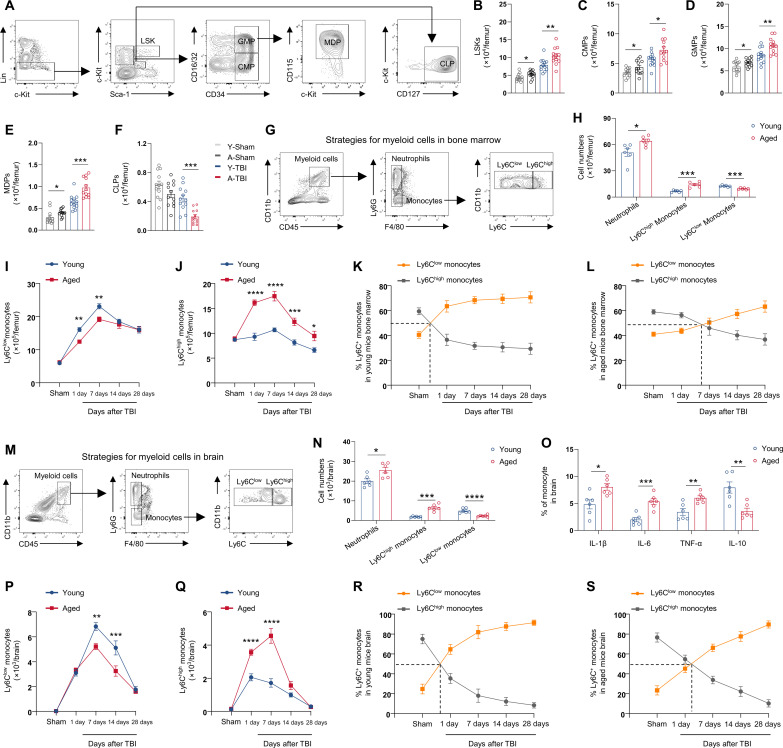
In the injury model, aged mice show greater marrow stem/progenitor expansion, more neutrophils and Ly6C-high monocytes and a weaker Ly6C-low response. The monocyte populations broadly correspond to human classical and nonclassical populations, with distinct response timing.
Brain-infiltrating populations also differ with age. Aged mice have higher proportions of monocytes positive for selected inflammatory markers and a lower IL-10-positive proportion. Supply, entry into brain tissue and inflammation-related phenotypes change together rather than all immune cells simply increasing or decreasing.
Source: Jiang R et al. · Science advances · CC BY-NC
Original figure and English caption ↗
Amygdala activity accompanies marrow-related signals
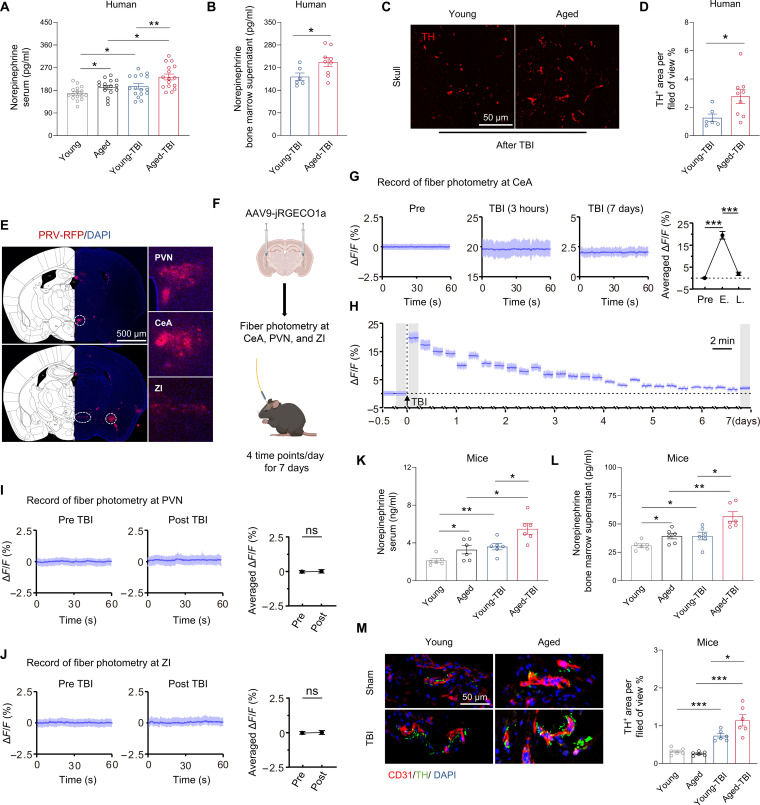
Human and mouse samples show higher post-injury norepinephrine concentrations, especially in older groups, alongside increased sympathetic-fiber labeling in marrow. Transsynaptic tracing from marrow labels CeA, hypothalamic paraventricular nucleus and zona incerta, identifying a multistage central network.
Mouse CeA population calcium increases after injury and remains above pre-injury levels at a later observation. Corresponding before–after comparisons in the other two regions are nonsignificant. Attention turns to CeA, while tracing describes a multistage system rather than a single CeA axon directly reaching marrow.
Source: Jiang R et al. · Science advances · CC BY-NC
Original figure and English caption ↗
Suppressing labeled cells shifts the supply pattern
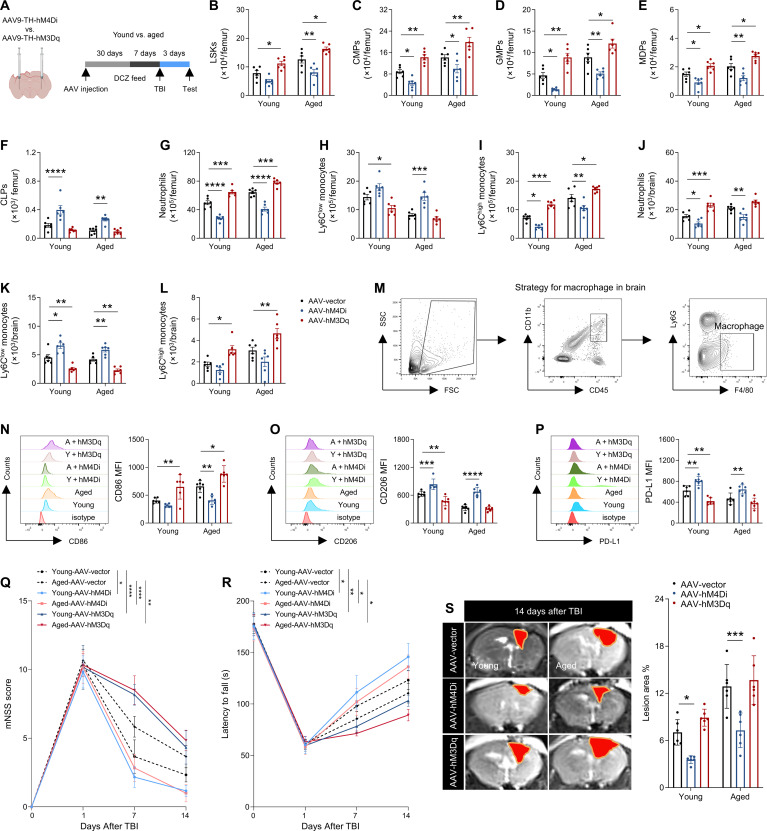
The researchers manipulate TH-promoter-labeled CeA cells. In the injury model, suppression reduces neutrophil and Ly6C-high supply and enhances the Ly6C-low response, while increasing activity produces the opposite pattern. Brain-infiltrating populations also change.
Suppressed groups show improved neurological scores, rotarod performance and lesion proportions, whereas activated groups worsen. Central activity and peripheral composition are functionally linked through the labeled CeA population rather than equivalent manipulation of every CeA cell.
Source: Jiang R et al. · Science advances · CC BY-NC
Original figure and English caption ↗
Aged donor marrow transfers the shifted response
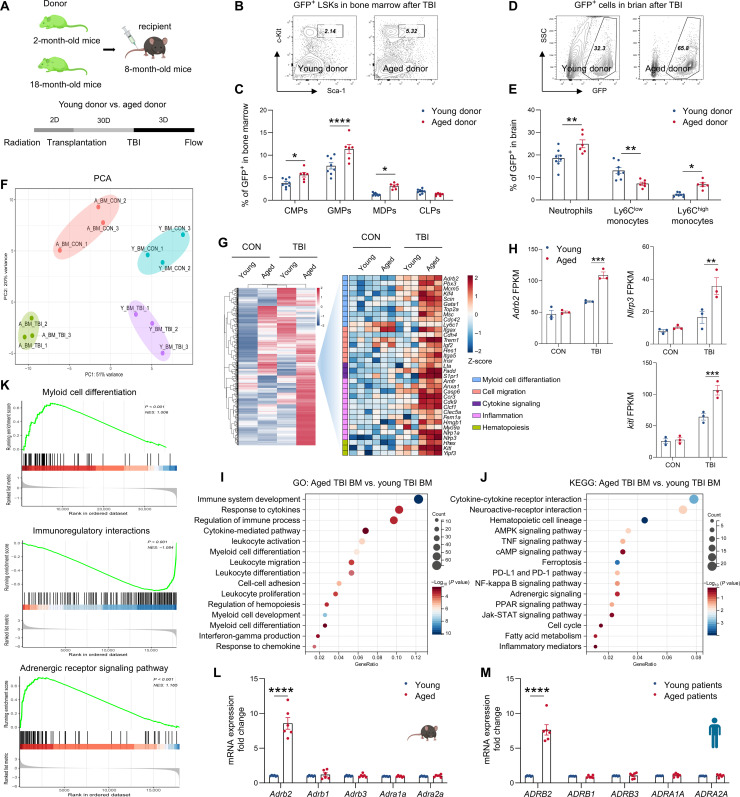
Recipients of aged donor marrow show a stronger post-injury shift toward myeloid progenitors and classical-like monocytes, with fewer Ly6C-low cells. Compared with young donors, the finding indicates that age-associated marrow state contributes to the response.
Bulk marrow transcription reveals stronger hematopoiesis- and inflammation-related expression in aged injured mice. Adrb2, encoding the β2-adrenergic receptor, stands out, with increased corresponding expression in patient marrow. Genetic and pharmacological interventions then test this clue.
Source: Jiang R et al. · Science advances · CC BY-NC
Original figure and English caption ↗
Composition changes without a significant reduction in the stem/progenitor pool
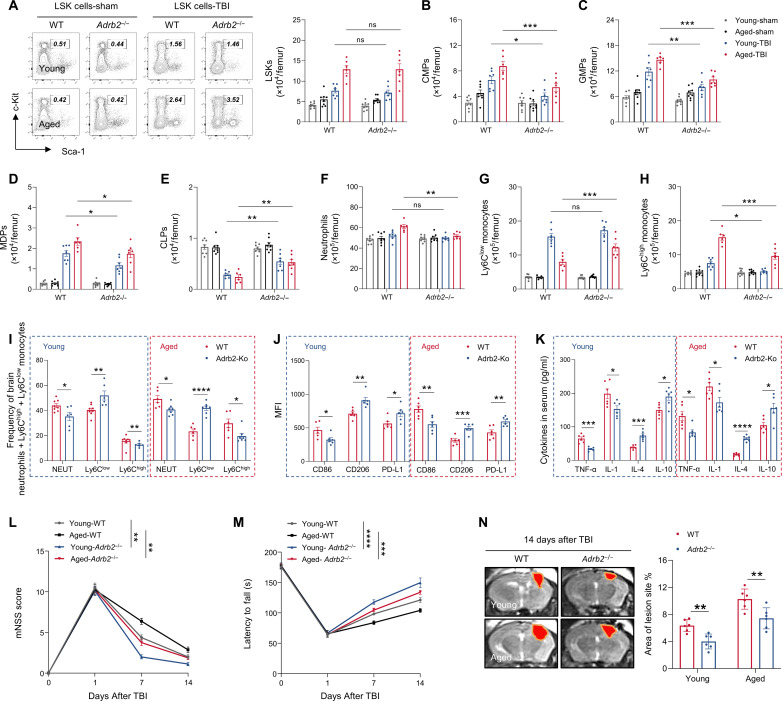
Deleting Adrb2 shifts cell composition in young and aged mice and enhances the Ly6C-low response. Marrow LSK stem/progenitor-pool counts change nonsignificantly. Receptor effects therefore concern downstream composition rather than a uniform reduction of the source pool.
Marrow chimeras further support a contribution from receptors in the hematopoietic compartment. Receptor-deficient mice show improved inflammation-related indices, neurological outcomes and lesions, linking central signals with how marrow receives and responds to them.
Source: Jiang R et al. · Science advances · CC BY-NC
Original figure and English caption ↗
Benefits differ across ages and measures
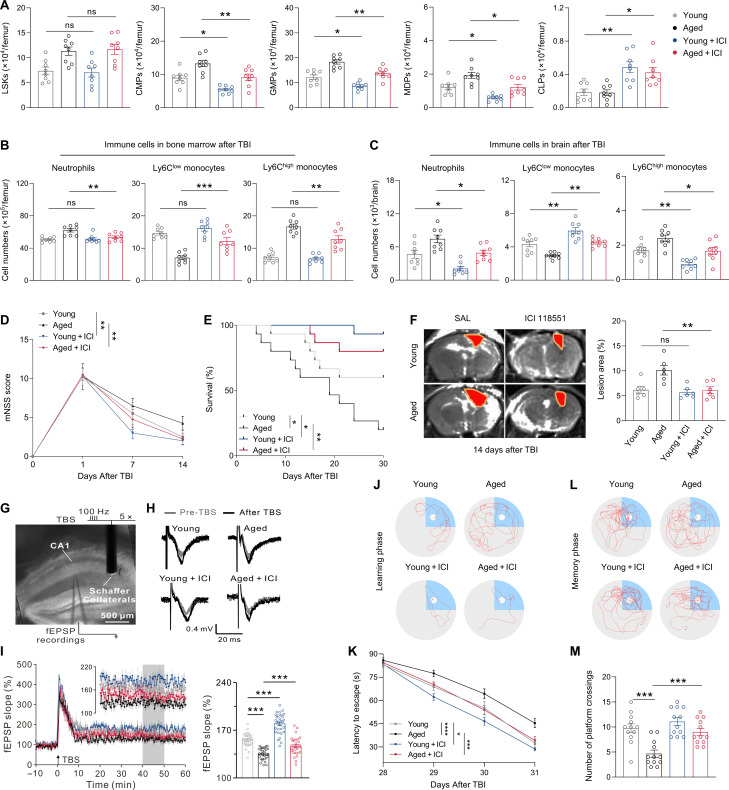
Pharmacological β2 blockade also shifts supply and improves measured neurological, survival and later learning-related outcomes. Lesion proportion falls in aged mice but changes nonsignificantly in young mice; selected young-marrow myeloid counts also do not significantly decline. LSK-pool counts remain nonsignificantly changed.
Human samples reveal age-associated patterns, while intervention results come from injury models using primarily male mice. The study resolves brain–marrow communication into receptors and cellular composition: which populations predominate may explain post-injury inflammatory differences more effectively than total immune-cell expansion alone.
Source: Jiang R et al. · Science advances · CC BY-NC
Original figure and English caption ↗