Beyond microglial depletion: why does PLX5622 alter anesthesia and nicotine responses?
A mouse study reveals that PLX5622 activates the hepatic constitutive androstane receptor, accelerating drug metabolism independently of microglial depletion.
Colony-stimulating factor 1 receptor (CSF1R) inhibitors such as PLX5622 and PLX3397 are among the most widely used pharmacological tools in neuroscience to deplete brain microglia and interrogate their roles in sleep, general anesthesia, addiction, and neurodegeneration. Behavioral alterations observed after PLX5622 treatment are routinely attributed to microglial loss, yet whether systemic administration of these small molecules perturbs peripheral xenobiotic metabolism has remained largely overlooked. On February 23, 2026, Zhihua Gao, Shumin Duan, Cunqi Ye, and colleagues published a study titled "More than microglial depletion: PLX5622 activates the hepatic constitutive androstane receptor to alter anesthesia and addiction" in Neuron. By comparing dietary PLX5622 administration with genetic microglial depletion models, the authors demonstrate that PLX5622 directly binds and activates the hepatic constitutive androstane receptor (CAR), inducing liver Cyp2b10 expression more than 7,000-fold and accelerating the clearance of injectable anesthetics, ethanol, and nicotine independently of microglia.
Beyond depleting brain microglia, the CSF1R inhibitor PLX5622 directly binds and activates the hepatic constitutive androstane receptor (CAR) to massively induce liver Phase I–III xenobiotic-metabolizing enzymes—especially Cyp2b10—thereby accelerating anesthetic and nicotine clearance and altering anesthesia emergence and withdrawal behaviors independently of microglia.
Contents · 5 sections
PLX5622 Shortens Injectable Anesthesia Duration Equivalently in Both Sexes but Spares Inhaled Anesthetics
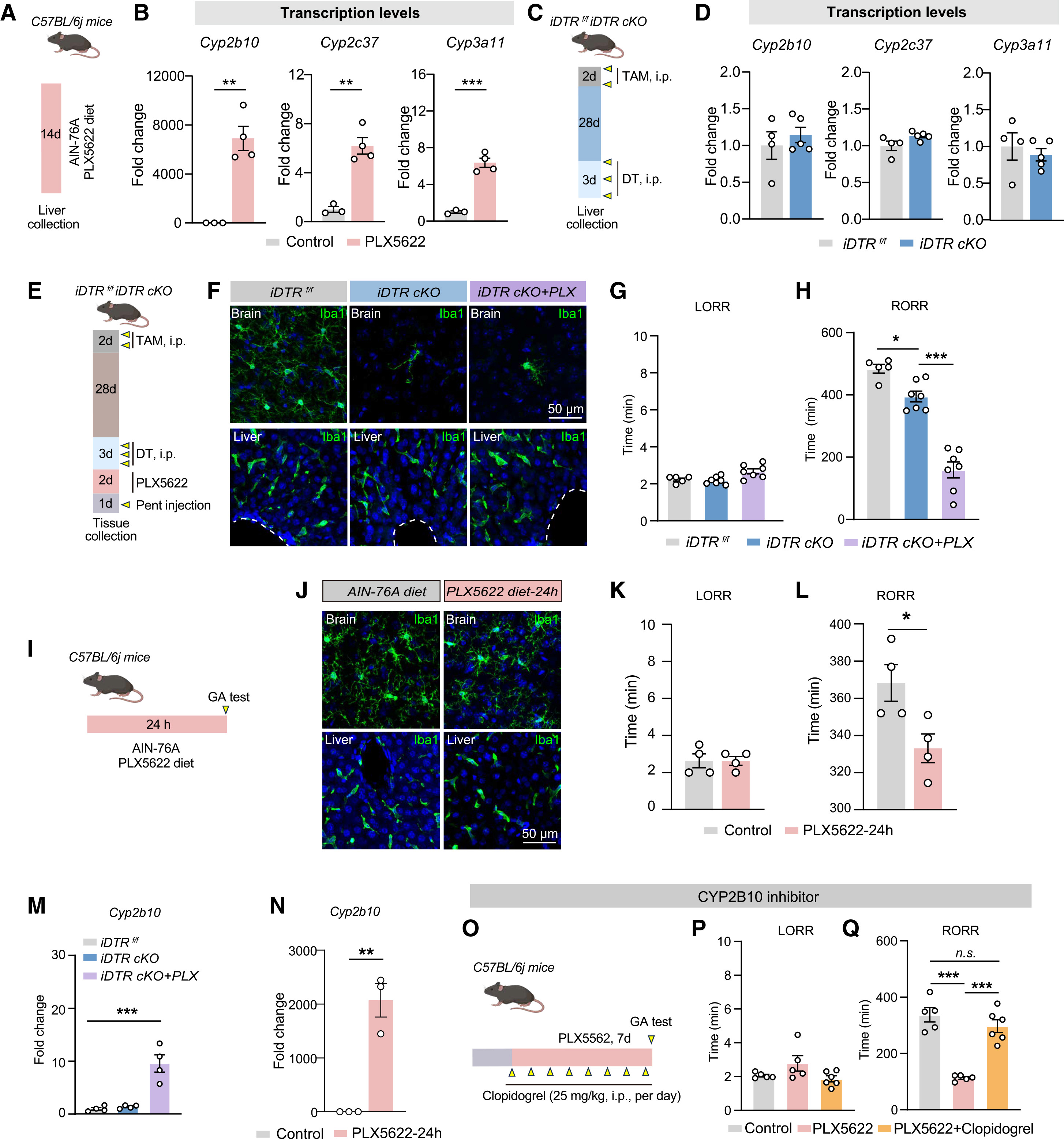
The authors first compared how dietary PLX5622 affects responses to injectable versus inhaled general anesthetics. Across injectable anesthetics—pentobarbital, ketamine, propofol, and dexmedetomidine—PLX5622 markedly shortened the time to recovery of righting reflex (RORR) in both male and female mice. By contrast, two genetic microglial depletion models (diphtheria toxin-treated Cx3cr1CreER/+::iDTRfl/fl mice and tamoxifen-induced Cx3cr1CreER/+::Csf1rfl/fl mice) achieved robust microglial ablation with at most a modest change in pentobarbital RORR (e.g., 484.2 min in iDTR f/f vs 394.9 min in iDTR cKO, *p < 0.05) that was further shortened to 159.1 min (***p < 0.001) when iDTR cKO mice were fed PLX5622.
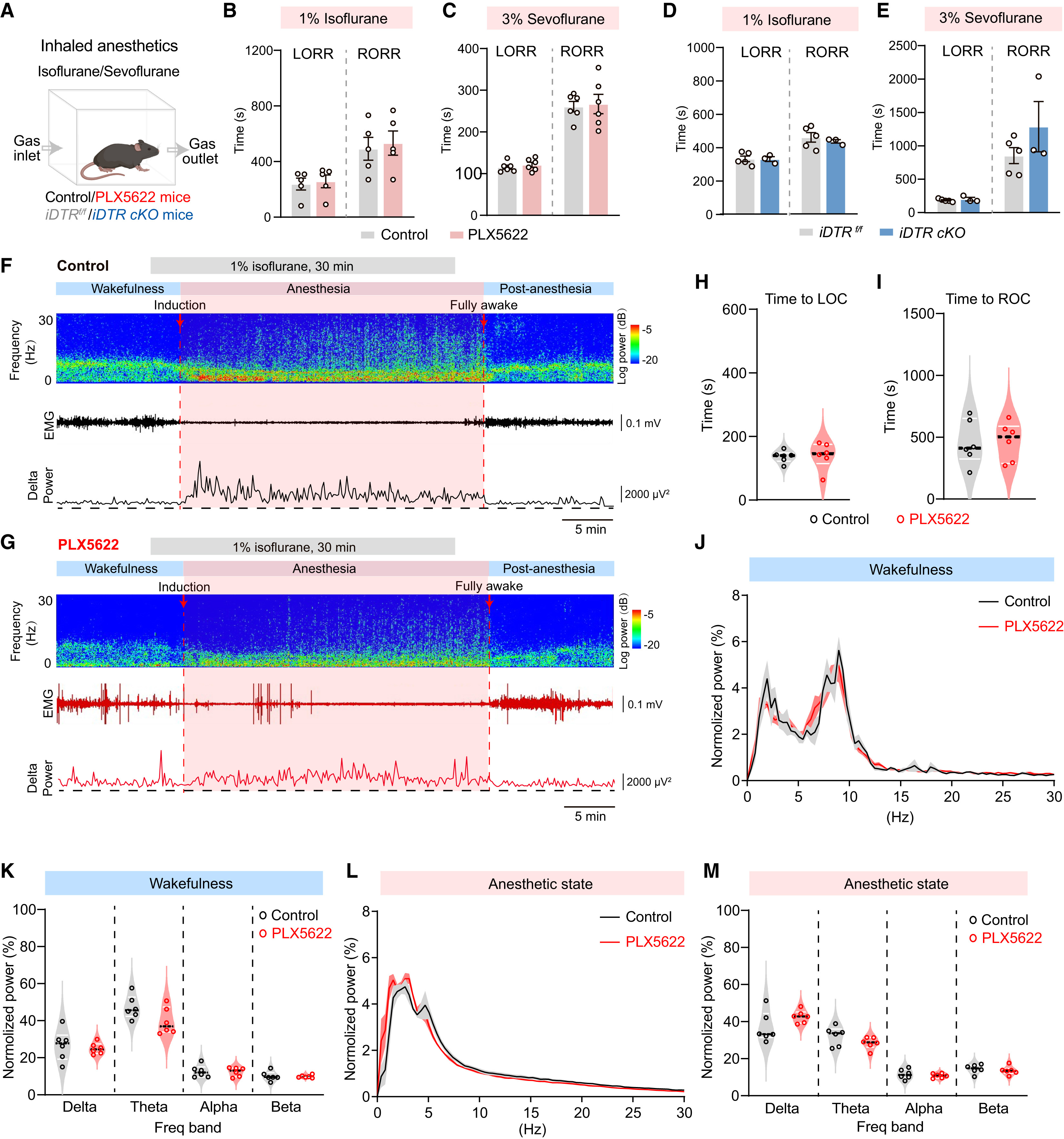
Even more tellingly, when mice were anesthetized with inhaled volatile anesthetics that are eliminated primarily via pulmonary exhalation rather than hepatic metabolism—1% isoflurane or 3% sevoflurane—PLX5622 had zero effect on induction (LORR), emergence (RORR), or EEG delta power. In vivo fiber photometry of extracellular adenosine dynamics (GRAB_Ado) in the mPFC and brain-wide c-Fos mapping confirmed that PLX5622 did not alter central adenosine responses or neuronal activation patterns, pointing instead to a peripheral pharmacokinetic mechanism.
Source: Kelei Cao et al. · Neuron · © Elsevier Inc.
Original figure and English caption ↗
Mass Spectrometry Reveals PLX5622-Accelerated Hepatic Anesthetic Clearance Independent of Microglia
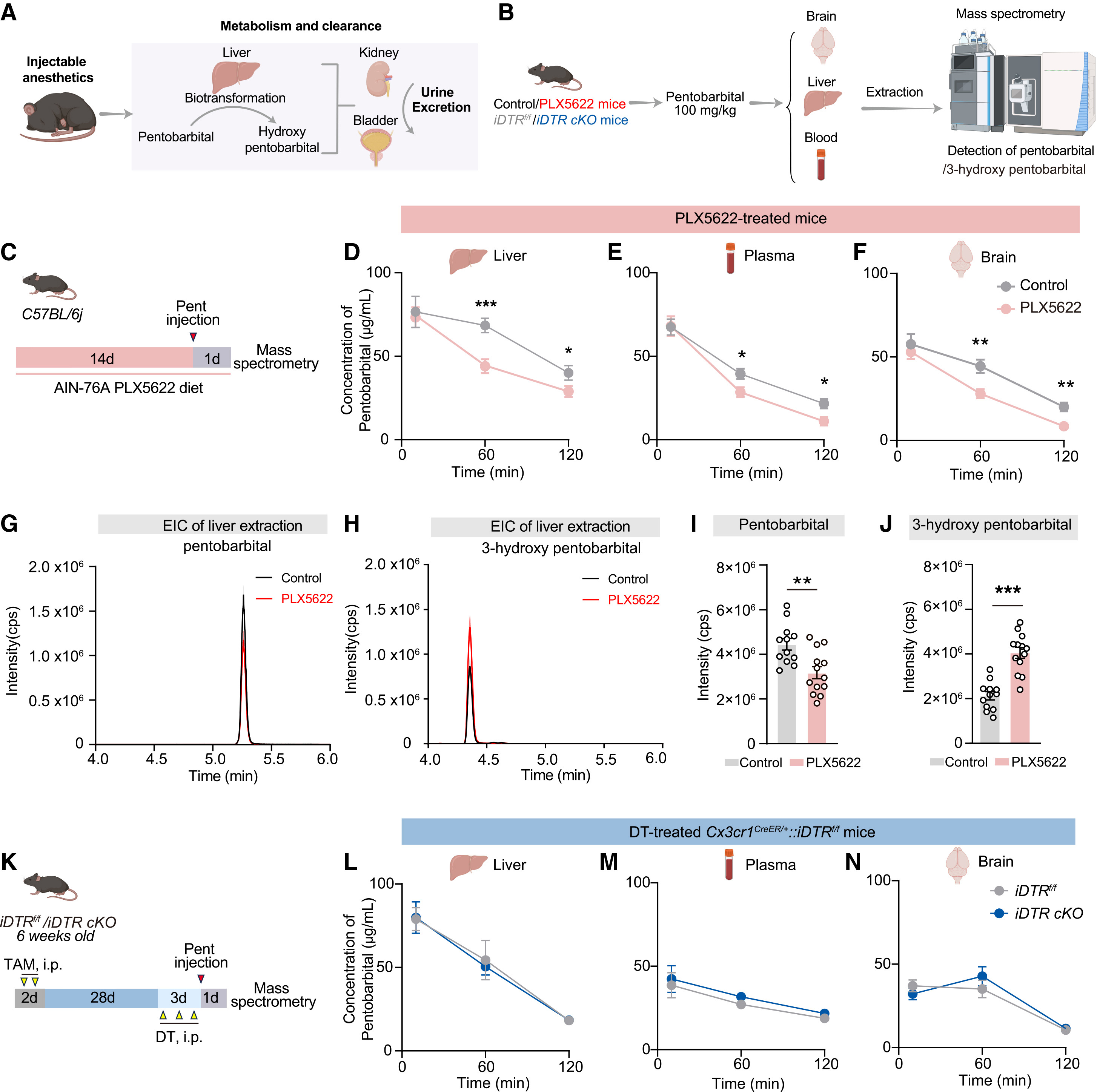
Because injectable anesthetics rely heavily on hepatic biotransformation, the authors quantified pentobarbital and its metabolites in liver, plasma, and brain at 10, 60, and 120 minutes post-injection using liquid chromatography-tandem mass spectrometry (LC-MS/MS). While initial drug uptake at 10 minutes was identical between groups, PLX5622-fed mice exhibited a dramatic reduction in parent pentobarbital levels across liver, plasma, and brain at 60 and 120 minutes, accompanied by elevated levels of the hydroxylated metabolite 3-hydroxypentobarbital.
By contrast, genetically microglia-depleted Cx3cr1CreER/+::iDTRfl/fl mice displayed pentobarbital clearance kinetics in liver, plasma, and brain that were indistinguishable from littermate controls. Thus, PLX5622 shortens anesthesia duration by accelerating hepatic oxidative drug metabolism and hastening the decline of brain anesthetic concentrations below the arousal threshold.
Source: Kelei Cao et al. · Neuron · © Elsevier Inc.
Original figure and English caption ↗
Massive Induction of Hepatic Cytochrome P450 Cyp2b10 Drives PLX5622's Anesthesia Phenotype
Screening hepatic cytochrome P450 (CYP) enzymes revealed a striking effect: dietary PLX5622 induced hepatic Cyp2b10 mRNA expression by more than 7,000-fold alongside significant upregulation of Cyp2c37 and Cyp3a11, without altering brain Cyp2b10 levels. Another widely used CSF1R inhibitor, PLX3397, similarly induced hepatic Cyp2b10 and shortened pentobarbital anesthesia, whereas intracerebroventricular (i.c.v.) infusion of PLX5622 depleted brain microglia without inducing liver Cyp2b10 or altering anesthesia emergence.
Three lines of evidence dissociated microglial loss from hepatic enzyme induction: first, administering PLX5622 to mice already depleted of microglia via genetic iDTR ablation still massively induced liver Cyp2b10 and shortened pentobarbital RORR; second, a single 24-hour exposure to PLX5622—prior to any loss of brain microglia—induced hepatic Cyp2b10 roughly 2,000-fold and accelerated emergence; third, pharmacological inhibition of CYP2B10 with clopidogrel or pan-CYP inhibition with 1-aminobenzotriazole completely reversed PLX5622-shortened anesthesia.
Source: Kelei Cao et al. · Neuron · © Elsevier Inc.
Original figure and English caption ↗
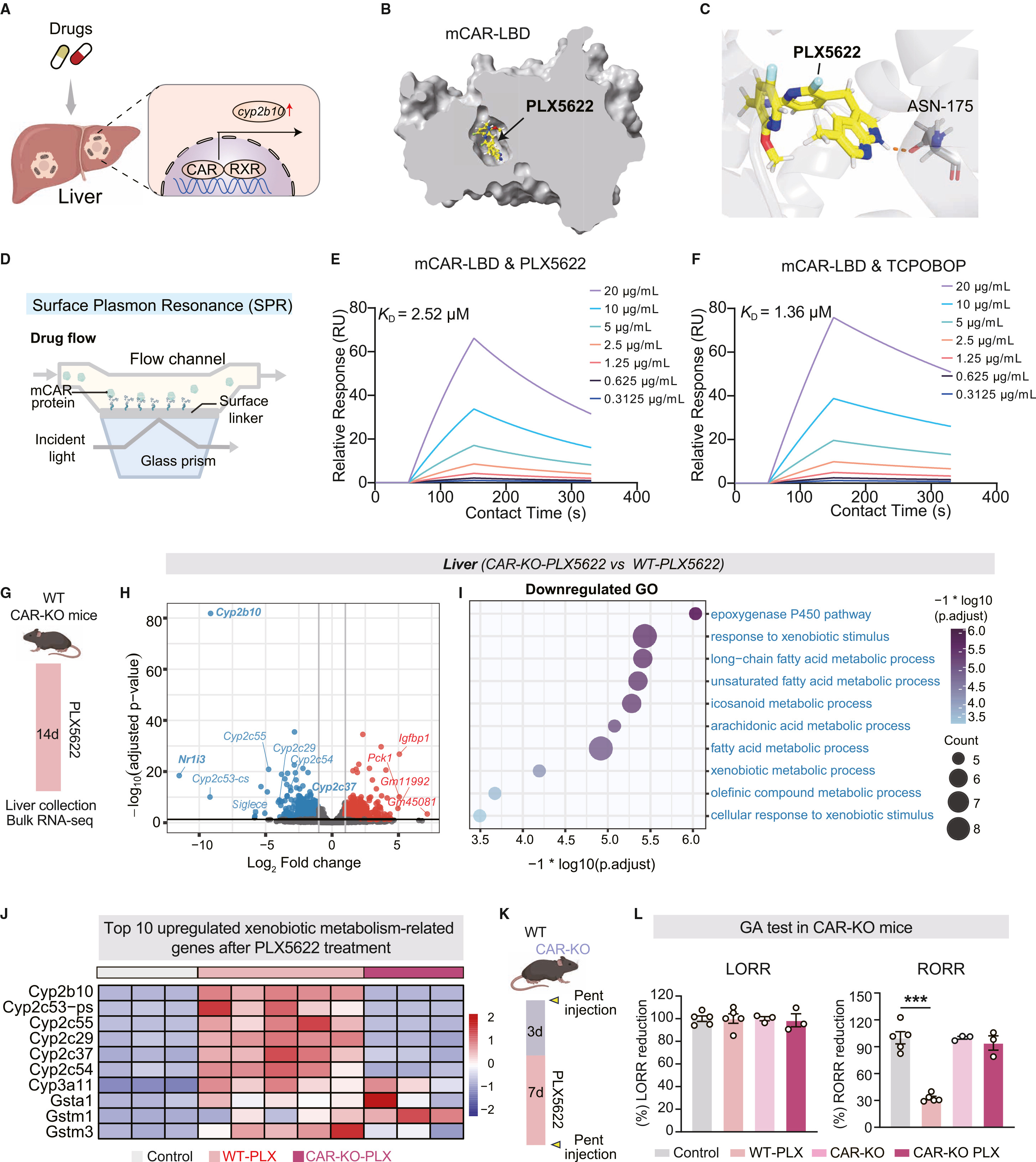
Dual Brain-Liver Transcriptomics Uncover Pan-Xenobiotic Metabolic Reprogramming in the Liver
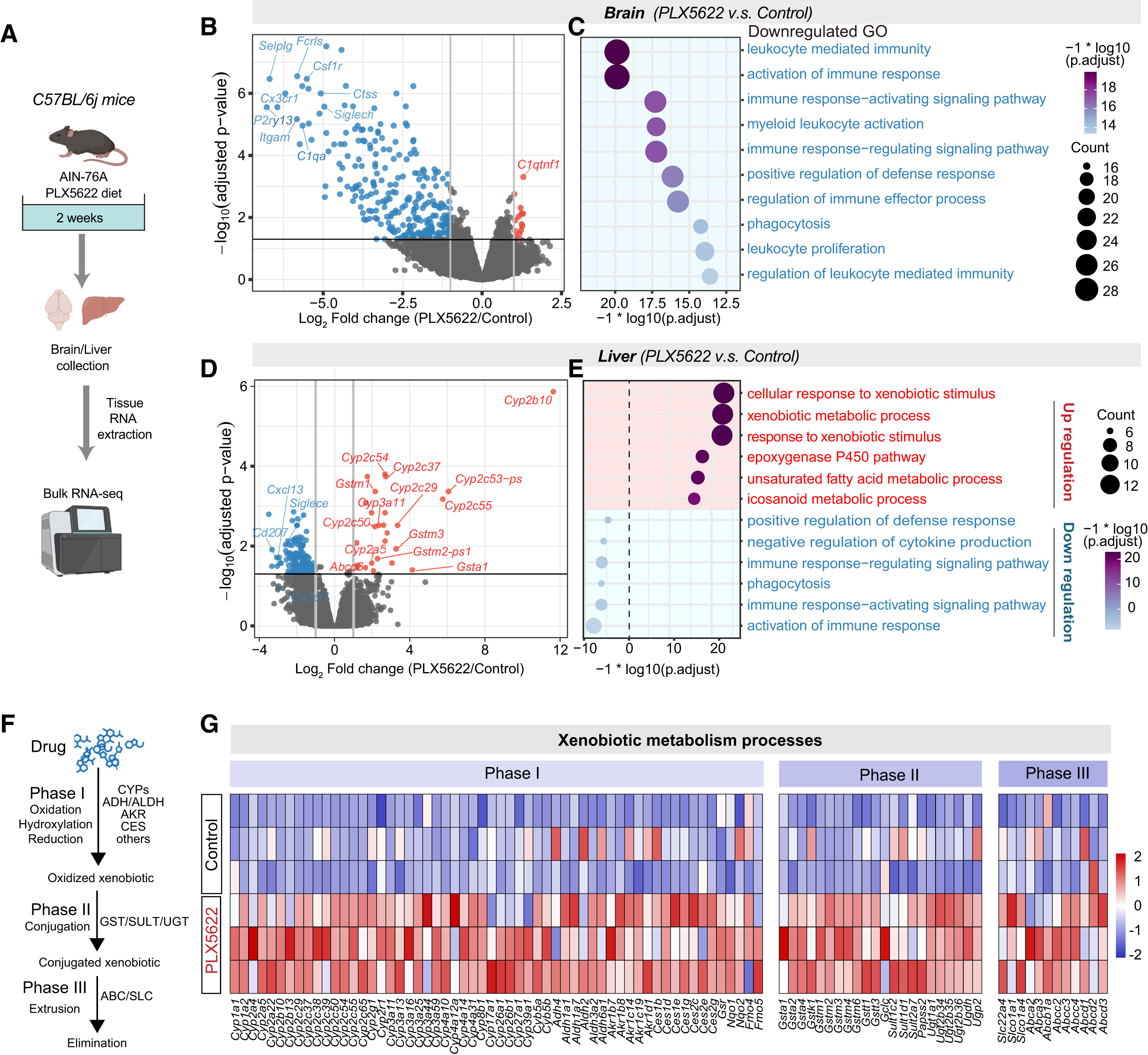
Because hepatocytes do not express Csf1r and neither global Csf1r knockout in rats nor Kupffer cell depletion induced hepatic Cyp2b10, the authors performed parallel bulk RNA sequencing of brain and liver from PLX5622-treated mice. While downregulated genes in the brain reflected expected microglial immune signatures, 664 genes were significantly upregulated in the liver, heavily enriched in xenobiotic metabolism, cytochrome P450 oxidation, and glutathione conjugation pathways.
Specifically, PLX5622 coordinately upregulated all three phases of hepatic xenobiotic detoxification: Phase I oxidation, reduction, and hydrolysis enzymes (Cyp2b10, Cyp2c cluster, Cyp3a11, Aldh, and Ces genes), Phase II conjugating transferases (Gsta, Gstm, Sult, and Ugt families), and Phase III efflux transporters (Abcc, Abcb, and Slc families)—a transcriptional signature characteristic of hepatic nuclear receptor activation.
Source: Kelei Cao et al. · Neuron · © Elsevier Inc.
Original figure and English caption ↗
Direct Activation of Hepatic CAR by PLX5622 Alters Drug Clearance and Nicotine Withdrawal
Among nuclear xenobiotic receptors, the constitutive androstane receptor (CAR, encoded by Nr1i3) is the primary regulator of Cyp2b10. Molecular docking predicted that PLX5622 fits snugly into the mouse CAR ligand-binding domain (mCAR-LBD) pocket via hydrogen bonding with ASN-175, and surface plasmon resonance (SPR) confirmed direct binding with a KD of 2.52 uM—comparable to the canonical CAR agonist TCPOBOP (KD = 1.36 uM)—driving nuclear translocation of CAR in hepatocytes. In global or hepatocyte-specific CAR-knockout mice, PLX5622 failed to induce hepatic CYP/GST enzymes and completely lost its ability to shorten pentobarbital anesthesia.
Crucially, this hepatic off-target effect confounds broader neuropharmacological paradigms. PLX5622 markedly accelerated the clearance of efavirenz, ethanol, and nicotine (enhancing conversion to cotinine). In a chronic nicotine model, PLX5622 feeding alleviated nicotine withdrawal-induced anxiety across the open field, light-dark box, and elevated plus maze; however, this behavioral rescue was completely absent in genetically microglia-depleted Csf1r cKO mice. These findings establish that PLX5622 acts as a potent hepatic CAR agonist and urge caution when interpreting pharmacological studies using CSF1R inhibitors.
Source: Kelei Cao et al. · Neuron · © Elsevier Inc.
Original figure and English caption ↗