Why does dopamine affect mechanical and heat responses differently?
Nigral input to subthalamic nucleus and D2-class receptors regulate contralateral mechanical sensitivity, with distinct sensory outcomes in nerve-injury and Parkinsonian models.
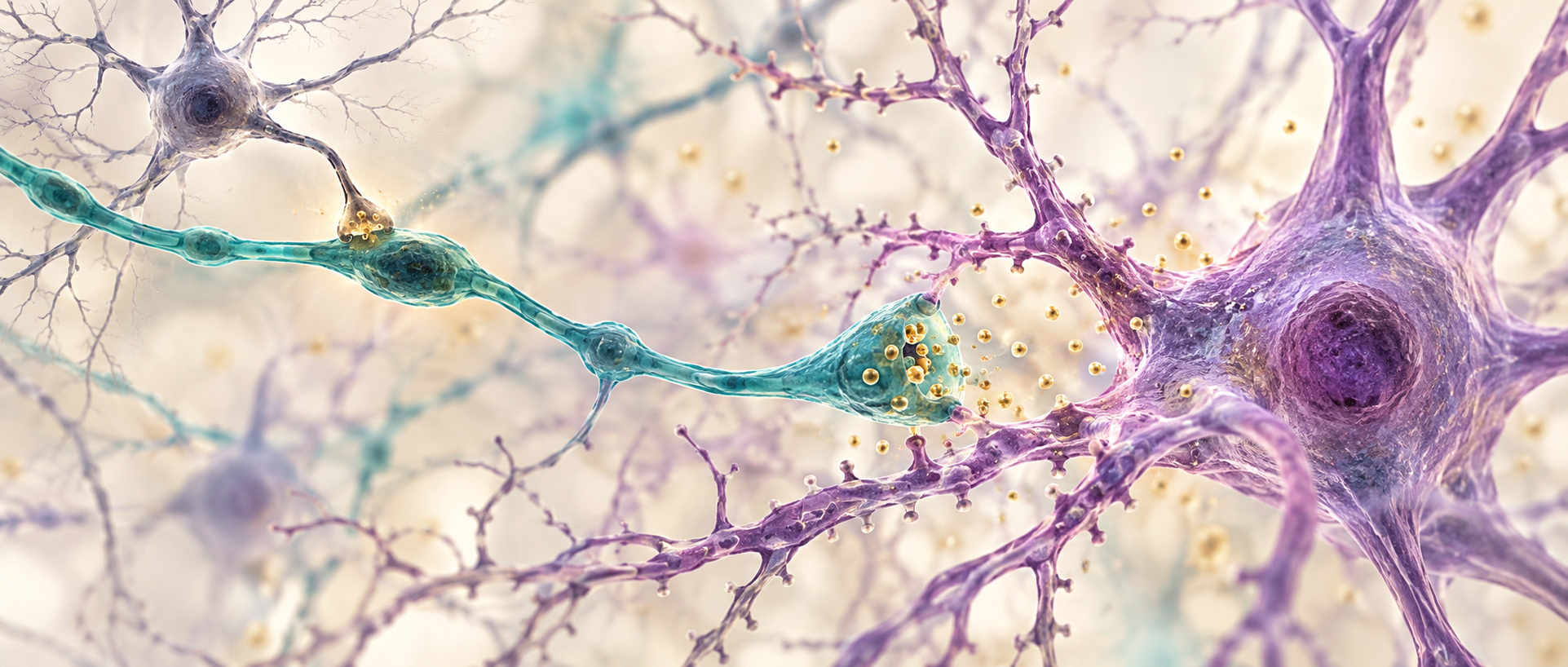
Nigral dopamine is familiar for its role in movement, but the same cells can influence sensory responses. An Advanced Science study in male mice follows the substantia nigra pars compacta, or SNc, projection to subthalamic nucleus, or STN. Which measure changes when input falls, and does stronger input always reverse the effect? Comparing mechanical and heat stimuli, both hind paws, and nerve-injury versus Parkinsonian states reveals striking selectivity.
Reducing SNc–STN dopamine input lowers the healthy contralateral mechanical threshold. Strengthening it improves contralateral mechanical hypersensitivity in models without equivalent heat-response benefits; local D2-class effects vary by model.
Contents · 7 sections
Less dopamine lowers the contralateral mechanical threshold
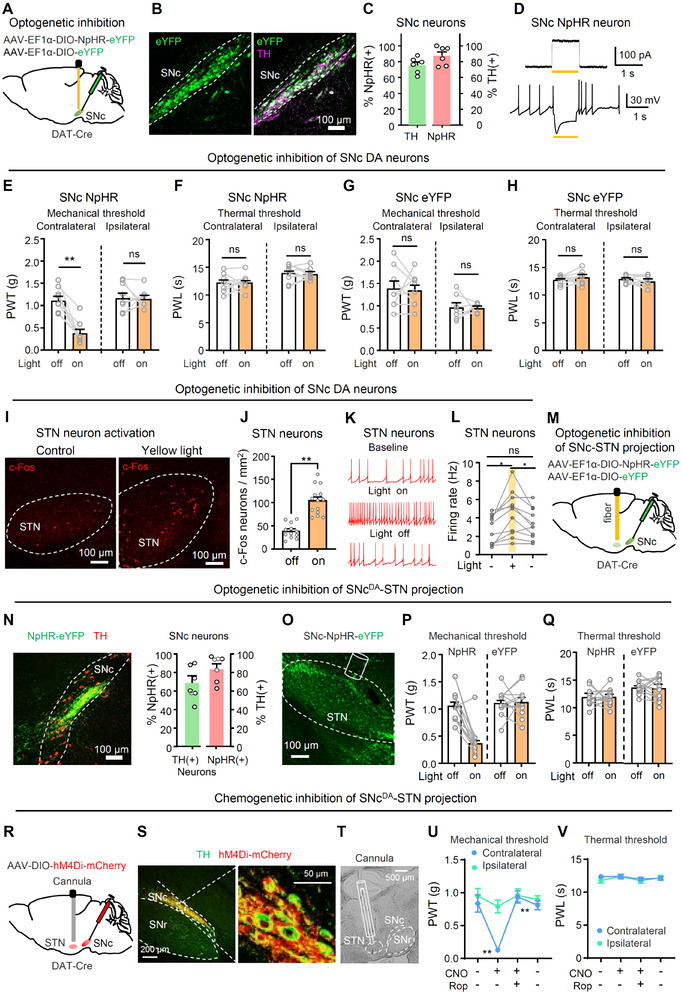
Brief SNc dopamine-cell inhibition lowers the contralateral hind-paw mechanical withdrawal threshold, without significant ipsilateral or bilateral heat-latency changes. Inhibiting their STN axons produces similar effects without significant velocity changes. This contribution emerges without waiting for long-term degeneration.
Reduced input increases firing in some STN cells and raises c-Fos in vivo. A local STN D2-class agonist attenuates the resulting mechanical hypersensitivity, unlike the D1-class agonist. Input, recipient-region activity and local receptor effects align.
Source: Ji Y et al. · Advanced science (Weinheim, Baden-Wurttemberg, Germany) · CC BY
Original figure and English caption ↗
Stronger input benefits hypersensitive states
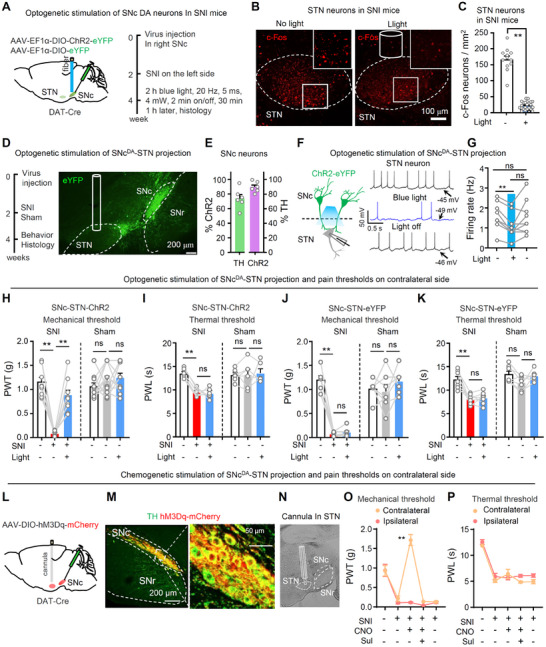
Activating SNc or its STN input does not significantly raise mechanical thresholds or heat latencies in healthy and sham mice. In capsaicin and spared-nerve-injury conditions, stronger input attenuates contralateral mechanical hypersensitivity without equivalent heat improvement. Benefit depends on the preexisting state.
Stimulating dopamine terminals reduces firing in some STN cells without rapid currents locked to each light pulse, suggesting slower modulation rather than pulse-by-pulse transmission. Local terminal chemogenetic activation also improves SNI mechanical responses, while local D2-class blockade weakens the benefit.
Source: Ji Y et al. · Advanced science (Weinheim, Baden-Wurttemberg, Germany) · CC BY
Original figure and English caption ↗
Cell bodies and terminals respond differently
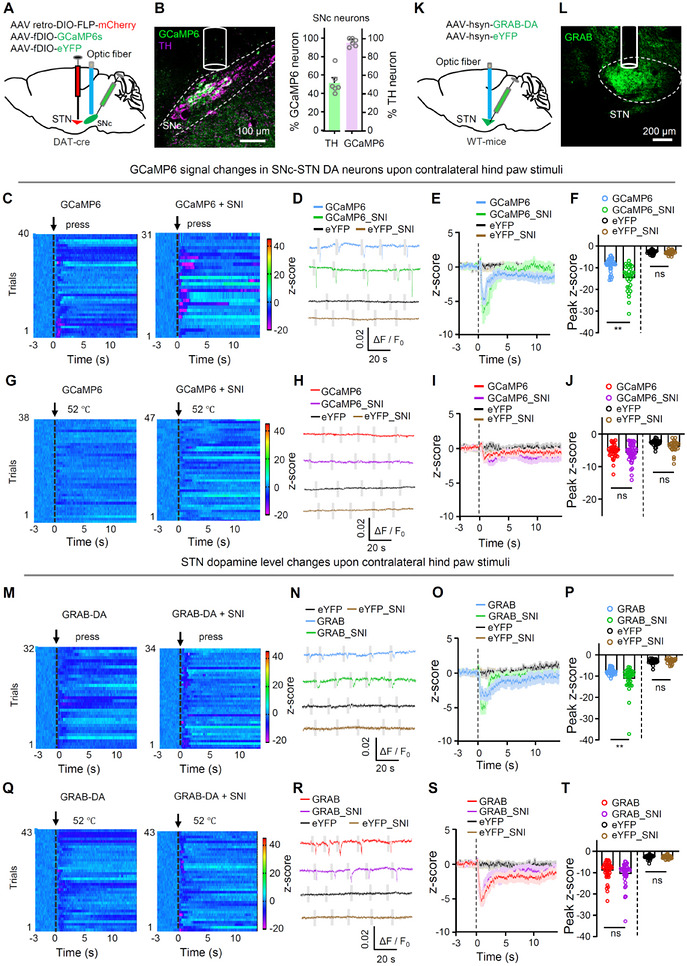
Mechanical stimulation decreases calcium in STN-projecting SNc cells, more strongly for contralateral stimulation after SNI; heat responses are less prominent. The STN dopamine sensor decreases with both mechanical and heat stimuli on either side, but only contralateral mechanical decreases become stronger after SNI.
Cell-body activity and local transmitter signals are not identical, drawing attention to the release site. STN receives other dopamine sources, and terminal release may be locally regulated. The recordings capture different levels, while contralateral mechanical changes stand out in both.
Source: Ji Y et al. · Advanced science (Weinheim, Baden-Wurttemberg, Germany) · CC BY
Original figure and English caption ↗
Local receptor effects change after nigral damage
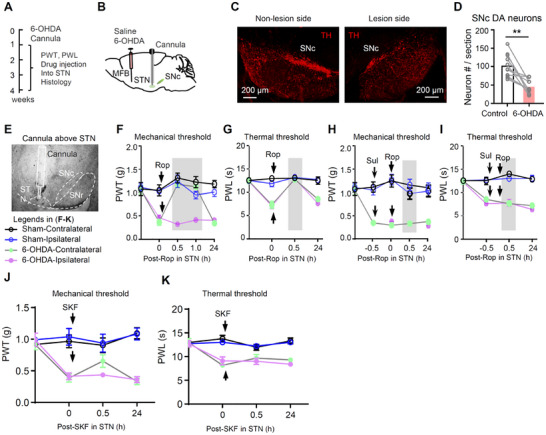
Following 6-OHDA Parkinsonian damage, nigral dopamine cells decrease and many stimulus-evoked STN dopamine drops become smaller; the contralateral heat comparison is nonsignificant. This differs from the enhanced mechanical drop after SNI. Reduced supply may limit the signal available for further suppression.
A local D2-class agonist raises the contralateral mechanical threshold and bilateral heat latencies in this model, whereas SNI benefits are mainly mechanical. D1-class mechanical changes are nonsignificant. Degeneration and peripheral injury create different contexts for the same local receptor manipulation.
Source: Ji Y et al. · Advanced science (Weinheim, Baden-Wurttemberg, Germany) · CC BY
Original figure and English caption ↗
Which STN population receives the input?
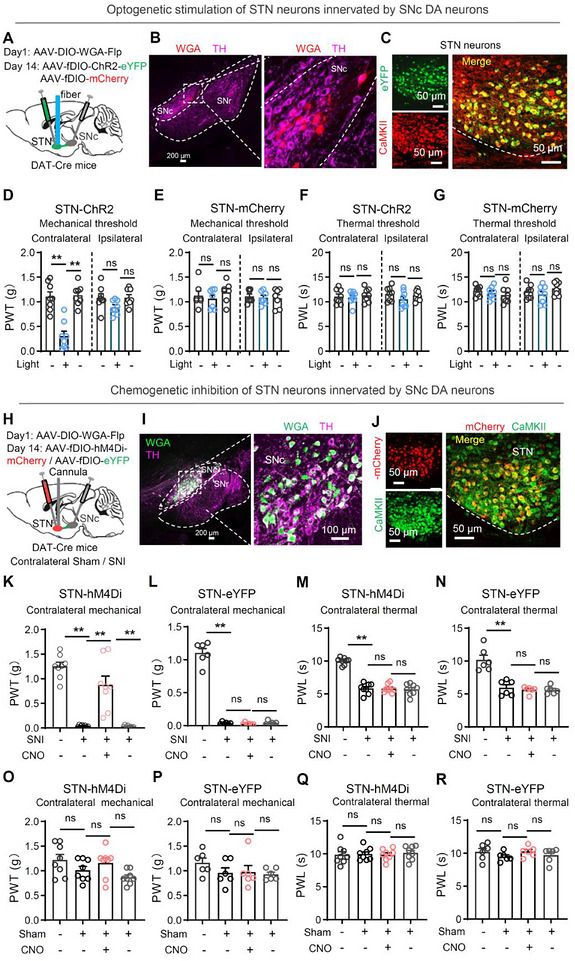
Transsynaptic labeling identifies SNc-input-associated STN cells. Their activation lowers the healthy contralateral mechanical threshold without significant ipsilateral or heat changes. Inhibition improves the contralateral threshold after SNI, but not heat hypersensitivity or sham measures, matching the input’s mechanical selectivity.
Source: Ji Y et al. · Advanced science (Weinheim, Baden-Wurttemberg, Germany) · CC BY
Original figure and English caption ↗
SNr contributes to mechanically evoked dopamine changes
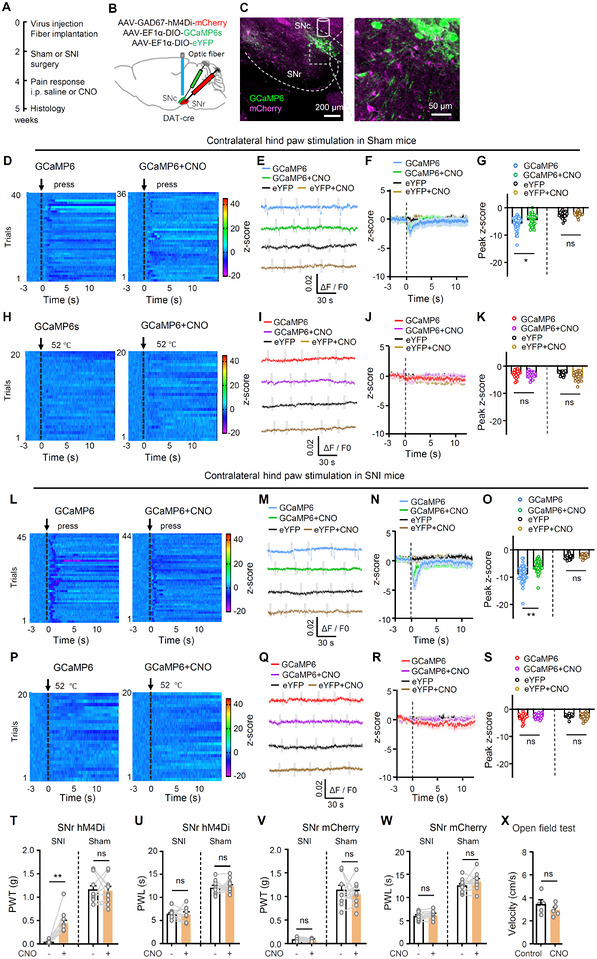
Upstream, SNr GABA cells can inhibit STN-projecting SNc neurons. Suppressing the SNr population weakens mechanically evoked SNc calcium decreases and improves SNI mechanical thresholds without significant heat benefits. Upstream inhibition, nigral responses and STN-related mechanical behavior show linked changes.
Source: Ji Y et al. · Advanced science (Weinheim, Baden-Wurttemberg, Germany) · CC BY
Original figure and English caption ↗
One transmitter does not imply one fixed effect
The study places dopamine modulation within a circuit and bodily state. Mechanical and heat responses, ipsilateral and contralateral measures, and nerve injury versus nigral damage do not change together. In male mice, SNc–STN effects are prominently mechanical, while local D2-class effects broaden with model state. Circuit function depends on source, target and context.