Why do pain-like responses weaken with a threat odor? An inhibitory route from olfactory cortex to thalamus
A male-mouse study follows anterior piriform cortex–mediodorsal thalamus, showing how an odor-related defensive state can regulate stimulus responses through inhibitory output.
The same stimulus need not elicit the same response in different states. What happens to injury-related behavior during a threat? A Nature Communications study uses the synthetic threat-associated odor 2MT to follow connections from anterior piriform cortex to thalamus in male mice. Inhibitory olfactory cells, downstream excitability and behavior reveal an intersection of sensory processing and defense: the odor leaves the stimulus unchanged but can alter the animal’s response.
Odor-recruited anterior piriform populations contribute to response regulation through inhibitory output to mediodorsal thalamus, with distinct roles in baseline sensitivity and odor-dependent changes.
Contents · 7 sections
An odor changes responses to the same stimulus
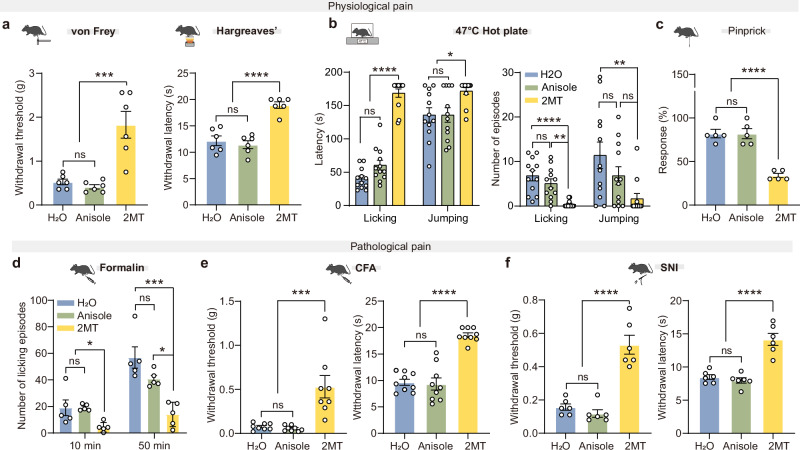
With 2MT, uninjured mice have higher mechanical-response thresholds, longer thermal-response latency and fewer nocifensive behaviors. Sensitivity also weakens in inflammatory and nerve-injury models. Neutral odor does not produce the same effects, directing attention to the state elicited by the odor rather than odor exposure alone.
Grip strength, paw-withdrawal kinematics, balance and coordination show no decline in the tested motor abilities. Threat odor also elicits freezing and other defensive behaviors. Responses are therefore part of a broader state, prompting the search for matching neural changes and the olfactory cells that communicate with stimulus-processing regions.
Source: Jia WB et al. · Nature communications · CC BY-NC-ND
Original figure and English caption ↗
Odor responses differ within anterior piriform cortex
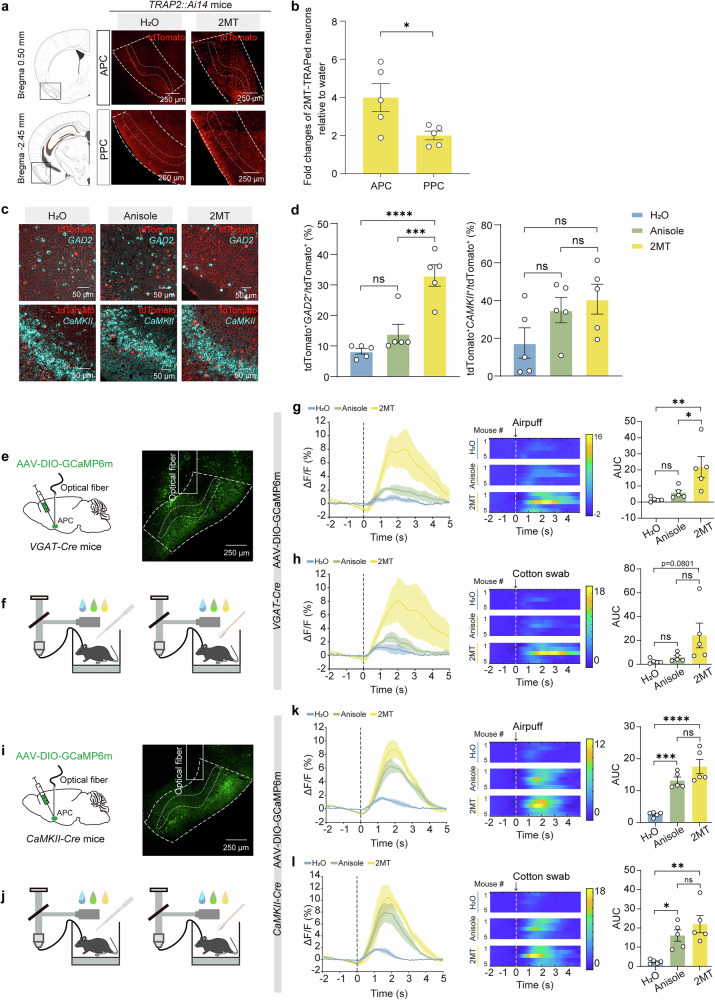
Anterior piriform cortex (APC) shows greater activity-related recruitment than posterior piriform cortex. Inhibitory cells make up a larger share of recruited cells, while the excitatory-label fraction does not clearly change. Inhibitory calcium signals increase in some presentation conditions, although one cotton-presentation area comparison is nonsignificant.
Excitatory cells also respond to odors, with no significant direct threat-versus-neutral difference in the displayed comparisons. Several responses coexist, while inhibitory populations become the focus of functional work. Combining cell identity with odor recruitment raises a more precise question: do the whole population and the threat-recruited subset have the same role?
Source: Jia WB et al. · Nature communications · CC BY-NC-ND
Original figure and English caption ↗
Baseline and odor-dependent regulation reveal different jobs
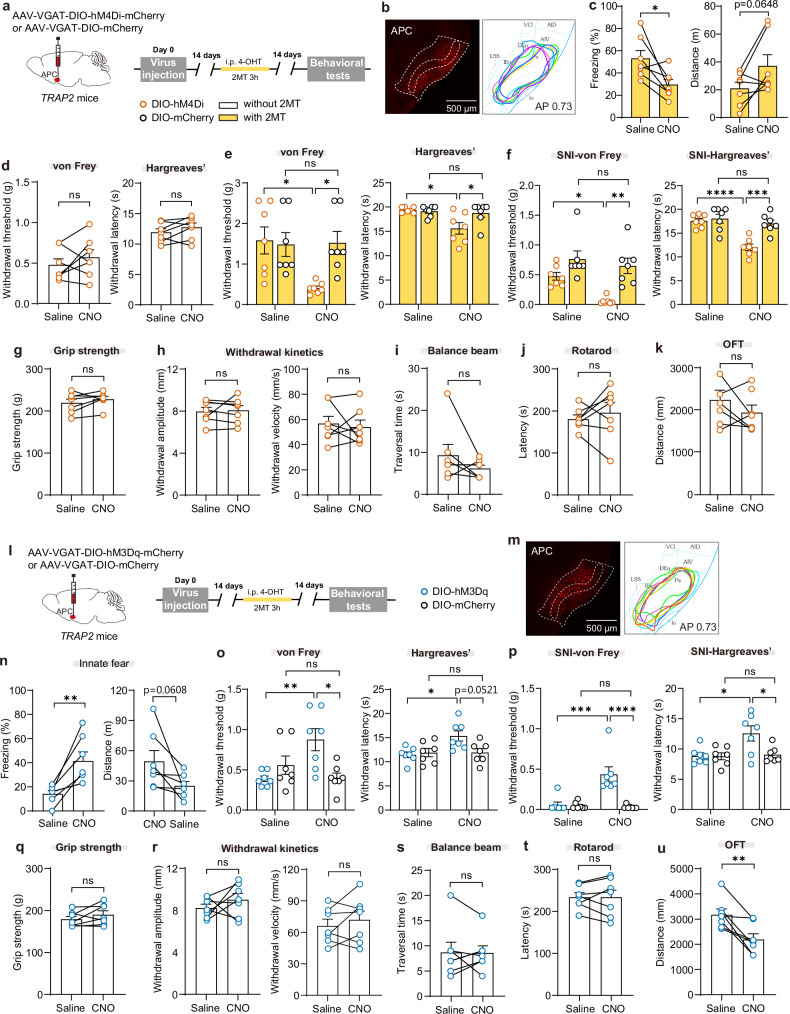
Reducing the broad APC inhibitory population increases baseline sensitivity and place avoidance and weakens odor-related response reduction. Increasing activity strengthens freezing and reduces several pain-like responses, although the baseline mechanical comparison with controls is nonsignificant. The broader group participates in both everyday sensitivity and the odor-related state.
The smaller odor-recruited ensemble differs. Reducing its activity leaves baseline mechanical and thermal responses unchanged but weakens the odor effect. Increasing it produces freezing and improves some responses, while the baseline thermal control comparison remains nonsignificant and open-field distance falls. The finer population definition highlights the odor-dependent contribution.
Source: Jia WB et al. · Nature communications · CC BY-NC-ND
Original figure and English caption ↗
Olfactory inhibition meets injury-related excitability
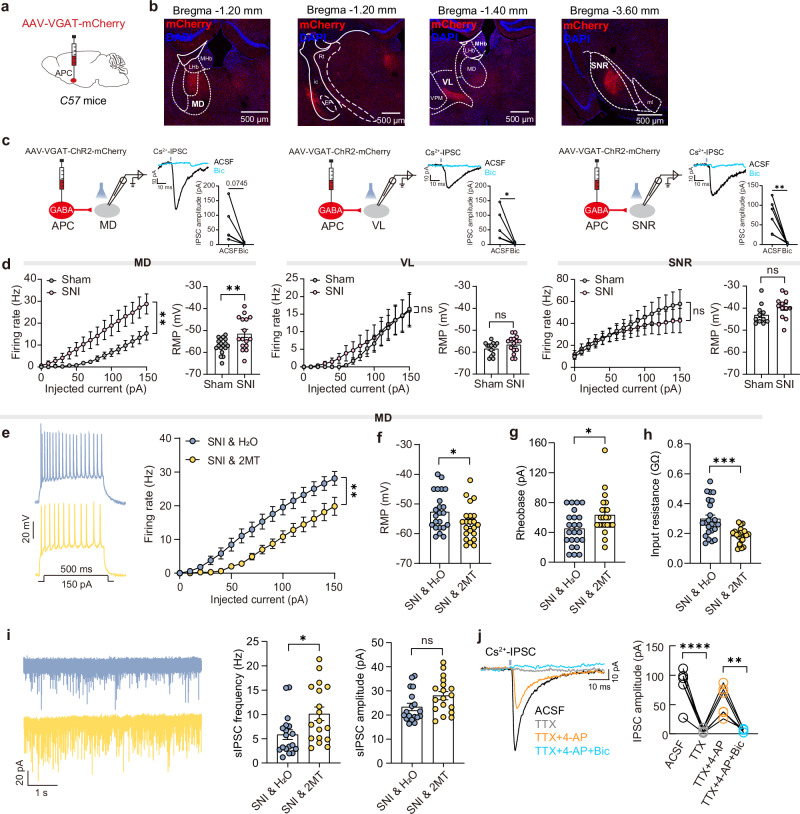
APC inhibitory cells have several targets. After nerve injury, mediodorsal thalamus (MD) shows increased excitability in firing and membrane properties, unlike the other two tested targets. With threat odor, MD hyperexcitability weakens and spontaneous inhibitory currents occur more frequently without a clear change in their amplitude.
Tracing and direct electrophysiological records support inhibitory APC–MD input. One earlier receptor-block comparison is nonsignificant, while subsequent direct recordings provide clearer connectivity evidence. Olfactory cortex connects with a thalamic node altered by injury, making local inhibition a concrete link to the behavioral changes.
Source: Jia WB et al. · Nature communications · CC BY-NC-ND
Original figure and English caption ↗
Watching responses change near MD
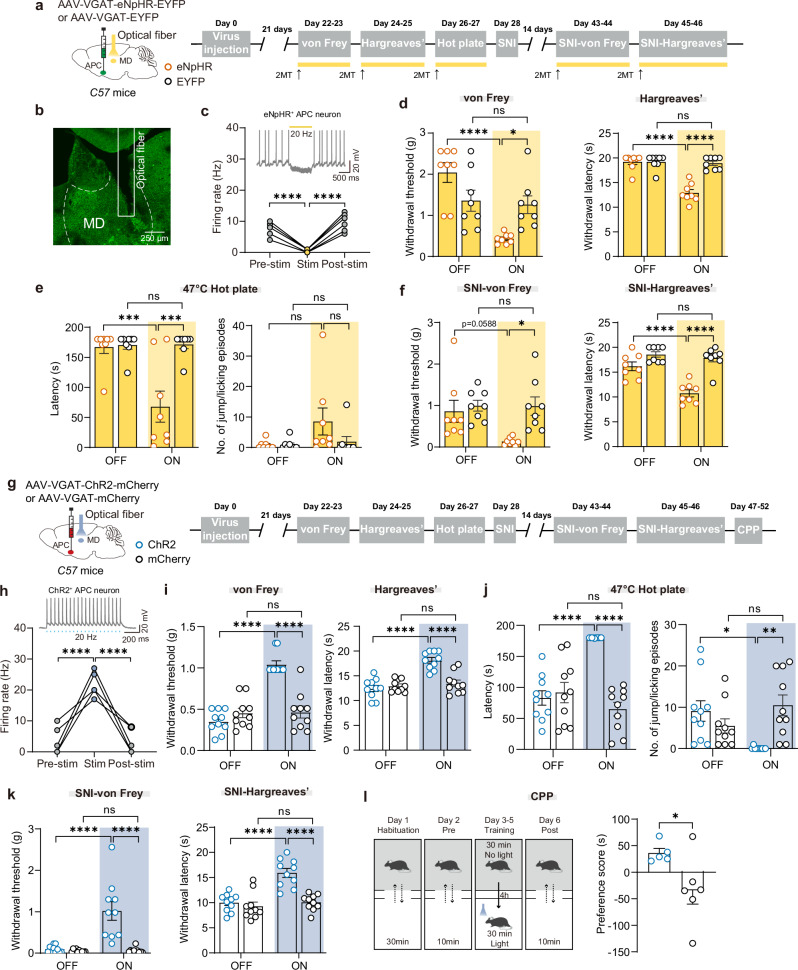
Reducing MD-projecting APC activity weakens the odor effect and its corresponding improvement in MD excitability. Changing source-terminal activity locally within MD produces directionally consistent results. Population, output location and downstream activity converge on the contribution of a particular connection.
Not every within-group mechanical comparison under local inhibition is significant. Increasing terminal activity produces preference for the paired location in nerve-injured mice but not in uninjured animals. Reduced responses and place choice show that the output’s behavioral significance depends on the pain-like state rather than a general reward effect.
Source: Jia WB et al. · Nature communications · CC BY-NC-ND
Original figure and English caption ↗
Does a pain-like state change odor defense?
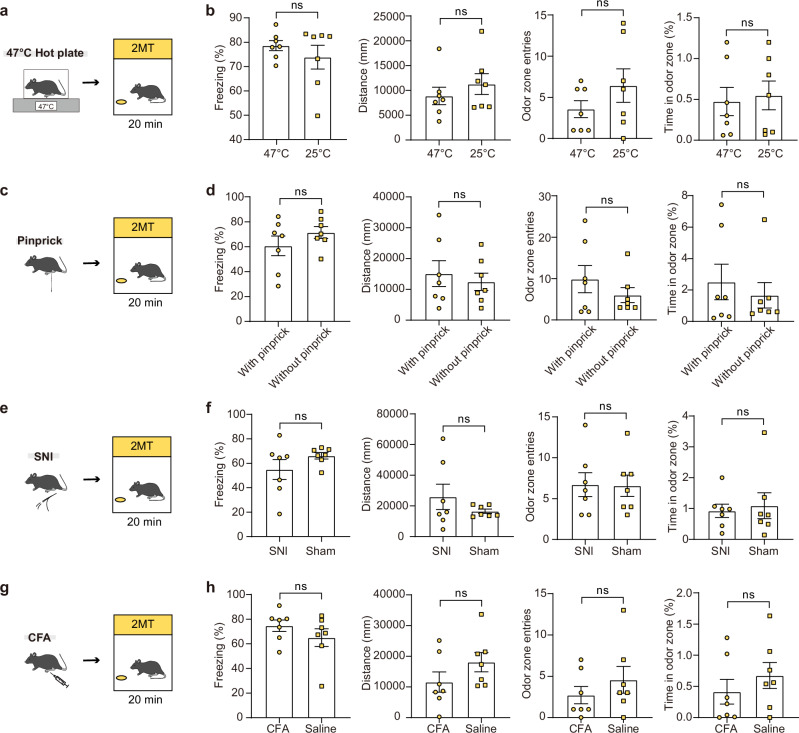
The team reverses the question: do acute stimulation, inflammation or nerve injury change threat-odor behavior? Freezing, distance and odor-zone measures show no significant group differences. The interaction is asymmetric under these conditions: odor state changes stimulus responses, while existing pain-like states do not similarly alter odor defense.
Source: Jia WB et al. · Nature communications · CC BY-NC-ND
Original figure and English caption ↗
Long-range inhibition links two functions
This male-mouse study makes olfactory regulation of sensitivity more concrete. Odor-associated inhibitory populations link defensive state with thalamic activity, while the broad population and odor-recruited ensemble have different roles. State-dependent sensory processing appears both in behavior and in neural changes along a long-range inhibitory output.