When persistent itch makes exploration more cautious
A thalamic–septal–hypothalamic connection contributes to avoidance in chronic-itch models, with scratching and anxiety-like behavior regulated at different circuit stages.
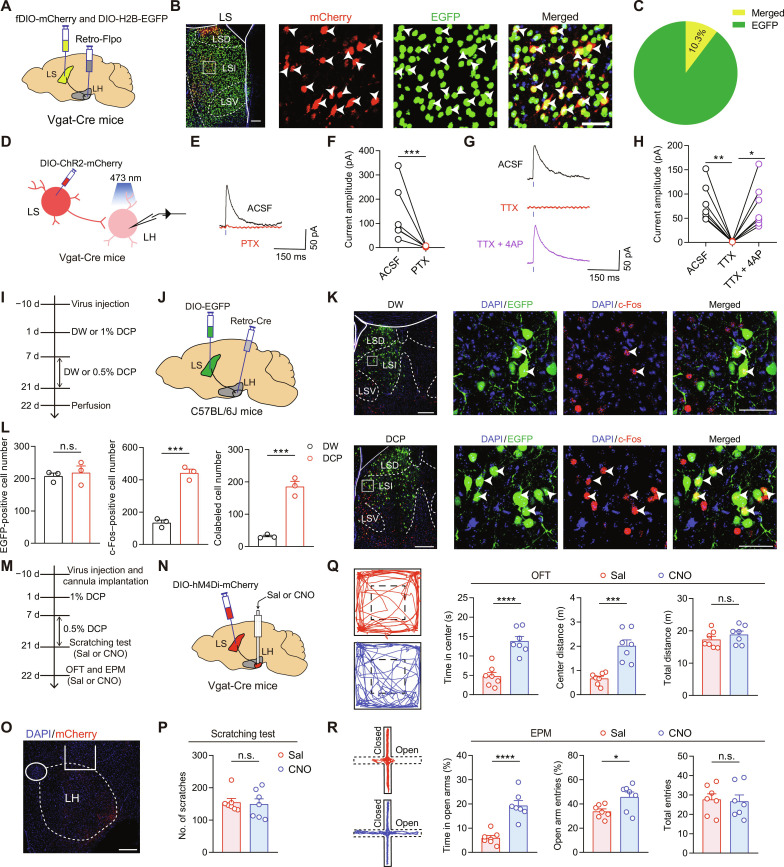
Itch urges an animal to scratch, but persistent itch may reach beyond the skin. Repeated scratching can accompany changes in exploration of exposed spaces. A study published in Science Advances on August 16, 2024 traces this relationship in chronic-itch mice. Connections among the thalamic nucleus reuniens, lateral septum and lateral hypothalamus contribute to anxiety-like avoidance. Manipulations at different points either reduce both scratching and avoidance or improve avoidance alone, revealing related yet distinguishable functions.
Chronic itch accompanies stronger excitatory Re-to-LS transmission. Inhibitory LS-to-LH inputs and the Re–LS–LH connection contribute to avoidance, with no significant benefit from corresponding manipulations in restraint-stress models.
Contents · 8 sections
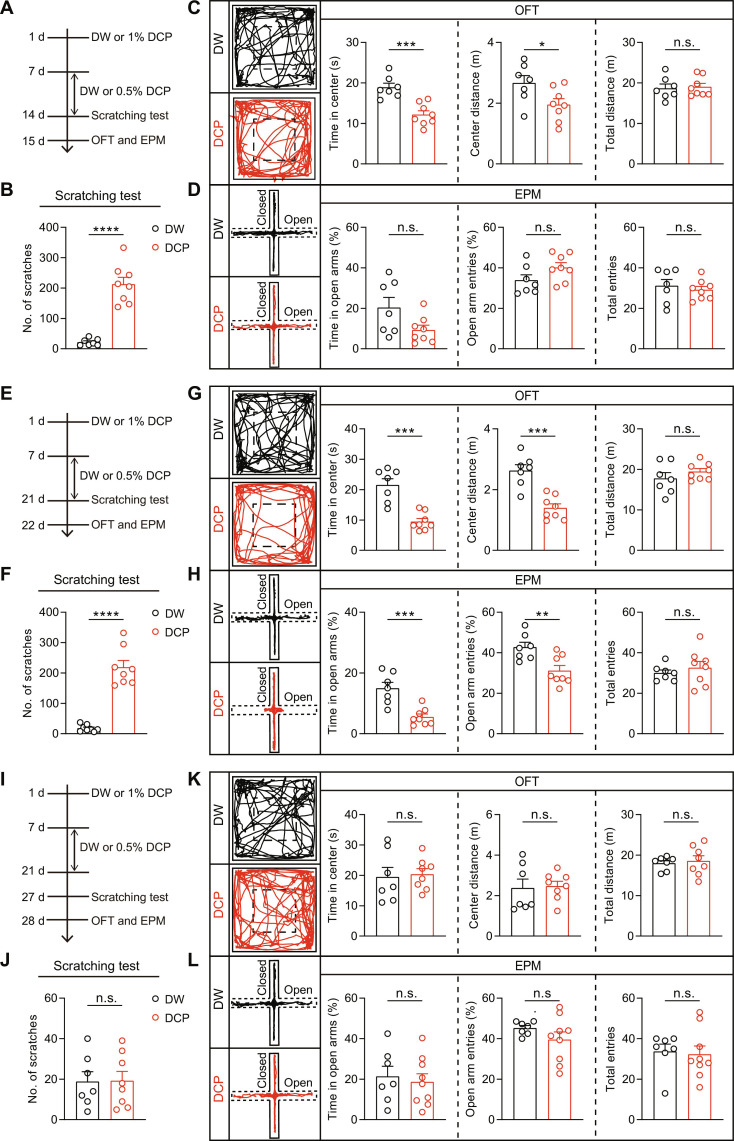
Persistent itch accompanies less exploration of exposed spaces
Repeated scratching appeared in the DCP skin-treatment model. After one week of challenge, mice spent less time in the open-field center, while elevated-plus-maze open-arm measures did not significantly change. After two weeks, avoidance was evident in both tasks, without significant differences in measured total locomotion.
One week after challenge ended, group differences in scratching and measured avoidance were no longer significant. Reducing itch-related spinal input also improved both outcomes, connecting persistent itch with avoidance while showing their dependence on model state.
Source: Guo SS et al. · Science advances · CC BY-NC
Original figure and English caption ↗
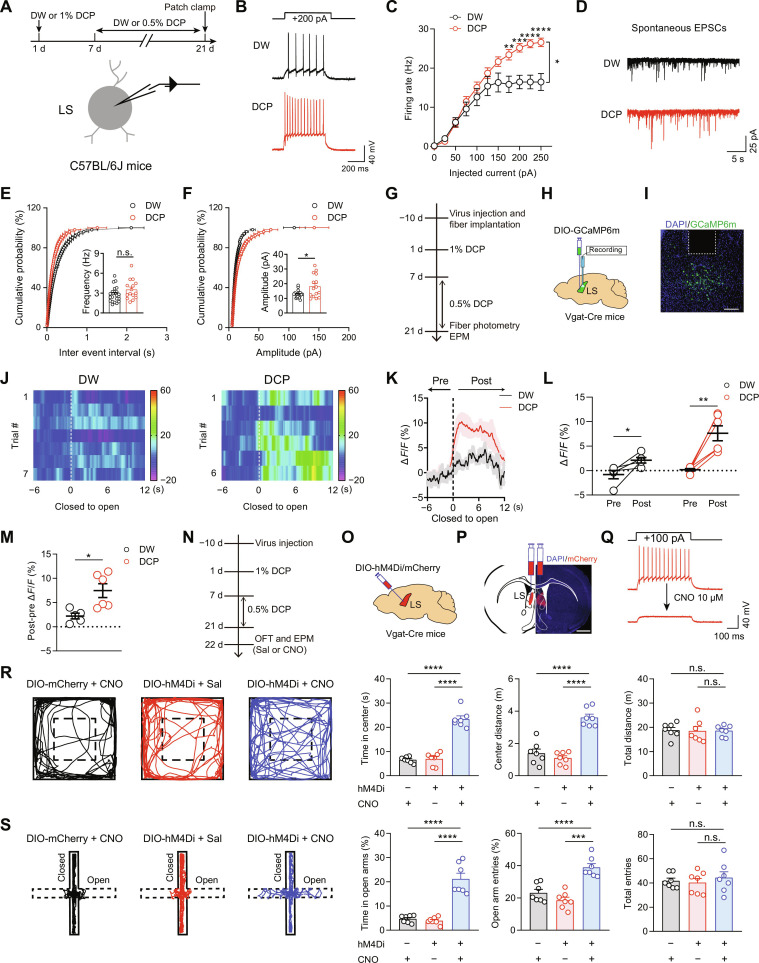
Septal activity rises during open-arm entry
LS GABAergic neurons fired more readily under chronic-itch conditions. Spontaneous excitatory-current amplitude increased without a significant frequency change. During closed-to-open-arm transitions, calcium responses were stronger in itch-model mice, connecting altered cellular state with exploration.
Inhibiting these cells improved center time and open-arm exploration without significantly reducing scratching. Aligning population activity with individual scratching onsets also revealed no clear response change, emphasizing involvement in accompanying avoidance rather than each scratching movement.
Source: Guo SS et al. · Science advances · CC BY-NC
Original figure and English caption ↗
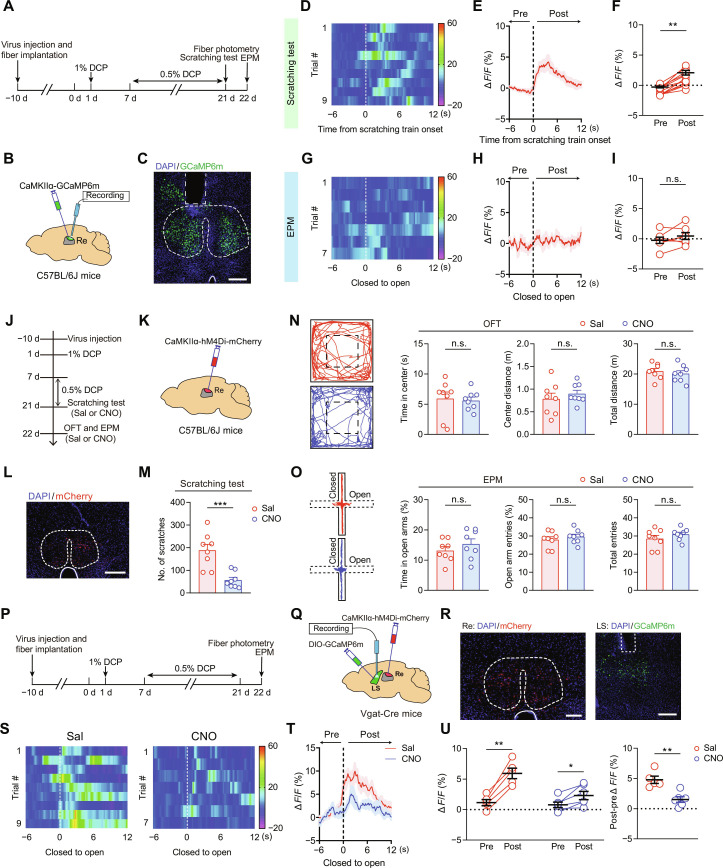
An upstream population relates differently to scratching
Upstream Re excitatory neurons increased activity at scratching onset but did not significantly respond to open-arm entry. Inhibiting the broader Re population reduced scratching without significantly improving measured avoidance in either behavioral task.
Re inhibition nevertheless attenuated LS responses during open-arm entry. An upstream population can influence downstream activity while broad regional manipulation and a defined projection produce different behavioral outcomes, motivating closer study of the Re-to-LS connection.
Source: Guo SS et al. · Science advances · CC BY-NC
Original figure and English caption ↗
The Re-to-LS connection strengthens during chronic itch
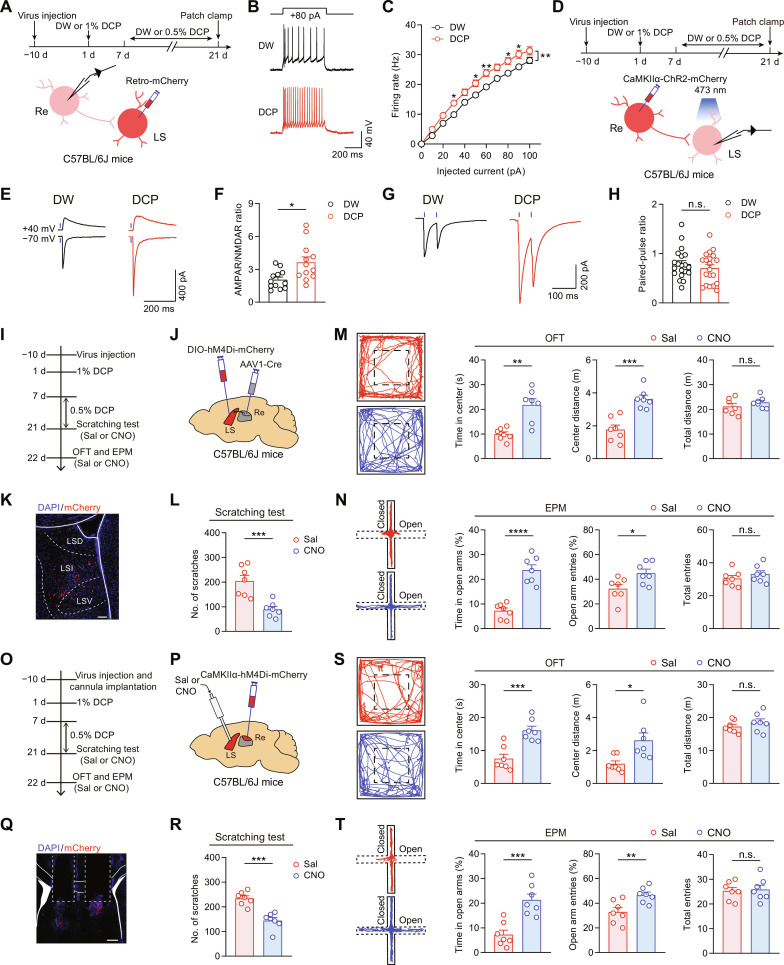
LS-projecting Re neurons fired more readily in itch-model mice. Their inputs produced a higher AMPA/NMDA current ratio in LS neurons, while paired-pulse ratio did not significantly change, implicating adaptation of a defined excitatory connection.
Inhibiting Re-innervated LS cells or locally suppressing Re terminals in LS reduced scratching and improved exposed-space exploration without significant changes in total locomotion. These projection-level outcomes differed from broad Re inhibition and refined the link between sensation and behavior.
Source: Guo SS et al. · Science advances · CC BY-NC
Original figure and English caption ↗
Restraint-related avoidance follows a different pattern
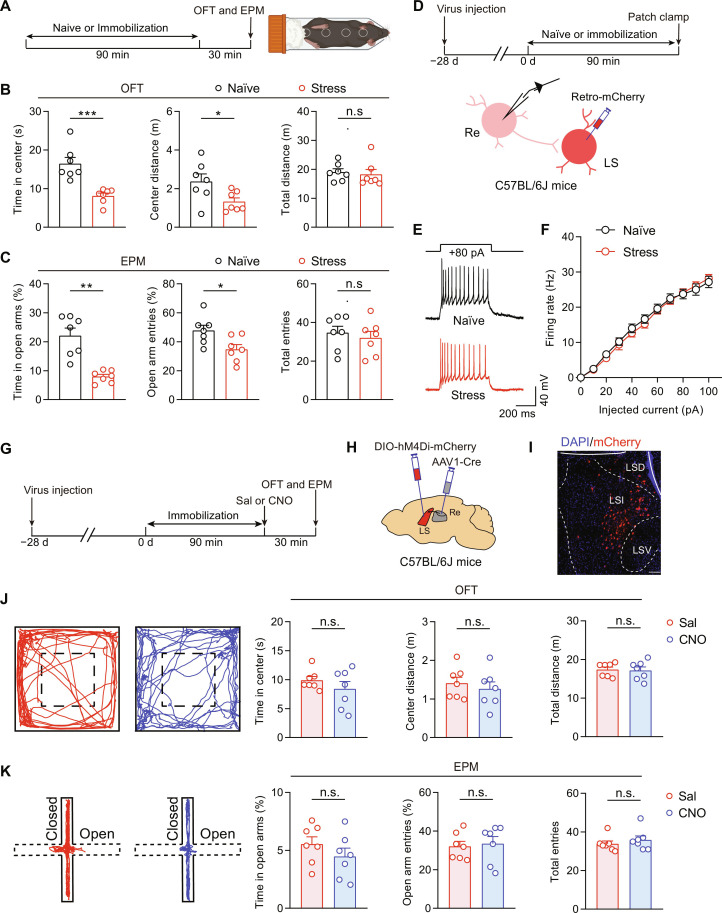
Acute and repeated restraint also reduced exposed-space exploration, but LS-projecting Re excitability did not significantly increase. Inhibiting the corresponding connection did not significantly improve avoidance, separating these stress conditions from the chronic-itch model.
In contrast, the tested prefrontal-to-LS manipulation improved acute-restraint avoidance without significantly changing DCP-related scratching or avoidance. Similar behavioral outcomes can involve different upstream inputs, making context part of the circuit account.
Source: Guo SS et al. · Science advances · CC BY-NC
Original figure and English caption ↗
LS sends inhibitory signals to the hypothalamus
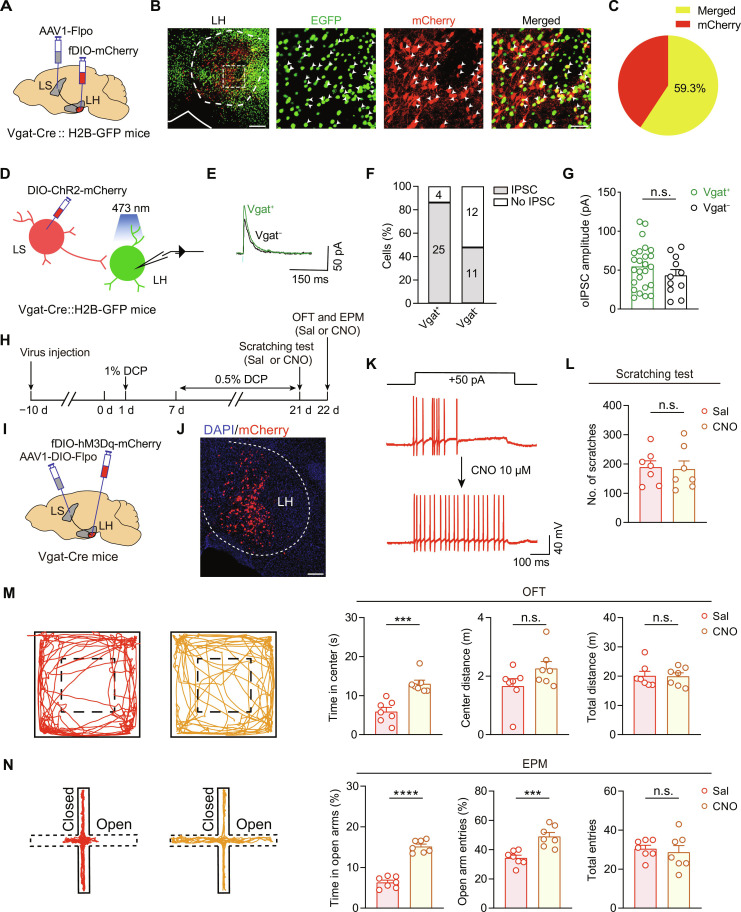
LS GABAergic cells form direct inhibitory connections with LH neurons. LH-projecting LS cells showed stronger activation labeling during chronic itch. Suppressing their terminals in LH improved center time and open-arm exploration without significantly changing scratching.
Relative to Re-to-LS manipulation, this downstream intervention separated scratching from avoidance more clearly. Mice continued to scratch while exploring the tested exposed spaces more, revealing different outcomes along connected stages of the circuit.
Source: Guo SS et al. · Science advances · CC BY-NC
Original figure and English caption ↗
Inhibitory cells connect to other inhibitory cells
Many LH cells receiving LS inputs were themselves GABAergic. Functional recordings found a higher connected fraction among GABAergic cells, without a significant difference in inhibitory-current amplitude. Non-GABAergic cells also received inputs, indicating a preference rather than exclusive connectivity.
Activating LH cells receiving LS GABAergic inputs increased center time and open-arm time without significantly changing scratching. These findings relate inhibitory LS inputs to avoidance regulation. Disinhibition of other LH cells is a proposed further mechanism.
Source: Guo SS et al. · Science advances · CC BY-NC
Original figure and English caption ↗
Connecting both ends identifies an avoidance-regulation point
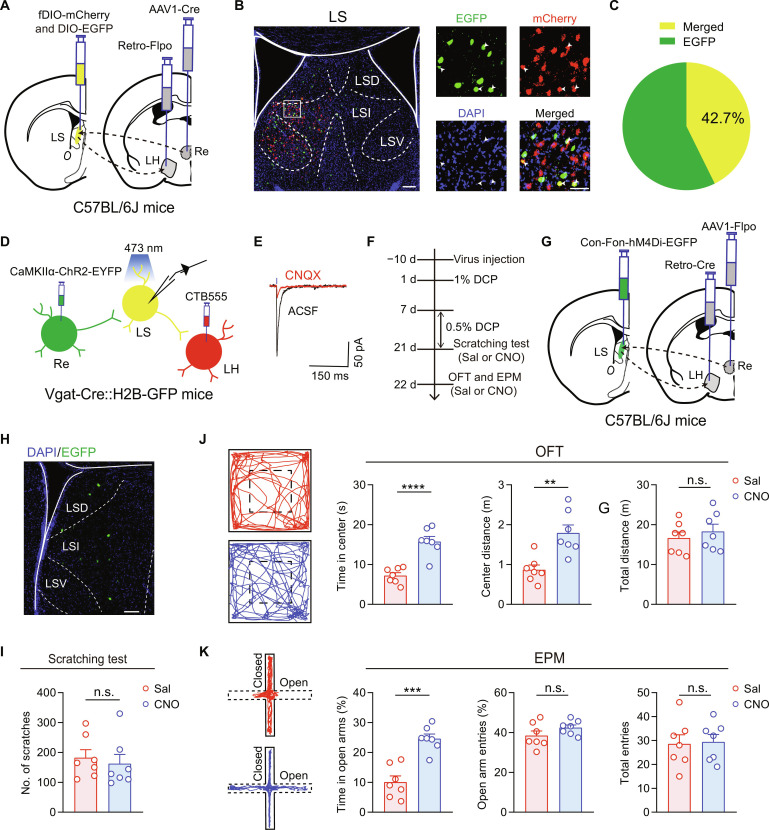
The study identified LS cells receiving Re input and projecting to LH. These cells receive excitatory Re input. Inhibiting them increased open-field center time and distance and maze open-arm time, without significantly changing scratching or open-arm entry count.
A defined Re–LS–LH relationship thus links persistent itch with cautious exploration in this mouse model. The work provides a circuit-level account while leaving questions about ascending input to Re, the molecular subgroups involved in LS and their behavior in other itch conditions.
Source: Guo SS et al. · Science advances · CC BY-NC
Original figure and English caption ↗