When chronic pain accompanies memory changes, what happens in prefrontal cells?
After nerve injury in male mice, layer-five GABAergic cells in prelimbic cortex become more active while pyramidal output weakens. Optical and ATF4 experiments reveal local circuit clues.
Nerve-injured animals can show altered spatial exploration and object recognition alongside heightened mechanical and thermal sensitivity. Could the changes meet at one neural node? In prelimbic layer five, researchers found more active GABAergic cells and less excitable pyramidal cells, then tested their behavioral contribution.
CCI increases local GABAergic activity and limits pyramidal output. Optical inhibition of GABAergic cells improves pain-related and memory measures in injured mice, while ATF4 reduction improves several memory tasks and lowers population activity.
Contents · 6 sections
Greater stimulus sensitivity accompanies altered spatial performance
Object recognition and spatial learning involve different cues and demands. Using several tasks allowed the team to examine novelty exploration, maze-arm alternation and finding a target location, giving a broader picture than one score alone.
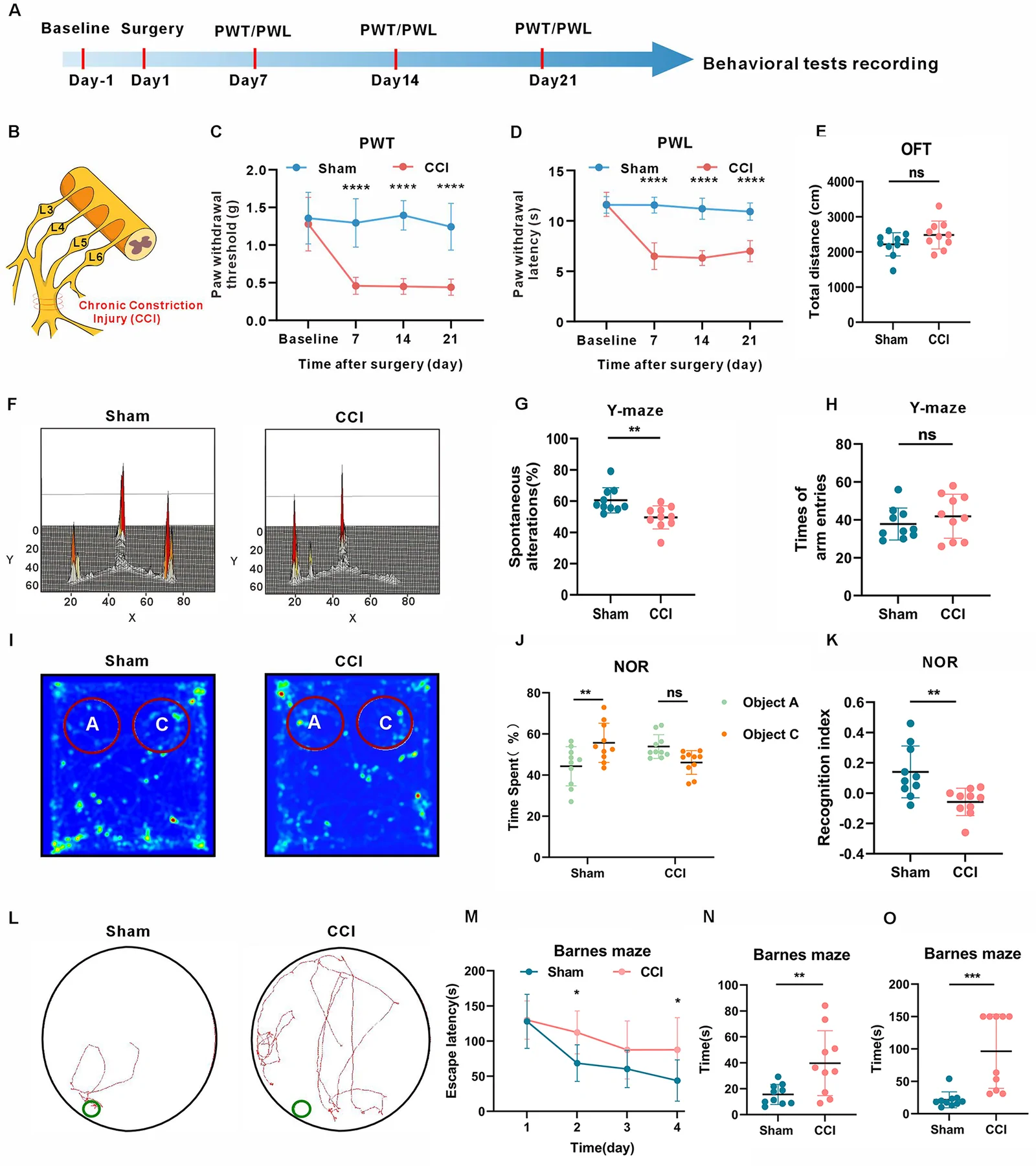
After chronic constriction injury of the sciatic nerve, mechanical thresholds and thermal withdrawal latency declined. Three weeks later, Y-maze alternation, novel-object recognition and Barnes-maze performance were impaired, revealing changes beyond stimulus responses.
Open-field distance and Y-maze arm entries remained comparable. The animals continued to explore but showed less alternation or recognition advantage, prompting an examination of local cortical cells involved in information output.
Source: Wang X et al. · The journal of headache and pain · CC BY-NC-ND
Original figure and English caption ↗
Neighboring populations shift in opposite directions
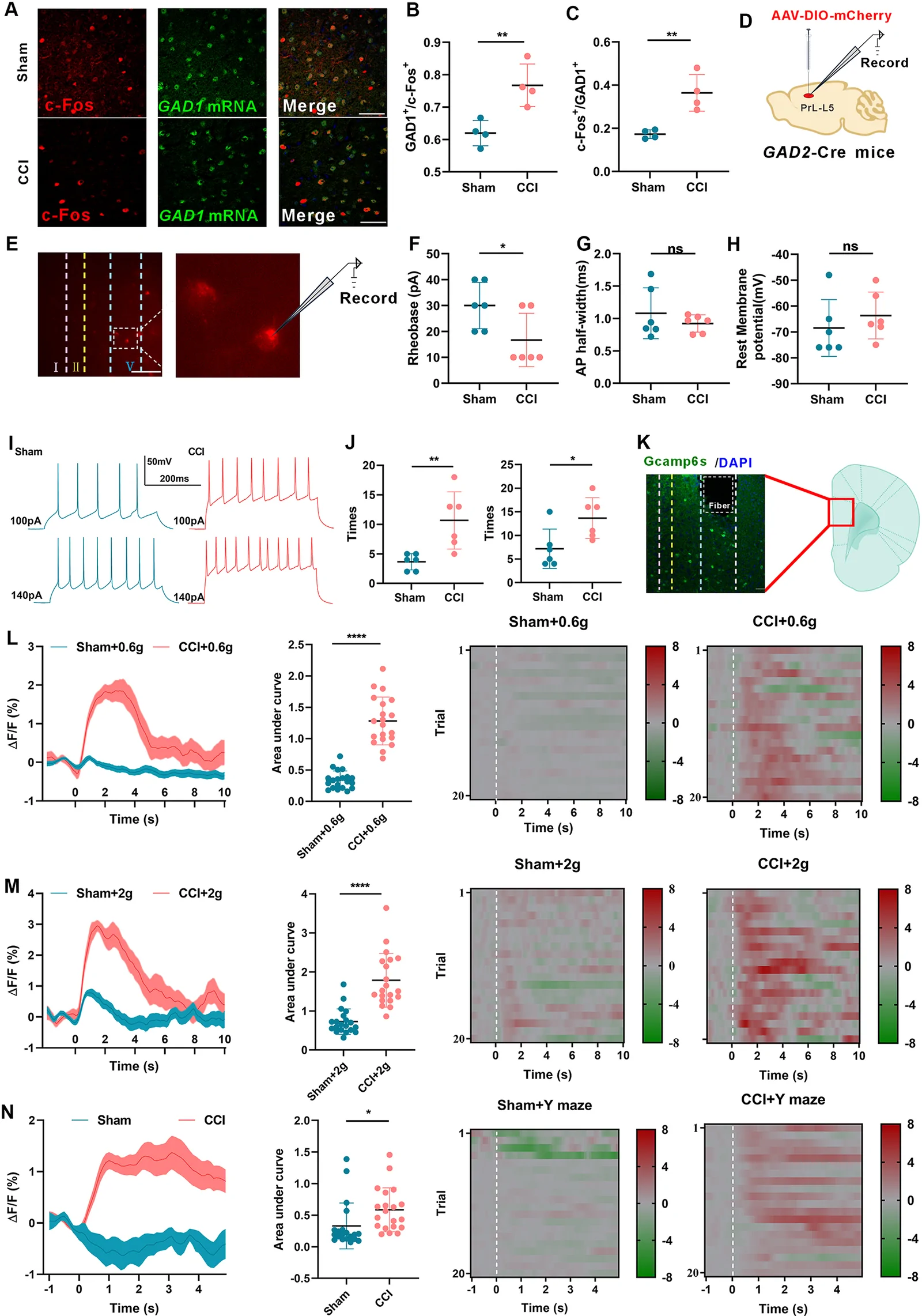
Layer-five pyramidal cells required more current to fire, produced fewer evoked spikes and received more frequent miniature inhibitory events. Spine density decreased with comparable overall dendritic complexity. GABAergic cells had lower firing thresholds, more evoked spikes and increased activity labeling.
In vivo, the GABAergic population showed stronger calcium responses to mechanical stimuli and higher transients during Y-maze testing. Resting potential and spike half-width remained comparable, with differences focused on particular excitability and response features.
Source: Wang X et al. · The journal of headache and pain · CC BY-NC-ND
Original figure and English caption ↗
What changes when GABAergic activity is reduced?
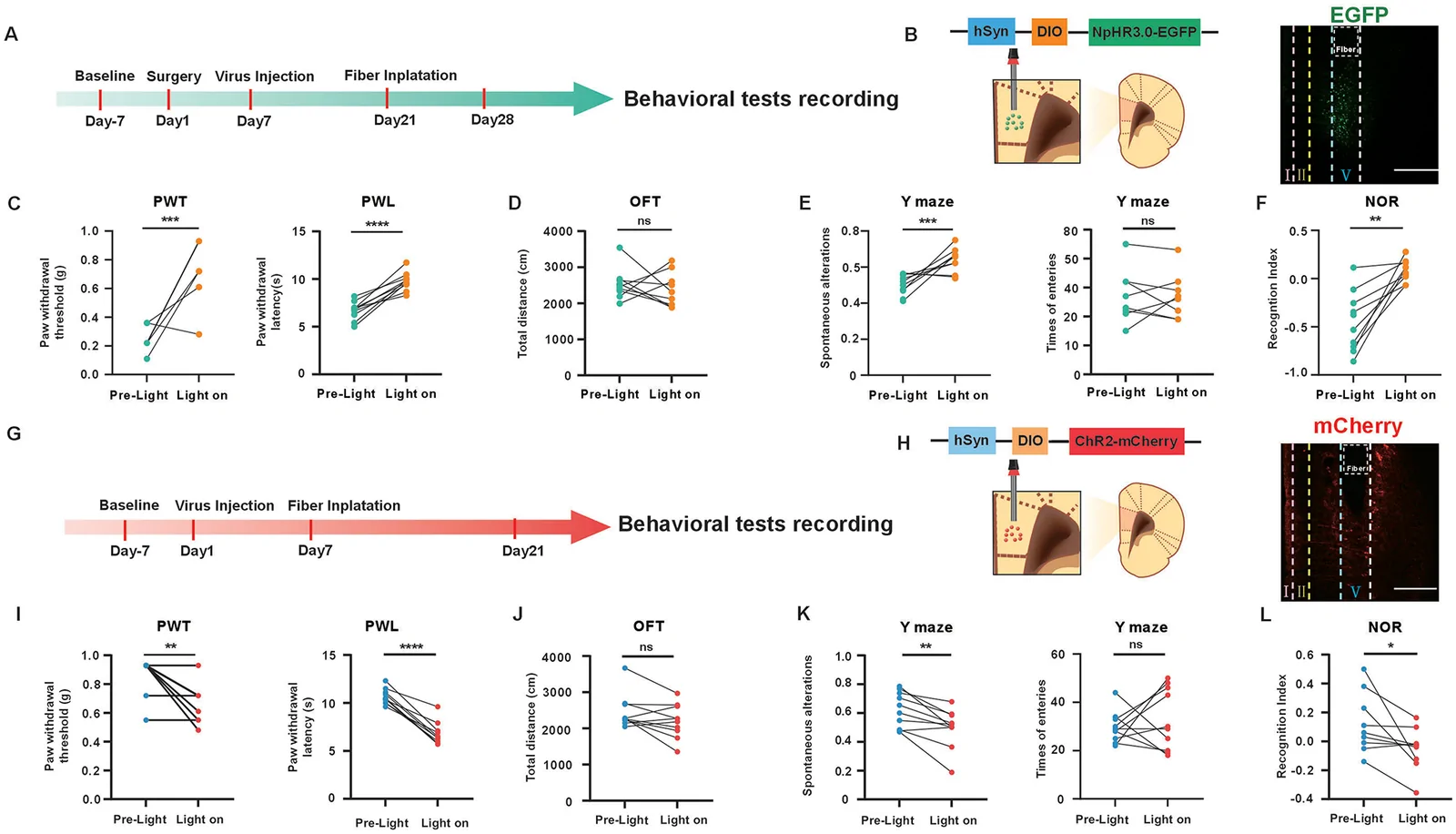
Optical inhibition of layer-five GABAergic cells in CCI mice raised mechanical thresholds and thermal latency and improved Y-maze alternation and object recognition, with comparable distance and arm entries.
Conversely, activating these cells in uninjured animals lowered thresholds and worsened the two cognitive tasks. Inhibition in injured mice and activation in normal mice extended the findings beyond correlations, with network state providing context for the effects.
Source: Wang X et al. · The journal of headache and pain · CC BY-NC-ND
Original figure and English caption ↗
Greater inhibitory input accompanies weaker cortical output
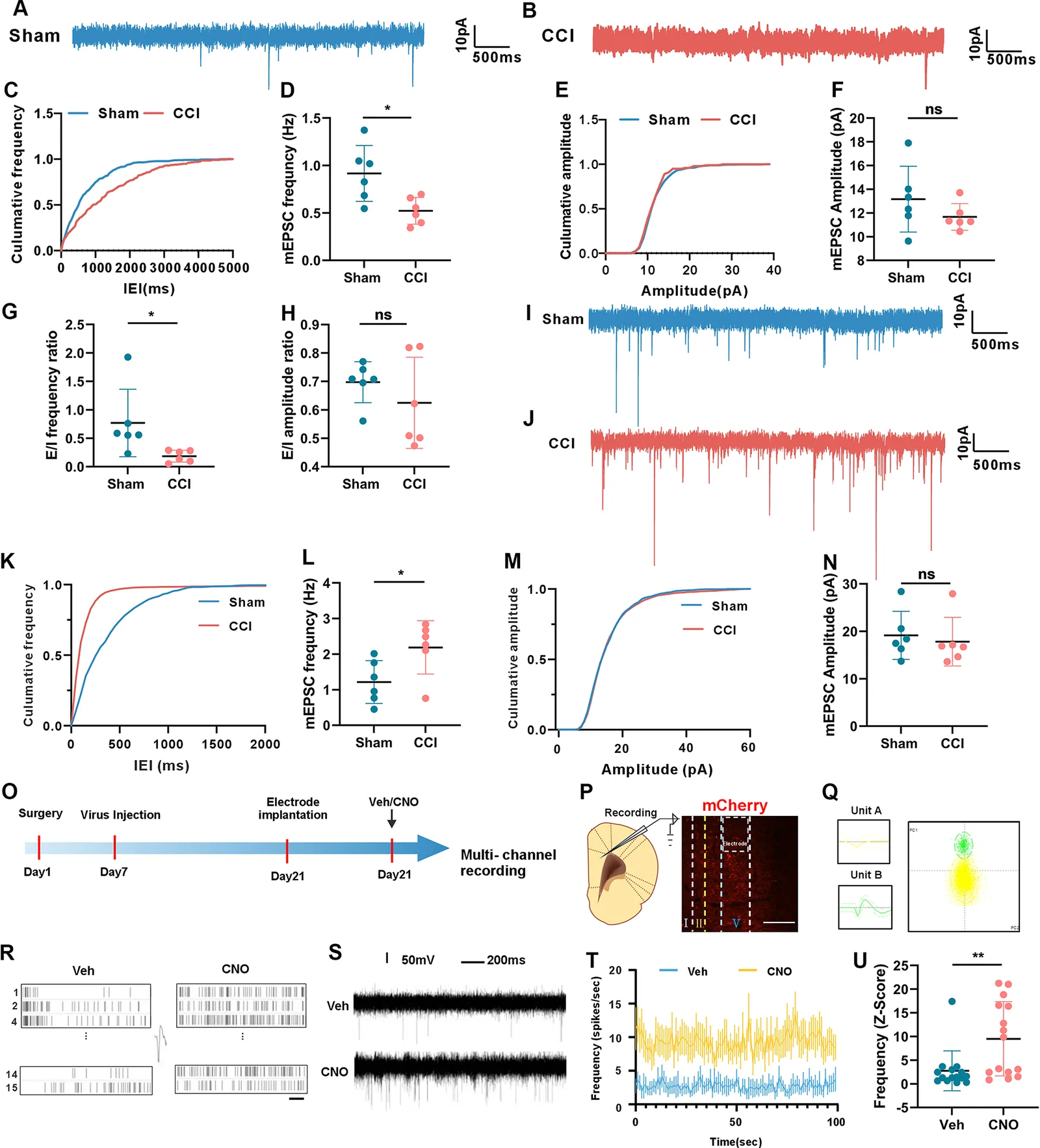
Pyramidal cells received fewer miniature excitatory events and more inhibitory events, while GABAergic cells received more excitation. Chemogenetic inhibition increased pyramidal firing in multichannel recordings, supporting a model of stronger local inhibition limiting output.
Synaptic events describe received input, firing records cellular output, and tasks animal responses. Together these layers give a cellular account of prefrontal change and motivate questions about molecular regulation after injury.
Source: Wang X et al. · The journal of headache and pain · CC BY-NC-ND
Original figure and English caption ↗
ATF4 changes localize to GABAergic cells
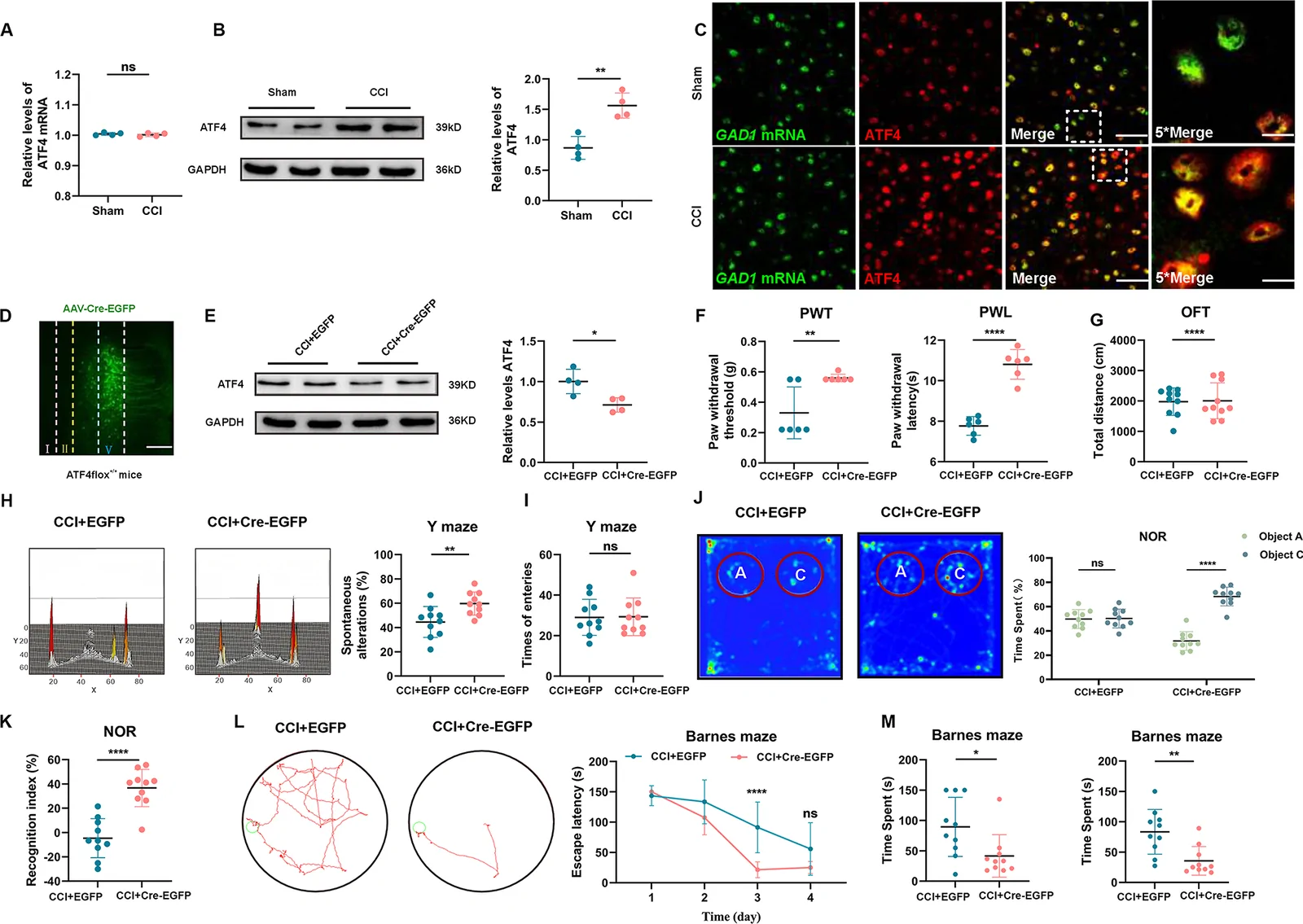
After injury, activating transcription factor 4 (ATF4) protein increased without significant mRNA change. Co-labeling localized the main rise to GABAergic cells rather than pyramidal cells, identifying a cell-specific molecular candidate despite differing protein and transcript trajectories.
Reducing ATF4 in these cells improved several memory tasks and lowered population calcium activity during Y-maze testing. The accompanying molecular, cellular and behavioral effects raise questions about how ATF4 regulates the population and cortical processing.
Source: Wang X et al. · The journal of headache and pain · CC BY-NC-ND
Original figure and English caption ↗
A local node behind co-occurring changes
Co-occurring hypersensitivity and task deficits were examined through neighboring layer-five populations. The optical and ATF4 findings make local inhibition a candidate node for further study, connecting behavioral changes to specific cells and input–output relationships.
The evidence comes from male mice with CCI. Relationships between pain changes and task performance, interneuron subtypes and molecular-to-behavioral sequence remain open. Comparing normal and injured states can clarify the node’s functions.