When cellular recycling stalls: ACC TMEM251 and persistent postoperative hypersensitivity
A mouse study links lysosomal enzyme localization, autophagic substrate buildup and excitatory-cell activation. TMEM251 enhancement improves later hypersensitivity maintenance while initial responses remain.
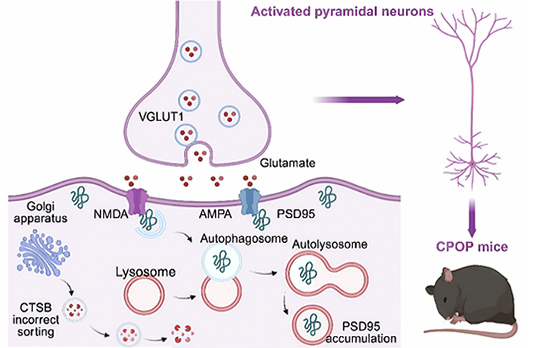
Neurons continually use and renew proteins and must process components no longer needed. Autophagy delivers material to lysosomes; if terminal processing stalls, material accumulates upstream. A December 2025 EMBO Reports study finds this dysfunction in anterior cingulate cortex (ACC) during persistent postoperative hypersensitivity, especially in excitatory cells. Reduced TMEM251, which supports lysosomal enzyme targeting, accompanies synaptic-protein accumulation and stronger cellular responses. Modulating this recycling process affects hypersensitivity persistence.
Reduced excitatory-cell TMEM251 relates to enzyme localization and impaired autophagic flux. Preoperative enhancement improves later hypersensitivity and activity; reduction produces hypersensitivity and substrate buildup in naive mice, while sustained activation can worsen recycling dysfunction.
Contents · 6 sections
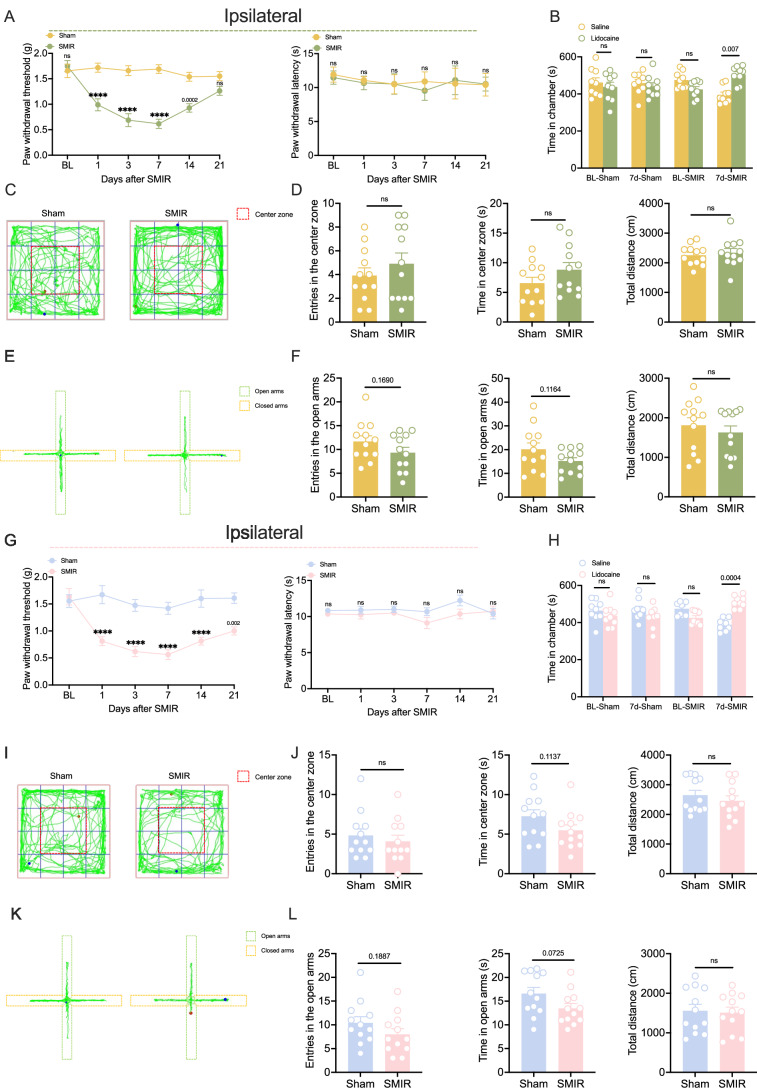
Mechanical sensitivity persists while heat and motor responses remain stable
In the skin/muscle incision-and-retraction model, ipsilateral mechanical withdrawal thresholds fell. Effects persisted through two weeks in males and remained evident in females at week three. Heat responses, contralateral thresholds and rotarod performance were broadly stable, defining side-, modality- and time-dependent changes.
At day seven, animals preferred a place paired with local anesthetic, indicating behavioral value of relief. Open-field and elevated-maze tests lacked clear anxiety-related changes. Persistent sensitivity and relief preference led the team toward the brain: which cellular processes help keep this sensitivity going?
Source: Xu Y et al. · EMBO reports · CC BY
Original figure and English caption ↗
More autophagic material, but processing falls behind
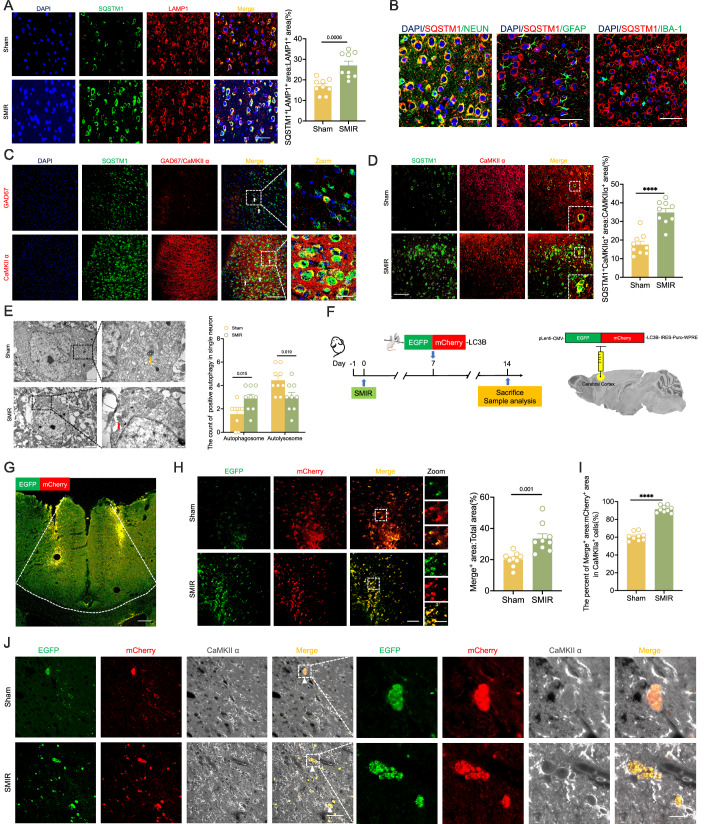
ACC autophagy-related markers increased in both sexes during postoperative weeks one to three. More autophagosomes, fewer autolysosomes and accumulated SQSTM1, together with dual-fluorescence reporters, supported impaired flux. Increased material here reflected difficulty completing processing rather than efficient clearance.
Accumulation predominated in neurons, especially CaMKIIα-positive excitatory cells. Synaptophysin and PSD95 appeared more in autophagic substrates; excitatory synaptic proteins increased while selected inhibitory proteins remained comparable. Recycling dysfunction thus related to selective synaptic-material accumulation.
Source: Xu Y et al. · EMBO reports · CC BY
Original figure and English caption ↗
Overall enzyme levels remain while lysosomal localization falls
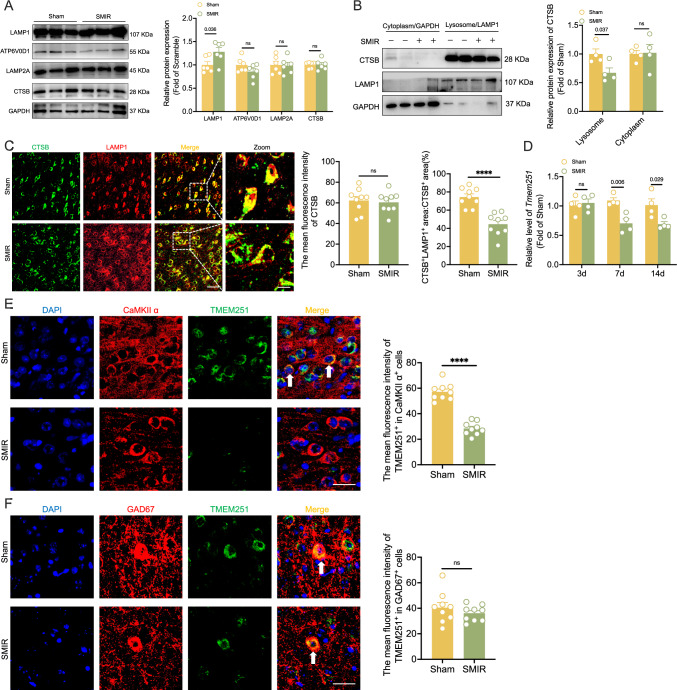
Lysosomes are a major processing destination. Overall ACC CTSB expression remained comparable, but lysosomal levels and localization fell. TMEM251, involved in hydrolase sorting, decreased on days seven and fourteen, mainly in excitatory cells without equivalent changes in inhibitory cells.
The question shifted from enzyme availability to correct delivery. A degradation system needs both components and transport; mislocalization can leave overall reserves intact while limiting processing. Coincident TMEM251 and recycling changes motivated bidirectional expression tests.
Source: Xu Y et al. · EMBO reports · CC BY
Original figure and English caption ↗
Initial sensitivity remains while later maintenance improves
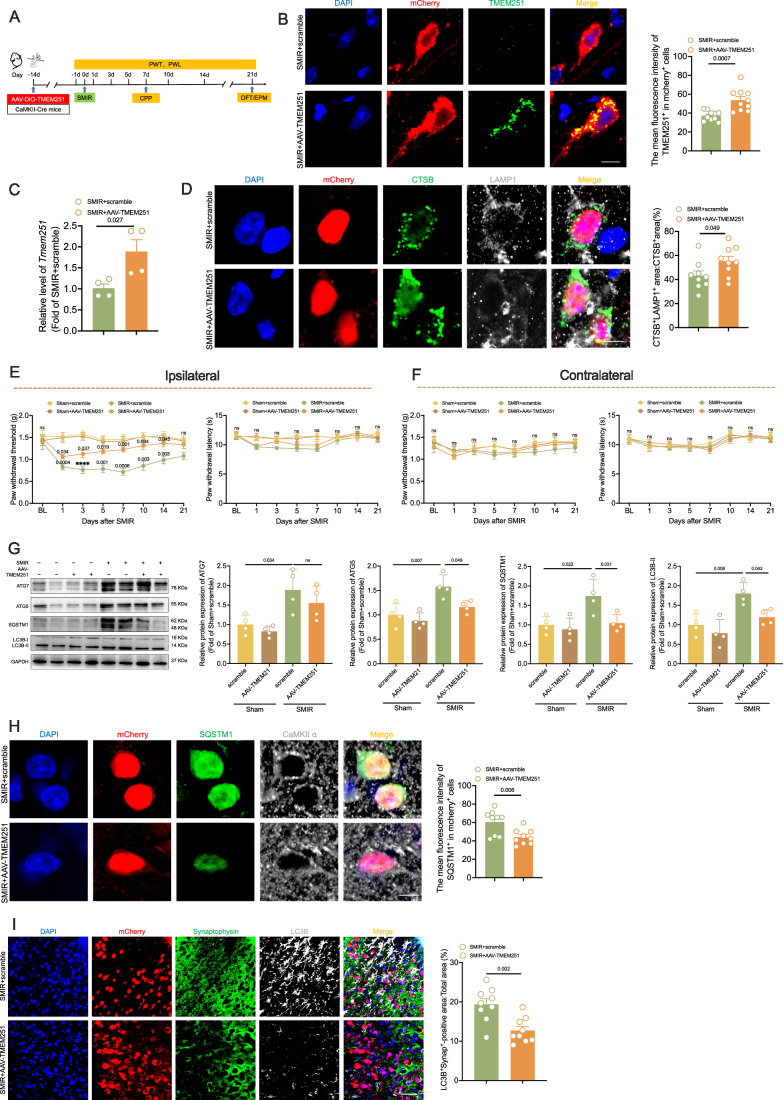
Preoperative enhancement of excitatory ACC TMEM251 increased lysosomal CTSB colocalization and reduced autophagic and synaptic-material accumulation. Mechanical thresholds still fell during days one to three, but later maintenance improved, separating initial sensitivity from persistence.
Reducing TMEM251 in naive mice produced autophagic buildup, increased synaptic proteins and bilateral mechanical/thermal sensitivity, while general motor and anxiety-related measures remained broadly stable. The opposite manipulation supported local contribution, with a sensory profile that differed from the surgical model.
Source: Xu Y et al. · EMBO reports · CC BY
Original figure and English caption ↗
Recycling and activity may reinforce one another
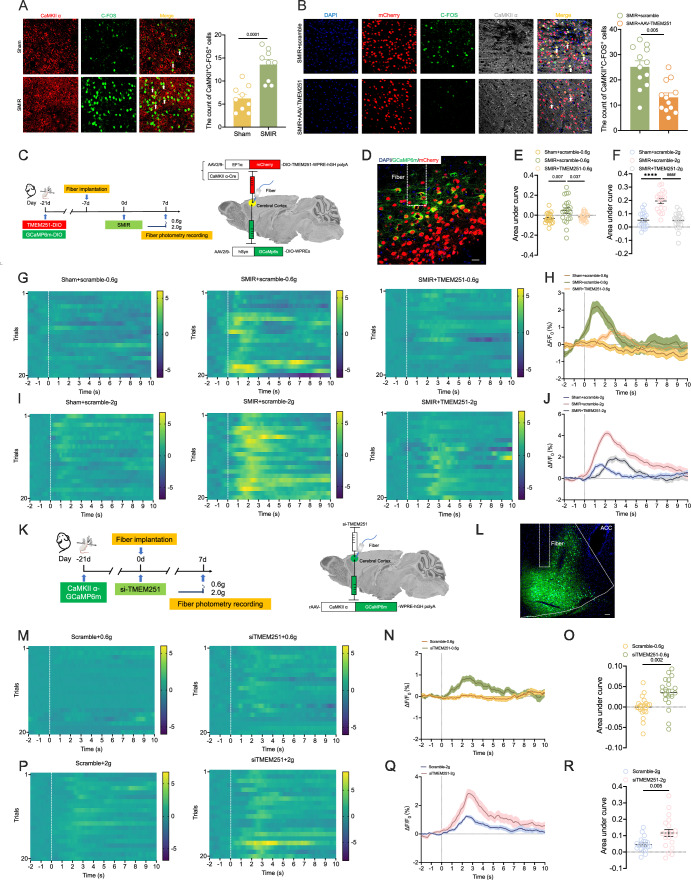
Postoperative ACC excitatory activity labeling and calcium responses to weaker and stronger mechanical stimuli increased. TMEM251 enhancement reduced responses, whereas reduction increased them in naive mice, linking recycling state with neuronal input responses across molecular and in vivo observations.
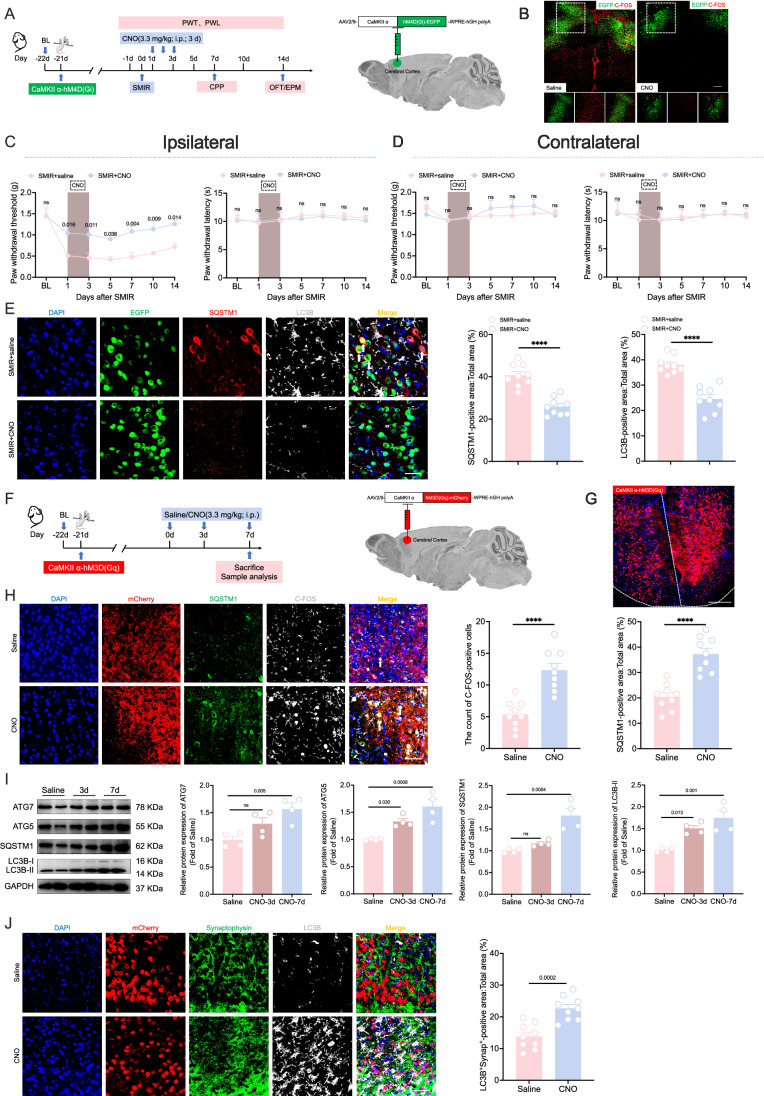
Suppressing excitatory cells improved ipsilateral mechanical thresholds and relief-related behavior while reducing SQSTM1/LC3B accumulation. Sustained enhancement conversely produced autophagic and synaptic-material buildup. The proposed reciprocal model links processing dysfunction with stronger activity and sustained activation with greater processing burden.
Source: Xu Y et al. · EMBO reports · CC BY
Original figure and English caption ↗
Persistent sensitivity involves cellular maintenance
The study follows enzyme targeting, substrate accumulation and activation to explain an ACC process contributing to hypersensitivity maintenance. Direct synaptic electrophysiology remains needed to define transmission consequences, while bidirectional molecular and activity interventions support a functional contribution of cellular maintenance.
Both sexes contributed to baseline behavior and selected autophagy comparisons; subsequent mechanistic work mainly used males. Human intervention effects remain unresolved. The study suggests that persistent hypersensitivity can involve not only incoming signals but also whether cells process their own components adequately to regain balanced activity.
Source: Xu Y et al. · EMBO reports · CC BY
Original figure and English caption ↗