Parkinsonian hypersensitivity connects to inhibitory ZI neurons
In male 6-OHDA mice, zona incerta GABA neurons and their ventral tegmental output alter mechanical and heat responses; cold responses differ with the intervention.
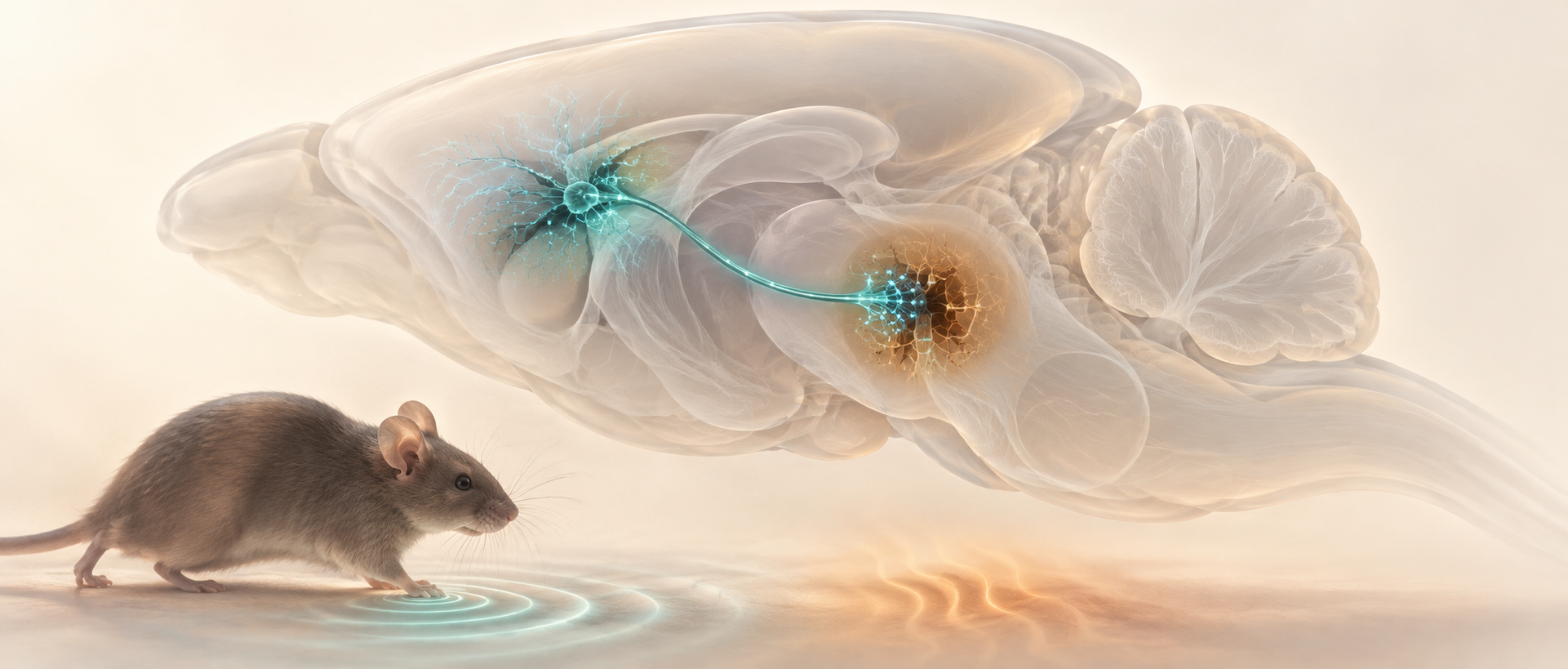
Parkinson’s disease brings tremor and slowed movement to mind, but pain is an important nonmotor symptom. Touch or temperature changes can become unusually uncomfortable. A study in The Journal of Headache and Pain examines inhibitory GABA neurons in the zona incerta, or ZI. In male Parkinsonian mice, changing their activity bidirectionally alters nociceptive sensitivity, with a contribution from their output to the ventral tegmental area, or VTA.
Activation of ZI GABA cells or VTA-projecting populations reduces model hypersensitivity. Optical stimulation of VTA terminals raises mechanical thresholds and heat-response latency, without a significant cold-response change.
Contents · 7 sections
Slower movement accompanies greater sensory sensitivity
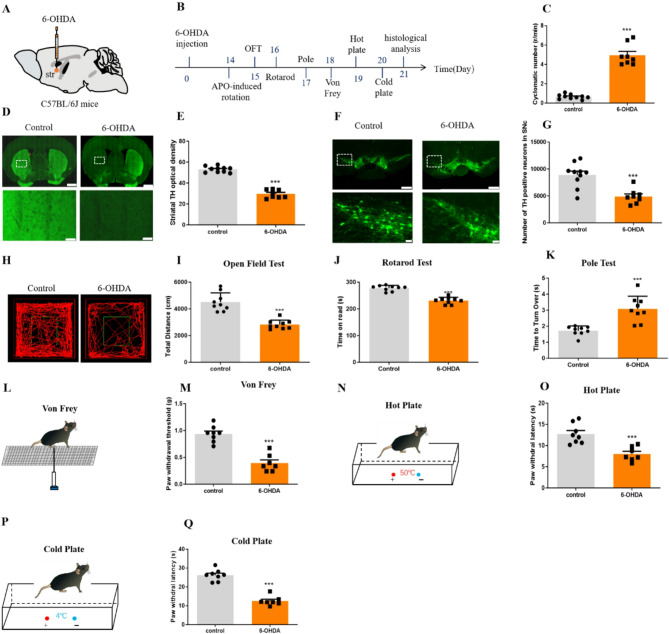
Unilateral striatal 6-OHDA lesions produce impaired motor performance after two weeks, reduced striatal dopamine-associated fibers and fewer tyrosine-hydroxylase-positive cells in substantia nigra pars compacta. Behavior and tissue changes define the model background.
The contralesional hindpaw withdraws at lower mechanical forces and sooner on hot and cold plates. This motivates testing whether an inhibitory brain network can change the elevated sensitivity.
Source: Cui J et al. · The journal of headache and pain · CC BY-NC-ND
Original figure and English caption ↗
ZI activity can change sensory responses
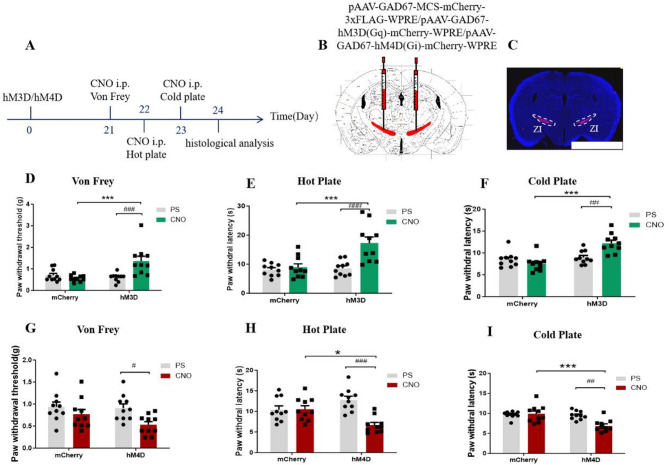
ZI lies below the thalamus and connects with sensory and motor regions. Many cells use inhibitory GABA signals. Such cells can regulate information flow within circuits, motivating a direct test of sensory modulation.
In unlesioned mice, chemogenetic activation raises mechanical withdrawal thresholds and prolongs heat and cold response latency. Inhibition shifts several measures in the opposite direction, implicating ZI in sensory regulation beyond the lesion state.
Source: Cui J et al. · The journal of headache and pain · CC BY-NC-ND
Original figure and English caption ↗
Stimulus-responsive ZI can still modulate hypersensitivity
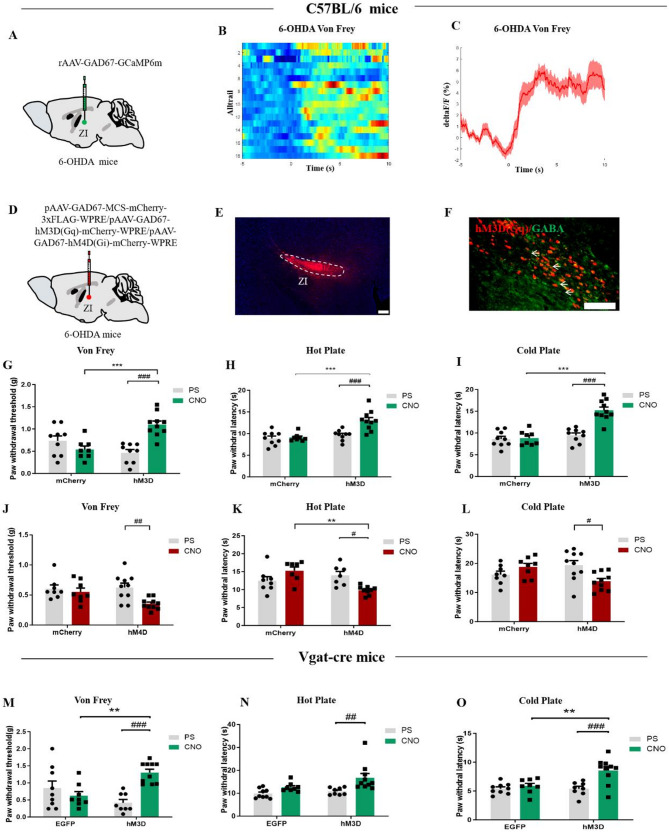
Mechanical stimulation increases population calcium signals in model ZI GABA cells. Chemogenetic activation then raises mechanical thresholds and prolongs heat and cold latency, while inhibition aggravates several sensitivity measures.
Activation experiments in Vgat-Cre mice show changes in the same direction. Stimulus-linked signals together with intervention effects identify ZI as a cellular node capable of regulating model hypersensitivity.
Source: Cui J et al. · The journal of headache and pain · CC BY-NC-ND
Original figure and English caption ↗
Optical modulation promptly alters mechanical and heat responses
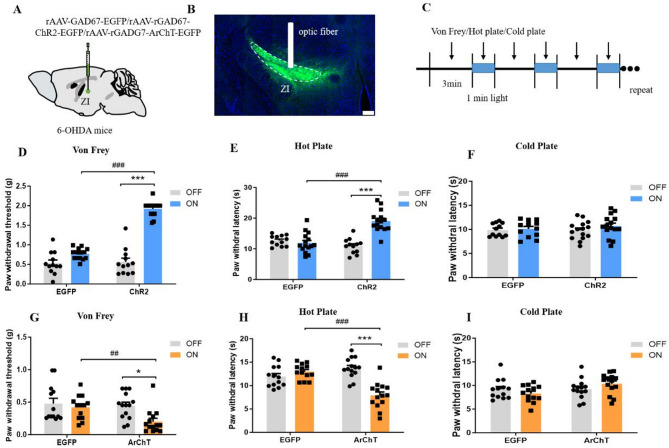
Optogenetics confines activity changes to illumination. Activation raises model mechanical thresholds and delays withdrawal after heat; inhibition shifts both measures oppositely. The two intervention approaches support ZI modulation of mechanical and heat responses.
Cold responses differ: neither optical activation nor inhibition significantly changes cold-plate latency. Longer chemogenetic modulation and brief optical modulation yield different sensory profiles, rather than uniform effects across stimuli.
Source: Cui J et al. · The journal of headache and pain · CC BY-NC-ND
Original figure and English caption ↗
Sensitivity changes do not shift every behavioral measure
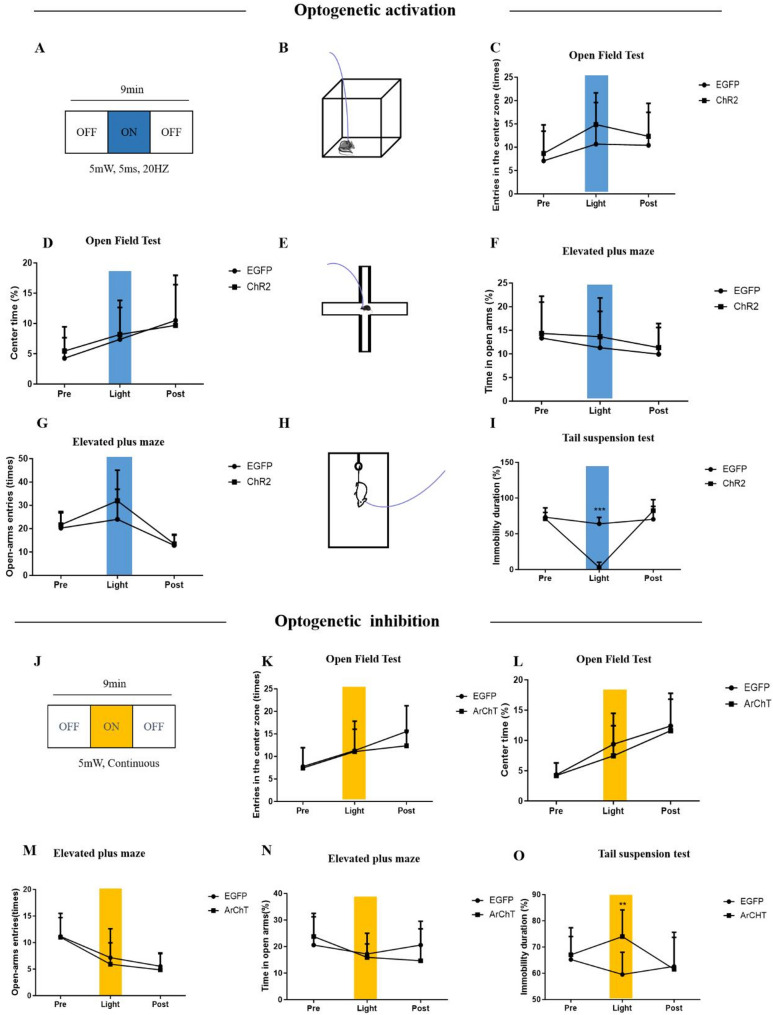
Model mice also show altered anxiety-like exploration and increased immobility. ZI optical activation shortens tail-suspension immobility, and inhibition lengthens it. Open-field center exploration and elevated-plus-maze open-arm measures do not significantly change.
Chemogenetic modulation likewise leaves the measured anxiety-like and immobility outcomes without significant change. Sensory sensitivity, exploration and tail-suspension behavior do not move together under every intervention, revealing separable behavioral effects.
Source: Cui J et al. · The journal of headache and pain · CC BY-NC-ND
Original figure and English caption ↗
Following ZI output to VTA
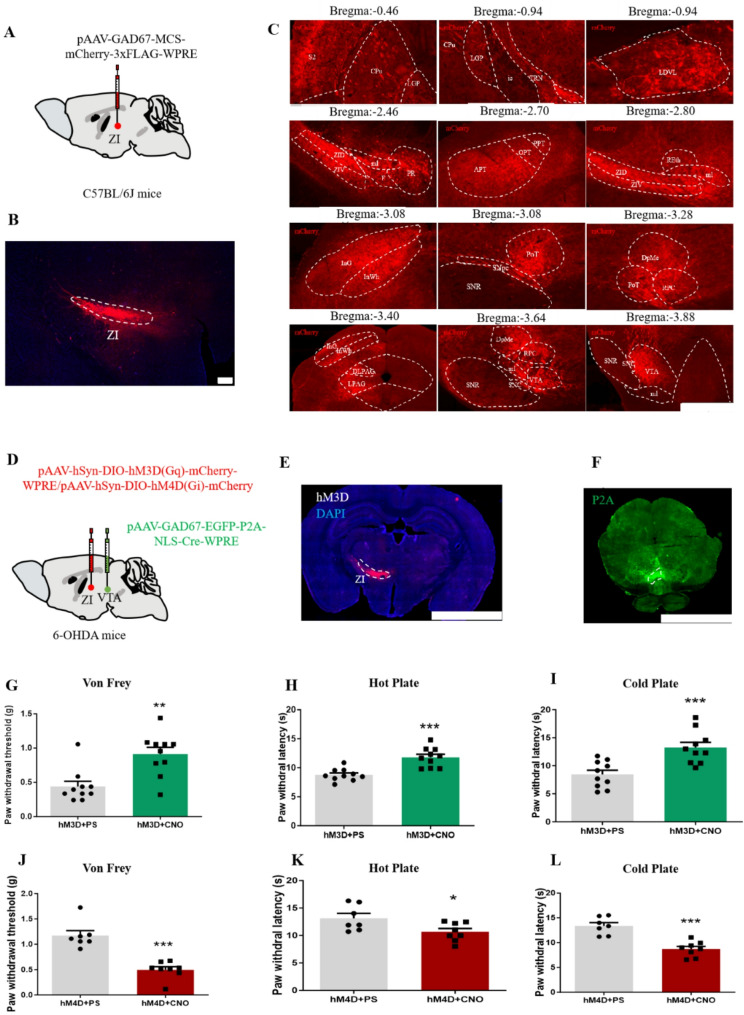
Tracing reveals ZI GABA outputs in several regions, including VTA. Its roles in motivation, affect and pain regulation motivate testing whether ZI inhibitory output can alter sensory-related behavior there.
Selecting VTA-projecting ZI neurons for chemogenetic manipulation shows increased mechanical thresholds and heat and cold latency after activation, with decreases after inhibition. A projection-defined population can influence model sensitivity without manipulating all ZI cells.
Source: Cui J et al. · The journal of headache and pain · CC BY-NC-ND
Original figure and English caption ↗
Activating VTA terminals reproduces part of the effect
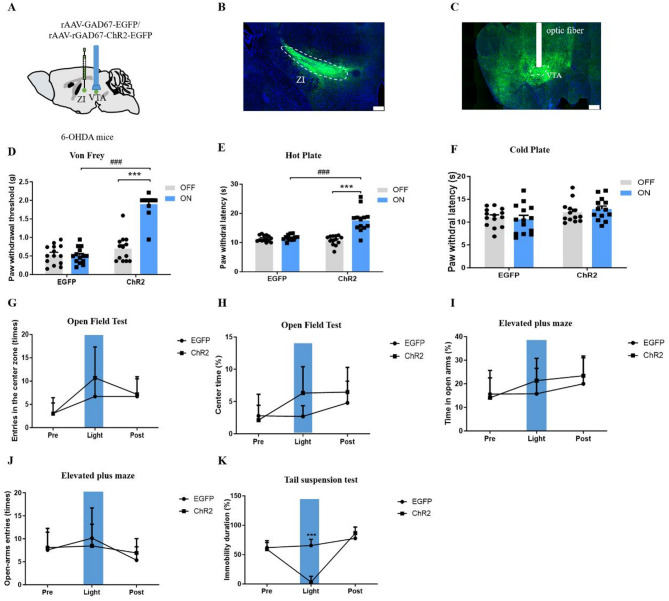
Optical activation of ZI axon terminals in VTA raises model mechanical thresholds and heat latency, with no significant cold-response change. Tail-suspension immobility decreases while anxiety-like exploration measures remain unchanged, echoing the sensory profile of ZI optical activation.
This male 6-OHDA study links Parkinsonian hypersensitivity with ZI inhibitory neurons and their VTA output. The VTA recipient cell type remains unidentified. The connection can modulate sensory responses, with distinct effects across stimuli and behavioral dimensions.
Source: Cui J et al. · The journal of headache and pain · CC BY-NC-ND
Original figure and English caption ↗