One sensory population recruits two spinal itch-inhibitory circuits
Mouse VGLUT3-lineage sensory fibers connect with spinal NPY and DYN cells. Their distinct effects on mechanical and chemical itch are further separated by receptor blockade.
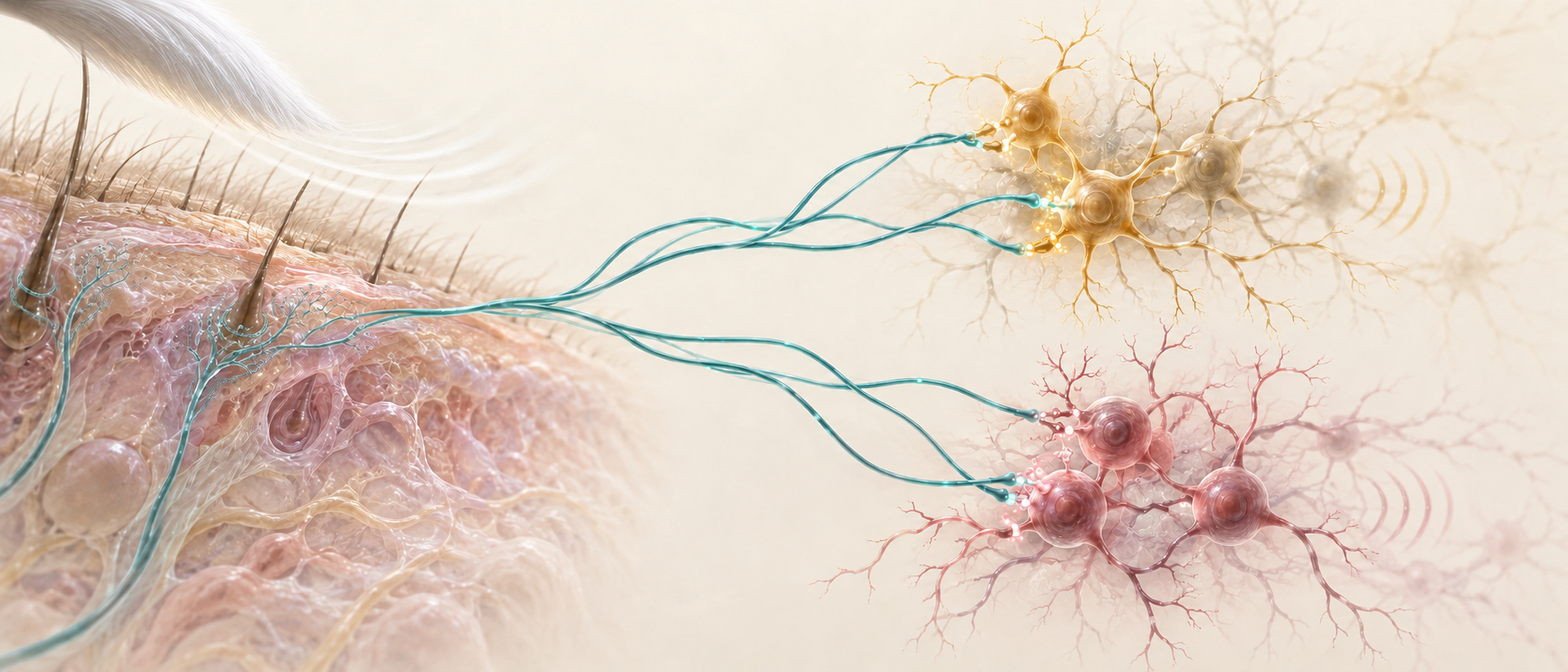
Skin input need not simply relay information upward. Sensory fibers may recruit spinal inhibitory cells that dampen another sensation. A Molecular Brain study follows touch-related VGLUT3-lineage neurons. Activating their skin endings reduces scratching elicited by chemical and mild mechanical stimuli. These sensory cells connect with two spinal populations whose effects differ across itch types.
VGLUT3-lineage activation reduces mechanical and chemical scratching. NPY cells and Y1 receptors preferentially regulate mechanical itch; DYN cells and KOR signaling preferentially regulate chemical itch, with clearer KOR-blockade effects for chloroquine.
Contents · 6 sections
A population associated with low-threshold touch
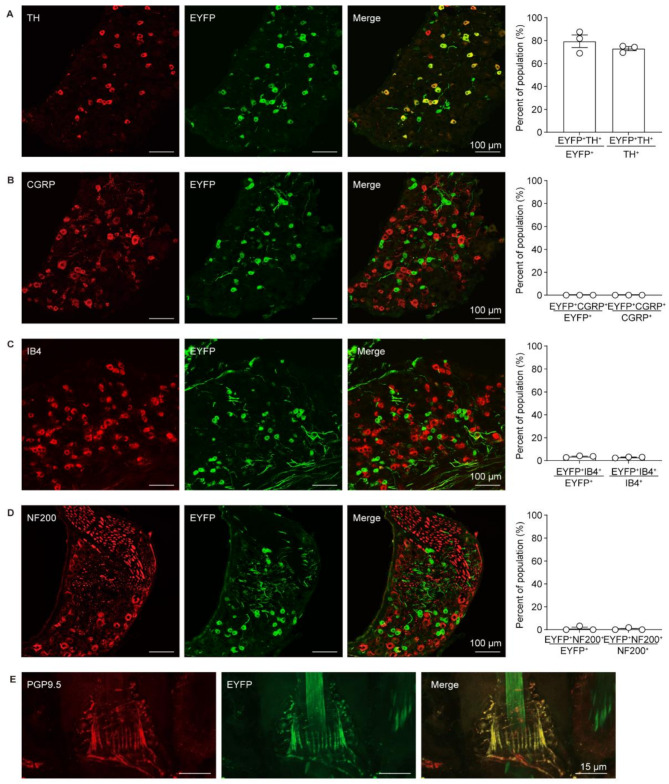
VGLUT3-lineage labeling equips sensory cells with a light-sensitive protein. About eighty percent of labeled dorsal-root-ganglion cells coexpress TH, with little overlap with CGRP or large myelinated-fiber markers, consistent with an unmyelinated low-threshold mechanoreceptor population.
Their endings occur in hairy nape skin, allowing modulation from the periphery and observation of scratching. The recruited input comes from touch-associated sensory cells rather than another pruritogenic stimulus.
Source: Su X et al. · Molecular brain · CC BY
Original figure and English caption ↗
Less scratching accompanies altered itch-context avoidance
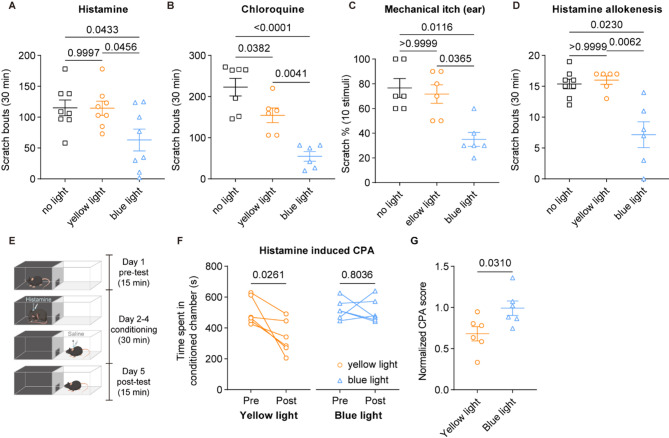
Chemical itch begins with pruritogens such as histamine or chloroquine; mechanical itch involves touch-evoked scratching. After histamine sensitization, surrounding skin responds more readily to mild touch. Separate tests reveal which inputs the touch-associated fibers regulate.
Activating skin VGLUT3-lineage fibers reduces histamine- and chloroquine-evoked scratching, as well as scratching elicited by mild mechanical stimulation behind the ear. It also reduces touch-evoked scratching after histamine sensitization.
Mice avoid a context paired with histamine itch. When fibers are activated during pairing, this avoidance is no longer significant. Effects extend from scratching counts to subsequent context choice associated with itch.
Source: Su X et al. · Molecular brain · CC BY
Original figure and English caption ↗
NPY and DYN cells receive sensory input
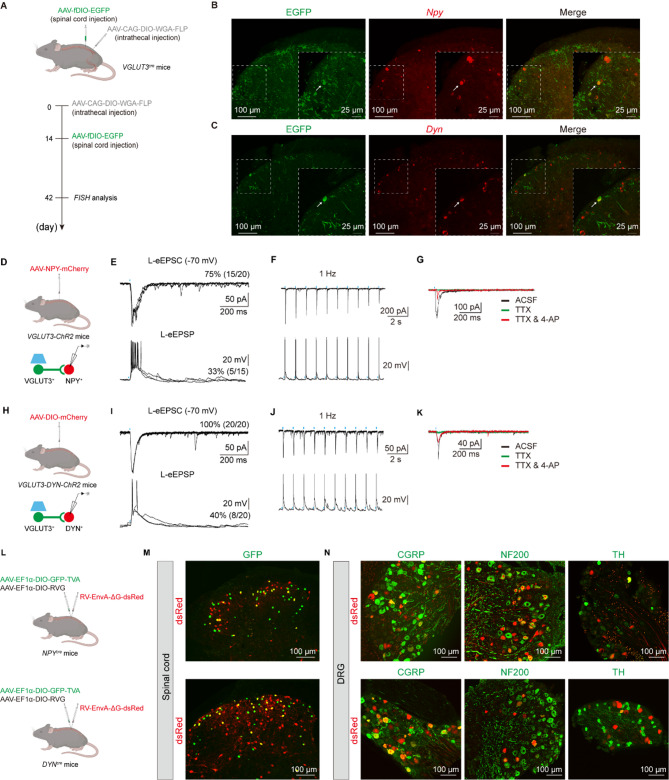
Forward transsynaptic labeling identifies NPY- or DYN-associated cells among spinal recipients. Both populations are associated with inhibitory regulation, providing candidate recipients for touch-related modulation of itch.
In electrophysiological recordings, sensory-cell optical stimulation evokes excitatory synaptic currents in fifteen of twenty NPY cells and all twenty recorded DYN cells. Some recipients also fire action potentials.
Recovery of synaptic responses under the tested pharmacological conditions supports direct connections to both recipient classes. Excitatory sensory input can recruit inhibitory downstream cells: a circuit’s brake must itself be engaged.
Source: Su X et al. · Molecular brain · CC BY
Original figure and English caption ↗
Two inhibitory populations favor different itch types
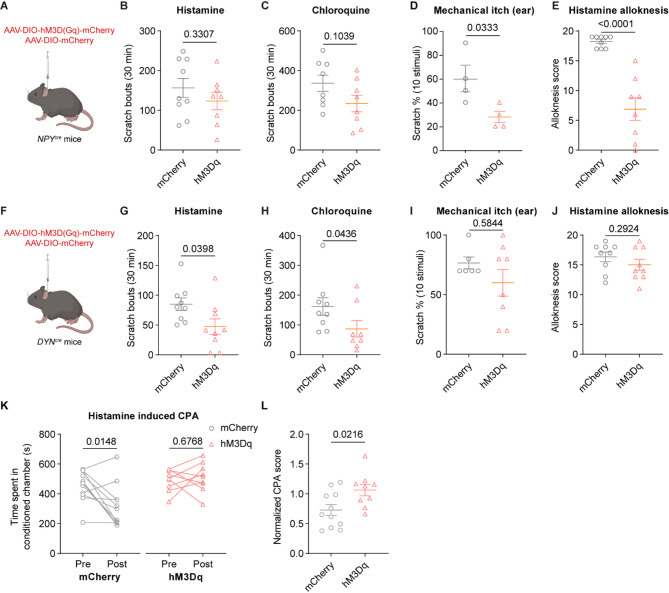
Activating adult spinal NPY cells reduces mechanical scratching and histamine alloknesis, without significantly changing histamine- or chloroquine-evoked chemical scratching. Inhibition-related effects differ across itch stimuli.
DYN activation reduces histamine and chloroquine scratching, without significant changes in mechanical scratching or alloknesis. Histamine-context aversion also becomes nonsignificant, separating these populations’ effects across mechanical and chemical itch.
Source: Su X et al. · Molecular brain · CC BY
Original figure and English caption ↗
Blocking downstream signals reveals the division again
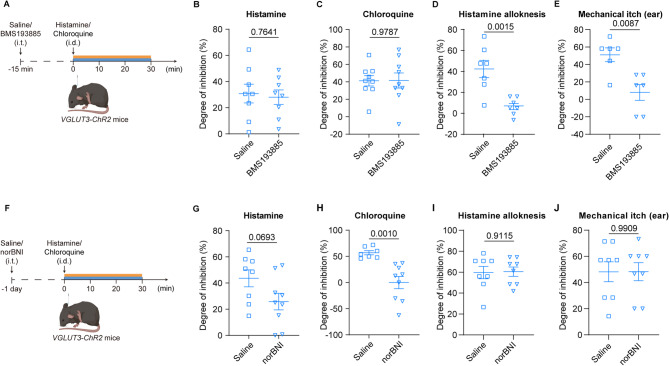
During peripheral VGLUT3-lineage activation, spinal NPY Y1-receptor blockade markedly weakens mechanical-itch inhibition while preserving chemical-itch inhibition, echoing the NPY-cell activation profile.
Blocking dynorphin-associated kappa opioid receptors, or KOR, significantly weakens chloroquine-itch inhibition. Histamine inhibition shows a nonsignificant weakening trend. Mechanical-itch and alloknesis inhibition remain unchanged, distinguishing receptor contributions even within chemical itch.
Source: Su X et al. · Molecular brain · CC BY
Original figure and English caption ↗
Touch-related input recruits two spinal regulatory routes
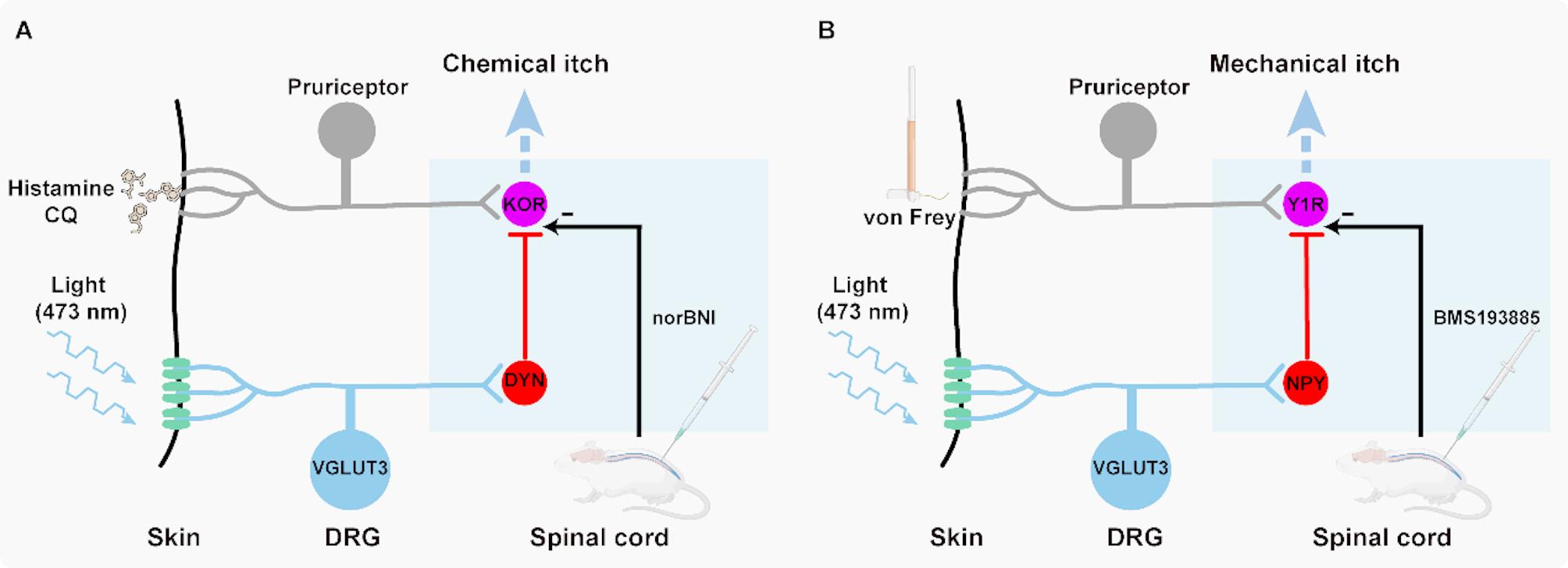
In acute-itch and histamine-sensitization experiments including male and female mice, peripheral fibers, spinal recipient cells and downstream receptors are connected. Input from one lineage population can recruit two inhibitory classes with distinct scratching effects.
Itch regulation need not uniformly lower all sensory signals. Mechanical and chemical stimuli can encounter different spinal inhibitory processes, with incoming sensory activity recruiting those processes. This division gives cellular substance to interactions between touch-related input and itch.
Source: Su X et al. · Molecular brain · CC BY
Original figure and English caption ↗