More active glia, less scratching? An unexpected role in chronic itch
A mouse study links astrocyte remodeling and neuronal signals to the modulation of chronic itch and accompanying behavior in the anterior cingulate cortex.
Scratching seems the most immediate response to an itch. When itch persists, however, changes extend beyond the skin: animals explore open spaces less, and their reward preferences and coping behavior shift. How does the brain participate in this prolonged sensory disturbance? A 2026 study in CNS Neuroscience & Therapeutics focuses on astrocytes in the anterior cingulate cortex, or ACC, cells often overshadowed by neurons. They are already more active during chronic itch, yet further increasing their activity reduces scratching. This unexpected result opens a window onto the connection between sensation and affect.
In mice with DCP-induced chronic itch, increasing ACC astrocyte activity reduces scratching and improves several accompanying behaviors while raising local excitatory-neuron calcium signals and D-serine and ATP levels.
Contents · 6 sections
Persistent itch changes how animals engage with their surroundings
In the DCP-induced allergic chronic itch model, mice developed redness, scaling and scratch lesions, alongside increased scratching. They also spent less time in the center of an open field and the open arms of an elevated plus maze, avoiding more exposed spaces. The skin disturbance was accompanied by changes in how the brain organizes behavior.
The changes extended to other behaviors: immobility increased in tail-suspension and forced-swim tests, sucrose preference decreased, and feeding latency lengthened. Total locomotor distance, latency to contact food and home-cage intake remained largely unchanged. Together, these readouts describe an animal state involving scratching as well as altered exploration and motivation. They also direct attention to the ACC, a region involved in linking sensation with affect and behavioral choices.
Similar cell numbers, altered structure and calcium activity
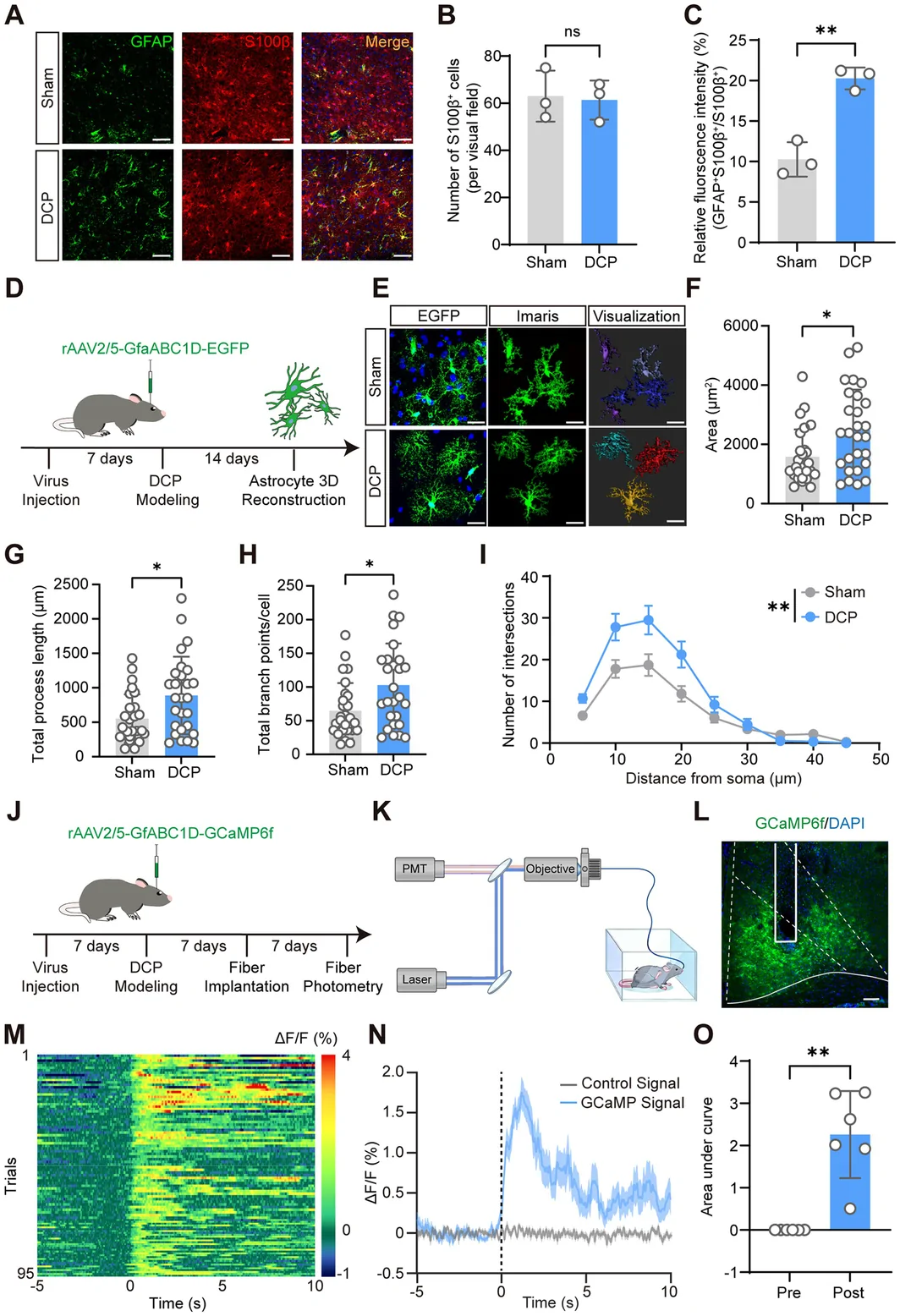
In the ACC, astrocyte changes first became apparent in their structure. S100β-positive cell counts did not appreciably increase, but GFAP-associated fluorescence rose. Three-dimensional reconstructions also showed larger cell area, longer processes, more branch points and more intersections. The response involved remodeling of existing cells rather than simply an expansion in cell number.
The cells also produced dynamic signals during scratching. In vivo recordings aligned to scratching onset showed increased astrocyte calcium signals. In slices, ATP-evoked calcium responses became stronger in somata and major branches, while responses in fine terminal branches changed little. Chronic itch thus left different signatures at the population level and within individual cellular compartments.
Source: Fan Z et al. · CNS neuroscience & therapeutics · CC BY
Original figure and English caption ↗
Increasing glial activity reduces scratching
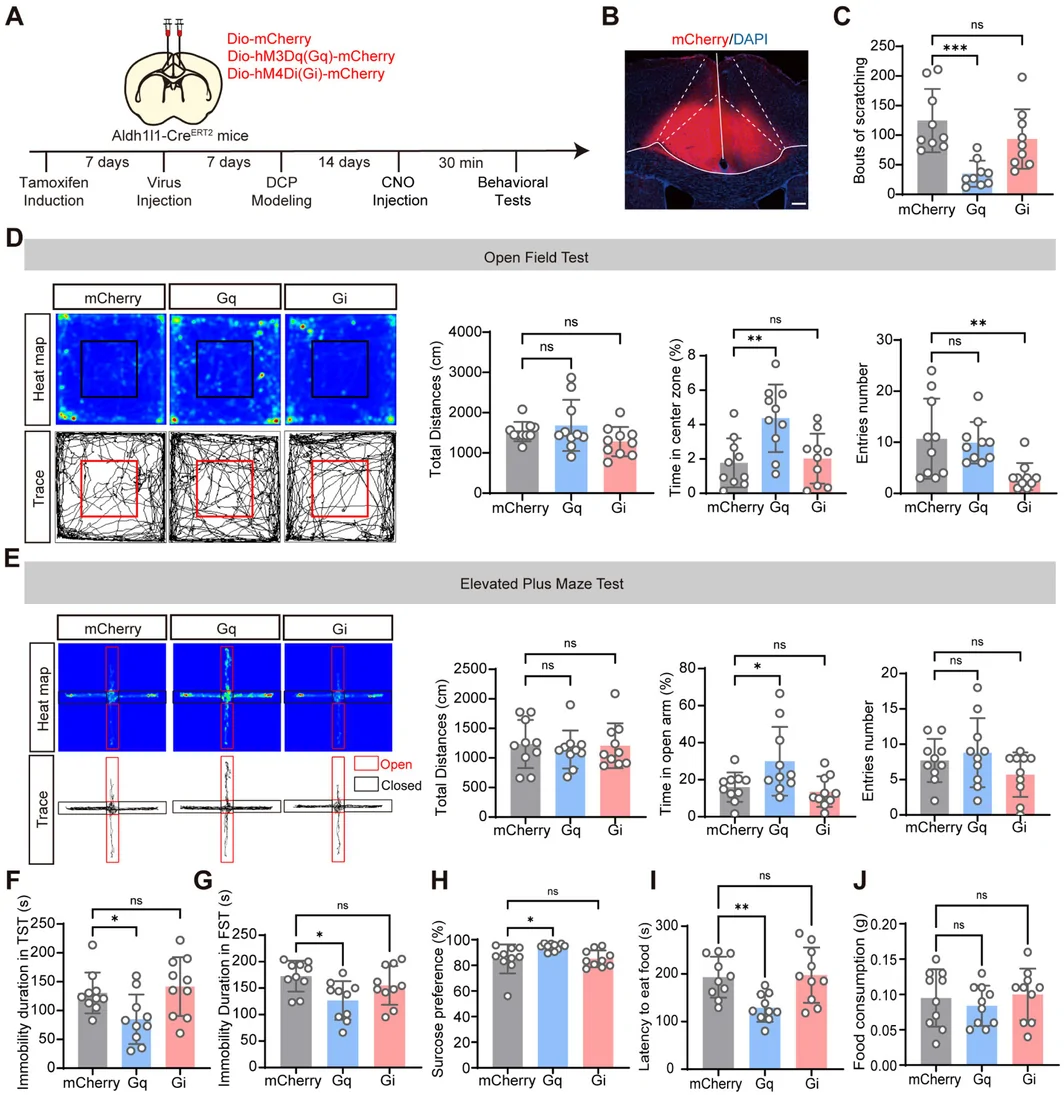
After observing heightened cellular activity, the researchers asked how it influences behavior. Further increasing ACC astrocyte activity reduced scratching in DCP mice and increased time in the open-field center and open arms. Immobility fell, sucrose preference rose, and feeding latency shortened, while home-cage intake remained similar. Cellular modulation therefore changed several behavioral readouts.
Modulation in the other direction produced a different outcome: suppressing astrocyte activity did not significantly change scratching or the accompanying behaviors. The asymmetry points to participation in a state-dependent network. The glial response already present in chronic itch had not exhausted these cells’ capacity to modify local networks and behavior.
Source: Fan Z et al. · CNS neuroscience & therapeutics · CC BY
Original figure and English caption ↗
Less scratching accompanies stronger neuronal signals
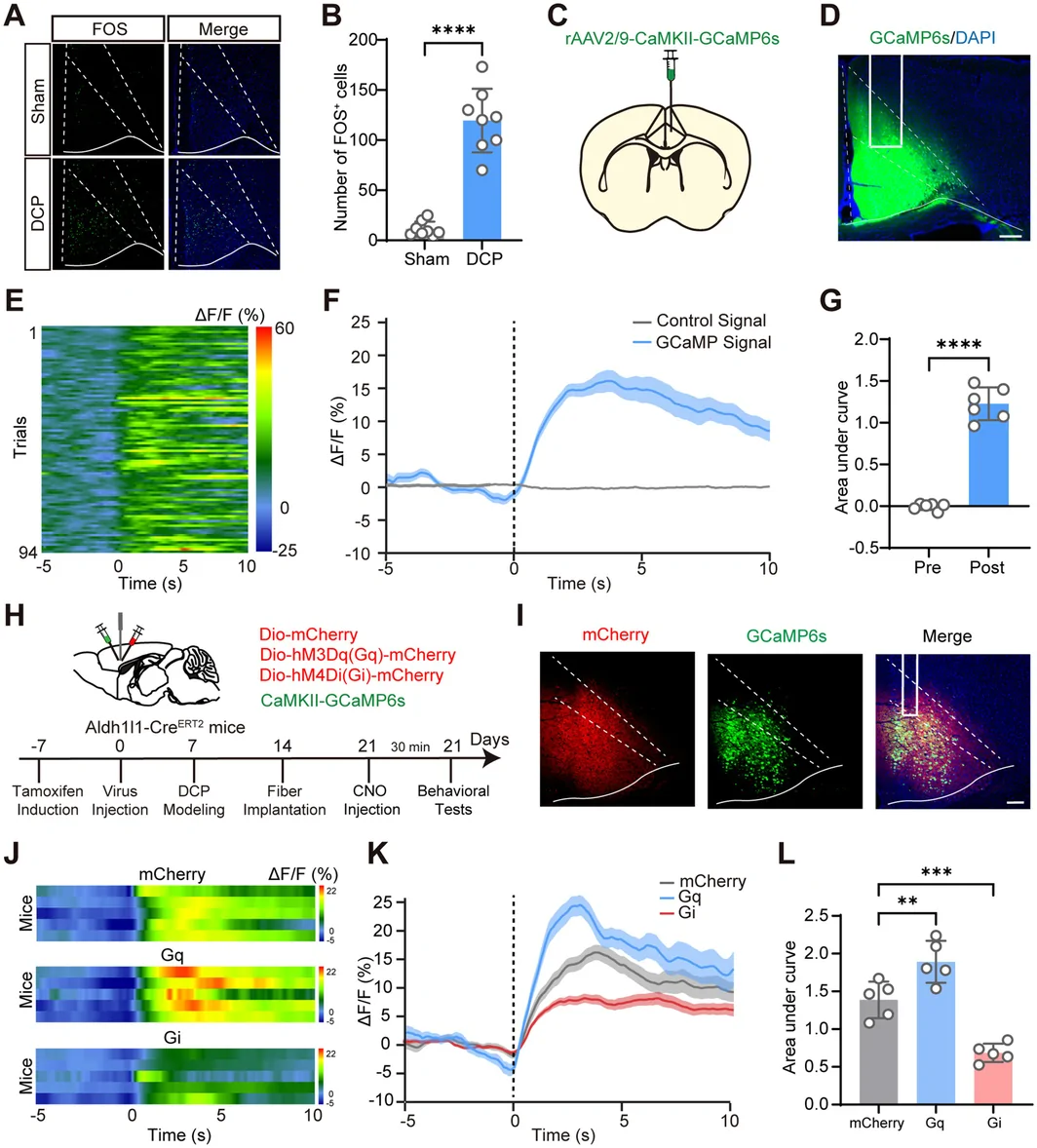
Astrocytes do not work alone. In the DCP model, ACC FOS-positive neurons increased, and CaMKII-positive excitatory neurons showed stronger calcium signals during scratching. Measuring neuronal responses during glial modulation revealed higher neuronal calcium with astrocyte activation and lower calcium with suppression. This brought the connection between the two cell populations into view.
Intriguingly, less scratching occurred alongside stronger bulk excitatory-neuron signals. Greater population activity did not correspond here to more severe itch behavior. The finding shifts attention from overall signal strength to which cells are recruited and how they work together. Population composition and network connections may shape how activity changes translate into behavior, making glial influences on neurons an important lead for further investigation.
Source: Fan Z et al. · CNS neuroscience & therapeutics · CC BY
Original figure and English caption ↗
D-serine and ATP come into focus
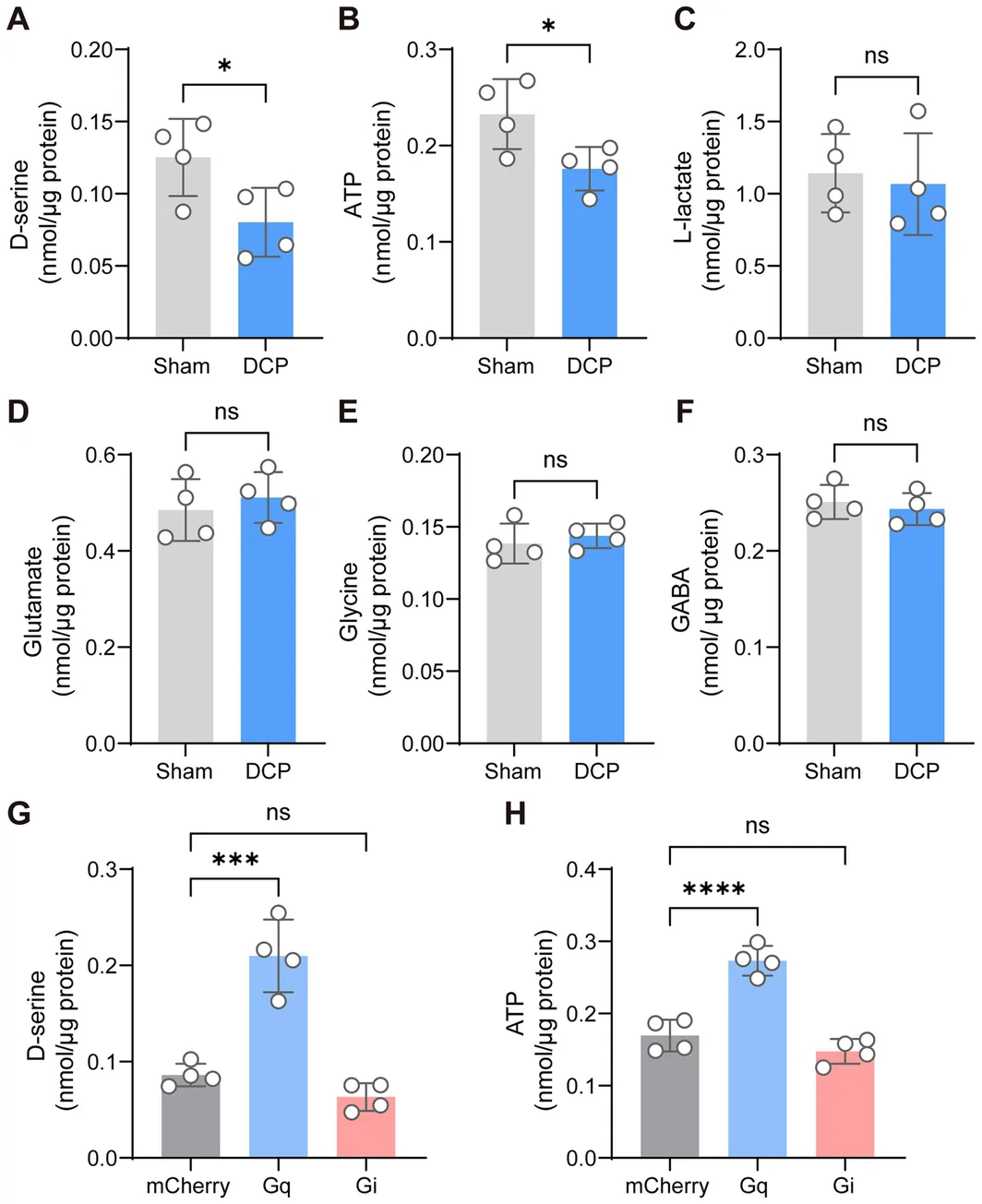
How might this modulation travel between cells? Measurements of several ACC molecules associated with glial communication showed lower D-serine and ATP levels after DCP. L-lactate, glutamate, glycine and GABA did not significantly change. Increasing astrocyte activity raised D-serine and ATP levels again. This selective pattern identifies two molecular candidates connecting glial activity with neuronal responses.
D-serine participates in NMDA receptor regulation, while ATP can influence neurons through purinergic signaling. Both have biological roles that could connect cellular activity. Here, their tissue levels changed alongside glial modulation, outlining a promising communication pathway to investigate. Resolving their release sources, local receptors and contributions to behavior will bring this picture of cell-to-cell communication into sharper focus.
Source: Fan Z et al. · CNS neuroscience & therapeutics · CC BY
Original figure and English caption ↗
Astrocytes can reshape the link between sensation and behavior
The study brings the glial response in chronic itch from an accompanying cellular marker into the study of behavioral modulation. Structural remodeling, compartmental calcium, neuronal responses and molecular levels connect with one another without always moving in parallel. These layered relationships make the combination of greater cellular activity and less scratching an informative clue to cortical network function.
The findings come from a DCP allergic chronic itch model in adult male mice. Work across other causes of itch, sexes, and specific ACC cell populations and communication pathways will define the reach of this modulation. Persistent itch can now be approached from another angle: alongside how neurons report stimulation, how do glial cells help organize the brain’s response?