How can an odor influence pain? Following a lavender-responsive brain circuit
A male-mouse study connects olfactory processing with inflammatory nociception through piriform–insular circuitry, showing how an excitatory input can recruit local inhibition.
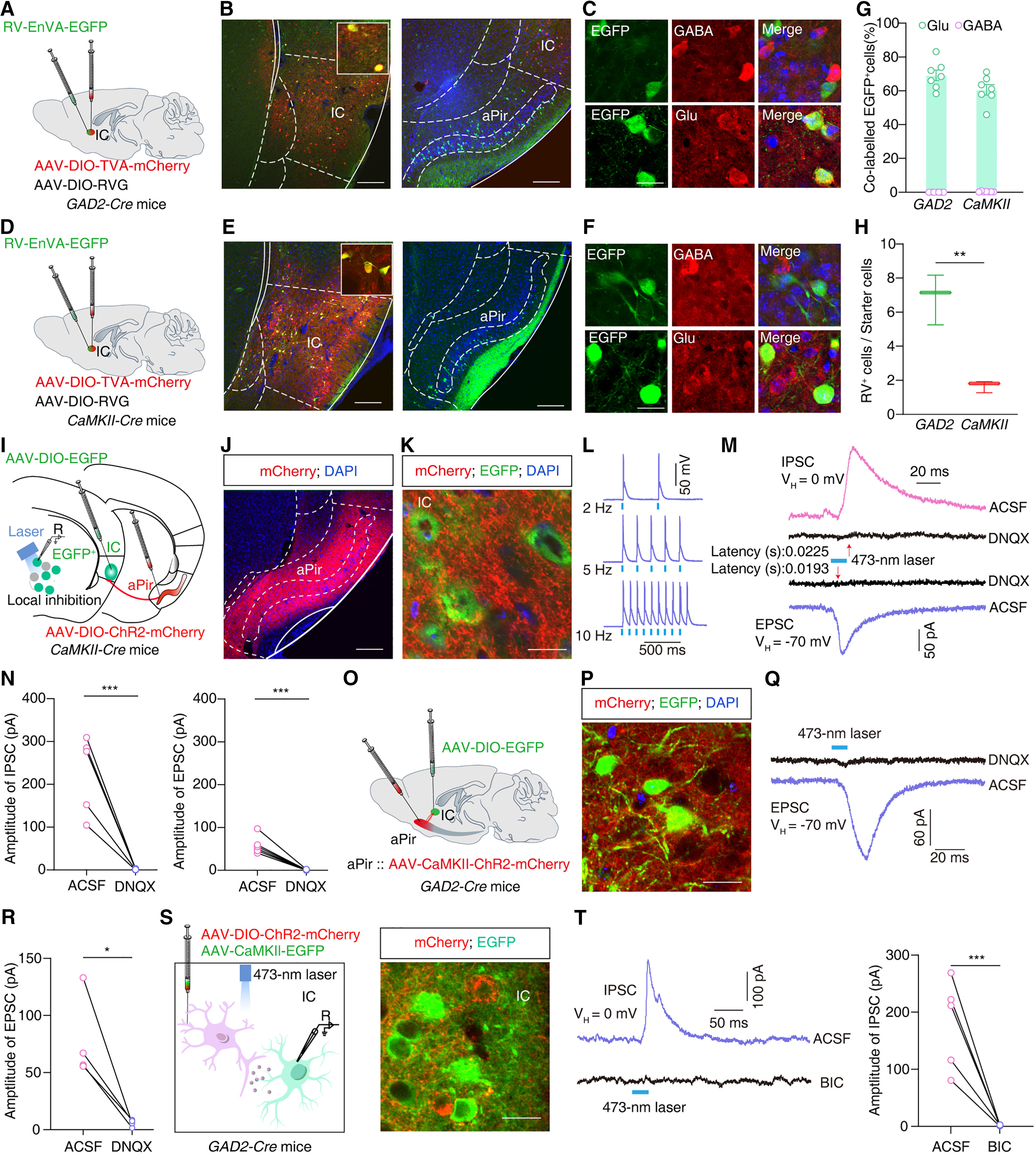
An odor helps identify the environment, but can it also influence how the body responds to pain? A study published in Cell Reports on October 3, 2024 follows this question from olfactory cortex to insula. In male mice with inflammatory pain, lavender essential oil exposure under selected conditions attenuated mechanical and thermal nociceptive responses. Anterior piriform inputs recruited inhibitory insular cells, linking olfactory excitation to reduced responses in local excitatory populations.
An anterior piriform–insular pathway contributes to lavender-associated antinociception. Olfactory input reaches excitatory cells while recruiting local inhibition, with behavioral effects varying across odor conditions, inflammatory stages and stimulus types.
Contents · 6 sections
The same odor meets different bodily states
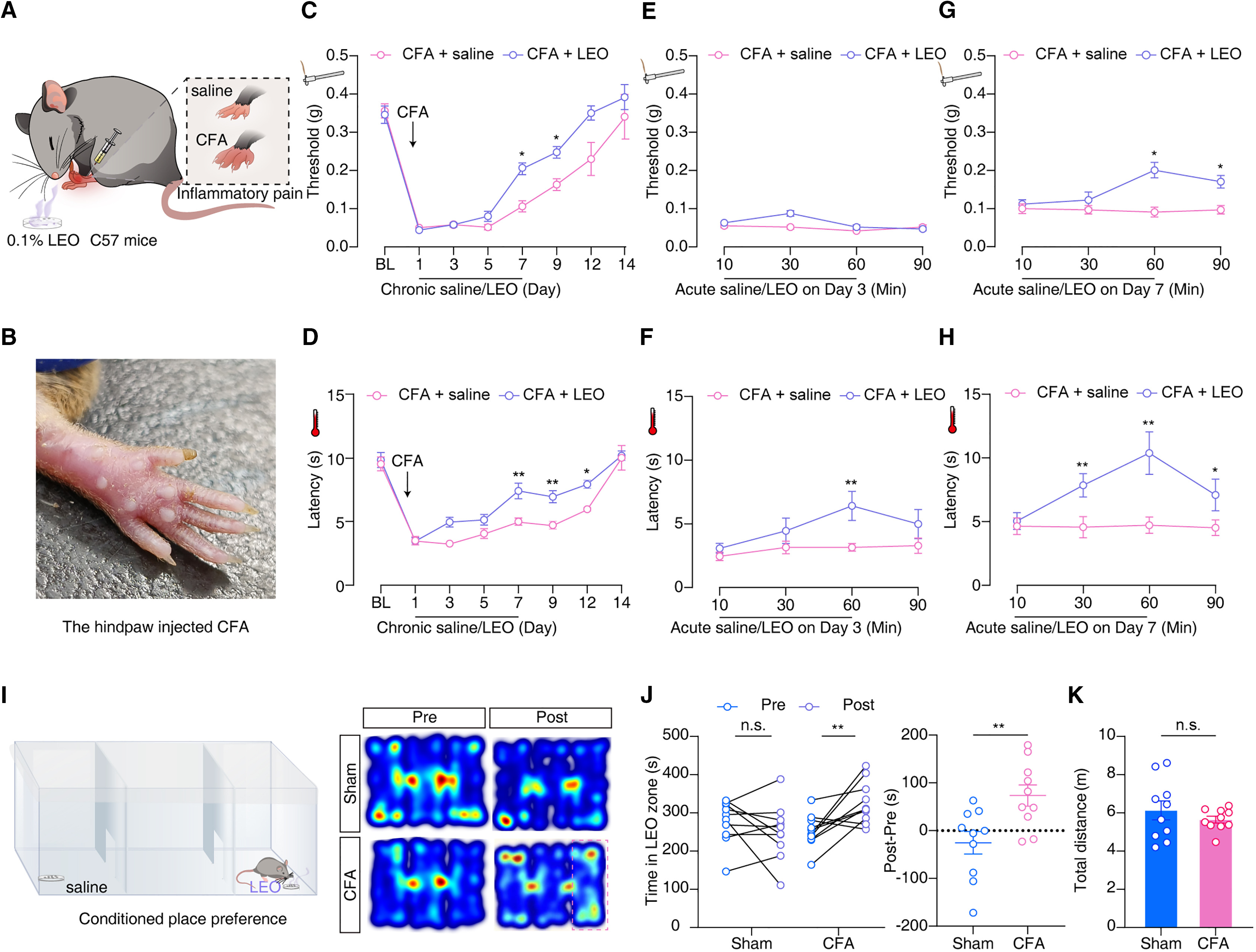
In the CFA inflammatory-pain model, repeated exposure to the selected lavender condition increased mechanical withdrawal thresholds and thermal withdrawal latency. Naive mice did not show significant threshold changes under the same odor condition, linking the effect to the underlying nociceptive state.
Timing mattered. Acute exposure at the earlier inflammatory stage altered thermal but not mechanical responses, whereas both measures improved at the later stage. CFA mice developed a preference for the context paired with the selected odor condition; sham mice did not. Effects were not monotonically concentration-dependent, and a higher concentration produced place avoidance.
Source: Yumeng Yang et al. · Cell Reports · CC BY 4.0; © 2024 The Author(s). Published by Elsevier Inc.
Original figure and English caption ↗
Piriform populations respond to the odor
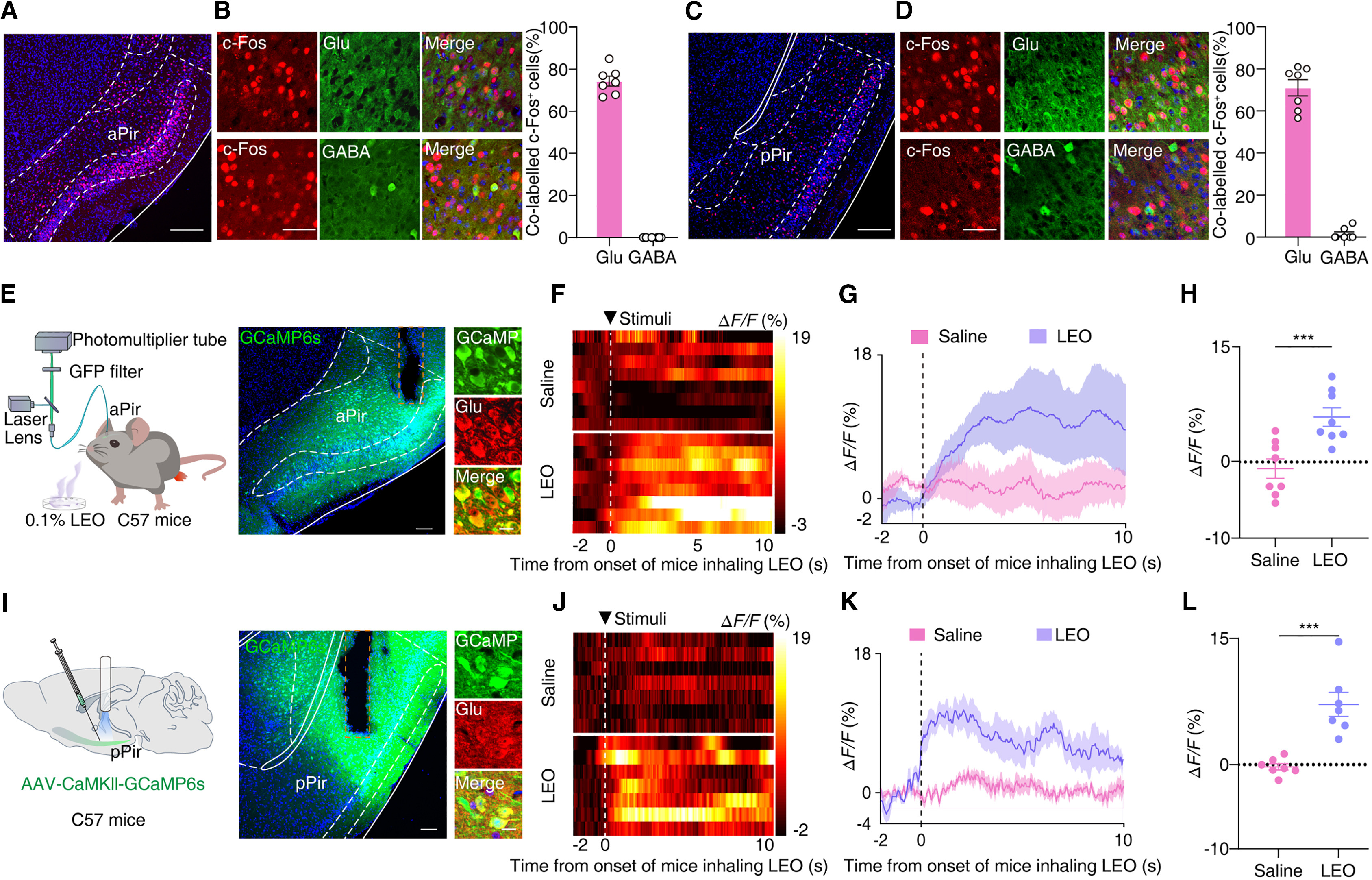
Both anterior and posterior piriform cortex showed lavender-associated responses. Activity-related c-Fos labeling increased, with many labeled cells carrying glutamatergic markers. Population calcium recordings likewise rose transiently after odor onset in both regions.
Shared odor responsiveness did not establish identical contributions to nociception. The next question was where those signals went and which downstream populations could connect odor processing with pain-related activity.
Source: Yumeng Yang et al. · Cell Reports · CC BY 4.0; © 2024 The Author(s). Published by Elsevier Inc.
Original figure and English caption ↗
Olfactory input reaches distinct insular populations
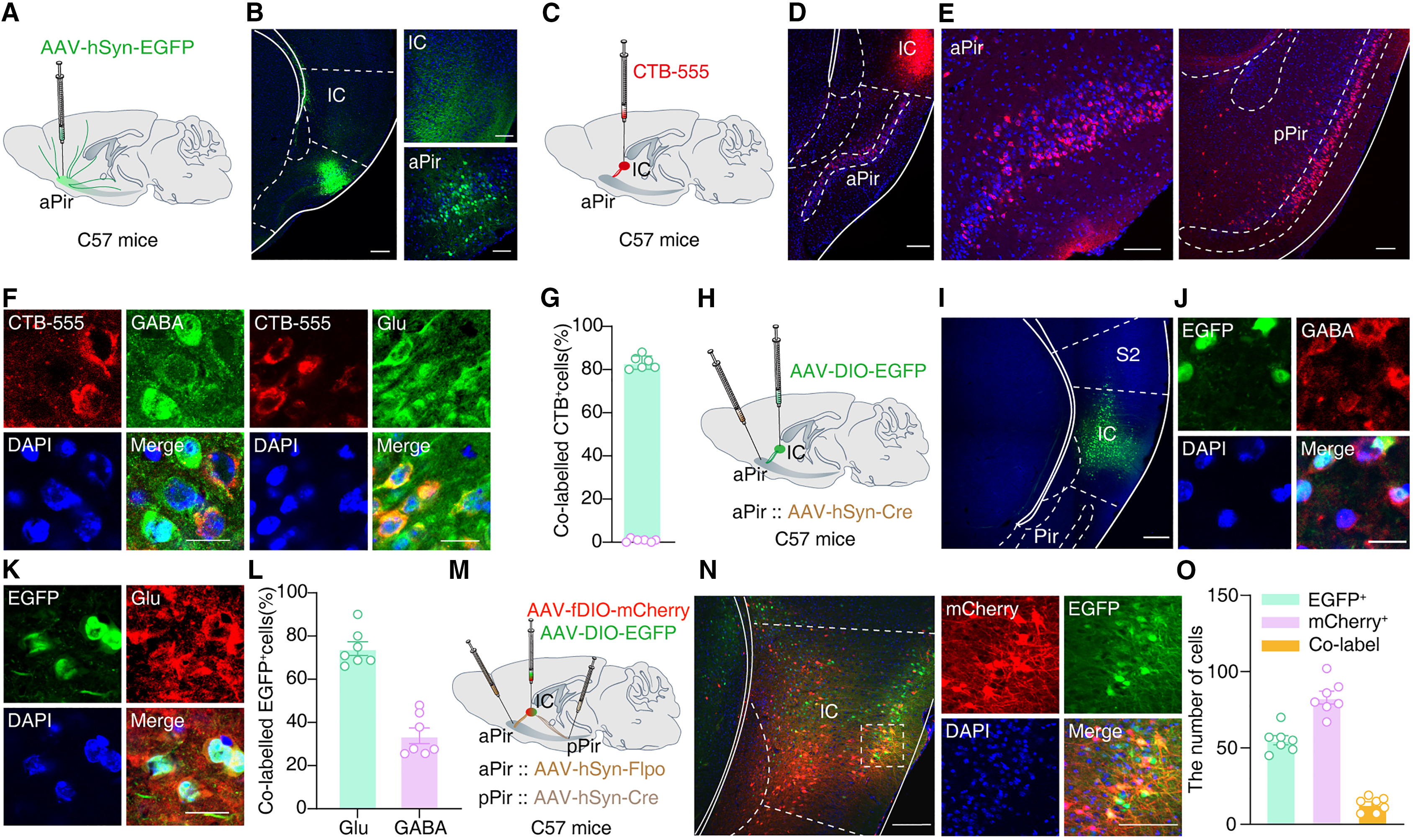
The insula integrates bodily, sensory and affective information and is implicated in pain processing. Anatomical tracing identified anterior piriform projections to insula, while retrograde labeling found corresponding piriform cells, most carrying glutamatergic markers.
Insular recipients included excitatory and inhibitory populations. Cells labeled in association with anterior versus posterior piriform input overlapped only partly. Similar odor responses could therefore engage different downstream arrangements with different functional consequences.
Source: Yumeng Yang et al. · Cell Reports · CC BY 4.0; © 2024 The Author(s). Published by Elsevier Inc.
Original figure and English caption ↗
How can excitatory input recruit inhibition?
An excitatory input need not make every downstream population more active. Anterior piriform input excited both insular glutamatergic and GABAergic cells, while local GABAergic cells could inhibit nearby excitatory neurons.
Electrophysiology supported this organization. Stimulating anterior piriform input evoked excitatory responses and later inhibitory responses in insular excitatory cells. Together with recordings from local inhibitory cells, the findings support recruitment of feedforward inhibition, making network arrangement central to the downstream effect.
Source: Yumeng Yang et al. · Cell Reports · CC BY 4.0; © 2024 The Author(s). Published by Elsevier Inc.
Original figure and English caption ↗
An amplified inflammatory response is attenuated
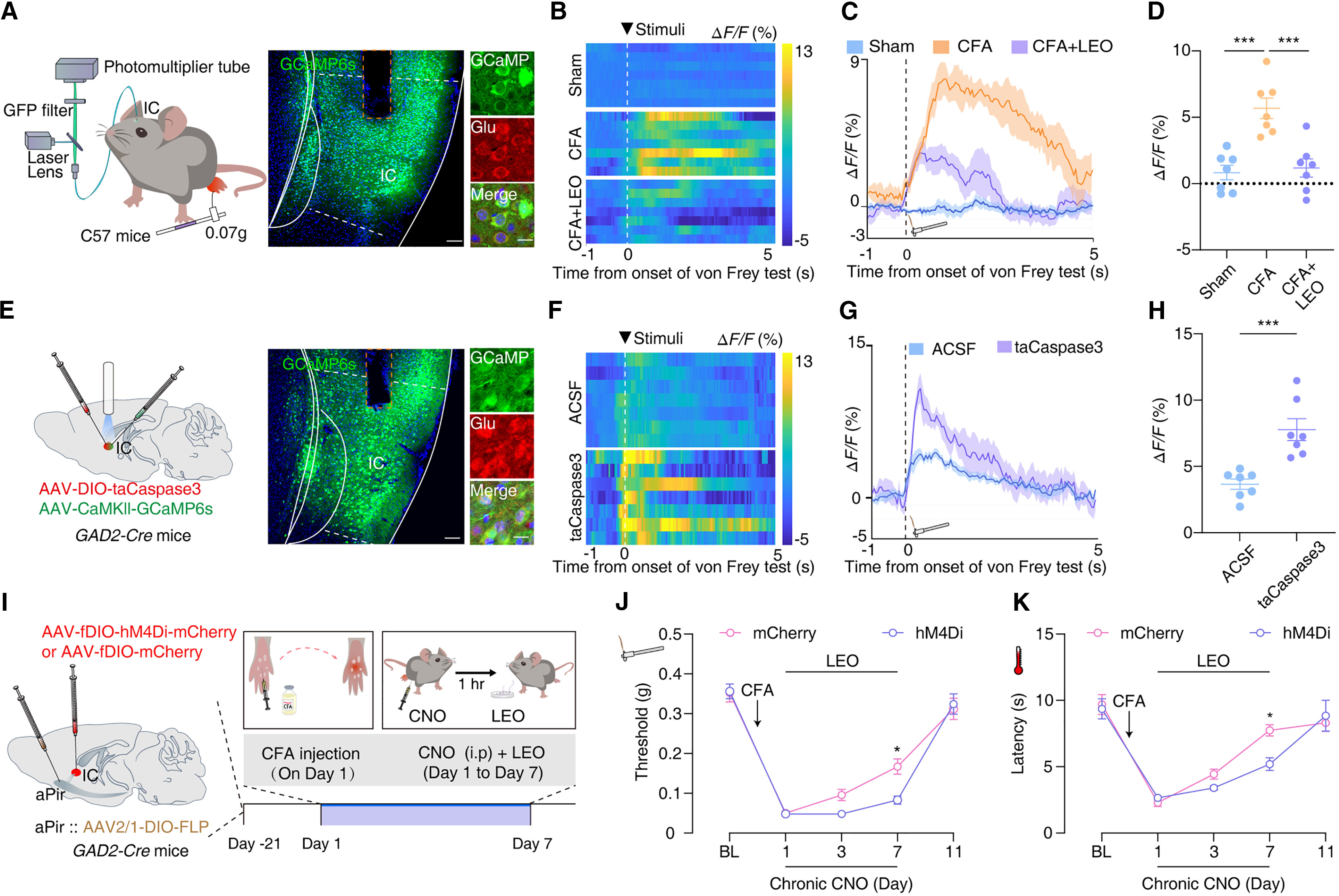
Mild mechanical stimulation produced larger calcium responses in insular excitatory populations of CFA mice, and lavender exposure attenuated that increase. Reducing local insular GABAergic cells increased the excitatory response under odor exposure, linking local inhibition to activity modulation.
Odor responses in piriform cortex, local excitatory–inhibitory organization and stimulus-evoked insular activity began to form a connected account. A sensory input could influence nociceptive processing through identifiable downstream cellular interactions.
Source: Yumeng Yang et al. · Cell Reports · CC BY 4.0; © 2024 The Author(s). Published by Elsevier Inc.
Original figure and English caption ↗
Changing the pathway alters nociceptive responses
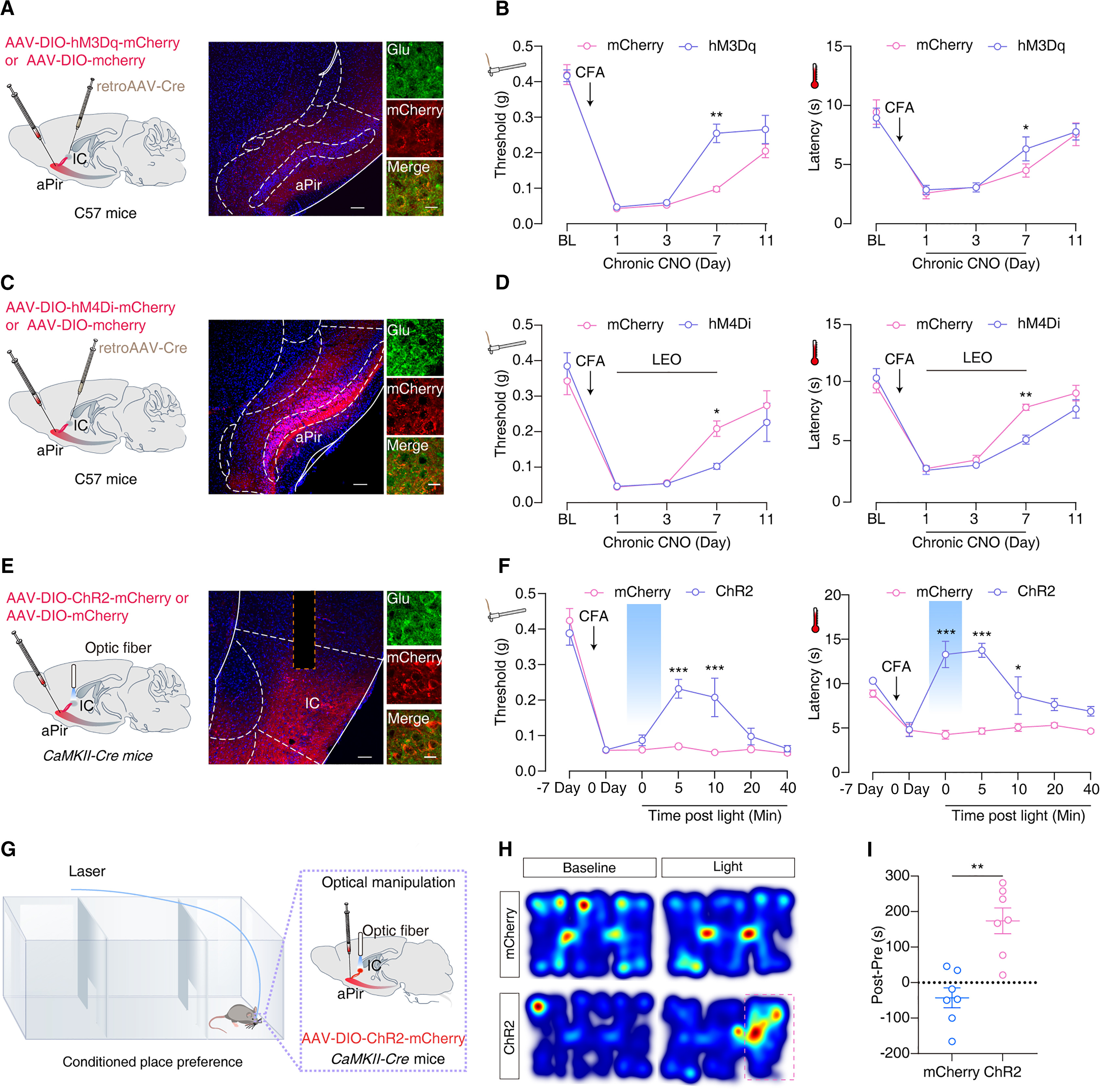
Activating insula-projecting anterior piriform cells increased mechanical thresholds and thermal withdrawal latency in CFA mice. Inhibiting this projection-defined population during odor exposure attenuated the improvement. Activating glutamatergic anterior piriform terminals in insula likewise altered both withdrawal measures and produced stimulation-associated place preference.
Posterior piriform cortex also responded to the odor, yet activation of its corresponding projection did not produce the same significant threshold changes. Separating these functions was a key advance. The evidence comes from male mice with inflammatory pain; equivalent circuitry in humans and relevance to other pain types remain open questions.
Source: Yumeng Yang et al. · Cell Reports · CC BY 4.0; © 2024 The Author(s). Published by Elsevier Inc.
Original figure and English caption ↗