After ethanol withdrawal, mechanical sensitivity points to a hippocampal–cingulate circuit
After short-term ethanol exposure ends, male mice show lower mechanical thresholds without a significant thermal-threshold change. An excitatory dorsal-CA1-to-anterior-cingulate pathway contributes to the persistent sensitivity.
Alcohol’s relationship with pain changes across exposure and withdrawal. Withdrawal-related sensitivity has often been studied in the setting of prolonged dependence. A 2024 Science Advances study examines an earlier window, after short-term exposure in mice. Mechanical thresholds fall despite no clear emergence of the tested dependence-related features. Following this change, the researchers identify an excitatory pathway from dorsal hippocampal CA1 to anterior cingulate cortex.
After ethanol withdrawal, excitatory activity increases in dorsal CA1 and anterior cingulate cortex. Suppressing their connecting pathway raises mechanical thresholds in affected mice and partially alleviates sensitivity on the third day.
Contents · 7 sections
Thermal and mechanical stimuli give different results
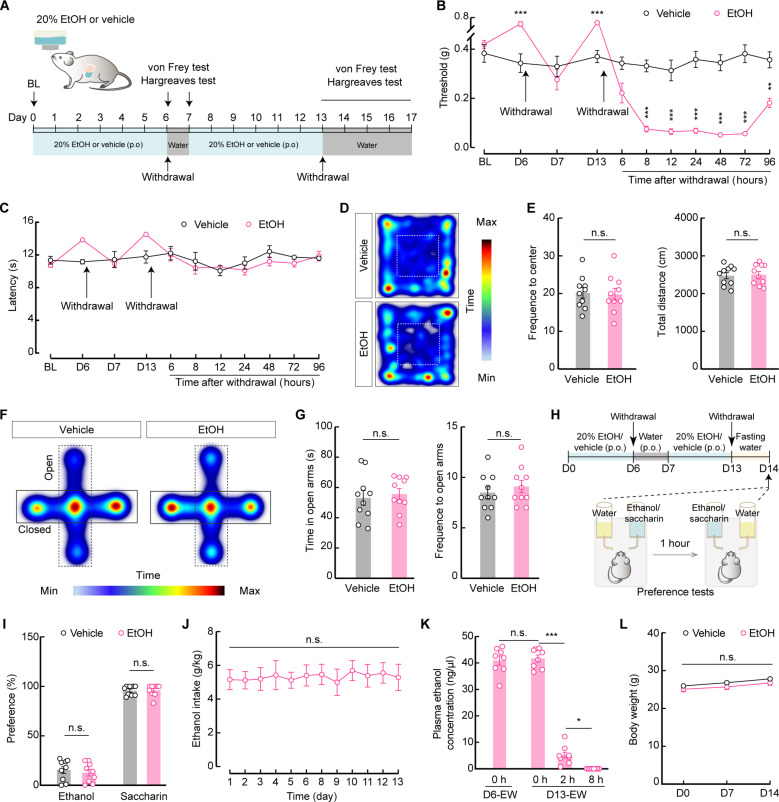
After about two weeks of ethanol exposure, male mice show lower hindpaw mechanical-response thresholds during withdrawal, without a significant change in thermal thresholds. The mechanical sensitivity remains observable on the third day. The contrast identifies the affected sensory measure.
Measured anxiety-like indices in the open field and elevated maze do not significantly change, and total movement remains similar. Ethanol preference is not higher and intake does not progressively increase during observation. The study therefore examines early mechanical sensitivity without accompanying increases in those anxiety or preference measures.
Source: Yang XL et al. · Science Advances · CC BY-NC
Original figure and English caption ↗
A familiar memory region joins the sensitivity state
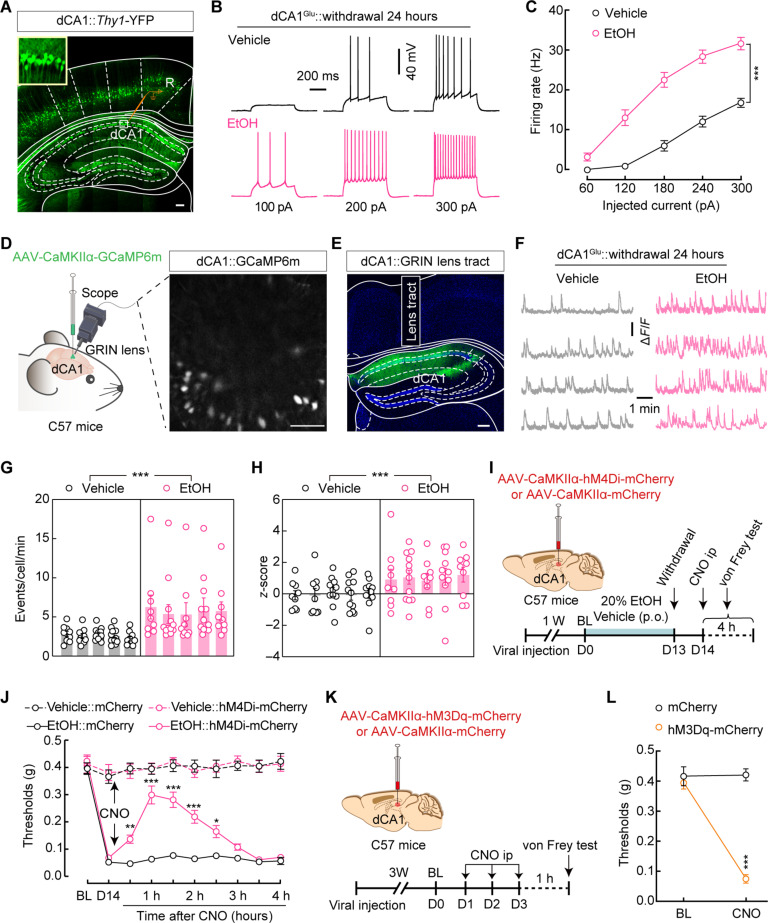
Dorsal hippocampal CA1 (dCA1), widely studied in learning and memory, is also sensitive to changes in ethanol exposure. After withdrawal, glutamate-associated cells show increased c-Fos labeling. Slice recordings reveal easier spike generation, while in-vivo imaging shows more frequent and stronger calcium events. These observations converge on increased cellular activity.
Reducing dCA1 excitatory-cell activity raises mechanical thresholds in withdrawal mice without significantly changing thresholds in controls. Conversely, activating these cells in ethanol-naive mice lowers contralateral hindpaw mechanical thresholds without a significant overall movement change.
Source: Yang XL et al. · Science Advances · CC BY-NC
Original figure and English caption ↗
An excitatory connection reaches anterior cingulate cortex
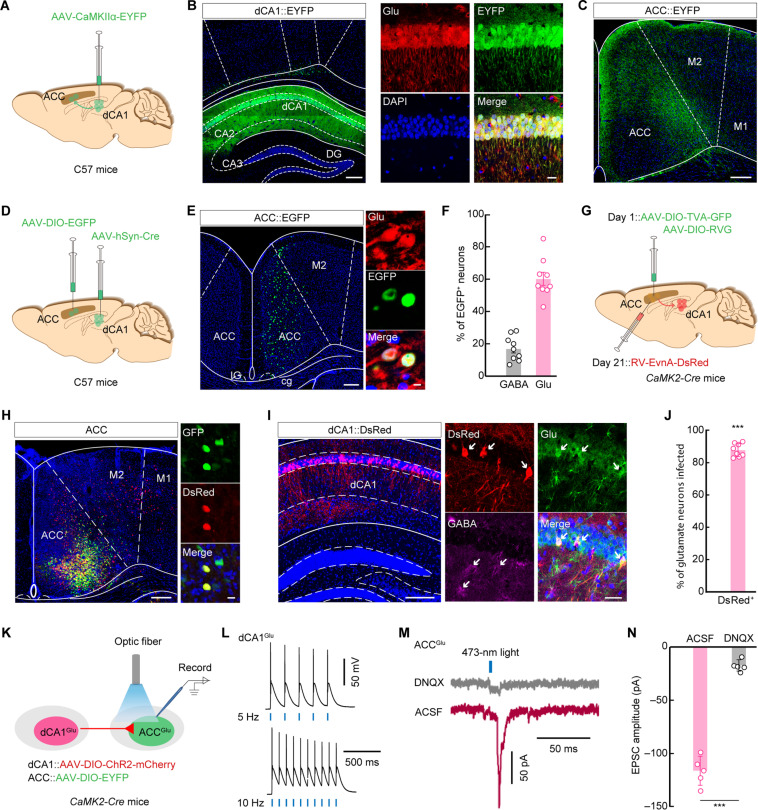
dCA1 sends outputs to several regions, including anterior cingulate cortex (ACC). Because ACC integrates pain-related information, it becomes a focus of tracing. Anterograde and retrograde labeling connect glutamate-associated dCA1 cells with glutamate-associated ACC cells, identifying a downstream recipient for hippocampal signals.
The connection is also functional. Recruiting dCA1 terminals in ACC evokes excitatory postsynaptic currents in ACC cells; AMPA-receptor blockade eliminates the currents. Tracing and functional recordings connect the two regions through a pathway capable of excitatory transmission.
Source: Yang XL et al. · Science Advances · CC BY-NC
Original figure and English caption ↗
A weak mechanical stimulus recruits a clear calcium response
In withdrawal mice, ACC-projecting dCA1 cells become more active, and ACC excitatory cells also spike more readily. Different in-vivo imaging approaches detect increased ACC calcium activity, extending the pathway change from its hippocampal source to its cortical recipient.
A weak hindpaw mechanical stimulus rapidly increases ACC calcium signals in withdrawal mice, without the same prominent response in controls. Single-cell and population recordings agree that a relatively weak external stimulus recruits stronger cortical activity in this state.
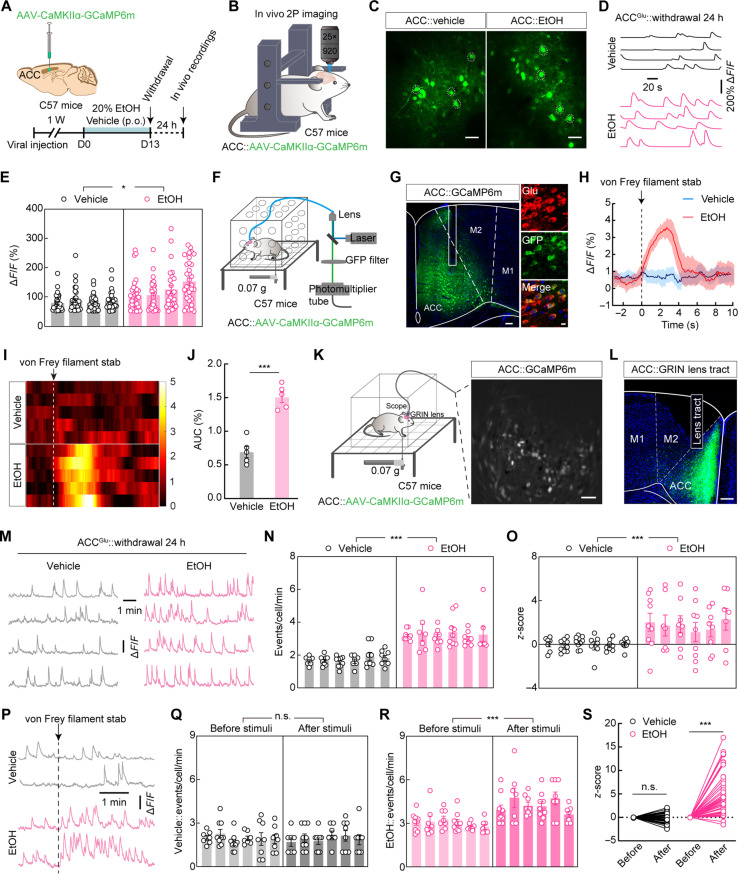
Source: Yang XL et al. · Science Advances · CC BY-NC
Original figure and English caption ↗
Reducing hippocampal input changes cortex and behavior
If hippocampal input helps sustain elevated ACC activity, what happens when it is reduced? dCA1 inhibition diminishes ACC calcium activity in withdrawal mice. Suppressing dCA1 terminals in ACC reduces ACC excitability and raises mechanical thresholds, supplying intervention evidence linking pathway activity and behavior.
In ethanol-naive mice, dCA1 activation increases ACC calcium activity, while activating its terminals in ACC lowers mechanical thresholds. The opposing interventions provide complementary evidence. Pathway inhibition does not significantly change thresholds in normal controls, indicating a dependence on the animal’s current state.
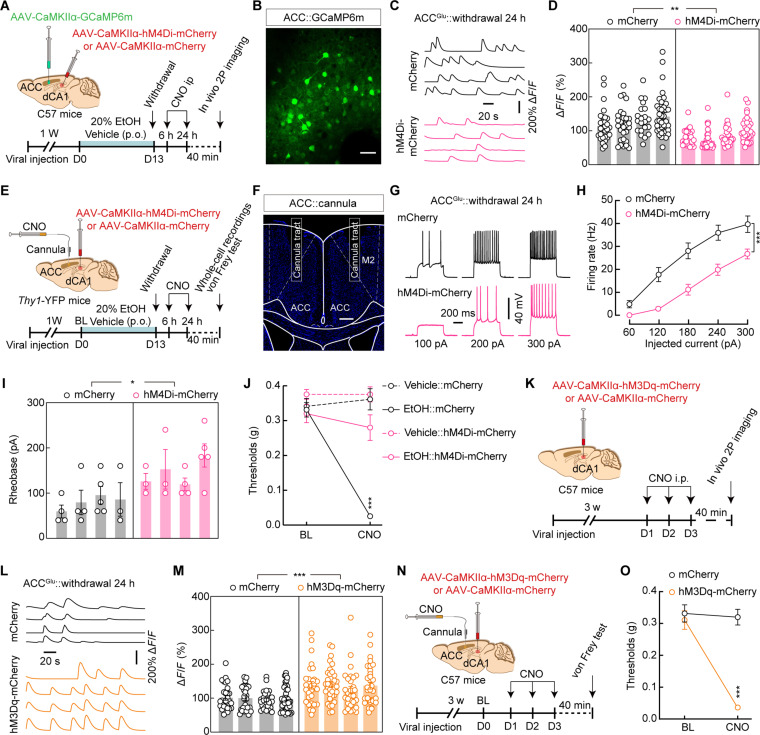
Source: Yang XL et al. · Science Advances · CC BY-NC
Original figure and English caption ↗
Ethanol clears while circuit changes persist
Plasma ethanol declines after withdrawal and becomes undetectable relatively early, yet mechanical sensitivity remains on day three. ACC-projecting dCA1 cells and ACC excitatory cells remain more active, and weak mechanical stimulation still evokes a clear ACC calcium response in affected mice.
Suppressing the pathway at this later time partially restores mechanical thresholds. Persistent sensitivity accompanies interregional activity changes rather than simply the immediate presence of ethanol in blood. In this male mouse study, the hippocampal–cingulate connection links a short ethanol history with subsequent sensory responses.
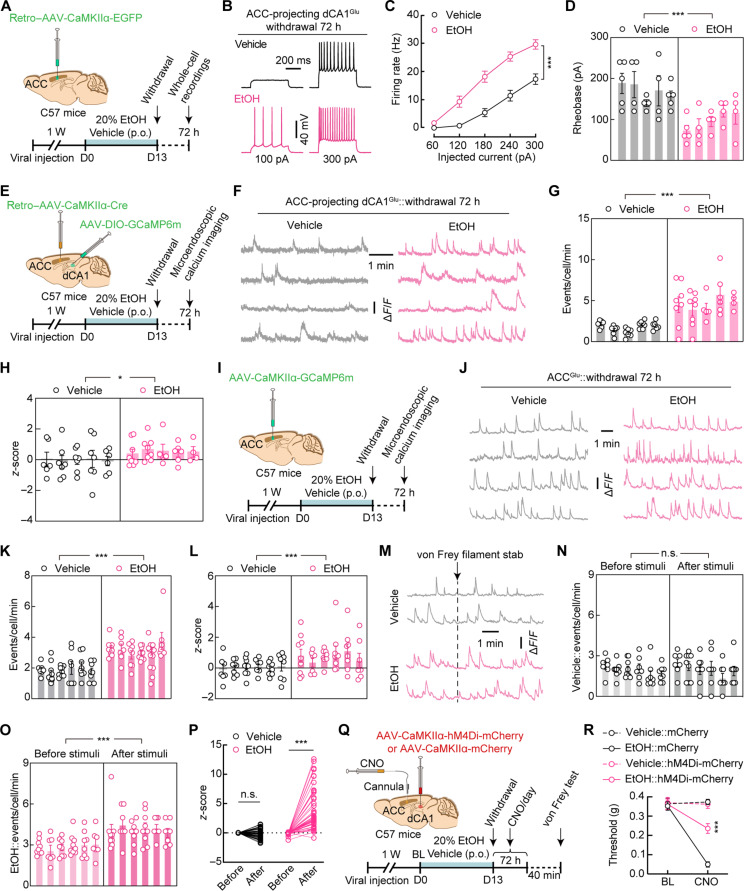
Source: Yang XL et al. · Science Advances · CC BY-NC
Original figure and English caption ↗
Memory-related circuitry can also shape sensory sensitivity
The finding concerns a defined window: after short-term ethanol exposure, mechanical responses change before clear emergence of the tested dependence-related features. Excitatory hippocampal–cingulate connectivity contributes to this change and its persistence. A region familiar from memory research can also influence responses to bodily stimuli through its outputs.