Beyond convulsions: a dorsal raphe link to seizure-related respiratory arrest
In DBA/1 mice, enhancing dorsal raphe serotonin-associated activity reduces seizure-induced respiratory arrest. Receptor-related intervention in the PBC provides evidence for a brainstem network link.
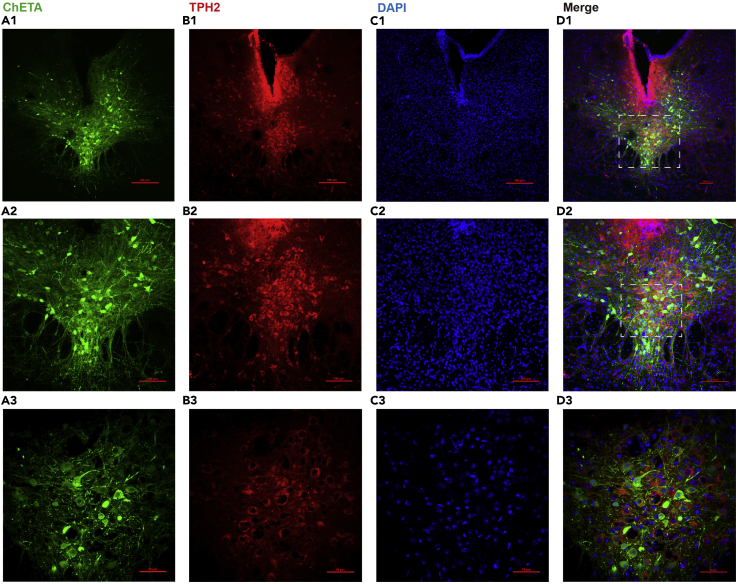
Convulsions are conspicuous during a seizure, but whether breathing continues is also critical. A study published in iScience on September 27, 2022 examined seizure-induced respiratory arrest in DBA/1 mice, focusing on dorsal raphe serotonin-associated cells and the respiratory pre-Bötzinger complex, or PBC. Enhancing dorsal raphe activity reduced respiratory arrest, while receptor-related intervention in the PBC weakened that effect. The work links seizure and breathing outcomes while leaving important circuit questions open.
Dorsal raphe activity, PBC receptor-related effects and seizure-induced respiratory arrest are functionally linked. These mouse findings establish neither a unique direct synaptic pathway nor prevention of human SUDEP.
Contents · 6 sections
Seizures and respiratory arrest are related but distinct
SUDEP involves complex physiological mechanisms. This study focused on seizure-induced respiratory arrest, or S-IRA, in a mouse model, extending the question beyond whether a seizure occurs to which vital functions are affected.
Fewer respiratory arrests do not necessarily mean seizures are eliminated, and unchanged convulsion scores cannot substitute for breathing measures. Comparing multiple outcomes helps separate these effects. Model incidence also differs from long-term clinical risk assessment.
Respiratory arrest decreases after activity enhancement
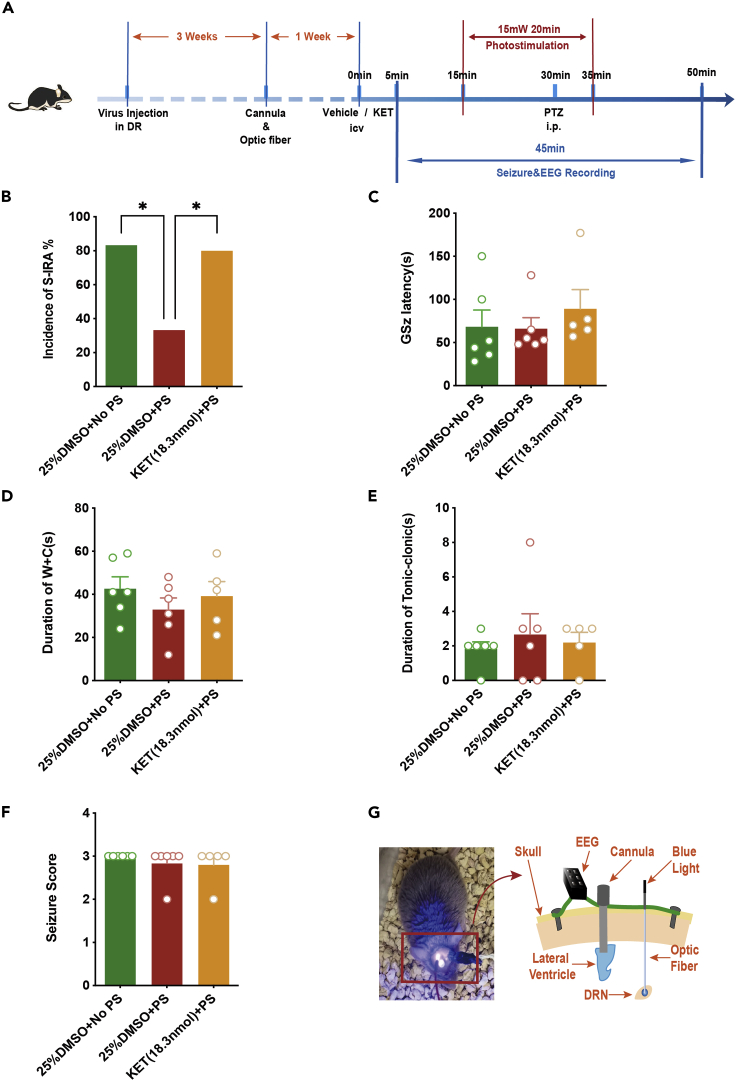
The dorsal raphe is a major source of serotonin cells. Enhancing related activity in DBA/1 mice reduced respiratory arrest accompanying chemically induced seizures. Together with pharmacological comparisons, this supports serotonergic involvement in the model’s respiratory outcome.
Several seizure-behavior measures in this comparison were not significantly altered, including seizure score and durations of particular phases. A better respiratory outcome could therefore coexist with continuing convulsions. Other conditions showed seizure-measure changes, so this was not a universal absence of seizure effects.
Source: Ma H et al. · iScience · CC BY-NC-ND
Original figure and English caption ↗
Receptor-related effects in a respiratory region
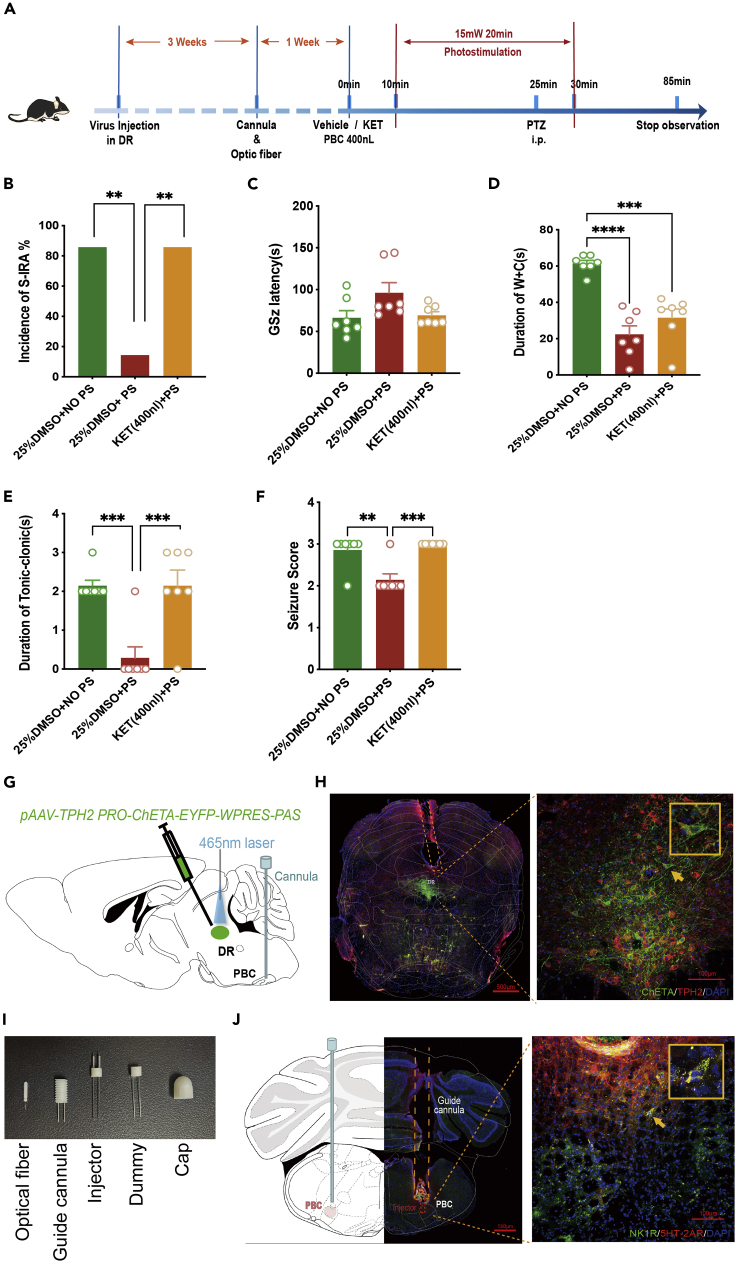
Because the PBC contributes to respiratory rhythm, it became a focus for further testing. Local serotonin-receptor-related pharmacological intervention weakened the respiratory protection associated with dorsal raphe enhancement, making the functional link more regionally specific.
The paper focuses on 5-HT2A receptors, but the drug action is not exclusive to one receptor or cell class. The results support PBC receptor-related involvement without assigning every effect to one molecule. Some seizure scores and durations also changed in this condition.
Source: Ma H et al. · iScience · CC BY-NC-ND
Original figure and English caption ↗
Direct PBC manipulation gives a different result
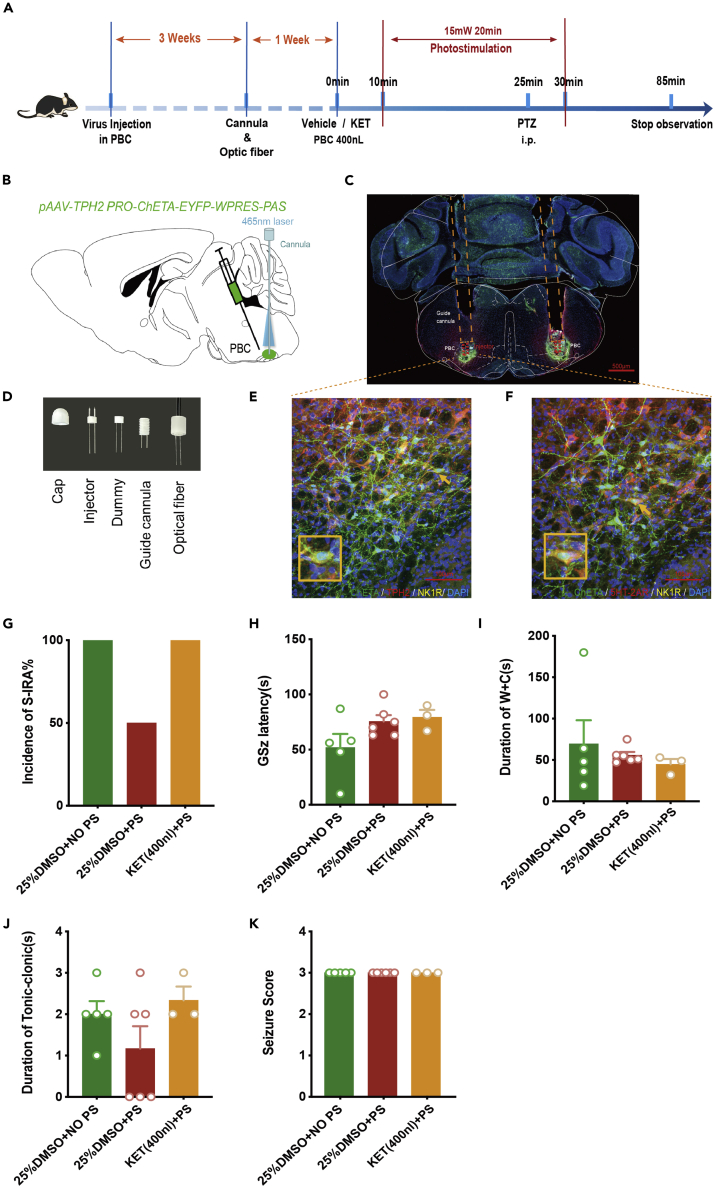
A separate comparison directly enhanced activity in marked PBC cells. Respiratory-arrest incidence differed numerically, but the comparison was not significant. Directly altering local marked cells therefore did not provide an interchangeable result with dorsal raphe enhancement.
This negative result does not show that the PBC is irrelevant. Cell identity, input source and network state may matter. A region’s association with breathing does not predict the consequence of enhancing any arbitrary population within it.
Source: Ma H et al. · iScience · CC BY-NC-ND
Original figure and English caption ↗
PBC calcium activity changes with upstream intervention
During tonic seizures, dorsal raphe enhancement was accompanied by a lower PBC population calcium peak. This provides another functional readout linking upstream intervention with downstream regional activity during a specific seizure phase.
Population calcium does not directly measure firing in every respiratory cell or fully establish how breathing rhythm is restored. A smaller signal does not mean the entire PBC is switched off; cellular composition, seizure phase and other physiological measures remain relevant.
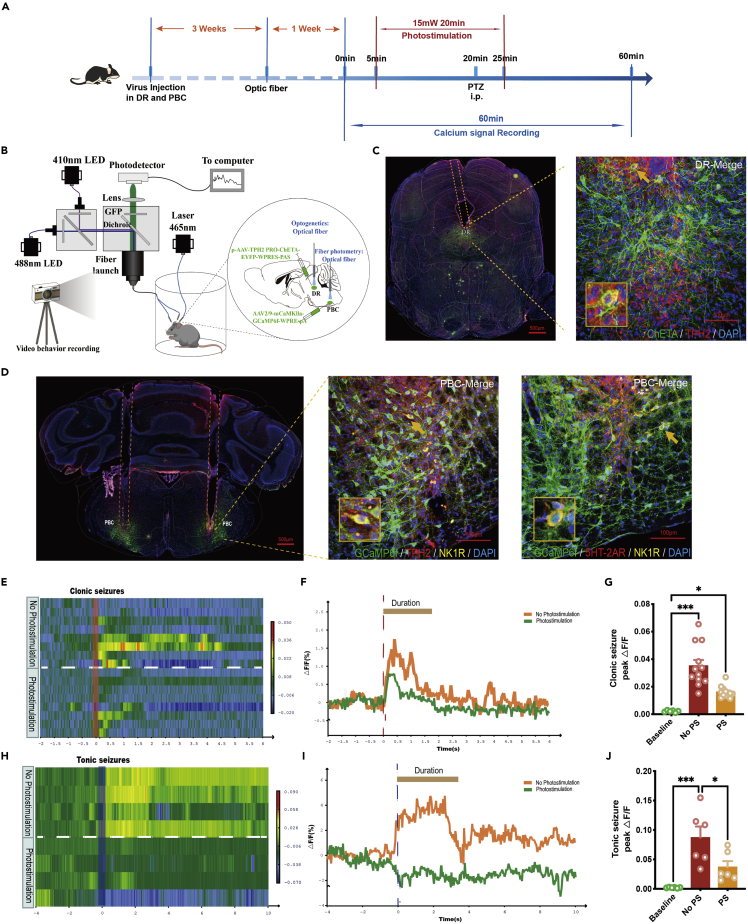
Source: Ma H et al. · iScience · CC BY-NC-ND
Original figure and English caption ↗
Functional evidence precedes a complete circuit account
Respiratory outcomes, local pharmacology and population signals place the dorsal raphe and PBC within a functional framework. The authors also acknowledge that tracing and activity markers do not establish a specific direct synaptic connection; other brainstem regions and serotonin receptors may contribute.
These findings concern DBA/1 mice of either sex under induced-seizure conditions and do not establish conclusions for every population. They highlight respiratory networks as an important dimension beyond seizures themselves, while translation to effective human SUDEP intervention remains to be tested.