Why does returning to a familiar place evoke more fear? An H1 receptor clue
A mouse study links histamine H1 receptors on cholinergic cells to medial septum–dentate gyrus signaling during contextual fear retrieval. Reduced receptor expression increases context-evoked freezing without similarly enhancing tone-cued fear.
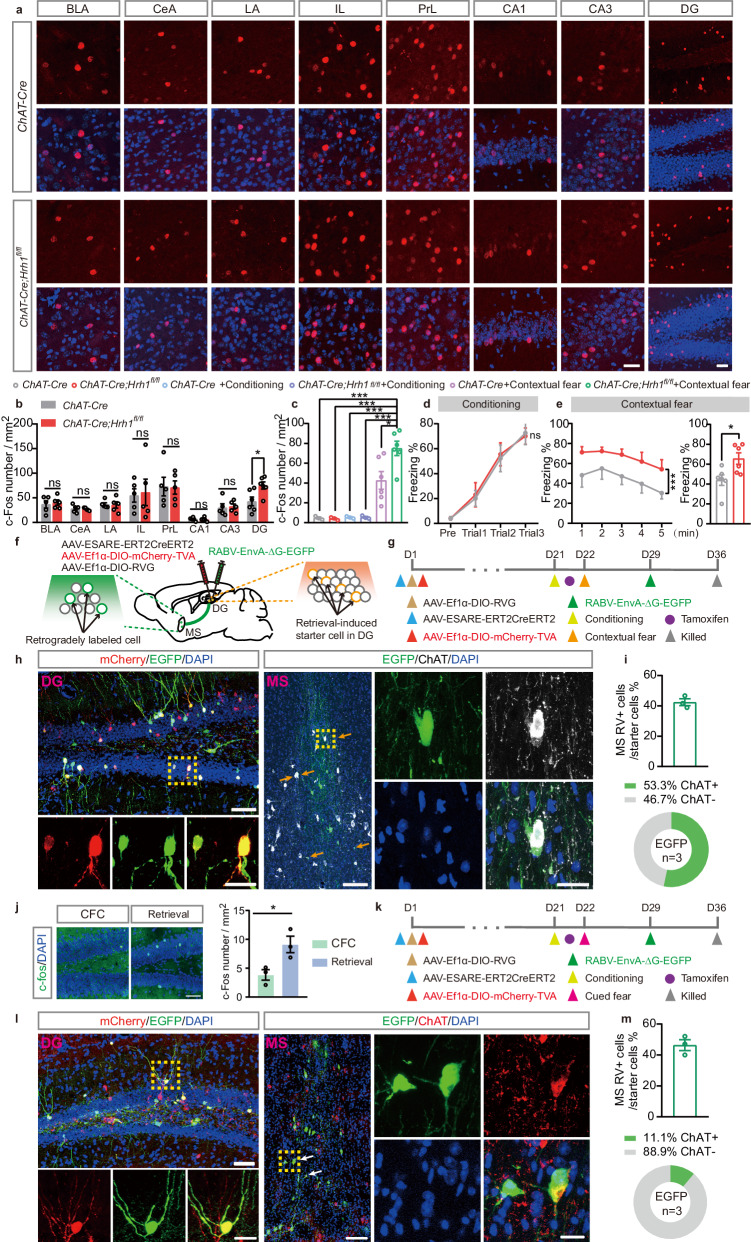
An unsettling experience can return with a familiar sound or with stepping back into a particular place. How does the brain distinguish what was heard from where it happened, and regulate the strength of memory expression? A study published in Nature Communications on July 10, 2024 focuses on histamine H1 receptors. Although these receptors occur in several cell types, H1 receptors on a medial septal cholinergic population are linked to dentate gyrus activity and contextual fear retrieval in mice. Reducing receptor expression increases freezing upon return to the associated context without similarly enhancing responses to the sound cue, revealing specificity in cell type, connectivity and memory phase.
Reduced H1 receptor expression in medial septal cholinergic cells accompanies lower excitability, weaker behavior-linked dentate acetylcholine dynamics and enhanced contextual freezing. Retrieval-phase enhancement of the cholinergic output or inhibition of retrieval-recruited dentate cells attenuates the enhanced response.
Contents · 6 sections
One experience leaves two kinds of cues
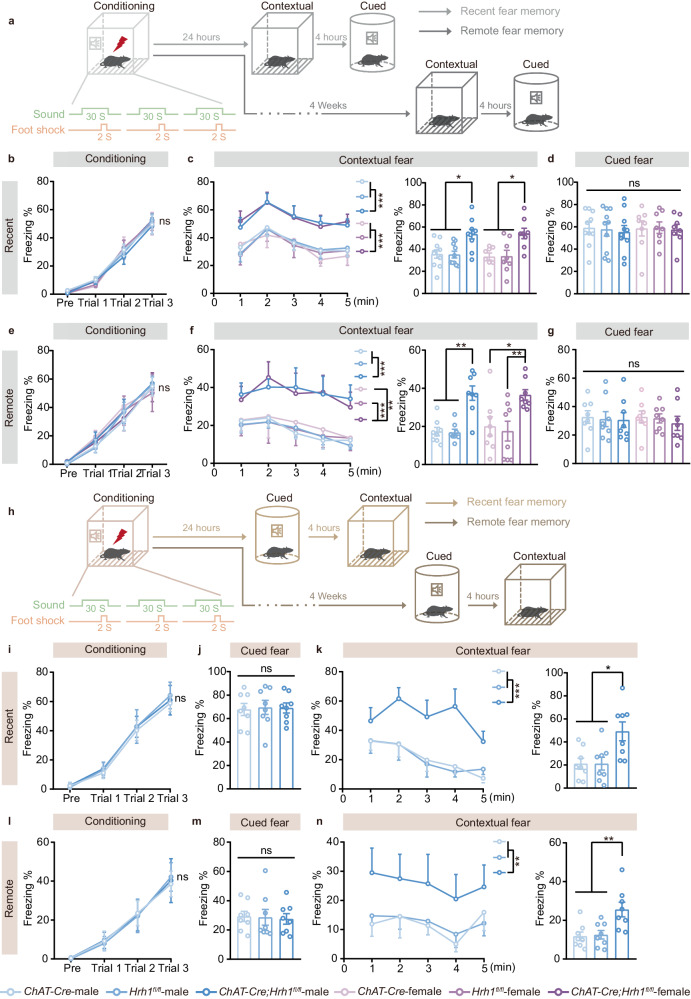
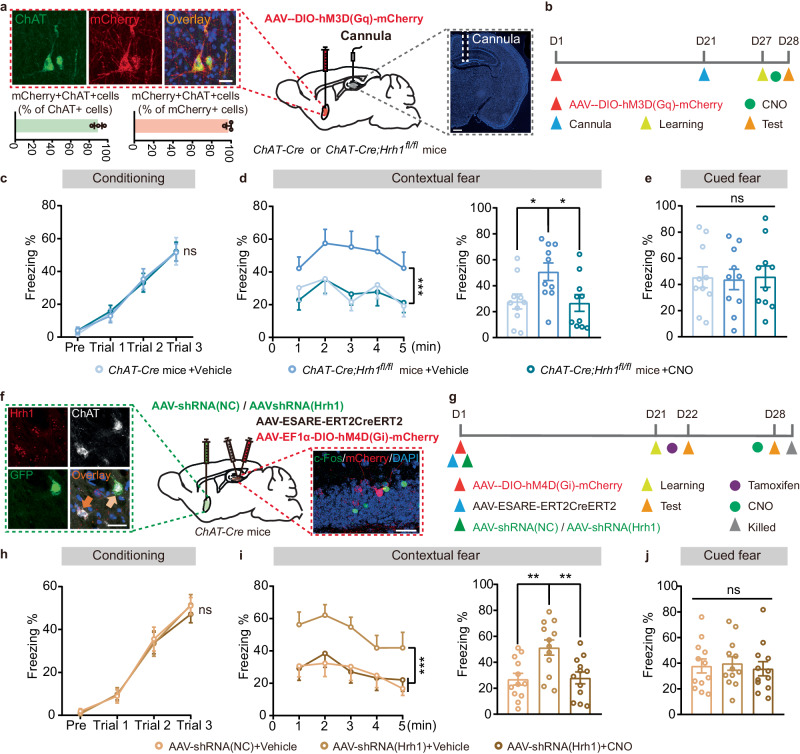
In fear conditioning, both context and sound can become routes to remembering. Deleting the H1 receptor gene Hrh1 in cholinergic cells left freezing during training comparable to controls, but increased freezing on return to the original context. Tone-cued responses did not significantly differ, concentrating the effect on context-evoked expression rather than uniformly amplifying fear responses.
The pattern appeared in recent tests one day later and remote tests four weeks later, with similar behavioral patterns in males and females. Reversing the order of context and cue tests preserved the selective enhancement. Different features of the same experience can therefore be affected differently, providing a starting point for identifying the relevant cells and connections.
Source: Cheng L et al. · Nature communications · CC BY
Original figure and English caption ↗
The receptor clue converges on medial septum
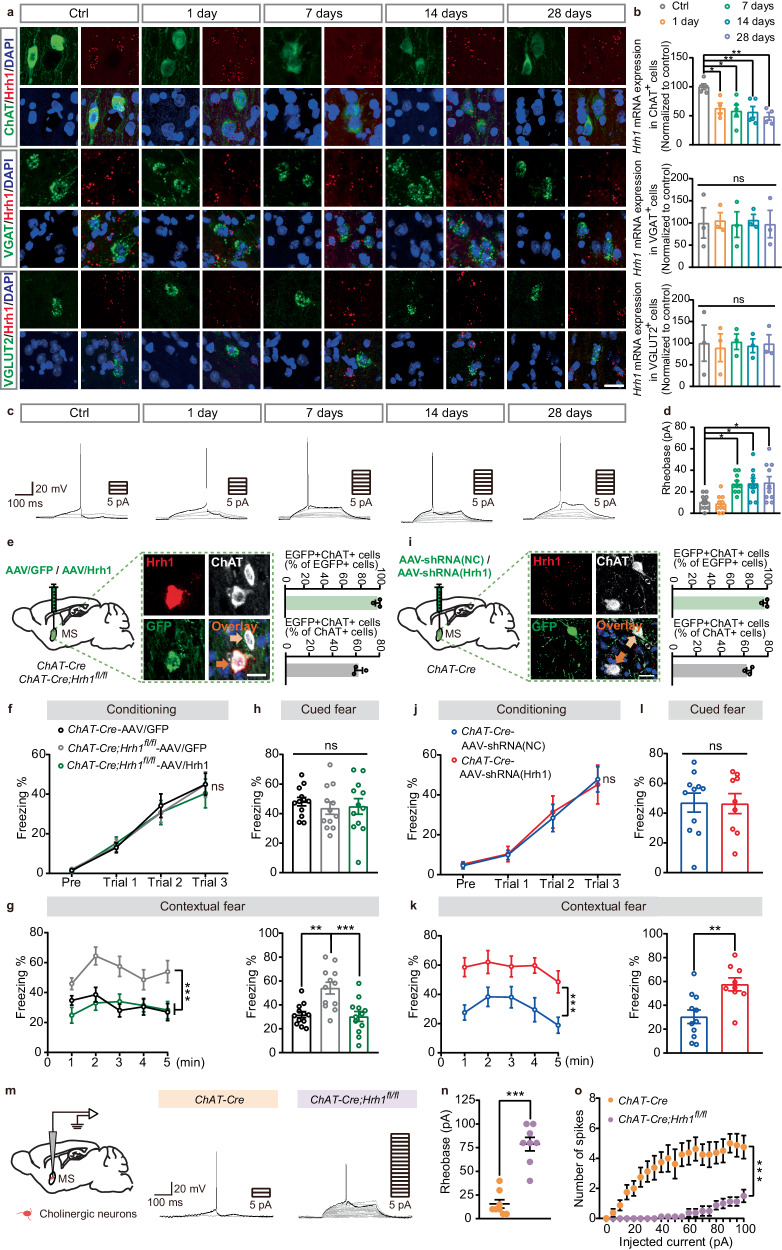
After conditioning, Hrh1 messenger RNA declined in medial septal cholinergic cells, without significant changes in local GABAergic or glutamatergic cells. RNA changes were present by one day, while significant increases in the current required to initiate firing emerged later. Receptor expression and cellular excitability did not change in complete temporal lockstep.
Restoring H1 receptors in this population attenuated enhanced contextual freezing in the deletion model, while local receptor knockdown in otherwise receptor-expressing mice produced the opposite change. Corresponding manipulations in the horizontal diagonal band did not produce the same significant behavioral effects. The receptor’s location and cellular identity matter alongside its name.
Source: Cheng L et al. · Nature communications · CC BY
Original figure and English caption ↗
Which dentate cells are recruited by retrieval?
The medial septum sends cholinergic input to hippocampus. After contextual retrieval, receptor-deficient mice showed more c-Fos-labeled cells in dentate gyrus, without the same significant differences in tested amygdalar, prefrontal or other hippocampal regions. The dentate difference was absent without context re-exposure, linking it to the retrieval situation.
Monosynaptic tracing from retrieval-active dentate cells identified medial septal inputs including cholinergic cells. The cholinergic fraction among labeled medial septal upstream cells was higher for context-related than for cue-related dentate populations. This connects context-associated dentate ensembles to an extrinsic modulatory input.
Source: Cheng L et al. · Nature communications · CC BY
Original figure and English caption ↗
How does acetylcholine change as behavior switches?
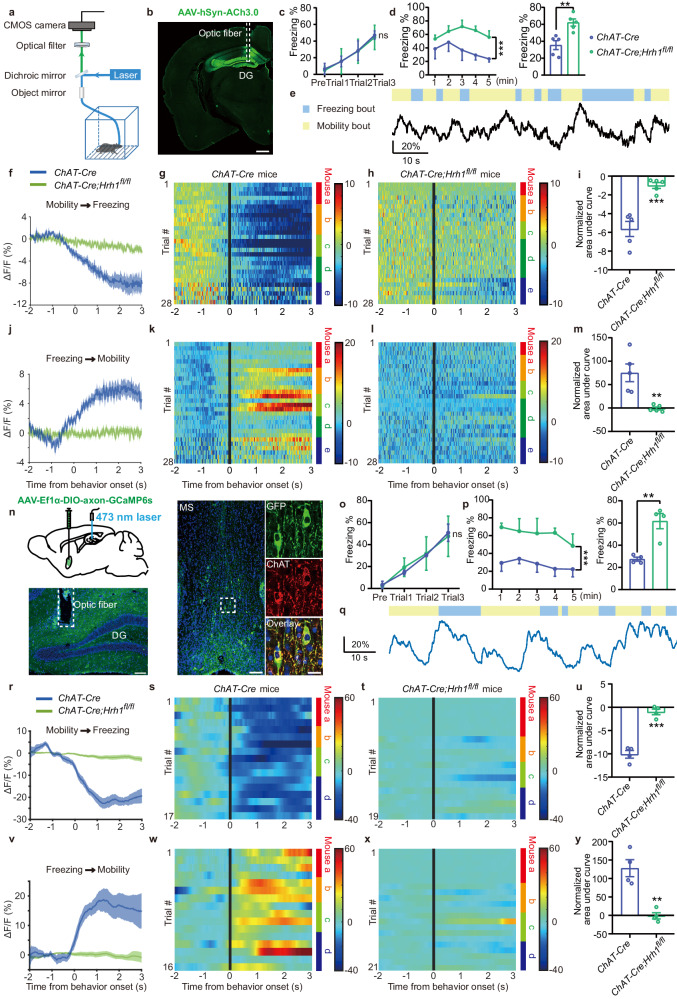
Around behavioral transitions, dentate acetylcholine signals declined as control mice switched from movement to freezing and increased with movement resumption. These behavior-linked fluctuations were flatter in receptor-deficient mice. Calcium signals from medial septal cholinergic axons in dentate gyrus showed similarly attenuated dynamics.
The transition-related dynamics were observed during contextual retrieval. Recordings in the post-training consolidation period did not show the same movement–freezing-associated fluctuations. Acetylcholine thus contributes a dynamic signal associated with behavior during memory expression, and receptor deficiency attenuates that modulation.
Source: Cheng L et al. · Nature communications · CC BY
Original figure and English caption ↗
Adjusting the connection during retrieval
Would enhancing the relevant cholinergic output during retrieval attenuate the stronger context response? Increasing activity associated with medial septal cholinergic terminals in dentate gyrus reduced enhanced contextual freezing in receptor-deficient mice. Corresponding intervention after training did not show the same behavioral effect, further implicating retrieval-phase modulation.
A complementary test targeted dentate cells. After reducing H1 receptors in medial septal cholinergic cells, inhibiting dentate neurons recruited during contextual retrieval also attenuated enhanced freezing. Interventions at the two ends connect a receptor, a modulatory input and a retrieval-related population.
Source: Cheng L et al. · Nature communications · CC BY
Original figure and English caption ↗
Regulating expression depends on cells and timing
Contextual memory expression remains subject to precise regulation when the memory is retrieved. Comparable training and cued responses alongside stronger contextual freezing reveal specificity across cell type, region and behavioral phase. H1 receptors provide a molecular entry point into the medial septum–dentate gyrus relationship.
The medial septum contains multiple cell types, and other mixed-population manipulations in the study did not always produce the same direction of effect. How different inputs recruit these cells and alter local dentate networks remains to be explored. Understanding why a context evokes a particularly strong response requires attention to receptors, populations and the moment of retrieval.