Sensory channel TRPA1 also participates in cocaine reward
Rodent experiments connect TRPA1 with cocaine-related place preference, drug-taking responses and accumbal synaptic changes, with clues involving dopamine uptake and D1 cells.
TRPA1 is familiar as an ion channel in sensory and pain research. What might it contribute to the brain’s reward network? A study published in Molecular Psychiatry on May 31, 2024 examines nucleus accumbens. Reducing local TRPA1 expression or blocking its function attenuates several cocaine-related behaviors. Mouse, rat and cell experiments follow links between the channel, dopamine signaling and excitatory transmission.
Reducing accumbal TRPA1 expression or blocking its function attenuates cocaine-related place preference and some drug-taking measures while altering dopamine signals and D1-cell excitatory synaptic responses.
Contents · 7 sections
A drug-associated place becomes less preferred
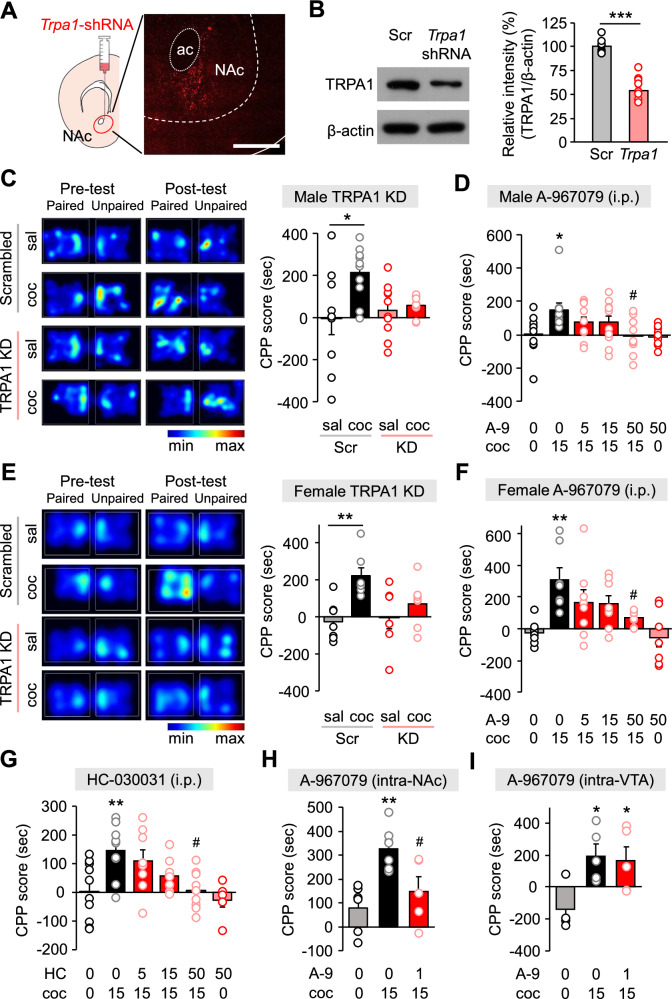
Place preference links environmental cues with drug experience. Controls spend more time in the area previously paired with cocaine, whereas reducing accumbal TRPA1 expression attenuates this preference. Corresponding experiments in male and female mice show the same direction, and channel antagonists produce related behavioral effects.
Location matters: local TRPA1 blockade in accumbens reduces cocaine-related preference, whereas the tested local blockade in ventral tegmental area does not significantly alter it. Antagonists alone also do not significantly change place preference, directing further investigation toward accumbens.
Source: Kim YJ et al. · Molecular psychiatry · CC BY
Original figure and English caption ↗
Synaptic enhancement varies with subregion and sex
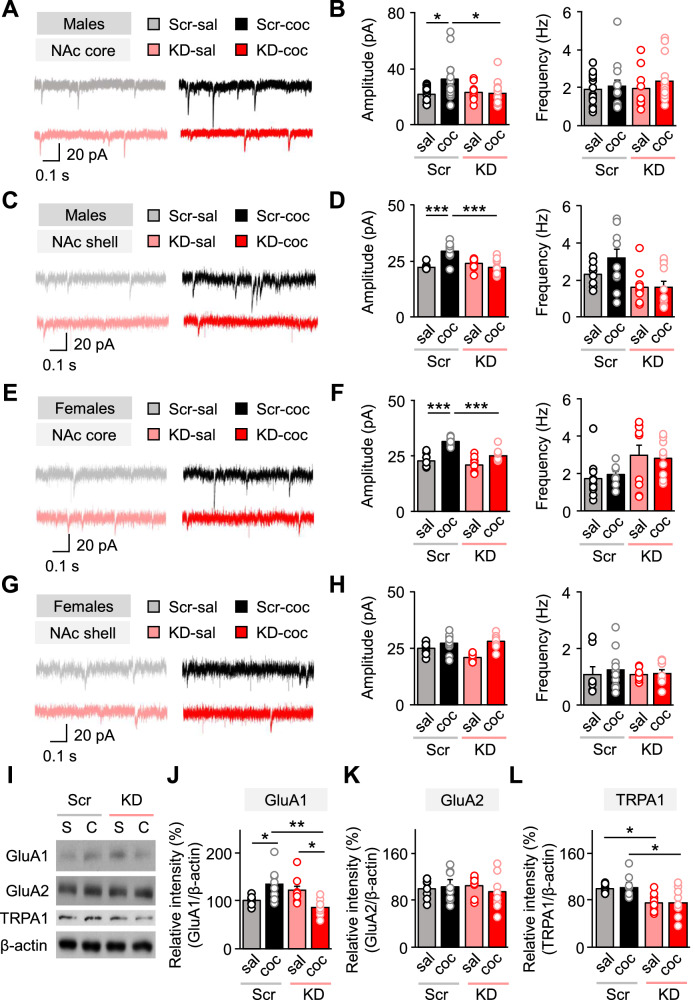
Repeated cocaine exposure increases spontaneous excitatory-current amplitude in accumbal-core medium spiny neurons in both sexes. In shell, amplitude increases in males but not significantly in females. Core and shell both belong to the reward network, but their changes are not uniform.
TRPA1 reduction removes the amplitude enhancement where it was originally present. In male tissue, the rise in AMPA-receptor subunit GluA1 is also absent, while GluA2 does not significantly change. These cellular findings complement the altered behavioral preference.
Source: Kim YJ et al. · Molecular psychiatry · CC BY
Original figure and English caption ↗
Drug-taking responses also change in rats
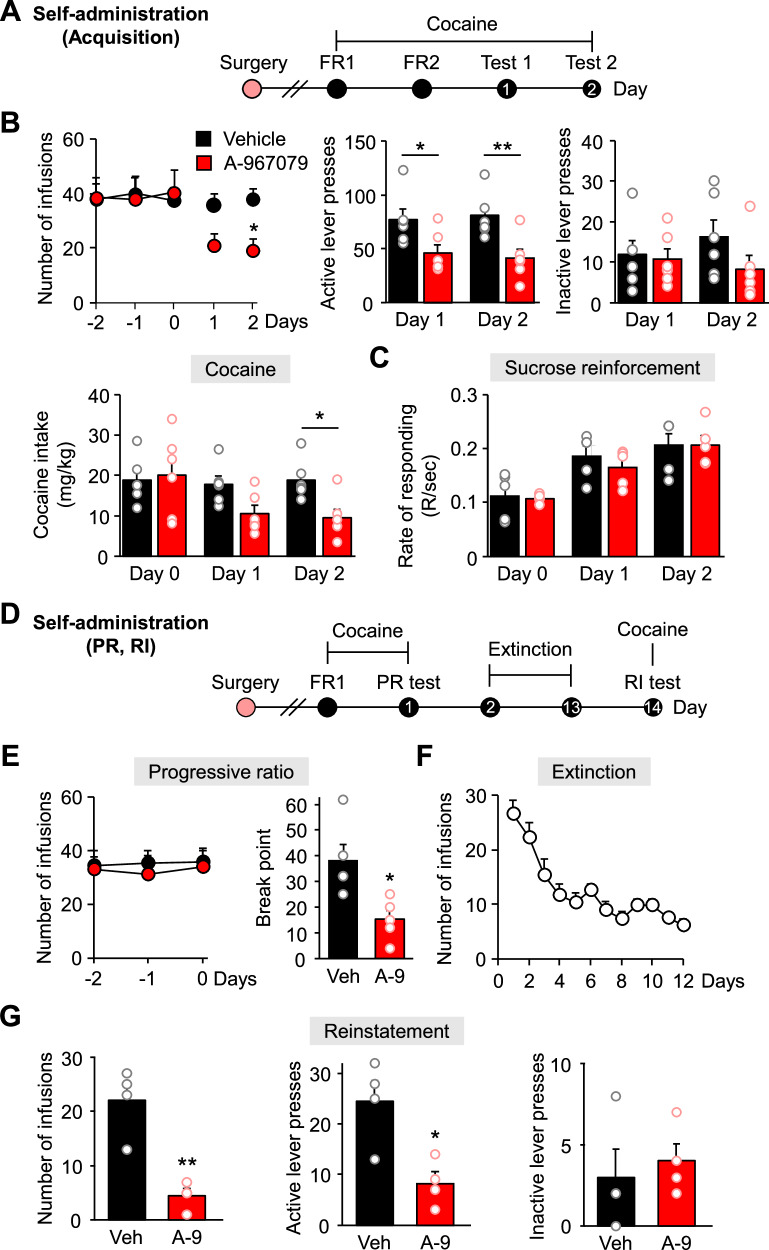
In male rats, the team examines active drug acquisition. TRPA1 blockade reduces active-lever responses and cocaine intake in some tests, without significant changes in inactive-lever pressing. Responses for a sucrose reinforcer also do not significantly decrease, distinguishing the tested drug-related and ordinary-reinforcer responses.
When increasingly more responses are required to obtain drug, treated rats reach a lower response breakpoint. After extinction, cocaine-triggered active-lever responses are also reduced. These measures extend the channel’s contribution from contextual preference to effort for drug and reinstated seeking.
Source: Kim YJ et al. · Molecular psychiatry · CC BY
Original figure and English caption ↗
The increase in dopamine signals is attenuated
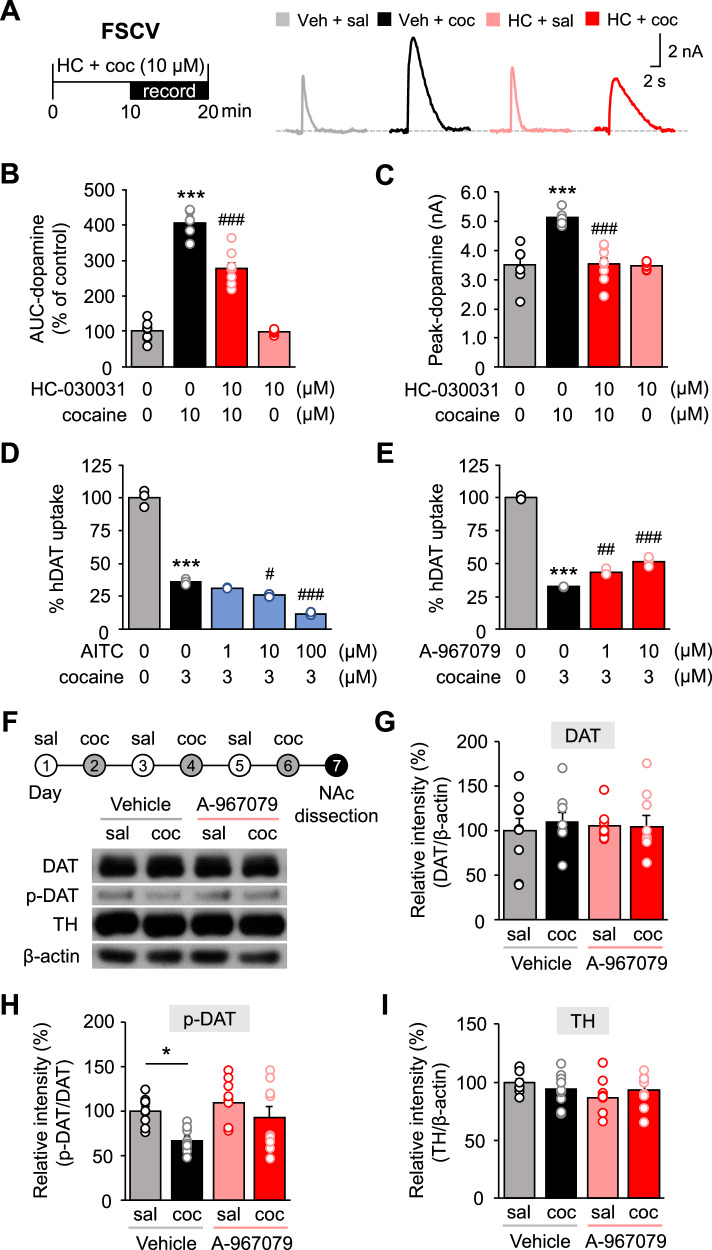
Cocaine affects dopamine transporter DAT and interferes with extracellular dopamine clearance. Electrochemical recordings in accumbal slices detect a larger dopamine signal, whose integrated size and peak decrease with TRPA1 blockade. Without cocaine, the antagonist alone does not significantly change these measures.
The finding links behavior with a chemical signal, but extracellular signals depend on both release and uptake. The team therefore investigates transport, asking whether TRPA1 changes cocaine’s effect on dopamine clearance.
Source: Kim YJ et al. · Molecular psychiatry · CC BY
Original figure and English caption ↗
Transport function can change without transporter abundance changing
In cells expressing human DAT and mouse TRPA1, channel activation strengthens cocaine’s inhibition of dopamine uptake, while blockade weakens it. The assay supports a functional interaction in transport and offers an uptake-related account of the smaller slice dopamine signal.
In tissue analyses, total DAT and dopamine-synthesis-related enzyme TH do not significantly change. DAT phosphorylation falls in the cocaine group, but that decrease is no longer significant under TRPA1 antagonist treatment. The findings concern function and regulatory state rather than simply total protein abundance.
Function changes without a general rise in expression
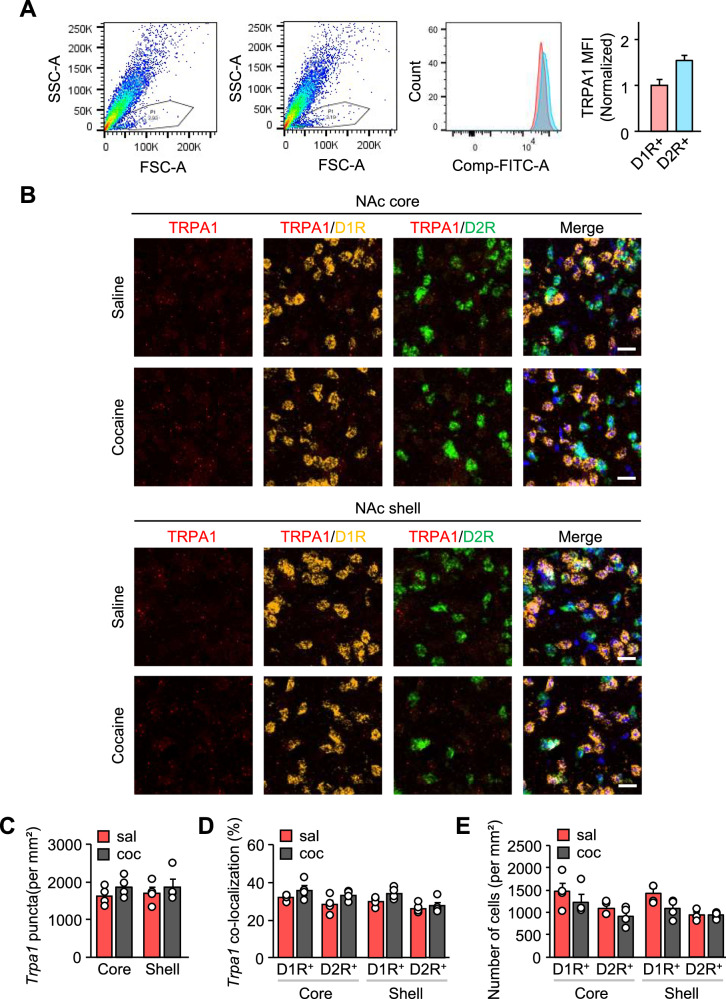
TRPA1 is detectable in both D1- and D2-associated accumbal cells. In core and shell, cocaine exposure does not significantly change TRPA1 messenger-RNA levels or its colocalization fractions with the two cell markers. Behavioral changes occur without a general increase in channel expression.
Where a channel is expressed and which cells show stronger functional effects are separate questions. Expression across populations can interact with differing inputs, receptors and activity states to produce different synaptic outcomes. The study finally focuses on D1 cells.
Source: Kim YJ et al. · Molecular psychiatry · CC BY
Original figure and English caption ↗
D1 cells participate in reward enhancement linked to the channel
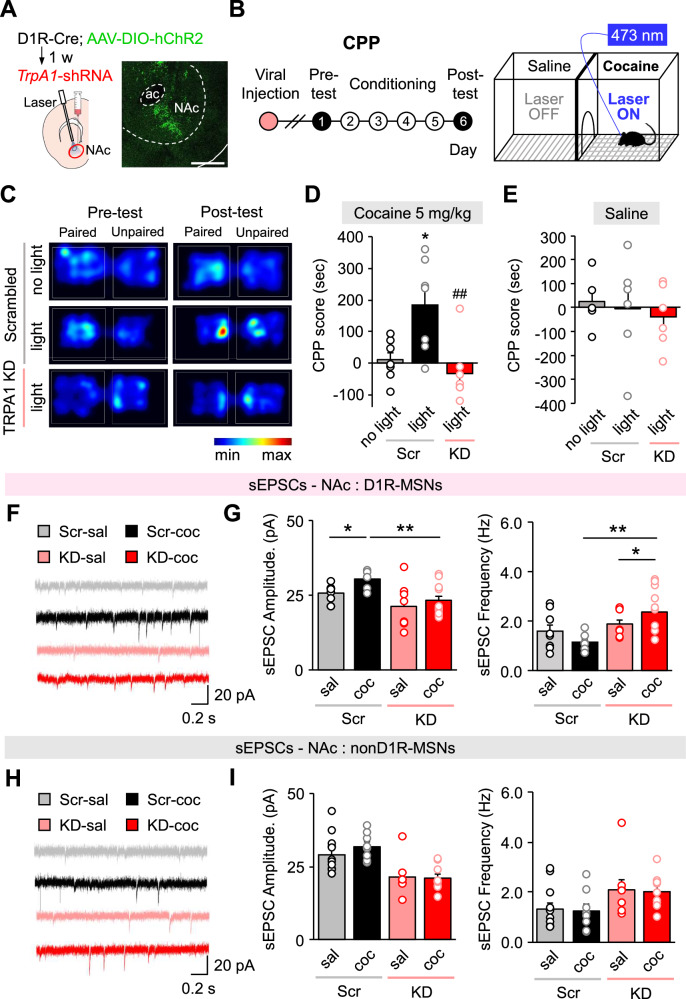
In male mice, activating D1 cells alone does not significantly produce place preference. Combined with a weaker cocaine condition, it enhances preference, an effect lost after accumbal TRPA1 reduction. The corresponding excitatory-current amplitude enhancement in D1 cells also disappears, while non-D1 cells lack the same amplitude change.
D1 event frequency is higher in some group comparisons rather than falling together with amplitude. Across rodent and cell models, the findings bring a sensory channel into the reward network and show that functional outcomes can concentrate in particular cellular responses. Increased expression is not required for the channel to participate in drug-associated synaptic and behavioral changes.
Source: Kim YJ et al. · Molecular psychiatry · CC BY
Original figure and English caption ↗