Why does a familiar sound become important again? Chandelier cells in learning
Male-mouse prefrontal chandelier-cell responses change with novelty, intensity and learned associations; insular and thalamic inputs contribute to adaptation.
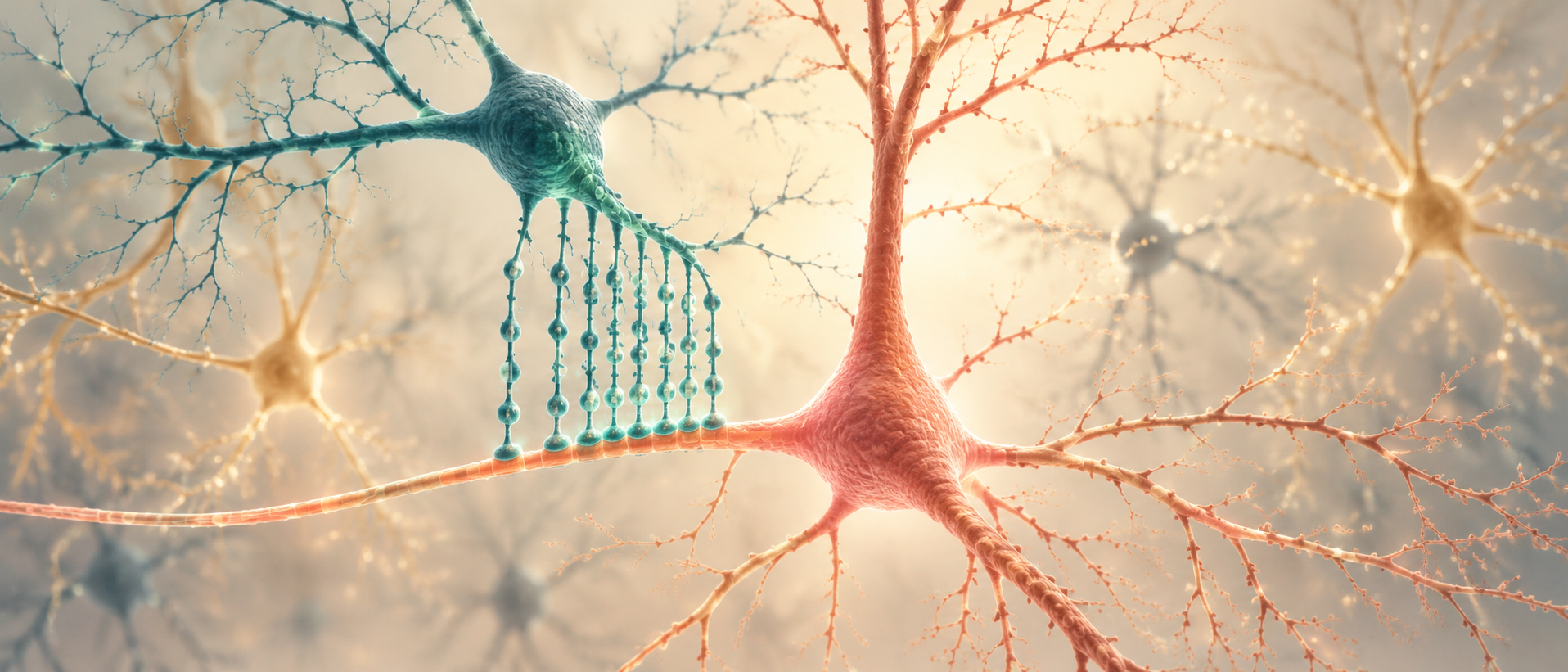
A sound initially evokes a strong response that fades with repetition. If it later predicts an outcome, it becomes important again. A Nature Communications study in male mice examines chandelier cells in medial prefrontal cortex, or mPFC. These GABAergic interneurons form strings of boutons at pyramidal-cell axon initial segments. Their calcium responses change with familiarity, intensity and learned association, and manipulating them influences learning.
Population responses shift from novelty-dominated to experience-dependent intensity discrimination and recover for learned predictive cues. Stimulus-time inhibition impairs learning, while basal-activity manipulations produce distinct evoked responses and outcomes.
Contents · 7 sections
Reward and threat both recruit chandelier cells
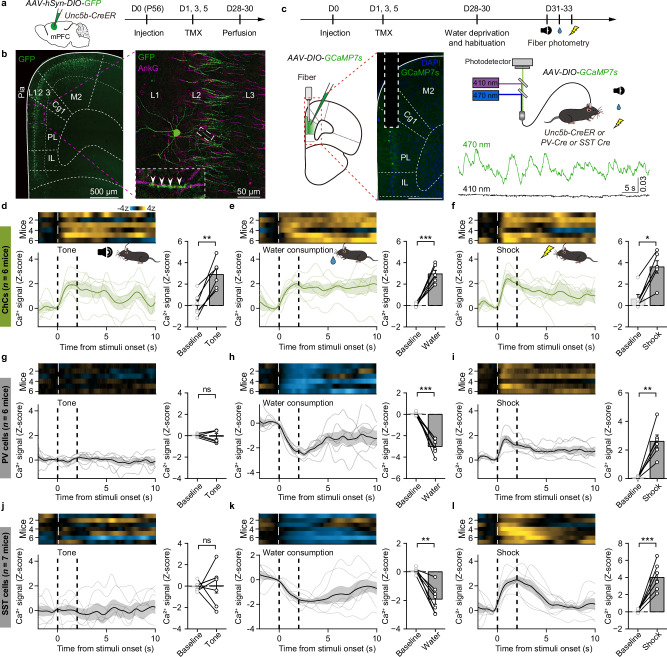
Tone, water reward and foot shock all increase chandelier-cell calcium, as do odor, flashes and novel objects. Recorded PV and SST populations respond differently to water versus shock and lack equivalent neutral-tone responses. Chandelier activity does not simply classify positive and negative events.
Their distinctive axonal targets motivate questions about cortical output. Population recordings first reveal collective stimulus responses; repetition and learning experiments then clarify their functional significance.
Source: Zhang K et al. · Nature communications · CC BY-NC-ND
Original figure and English caption ↗
Responses rapidly decline with repetition
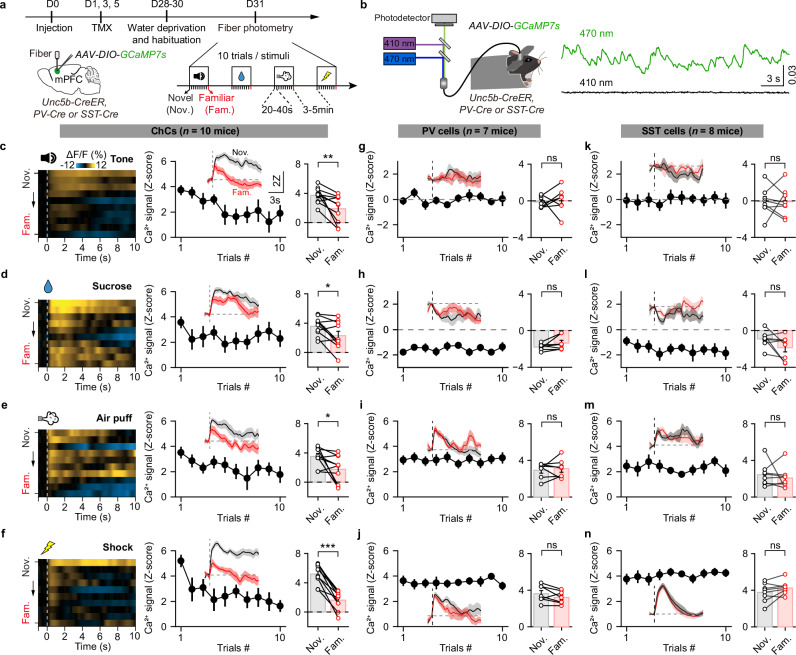
Repeated tone, sucrose, air puff and shock presentations evoke strong initial chandelier responses that rapidly decline. PV/SST populations lack the same adaptation. After tone A habituation, tone B restores a strong response that also declines, indicating stimulus-specific adaptation.
Sucrose licking changes do not significantly correlate with calcium attenuation, and freely moving population signals are not significantly related to speed. Stimuli and engagement persist while responses change with familiarity, providing a population correlate of novelty salience.
Source: Zhang K et al. · Nature communications · CC BY-NC-ND
Original figure and English caption ↗
Intensity discrimination emerges with variable experience
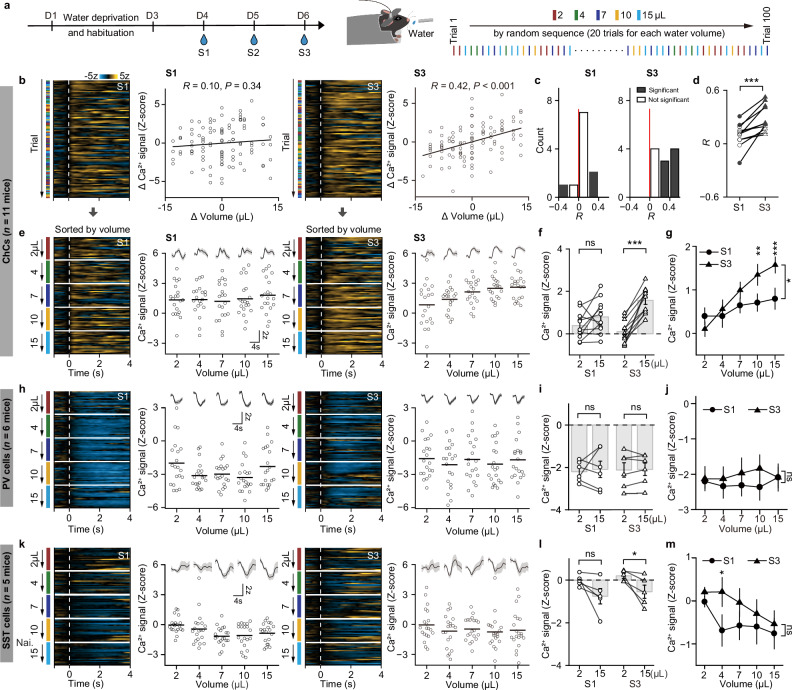
With fixed-volume blocks, responses mainly attenuate with exposure, with little volume influence. Randomly interleaving volumes initially still yields weak discrimination; later, larger volumes evoke stronger chandelier responses. The population changes which stimulus feature it emphasizes with experience.
The relationship reflects absolute-volume discrimination rather than demonstrated perception of trial-to-trial differences. Later tone-intensity discrimination also emerges, without the same PV/SST pattern. Intensity becomes more prominent after novelty declines in a variable context.
Source: Zhang K et al. · Nature communications · CC BY-NC-ND
Original figure and English caption ↗
Insular and thalamic inputs support adaptation
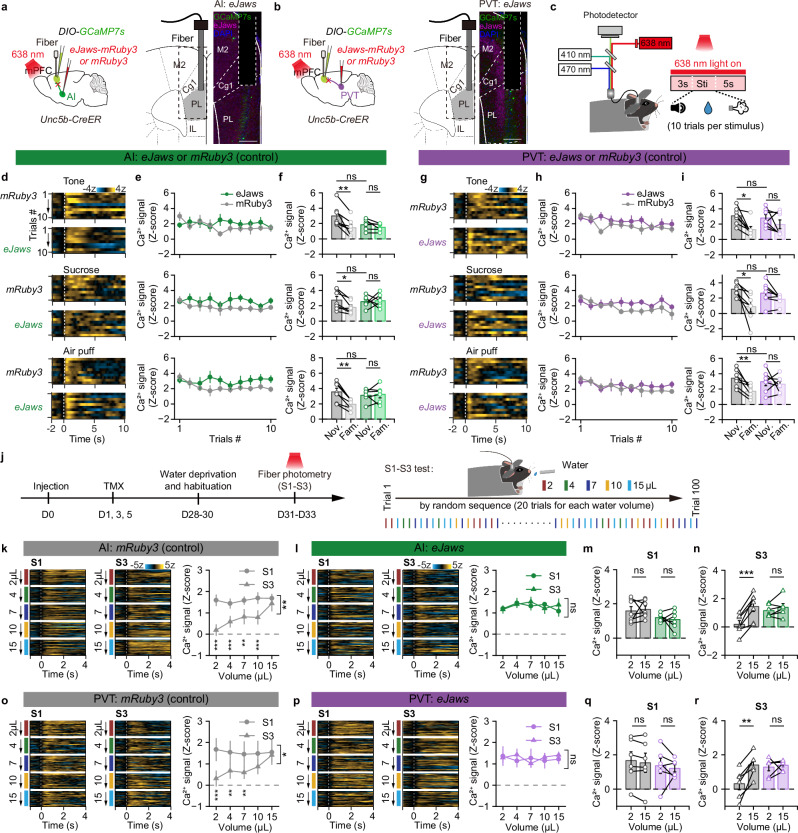
Blocking anterior-insular, or AI, and PVT synaptic transmission alters novelty and intensity responses with distinct patterns. AI directly excites chandelier cells; PVT excites mPFC without observed direct monosynaptic chandelier responses.
Inhibiting these terminals in mPFC leaves initial tone, reward and air-puff responses without significant changes, but disrupts attenuation and later volume discrimination. Initial responses and later adaptation have distinct input dependence.
Source: Zhang K et al. · Nature communications · CC BY-NC-ND
Original figure and English caption ↗
A predictive association restores the familiar-cue response
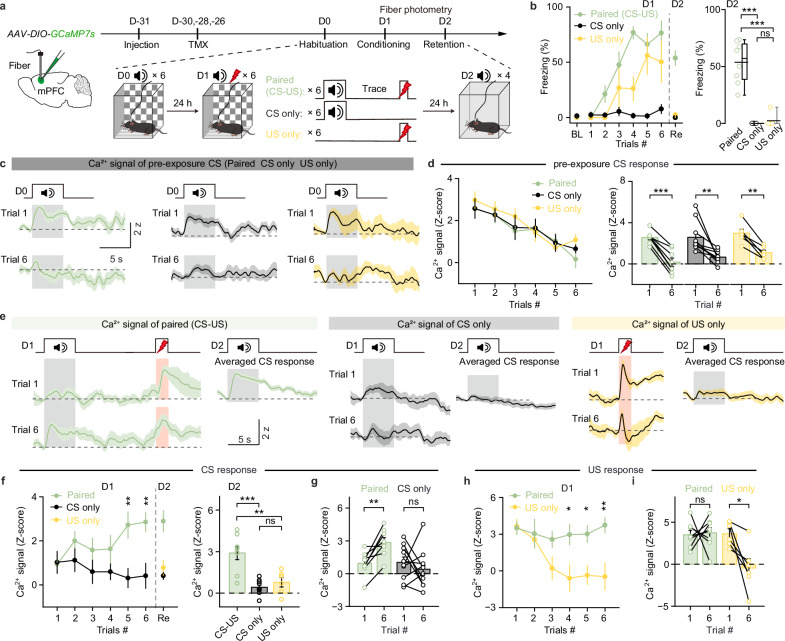
Trace conditioning pairs a familiar tone with a later shock. Its previously weak response increases after pairing, unlike tone alone. Shock responses persist in pairing but decline with unpaired presentation. Association changes population responses to the same stimulus.
Reward learning similarly sustains responses to a sucrose-predictive tone while responses to an unrewarded tone decline. Behavioral relevance, beyond novelty, shapes population responses as learning makes a cue predictive.
Source: Zhang K et al. · Nature communications · CC BY-NC-ND
Original figure and English caption ↗
Input inhibition changes cue responses and later freezing
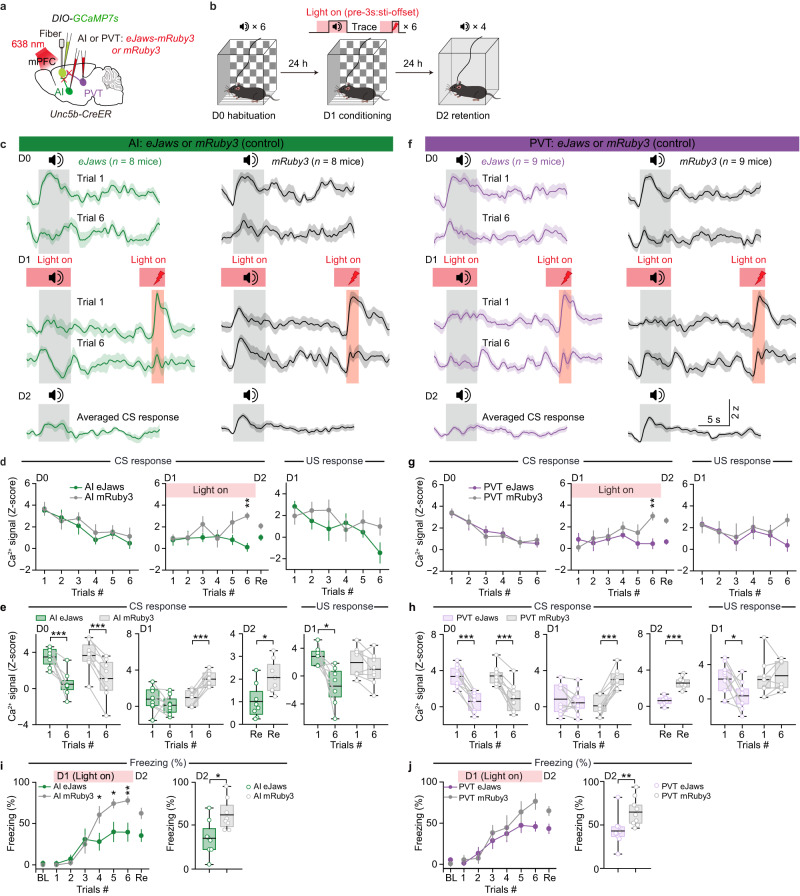
During learning, AI- or PVT-input inhibition disrupts learning-related enhancement of predictive-tone responses and reduces next-day cue freezing. Upstream routes, population responses and learning outcomes are functionally linked.
Not every measure changes equivalently: the final shock-response comparison after AI inhibition is nonsignificant. Shared findings concern learned cue enhancement and next-day memory performance rather than a uniform reduction of all responses.
Source: Zhang K et al. · Nature communications · CC BY-NC-ND
Original figure and English caption ↗
More activity is not uniformly better
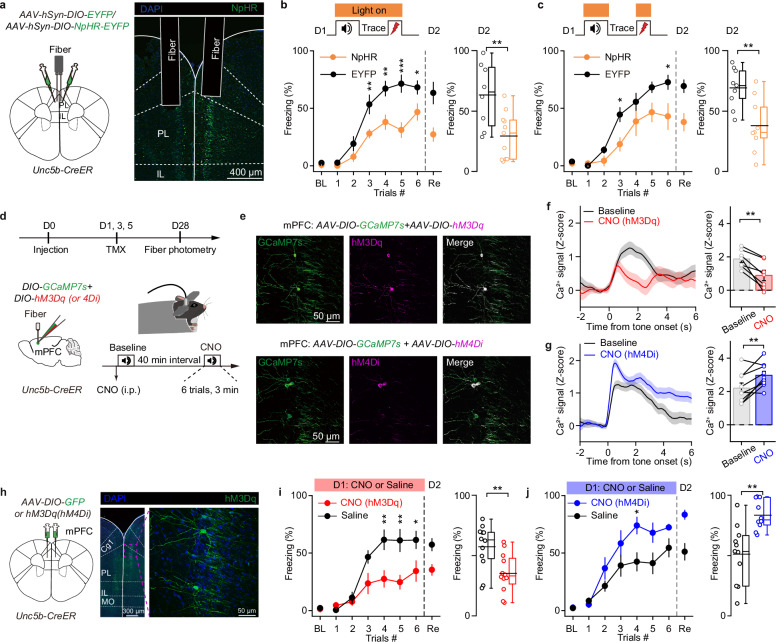
Direct stimulus-time chandelier inhibition reduces learning and next-day freezing and impairs reward discrimination. Basal-excitability manipulation differs: chemogenetic excitation reduces tone-evoked calcium and learning freezing, whereas lowering basal excitability increases both.
Tested locomotor measures do not significantly change. In male-mouse prefrontal cortex, stimulus-linked activity changes explain learning better than uniformly high activity. Chandelier populations adapt to experience, emphasizing novelty, intensity and predictive relevance at different stages.
Source: Zhang K et al. · Nature communications · CC BY-NC-ND
Original figure and English caption ↗