Why can old cues drive more seeking after withdrawal?
In mice, accumbens ensembles recruited during cocaine experience become more excitable during withdrawal. Changes in Kir2.1-associated currents link cellular responsiveness with cue-induced seeking.
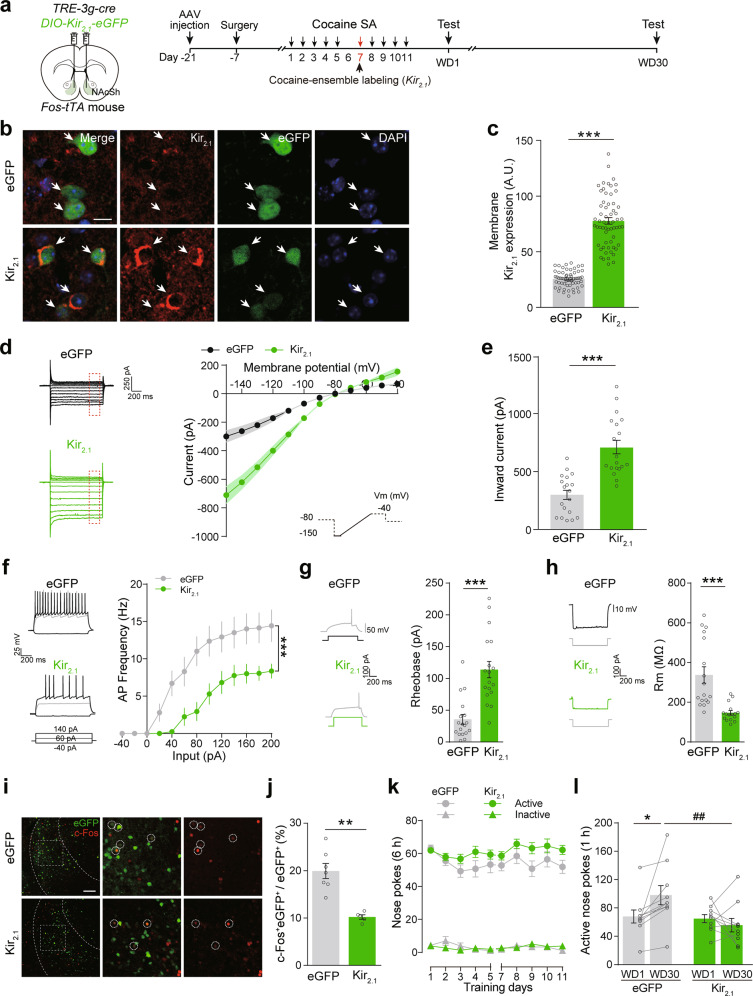
An experience may be over while its cues become increasingly compelling. In addiction research, stronger cue-induced seeking after abstinence is called incubation of craving. A mouse study published in Molecular Psychiatry on December 8, 2022 focused on accumbens-shell ensembles recruited during cocaine experience. Their cue-related reactivation and membrane excitability changed with withdrawal stage. Kir2.1-associated currents offered a link between an earlier experience and later seeking.
At withdrawal day 30, cocaine-associated NAcSh ensembles showed greater excitability and weaker Kir2.1-associated inward-rectifying currents. Enhancing related channel function reduced reactivation and seeking; reducing it brought stronger seeking forward.
Contents · 7 sections
The same cues can evoke stronger later responding
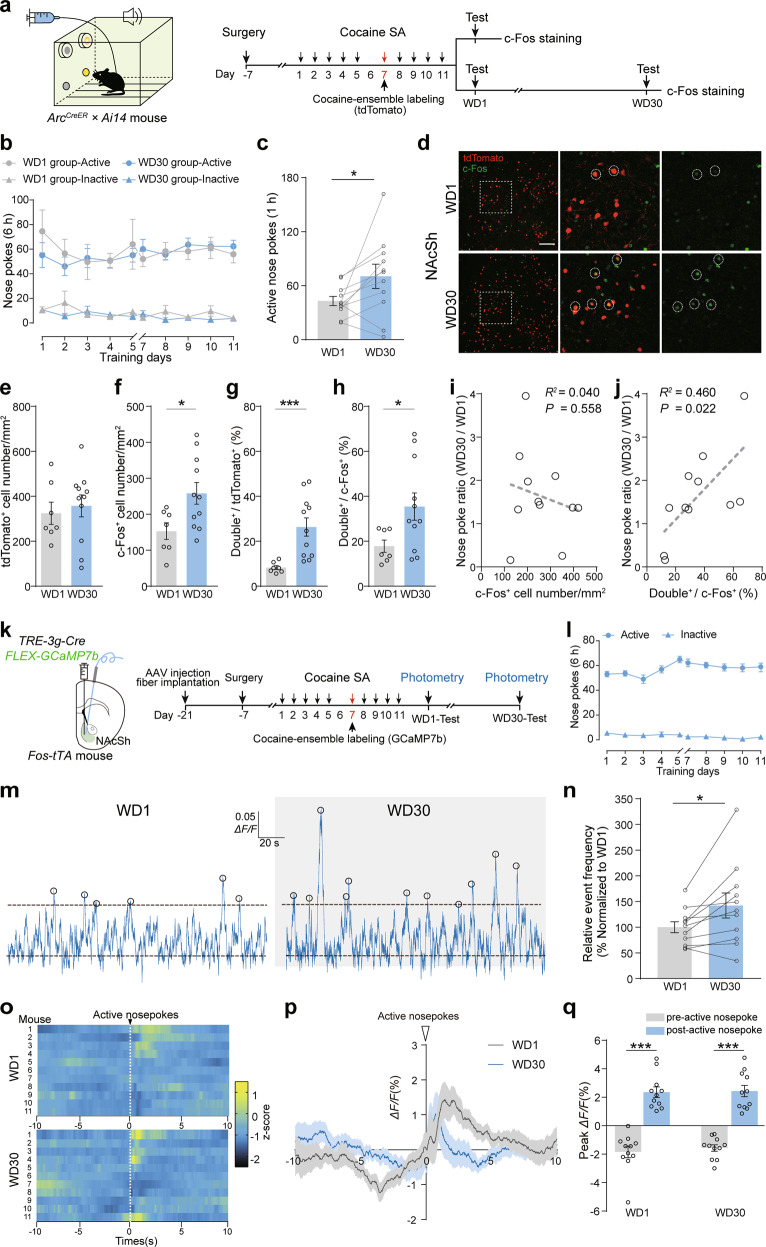
The study measured seeking through cue-related active nose pokes. Responding was stronger at withdrawal day 30 than at an early stage, alongside a higher reactivation fraction in cocaine-associated NAcSh ensembles. Similar initial tag counts pointed to altered recruitment rather than simply more tagged cells.
Population calcium events became more frequent, while peak comparisons around individual nose pokes showed no significant withdrawal-stage interaction. Reactivation fractions correlated with stronger seeking, whereas total activity-marker counts did not. Ensemble membership therefore provided information beyond a regional count.
Source: He G et al. · Molecular psychiatry · CC BY
Original figure and English caption ↗
Changing the tagged ensemble changes later behavior
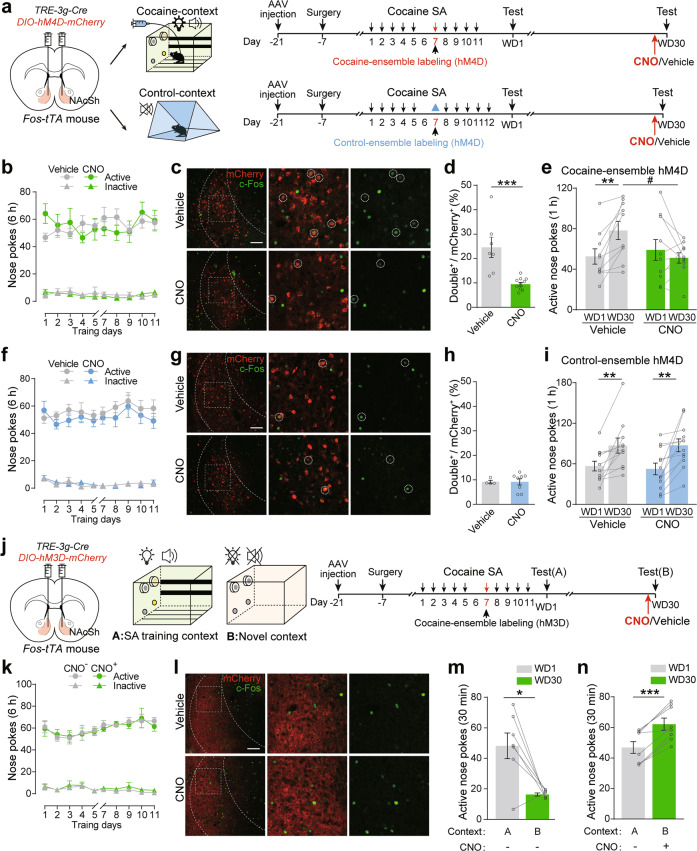
Reducing activity in the cocaine-associated ensemble decreased late-withdrawal active responding. Inhibiting a neutral-context-tagged control ensemble did not significantly alter the corresponding activation or seeking comparisons, supporting a contribution from the experience-related population.
In conditions with altered context and fewer original drug-related cues, activating the ensemble promoted seeking responses. This establishes a functional behavioral contribution, while nose poking remains an animal readout involving prior learning rather than a direct measurement of human subjective craving.
Source: He G et al. · Molecular psychiatry · CC BY
Original figure and English caption ↗
Changes depend on stage and ensemble identity
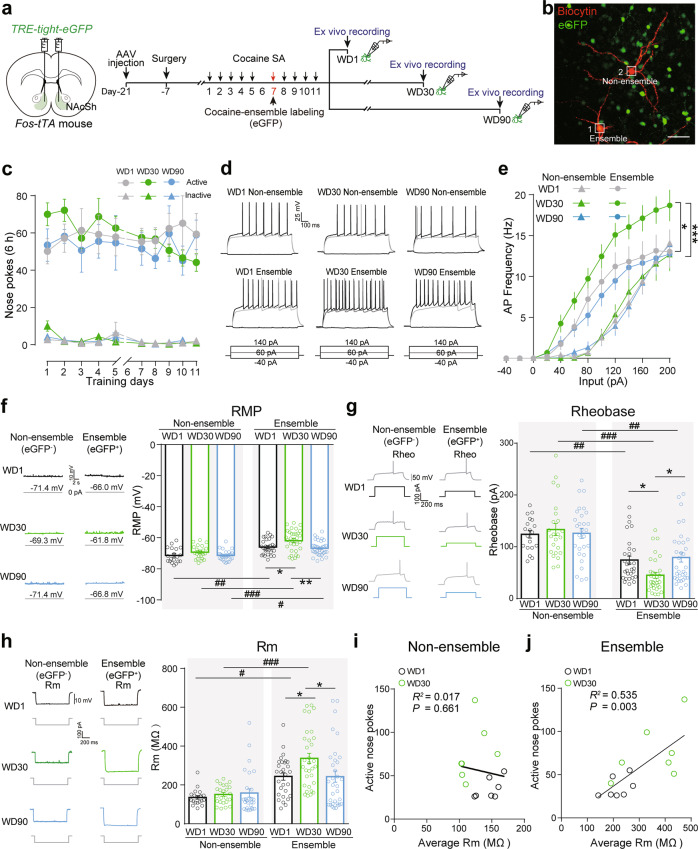
At day 30, tagged cells generated more spikes in response to input, had lower rheobase and higher input resistance. Adjacent untagged cells did not show the same stage-dependent pattern, and saline-experience ensemble controls lacked corresponding significant changes.
Excitability did not increase indefinitely. By day 90, several membrane properties returned toward early-stage levels. This is a time-dependent cellular pattern rather than permanent escalation; membrane recovery alone does not establish that associated memory or addiction risk has disappeared.
Source: He G et al. · Molecular psychiatry · CC BY
Original figure and English caption ↗
Kir2.1-related changes occur within the ensemble
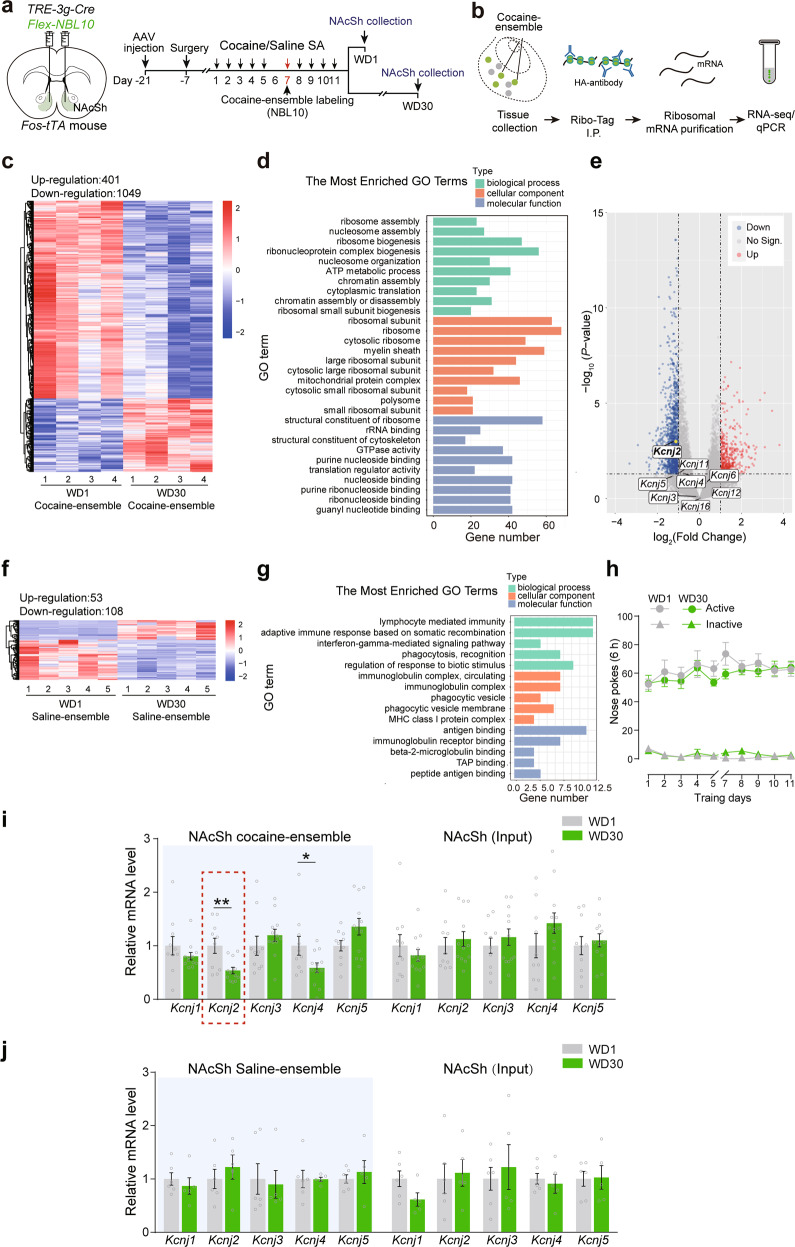
Why were these cells more responsive? Ensemble-associated RNA comparisons identified changes including Kcnj2, which encodes the Kir2.1 channel. Kir2.1 contributes to inward-rectifying potassium currents and membrane responsiveness.
The corresponding reduction was not significant in bulk NAcSh input RNA or saline-associated ensembles. Selecting the relevant population thus matters, because mixed samples can dilute experience-associated differences. Other molecules also changed, leaving Kir2.1 as one contributor rather than the sole candidate.
Source: He G et al. · Molecular psychiatry · CC BY
Original figure and English caption ↗
Membrane currents add a functional explanation
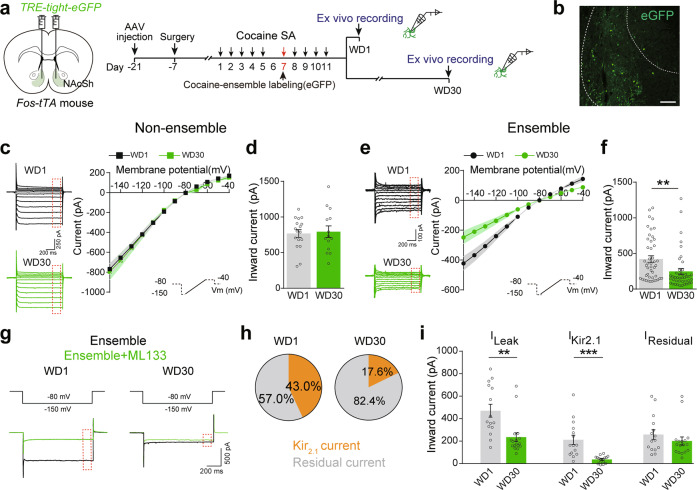
At day 30, inward-rectifying currents were weaker in the tagged ensemble, including a smaller Kir2.1-sensitive component. Corresponding neighboring nonensemble and residual-component comparisons were not significant.
RNA, membrane current and firing responsiveness therefore converge across levels. Molecular measurements identify a candidate, currents describe part of membrane function and behavior reflects a system output. Targeted functional changes can test whether the link contributes to seeking.
Source: He G et al. · Molecular psychiatry · CC BY
Original figure and English caption ↗
Lower responsiveness accompanies reduced seeking
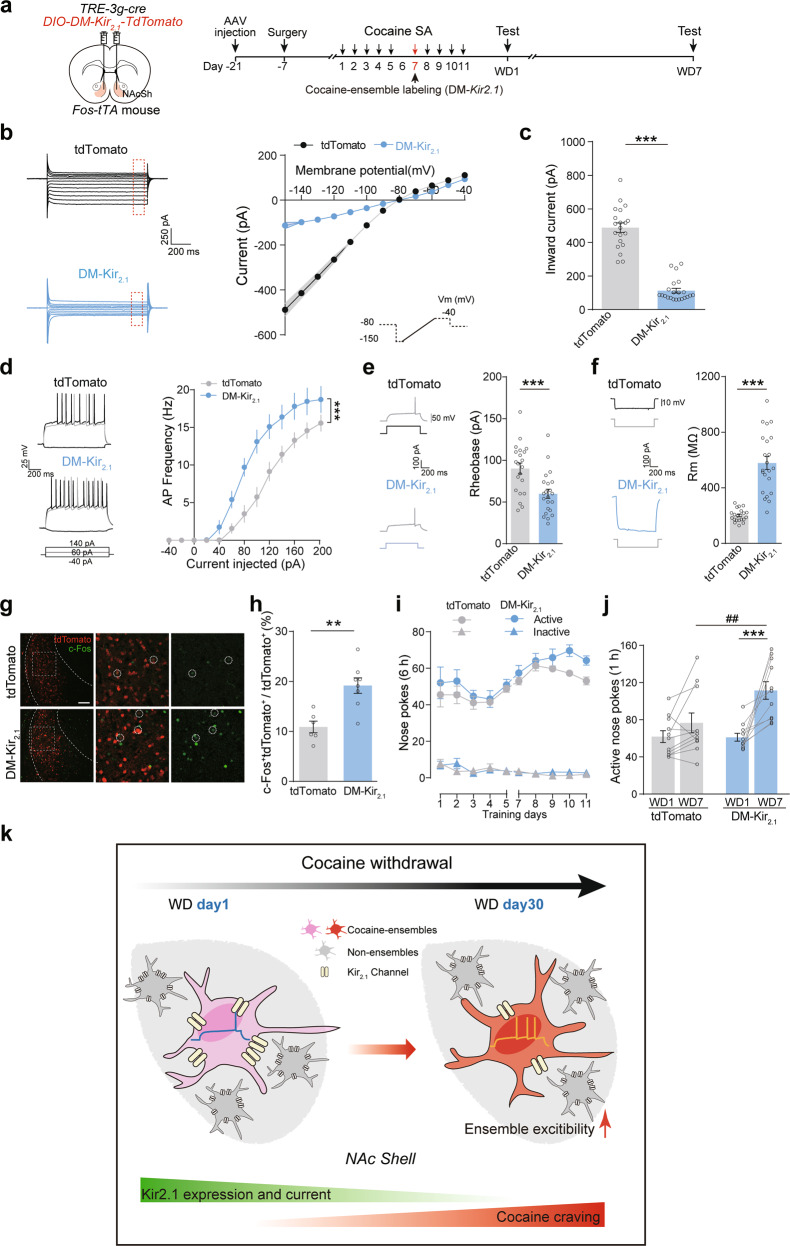
Enhancing ensemble Kir2.1-related function increased inward-rectifying current and rheobase while lowering excitability, input resistance and reactivation. Late-stage active seeking also decreased, giving convergent cellular and behavioral effects.
The findings support a contribution from channel-related membrane adaptation without showing erasure of the prior experience. These cells remain part of a broader network whose inputs, local connections and earlier learning can all shape cue responses.
Source: He G et al. · Molecular psychiatry · CC BY
Original figure and English caption ↗
An experience can exert different effects as cell states change
In the opposite functional comparison, reducing Kir2.1-related function increased excitability, ensemble reactivation and seeking at an earlier withdrawal stage. This supports membrane responsiveness contributing to the evolving cue effect rather than simply following behavior.
The mouse study links membrane state in an experience-associated ensemble with later cue-driven behavior. The relative roles of stronger associative memory and craving, and the upstream causes of channel adaptation, remain unresolved. It provides a cellular mechanism for further research without establishing human treatment efficacy.
Source: He G et al. · Molecular psychiatry · CC BY
Original figure and English caption ↗