How does prior knowledge make room for new learning?
In rats, hippocampal and cingulate engagement changes as a knowledge framework develops. Modulating CA1 astrocytic Gi signaling affects its establishment and new-information assimilation in a stage-dependent way.
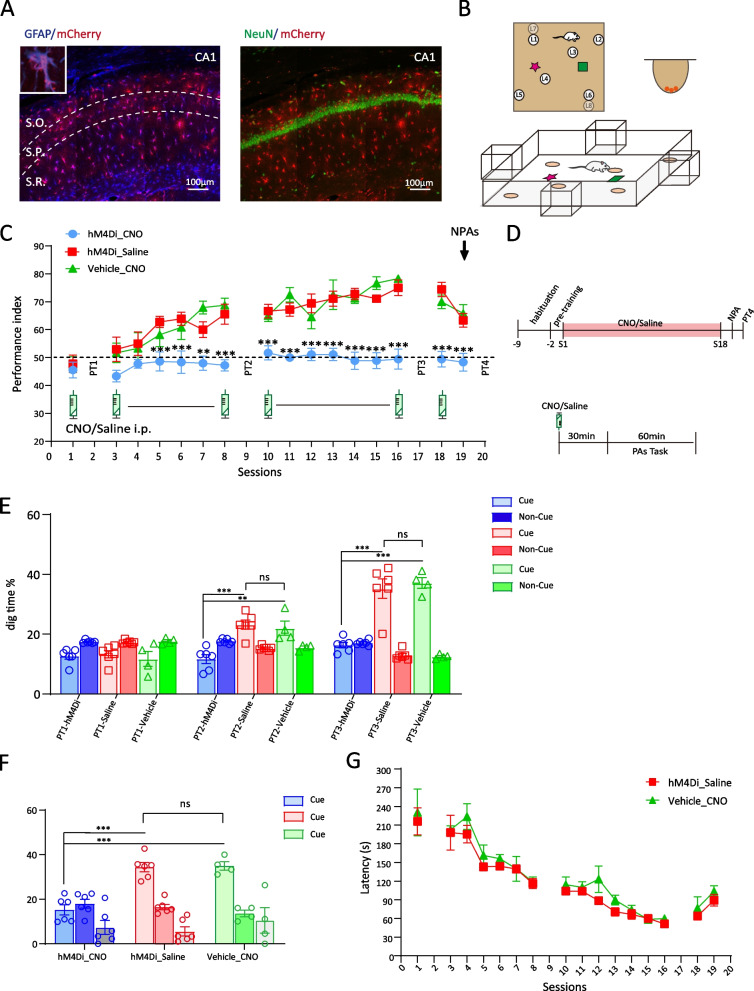
Knowing a city can make a new shop easier to locate than learning an unfamiliar street network from scratch. Prior experience offers a framework for new information. A rat study published in BMC Biology on November 10, 2022 examined such schemas through flavor–location associations. Activity in ACC-projecting CA1 cells and ACC itself changed across learning stages. Modulating CA1 astrocytic Gi signaling affected framework establishment and new learning, bringing non-neuronal cells into the picture.
CA1-to-ACC population activity declined with original-association learning, ACC activity was strongest in the middle stage, and both increased with new associations. Astrocytic Gi modulation had stage-dependent effects, distinguishing established associations from new-information assimilation.
Contents · 7 sections
Flavor predicts place, providing a basis for new learning
Rats learned flavor–location pairs: a flavor cued its associated place. After repeated learning, introducing new pairs tested assimilation into the existing framework. Training performance and digging preference during nonrewarded probes provided complementary behavioral readouts.
Sustained CA1 astrocytic Gi modulation impaired improvement in original associations and later new-pair recall. Drug-treated controls lacking the corresponding functional receptor did not show the same impairment, supporting a contribution from cell-associated pathway modulation rather than the drug condition alone.
Source: Liu S et al. · BMC biology · CC BY
Original figure and English caption ↗
CA1 and ACC follow different activity trajectories
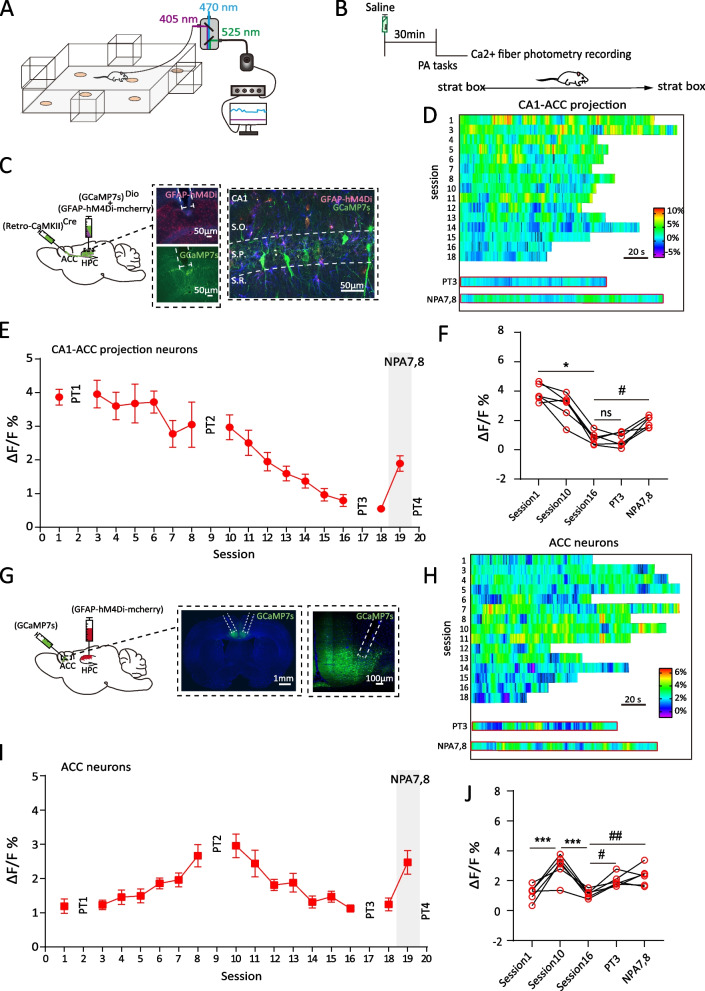
ACC-projecting CA1 population calcium was high early in original-association learning and declined with familiarity. ACC activity rose toward the middle stage and then fell. The trajectories indicate changing engagement while animals repeatedly perform the task.
Both populations increased activity when new pairs were introduced, consistent with hippocampal–cortical engagement in assimilation. Recordings involved three rats per population. These calcium changes describe population engagement without directly tracing a specific memory moving between or being stored within regions.
Source: Liu S et al. · BMC biology · CC BY
Original figure and English caption ↗
Intervention delays establishment of the framework
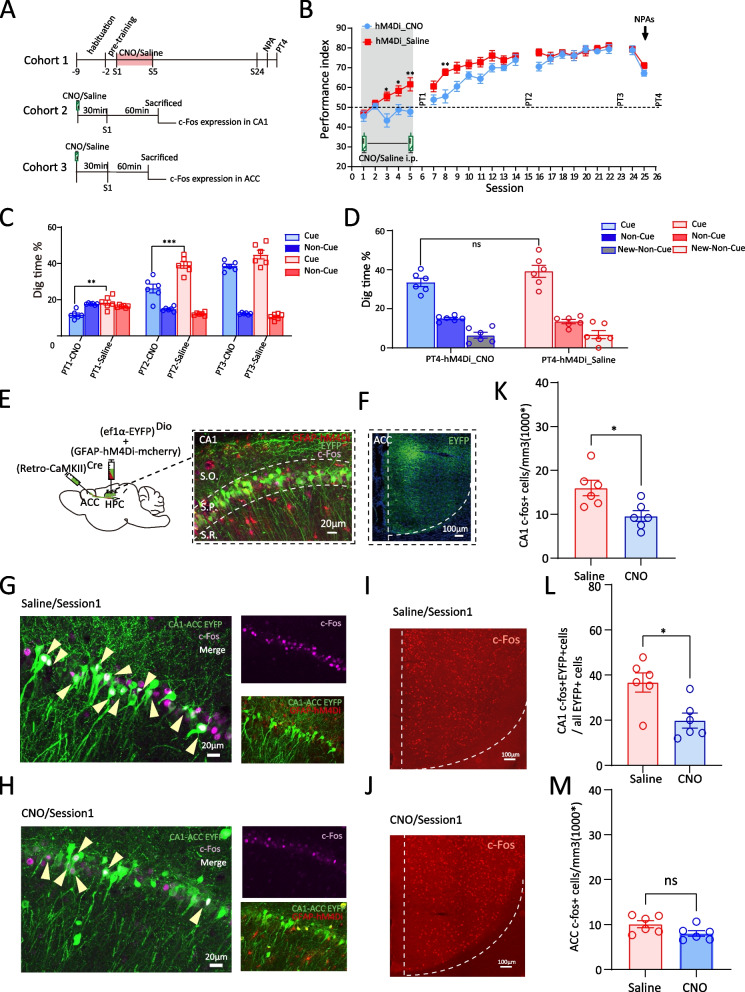
Early-stage Gi modulation slowed associative improvement and weakened early probe performance. After intervention ended, continued learning brought training performance toward controls, with probe recall catching up later. The framework could therefore still develop after the disruption.
CA1 overall activity labeling and the labeled fraction of ACC-projecting cells were lower, while overall ACC labeling did not differ significantly. Early behavioral impairment thus accompanied different regional profiles rather than uniform reductions across the network.
Source: Liu S et al. · BMC biology · CC BY
Original figure and English caption ↗
Regional changes converge in the middle stage
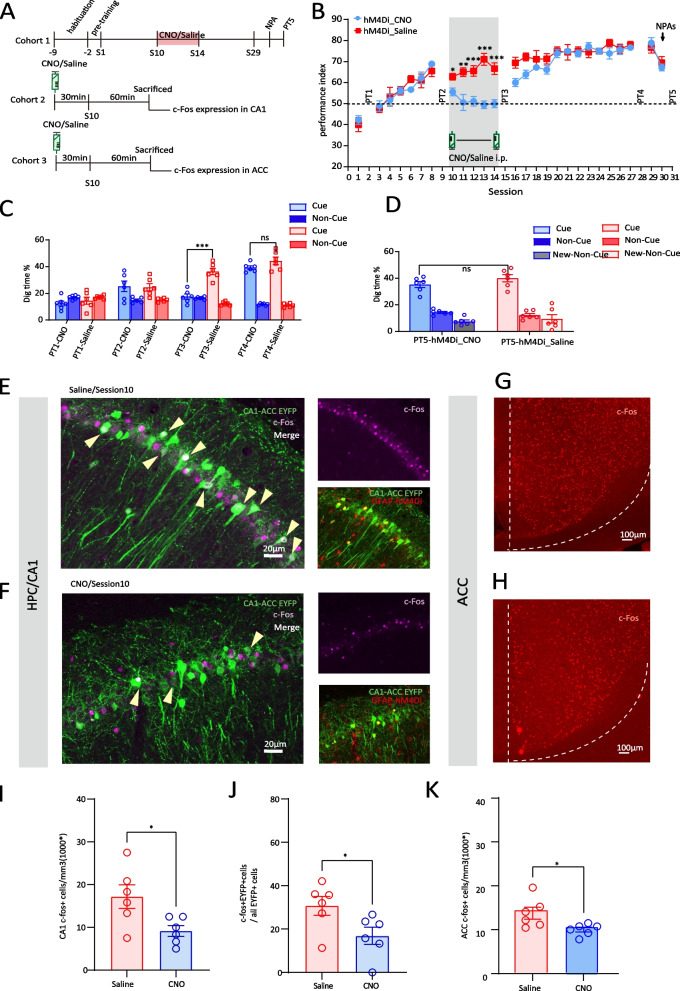
Middle-stage modulation impaired training and subsequent probe performance, with recovery during continued training after intervention ended. Unlike the early stage, activity labeling was lower in CA1 overall, ACC-projecting CA1 cells and ACC overall.
This fits the stronger normal ACC engagement in the middle stage. Astrocyte-associated effects on behavior and neuronal activity therefore depend on learning stage. The observations do not isolate a single synapse or gliotransmitter as the complete mediator.
Source: Liu S et al. · BMC biology · CC BY
Original figure and English caption ↗
Established original associations remain robust
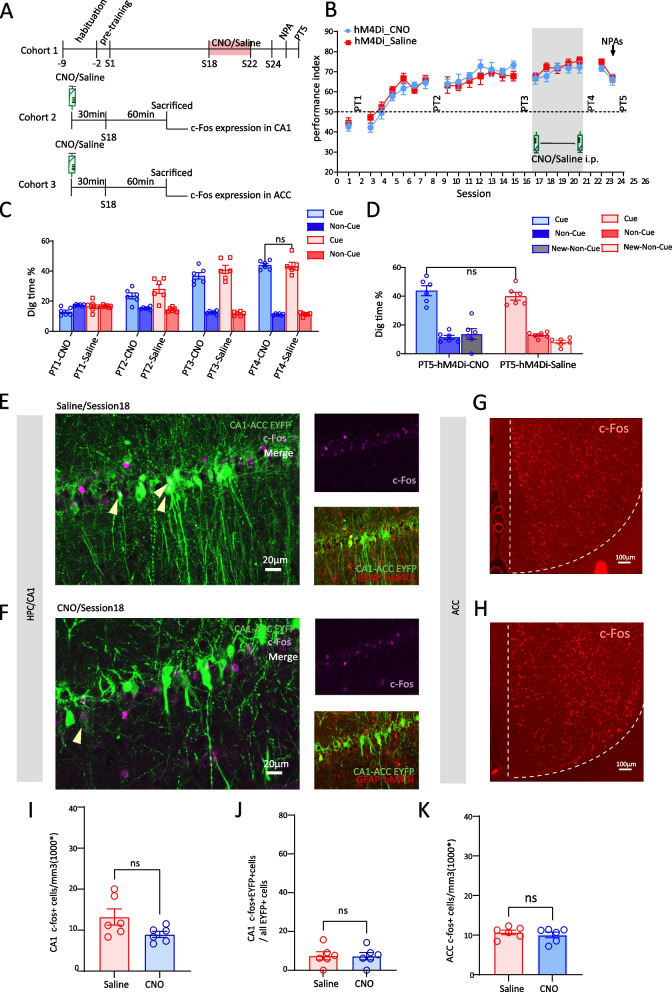
After the original framework was established, late-stage modulation did not significantly alter original-task performance or corresponding probe recall. ACC-projecting CA1 recruitment was already low, and intervention comparisons for CA1 overall, the projection-associated population and ACC overall were nonsignificant.
This distinguishes new learning from using familiar associations. Established pairs remained robust under the tested CA1 astrocytic intervention, without establishing that the whole hippocampus becomes irrelevant to all long-term memories.
Source: Liu S et al. · BMC biology · CC BY
Original figure and English caption ↗
A stable framework still recruits activity for new pairs
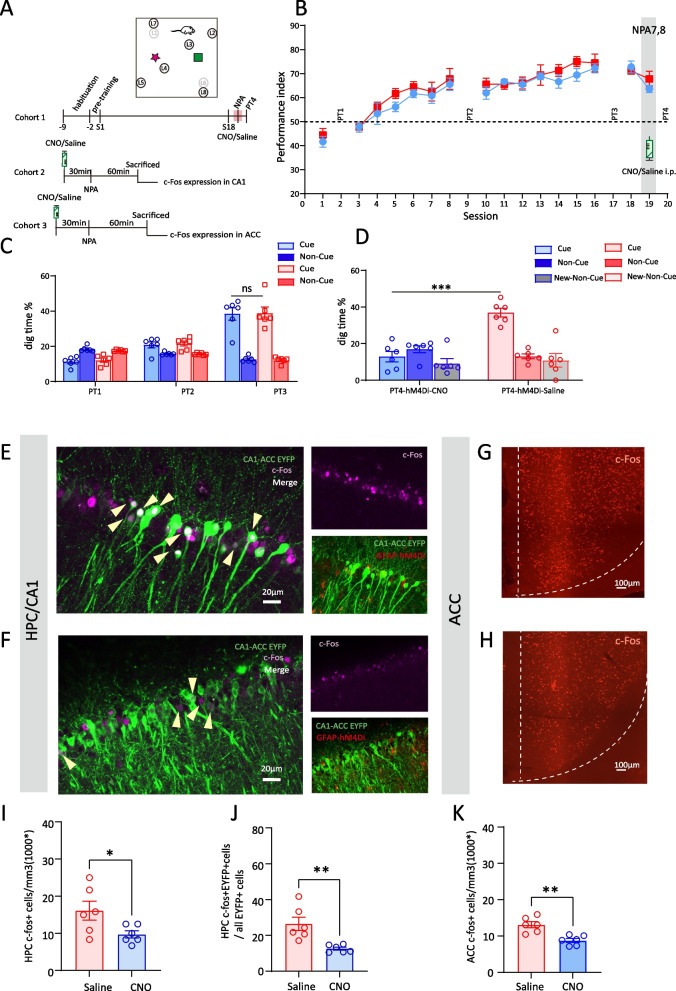
When modulation was restricted to new-pair acquisition, same-session performance did not differ significantly, but subsequent new-pair probe recall was weaker. Immediate task performance and later cue-based recall therefore supplied distinct behavioral information.
Activity labeling was reduced in the ACC-projecting CA1 population and ACC overall. Together with renewed activity when new pairs appeared, the findings suggest that an established framework can still recruit hippocampal-related processing for new information.
Source: Liu S et al. · BMC biology · CC BY
Original figure and English caption ↗
Astrocytes contribute across distinct learning stages
The rat study treats a memory framework as an experience-dependent process and includes CA1 astrocytes within it. Gi signaling provides the experimental entry point, while the intervening glial signals and effects on distinct neuronal populations remain to be identified.
Changing regional activity, robust familiar associations and new-information assimilation outline dynamic hippocampal–cortical cooperation. Longer-term and cross-species work is needed to determine how old and new knowledge form retrievable associations and whether the same cellular mechanism applies in humans.