The same sound can call for a different choice
In male mice, anterior cingulate cortex carries unexpected feedback into subsequent sound responses. Neural signals shift after one surprise, while repeated feedback drives a change in choice.
A familiar sound once predicted a reward, but now becomes unreliable. Should the animal keep responding or change its approach? Flexible decisions require a balance between persistence and adjustment, resisting isolated setbacks while responding to repeated changes. A study published in Nature Communications on July 17, 2024 tracks anterior cingulate activity during an auditory task in male mice. Feedback alters neural representations of the next sound, while a change in behavioral strategy generally requires more accumulated experience.
A subset of anterior cingulate cells shows both outcome-monitoring and value-updating response signatures, with a larger fraction during rule reversal. Suppressing this region slows feedback-guided strategy switching while preserving performance under the established rule.
Contents · 7 sections
The sound stays the same while its reward rule changes
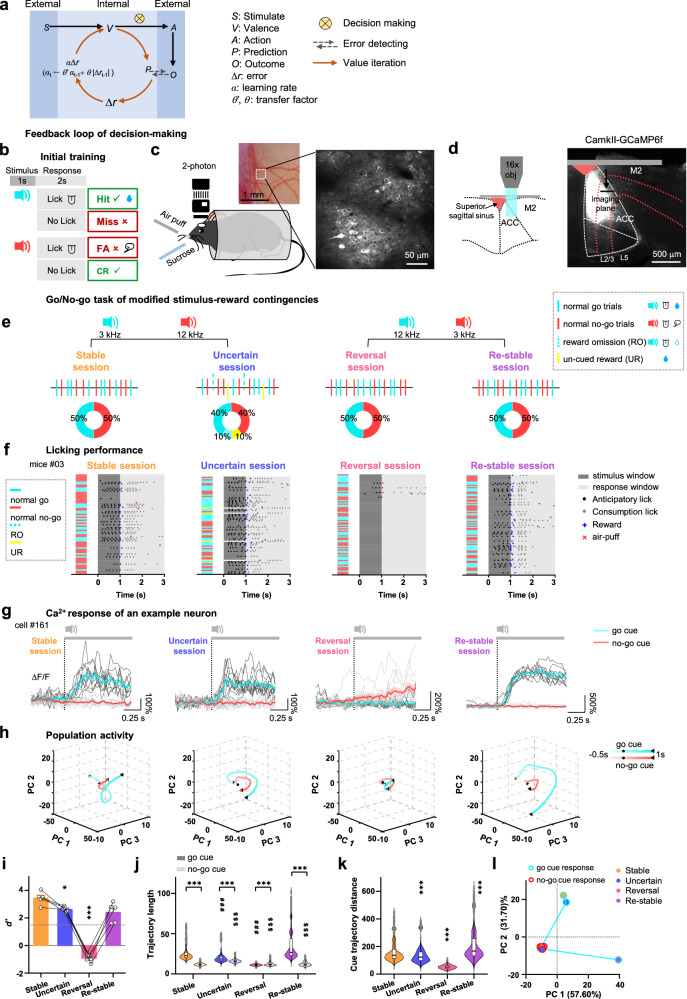
Mice first learn a simple association: licking after one sound earns a reward, whereas licking after another brings an air puff. Learning makes licking increasingly selective for the rewarded sound. The team then changes the relationship between sounds and outcomes to examine how new experience reshapes a practiced choice.
Under a stable rule, anterior cingulate population responses are stronger for the rewarded sound. When rewards become unreliable or rules reverse, activity patterns for the two sounds become less separated. Separation returns after the reversed rule is learned. Neural activity changes with the sound’s significance even though its physical identity remains the same.
Source: Chen W et al. · Nature communications · CC BY
Original figure and English caption ↗
One surprise first leaves a trace in neural signals
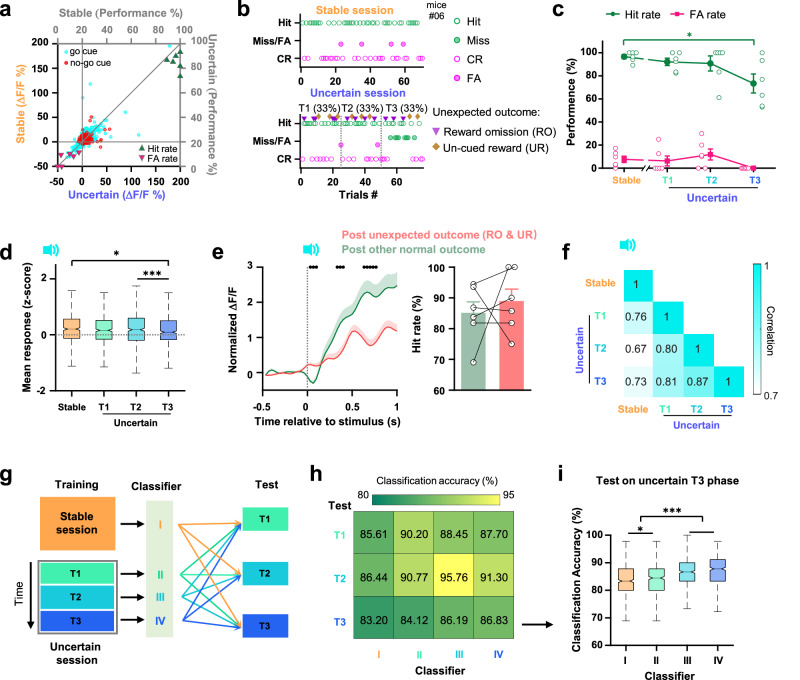
In the uncertain phase, expected rewards are sometimes omitted and rewards occasionally arrive without a sound. Mice initially retain their familiar licking strategy, reducing responses to the previously rewarded sound after more unexpected outcomes accumulate. Anticipatory licking and reward-consumption lick rates remain stable, consistent with reassessing cue reliability.
Neural differences precede the behavioral shift: after an unexpected outcome, the next rewarded-sound response is already weaker, although the hit rate does not significantly change. Experience can therefore first alter the neural response and subsequently influence behavior as it accumulates. Retaining the old choice does not mean that new feedback went unprocessed.
Source: Chen W et al. · Nature communications · CC BY
Original figure and English caption ↗
Some cells monitor outcomes and track updating
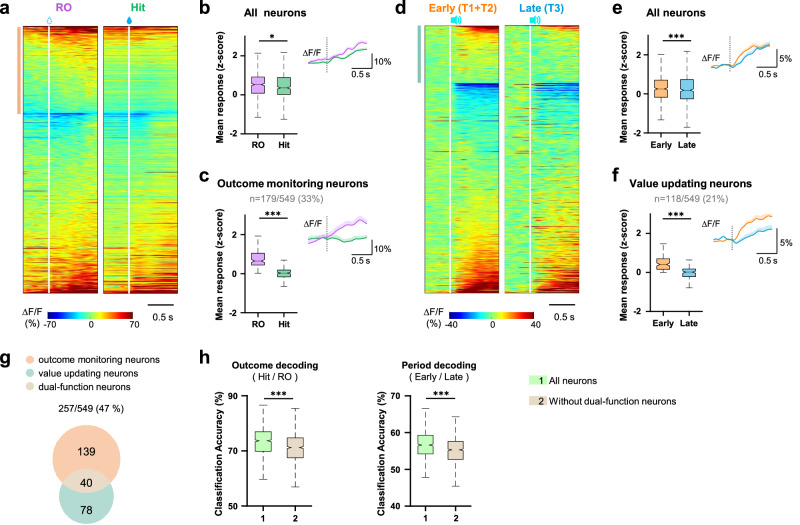
The team next examines individual cells. One group responds more strongly to reward omission than to reward delivery; another responds less strongly to the rewarded sound later in the uncertain phase. The first signature reflects outcome monitoring, while the second accompanies downward updating of cue value. Both signatures can occur in the same cell.
Of 549 cells recorded in this phase, 40 have both signatures. Excluding their recordings from decoding analysis reduces accuracy for outcomes and task phases. Although a small fraction, they carry information linking what just happened with how the current sound is represented.
Source: Chen W et al. · Nature communications · CC BY
Original figure and English caption ↗
When reward becomes an air puff, choices change faster
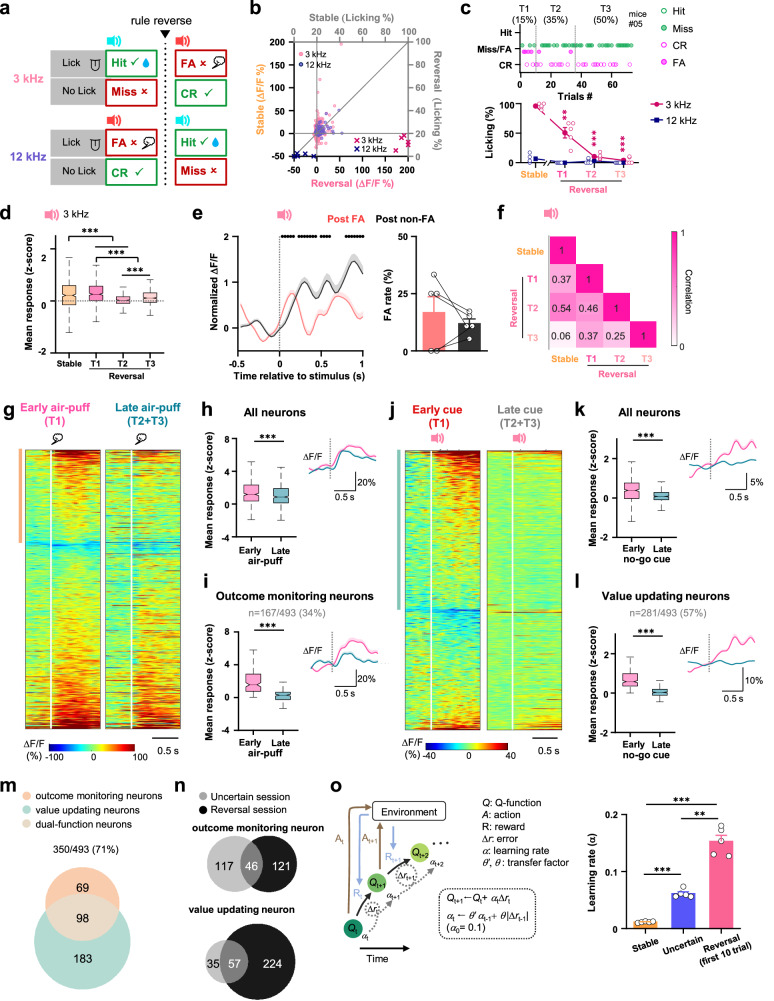
When the rule reverses, licking after the formerly rewarded sound now brings an air puff. Initial use of the old choice produces repeated unexpected outcomes. Mice rapidly reduce licking early in the session, and responses to the old rewarded sound decline. Yet the next choice after one error still does not significantly change immediately.
Of 493 cells recorded here, 98 have both outcome-monitoring and value-updating signatures, a larger fraction than in the uncertain phase. Stronger, denser feedback accompanies recruitment of more such cells and faster strategy switching. The pace of adjustment appears related to how persistently experience challenges the old expectation.
Source: Chen W et al. · Nature communications · CC BY
Original figure and English caption ↗
Feedback may adjust both value and the pace of learning
A reinforcement-learning model describes feedback as influencing both cue value and the weight given to subsequent experience. Its estimated learning rate is higher early in reversal than in the uncertain phase, matching the direction of faster behavioral adjustment.
The team proposes that dual-function cells may act as parallel units for processing experience. Recruiting more units could strengthen feedback-driven updating when rapid adjustment is needed, while reliable conditions favor stable choices. Cellular activity and modeling motivate this account, in which the pace of adaptation itself changes with experience.
Even after mastery returns, the previous trial still matters
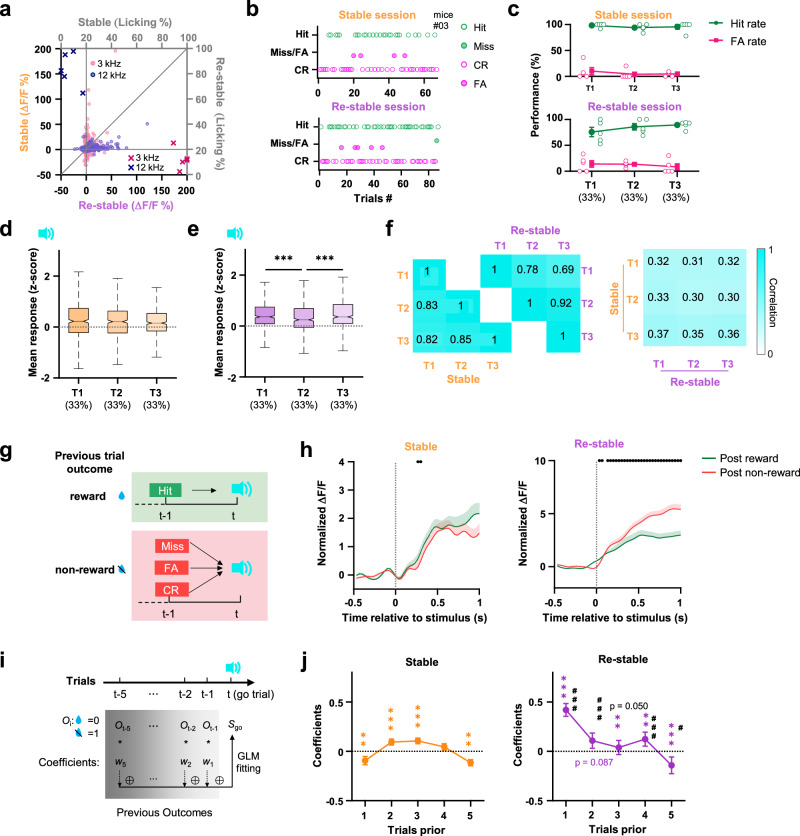
Once the reversed rule is learned, performance stabilizes, but neural responses still depend on outcomes. The same rewarded sound elicits different anterior cingulate responses depending on whether the previous trial produced a reward. Recent experience remains visible in neural activity despite steady overall behavior.
Statistical modeling shows a stronger, more extended influence of recent outcomes on current sound responses after reversal. Experience of a rule change can therefore influence subsequent feedback processing. Stable performance can coexist with continued updating and a balance between recent information and learned associations.
Source: Chen W et al. · Nature communications · CC BY
Original figure and English caption ↗
The old rule remains usable while adjustment slows
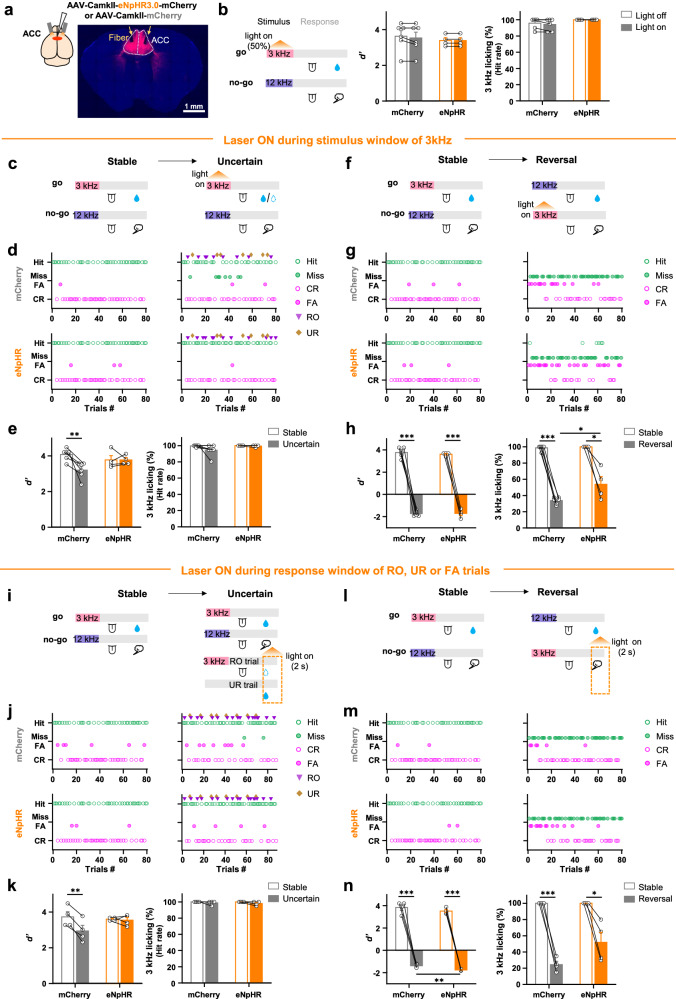
A causal intervention reveals a clear distinction. Suppressing anterior cingulate activity during the stable task does not significantly change hit rate or discrimination, whereas suppression during uncertainty or reversal impedes or slows adjustment. Mice can still execute familiar responses but adapt less readily to new outcomes.
Switching is affected when suppression occurs either during the sound or during unexpected outcomes. This adult male mouse study connects anterior cingulate cortex with feedback-guided updating, pairing regional causal evidence with a computational account from single-cell activity. Flexible choice requires both retaining a rule and using experience to decide when to revise it.
Source: Chen W et al. · Nature communications · CC BY
Original figure and English caption ↗