Left hippocampal CA3 stands out at the moment of spatial choice
When mice use a recent location to make a choice, left and right hippocampal CA3 make different contributions. Left CA3 and associated medial septal PV cells are particularly important during retrieval.

At a junction, how does a recent experience guide the next choice? Spatial working memory briefly retains location information for later use. The two hippocampi look similar, but do they perform the same work? A mouse study published in Nature Communications on June 9, 2020 separates sampling, waiting and choosing. Left hippocampal CA3 makes a particularly clear contribution when information is retrieved to guide choice, and an input from medial septum links this asymmetry to an upstream population.
Suppressing left CA3 pyramidal cells impairs spatial working-memory performance during choice, without significant effects during sampling or waiting, or after corresponding right-side inhibition. Medial septal PV cells associated with left CA3 also contribute to retrieval.
Contents · 7 sections
Similar hippocampi diverge during choice
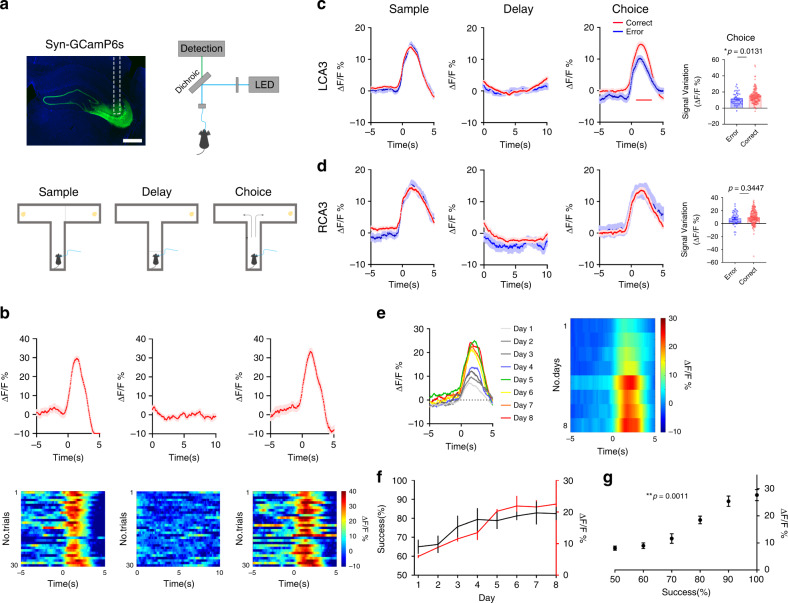
In the spatial-choice task, mice sample location information, wait and then use it to choose. Population calcium signals increase in both left and right CA3 during sampling and choice, without the same clear increase during waiting. Both sides participate; the distinction is not an active side opposed to a silent one.
During choice, left CA3 calcium signals are higher on correct than error trials; the corresponding right-side comparison is not significant. Signal strength also correlates with performance across learning. These associations focus attention on the moment when stored information is retrieved for action.
Source: Song D et al. · Nature communications · CC BY
Original figure and English caption ↗
Different response timing within active populations
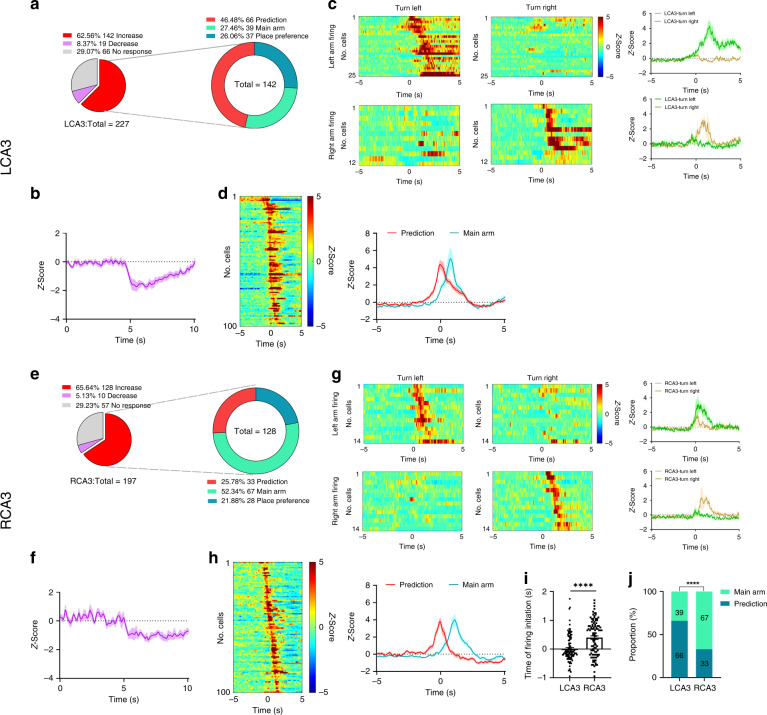
At the level of recorded units, many cells on both sides change firing across task phases, with similar proportions of task-responsive units. Response type and timing differ: prediction-related firing is more common on the left, while main-arm-related firing is more common on the right.
Within the compared response classes, left-side firing also begins earlier. Both sides contain location-preferring units and units without clear task responses. The asymmetry concerns how populations organize activity in time, rather than assigning memory to one entire hippocampus.
Source: Song D et al. · Nature communications · CC BY
Original figure and English caption ↗
Left CA3 contributes at the moment of retrieval
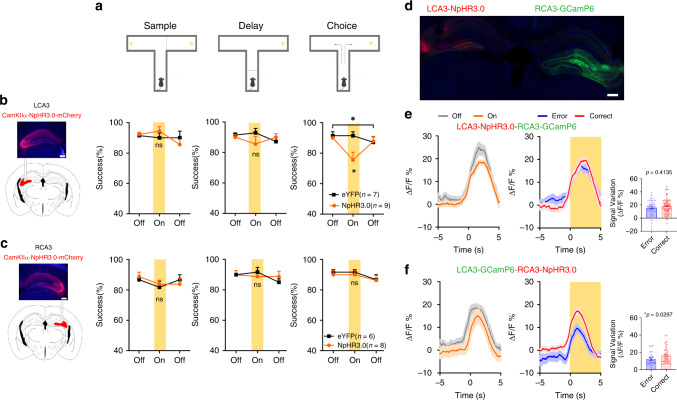
An association with success raises the question of functional contribution. Reducing left CA3 pyramidal-cell activity lowers accuracy during choice, but not significantly during sampling or waiting. Corresponding right CA3 inhibition does not significantly affect accuracy in these tested phases.
This phase dependence fits the recording results. Yet additional activation of either left or right CA3 can impair performance. Appropriate organization of activity matters more than simply increasing activity on one side, and right CA3 remains part of the network.
Source: Song D et al. · Nature communications · CC BY
Original figure and English caption ↗
The retrieval difference extends across tasks
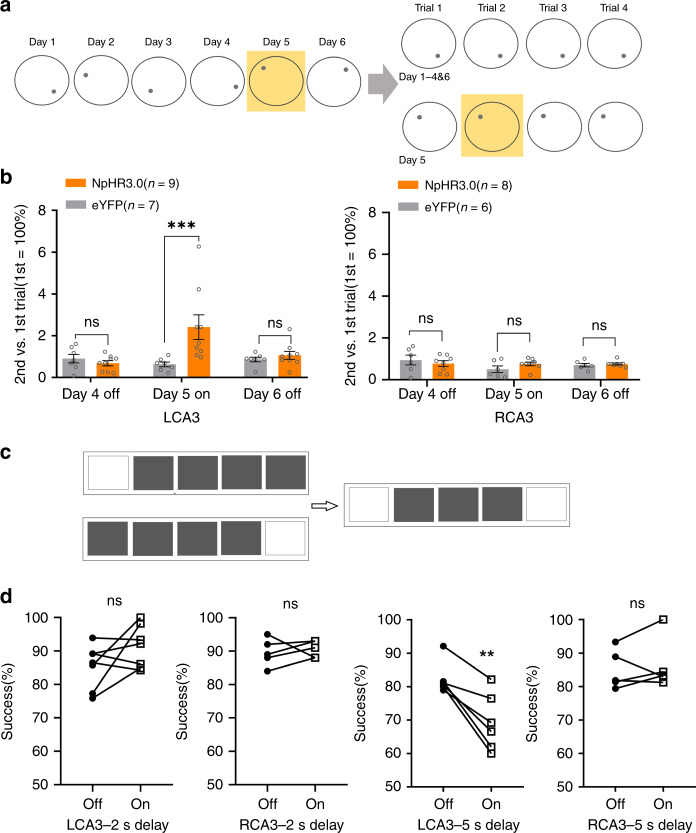
In another task requiring recent spatial information, left CA3 inhibition increases the time needed to retrieve the target location in a water maze; the corresponding right-side comparison is not significant. Performance recovers on subsequent testing, linking the deficit to the current activity state rather than permanent loss of the memory.
A touchscreen task varies how long information must be retained. At shorter delays, inhibition on either side does not significantly affect performance. At longer delays, left-side inhibition impairs performance, while right-side inhibition remains without a significant effect. Task demands therefore shape when this asymmetry becomes evident.
Source: Song D et al. · Nature communications · CC BY
Original figure and English caption ↗
Upstream connections show preferences rather than absolute divisions
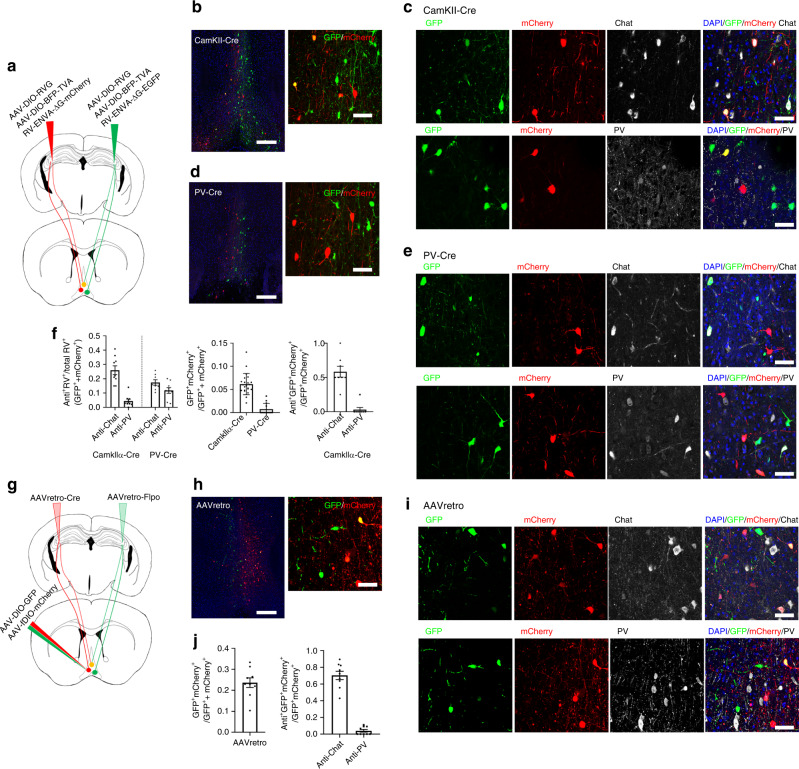
The researchers trace upstream toward medial septum and diagonal band. PV-associated cells show a stronger preference for unilateral CA3 targets, whereas ChAT-marked cholinergic cells more often have bilateral connections. This anatomical preference offers a possible basis for functional asymmetry.
These are overlapping distributions rather than completely separate wiring plans: cholinergic cells also make unilateral connections. Anatomical preference motivates, but does not replace, a functional test of how the connected populations influence choice.
Source: Song D et al. · Nature communications · CC BY
Original figure and English caption ↗
PV cells associated with left CA3 influence choice
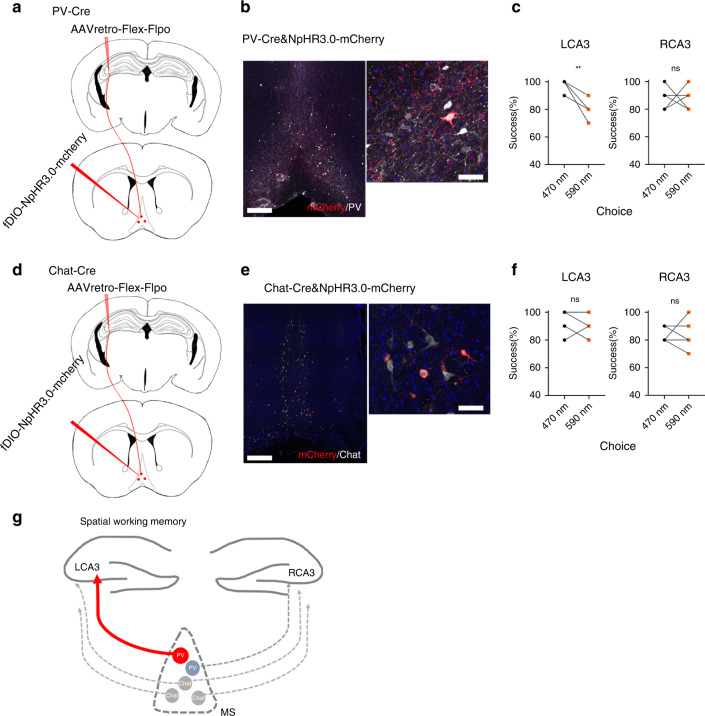
Reducing activity in medial septal PV cells associated with left CA3 lowers choice accuracy. The corresponding right-associated PV population does not show a significant effect. Inhibiting ChAT-associated populations linked with either side likewise does not significantly change accuracy.
The affected upstream populations are identified by their projection relationships and may also act through other connections. The result identifies a concrete upstream partner for left CA3 retrieval while leaving open how these inputs shape CA3 activity timing.
Source: Song D et al. · Nature communications · CC BY
Original figure and English caption ↗
Memory asymmetry is also a division across time
The study narrows a broad question about brain asymmetry to specific regions, populations and moments. Both CA3 sides respond during the task, but left CA3 and its associated PV input make a clearer contribution when recent spatial information must guide a choice. Delay length and task format further condition the effect.
These conclusions concern the tested spatial tasks in mice. The recipient CA3 cell types, coordination between sides and possible roles for network rhythms remain unresolved. Rather than placing memory in one side, the findings reveal different ways in which the two networks contribute over time.