Struggling or remaining still under stress? A GluN3A clue from intermediate CA1
A mouse study connects a local hippocampal receptor subunit, cellular activity and coping behavior, revealing regional specialization in stress responses.
Animals alternate between struggling and remaining still in difficult situations. How does the brain regulate this coping pattern? The hippocampus is often implicated in stress, but its subdivisions have different roles. A 2026 Communications Biology study focuses on intermediate CA1, or CA1i, and the nonclassical NMDA receptor subunit GluN3A, following molecular changes after stress through local cellular activity and behavioral modulation. A specialized region and receptor subunit thus become linked with coping strategies.
CA1i GluN3A and local neuronal activity modulate coping in suspension and swimming tasks. Improvements associated with D-serine depend on this molecular component and local activity.
Contents · 6 sections
Stress-associated molecular changes focus on CA1i
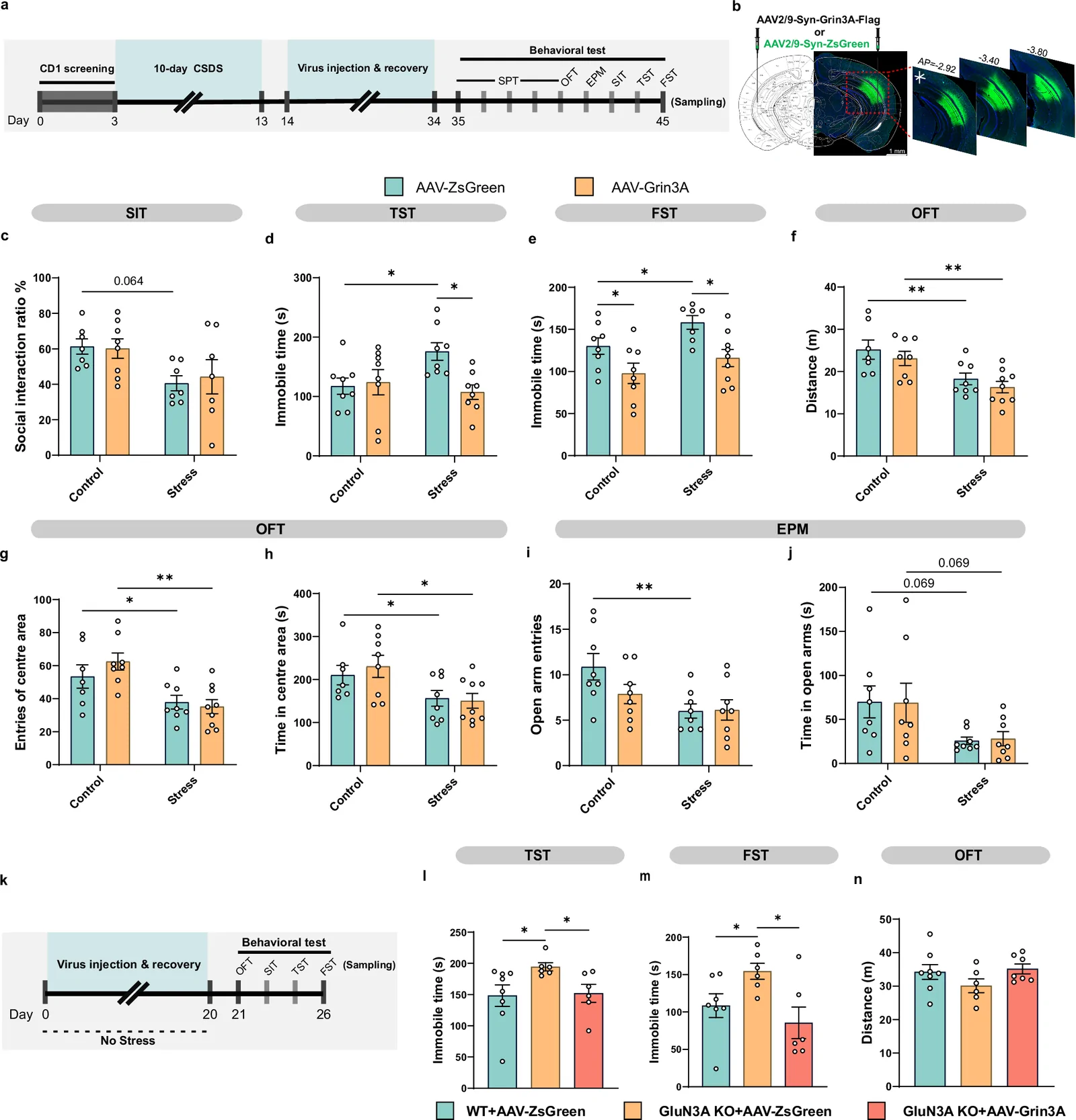
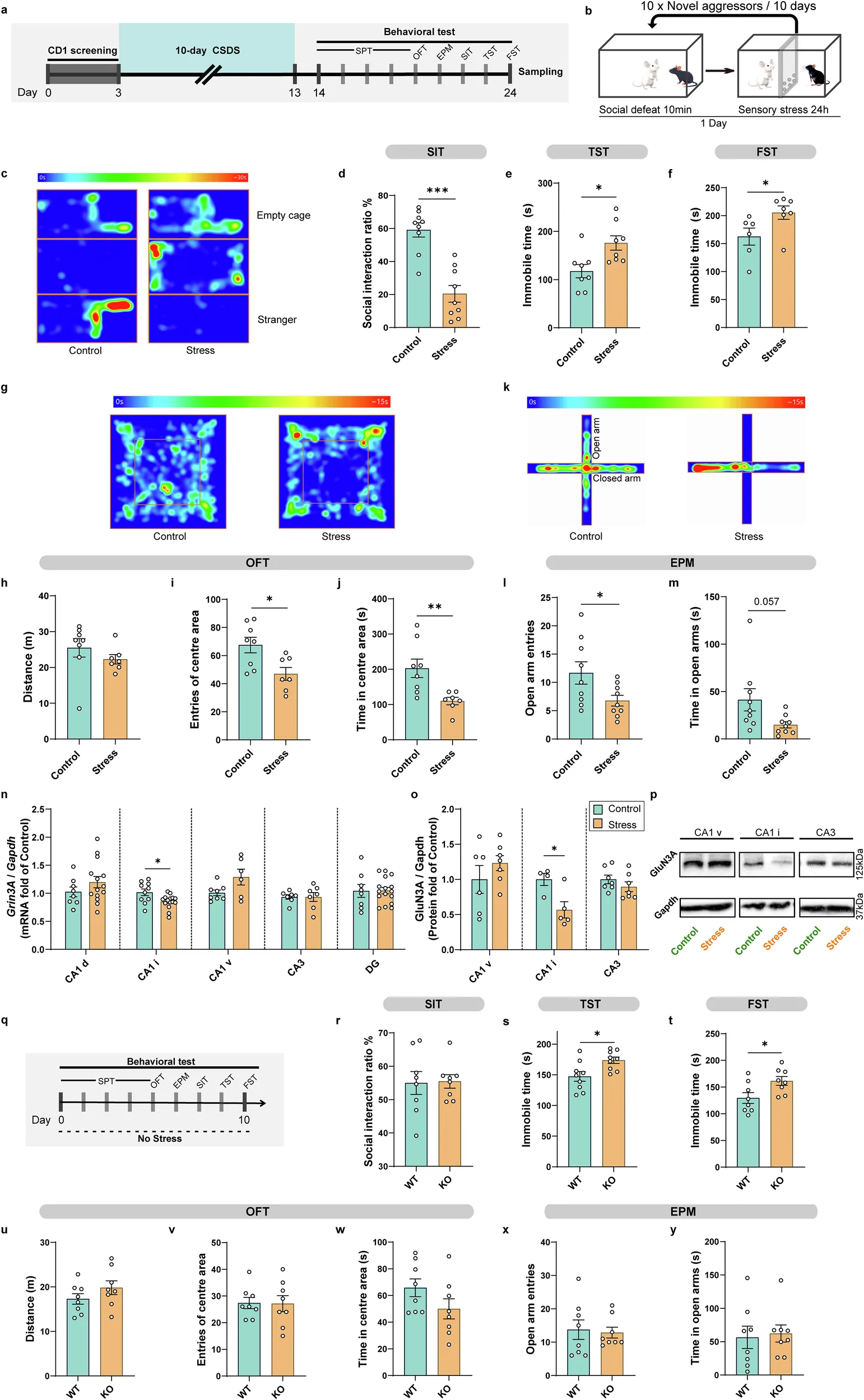
After chronic social defeat, mice interacted less and showed increased immobility in suspension and swimming, with similar sucrose preference. Some anxiety-related measures changed, while open-arm time did not significantly change. The behaviors described different facets of the post-stress state and provided readouts for investigating local mechanisms.
GluN3A decreased in CA1i, while other examined hippocampal subdivisions did not show the same significant reduction. This regional difference narrowed the question from the whole hippocampus to a defined location. Different molecular and connectivity profiles may support distinct roles during stress, making CA1i a focus for expression restoration and behavioral observation.
Source: Zhang W et al. · Communications biology · CC BY-NC-ND
Original figure and English caption ↗
Restoring local GluN3A changes coping
Unstressed GluN3A-deficient mice showed greater immobility without matching social, sucrose, motor or anxiety-related abnormalities. Increasing CA1i GluN3A in stressed mice reduced immobility while social and anxiety measures remained similar. Local restoration in deficient animals also improved the corresponding coping outcomes, placing the molecular contribution most clearly within coping behavior.
The tasks also differed: improvements in suspension were more prominent after stress, whereas swimming immobility could change in both control and stressed animals. The correspondence between local restoration and molecular loss supported the CA1i contribution while revealing differences between coping tasks.
Source: Zhang W et al. · Communications biology · CC BY-NC-ND
Original figure and English caption ↗
CA1i is recruited during struggling
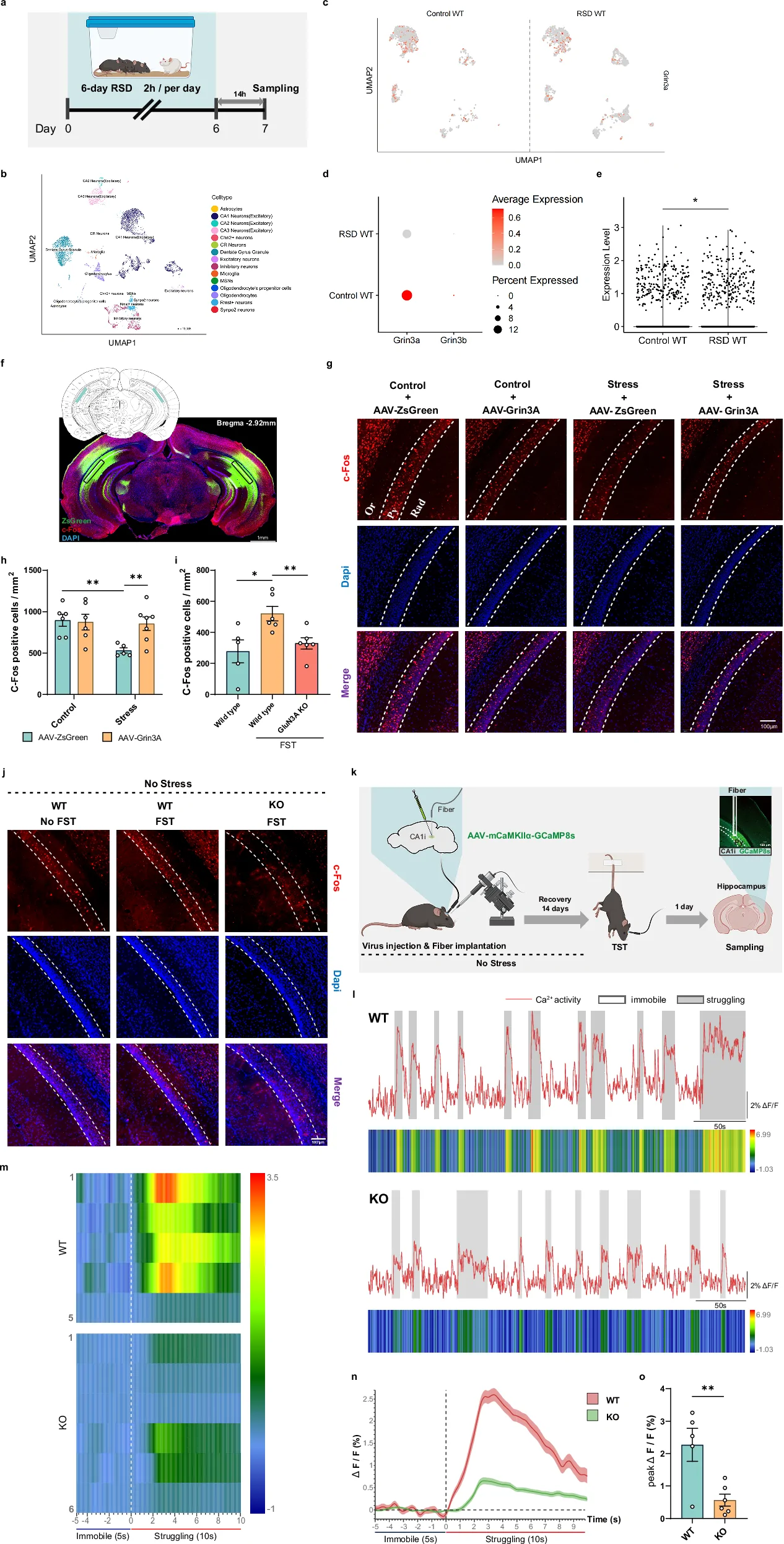
Transcript reanalysis implicated excitatory CA1 cells. Post-task c-Fos showed weaker CA1i recruitment after stress and restoration with local overexpression. Deficient mice had similar baseline c-Fos but weaker task recruitment. This state-dependent difference linked the molecular changes with cellular activity during coping.
Population calcium rose after the transition from immobility to struggling, with weaker responses in GluN3A-deficient animals. The rise lagged behind the behavioral transition, describing activity accompanying the struggle. Molecular findings, task recruitment and dynamic recordings converged on a further question: can direct modulation of the region change coping?
Source: Zhang W et al. · Communications biology · CC BY-NC-ND
Original figure and English caption ↗
Activation and suppression change immobility
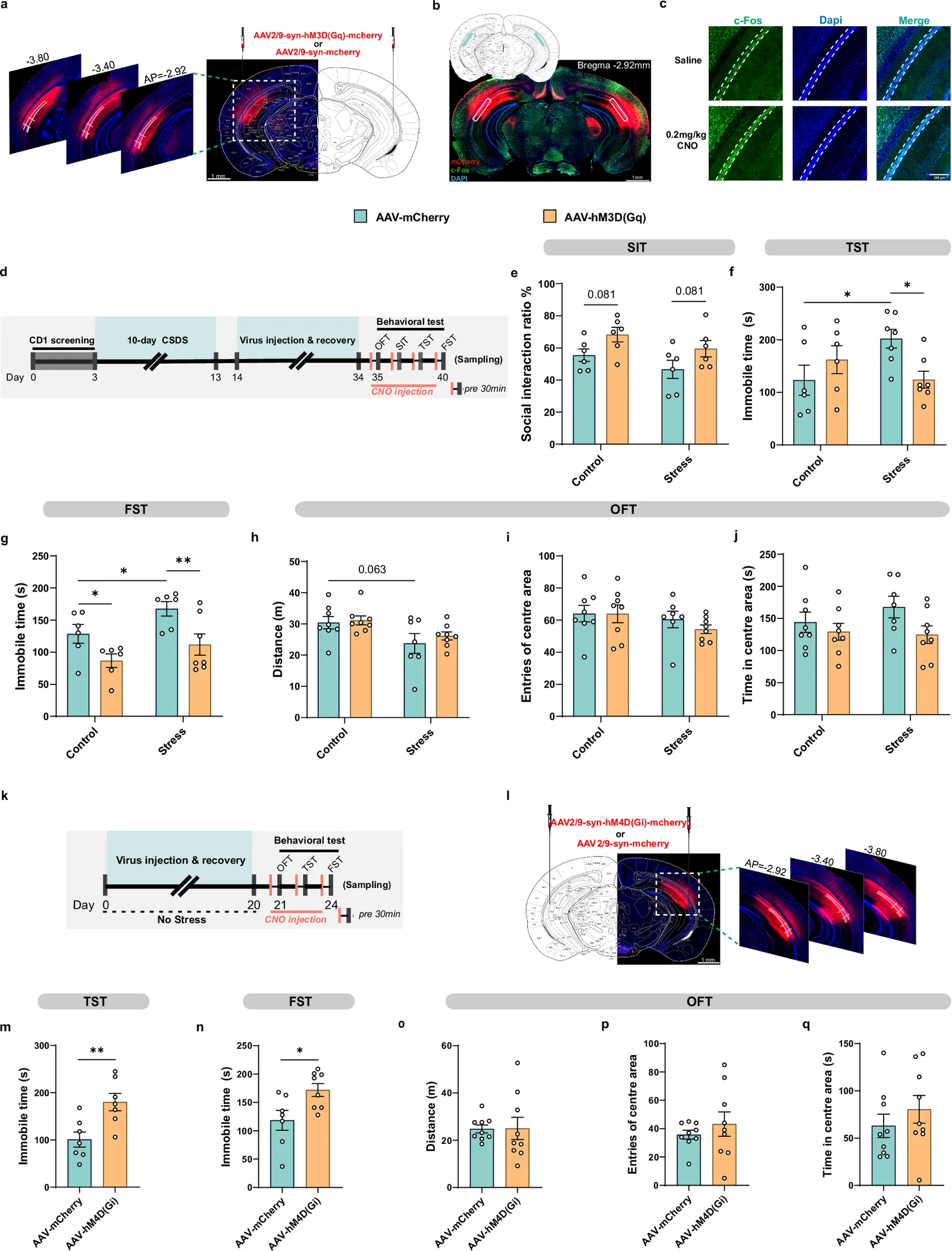
Increasing CA1i neuronal activity reduced suspension immobility in stressed animals and swimming immobility in both states. Suppression increased immobility in unstressed animals in both tasks. Motor and anxiety-related controls remained similar, showing that local activity can regulate these coping readouts.
The results advanced the activity observations to a functional level. Local hippocampal dynamics can influence the balance between action and immobility. Resolving coordination between excitatory and inhibitory cells will help explain how CA1i network activity translates into defined coping patterns.
Source: Zhang W et al. · Communications biology · CC BY-NC-ND
Original figure and English caption ↗
Molecular identity and activity contribute to the pharmacological effect
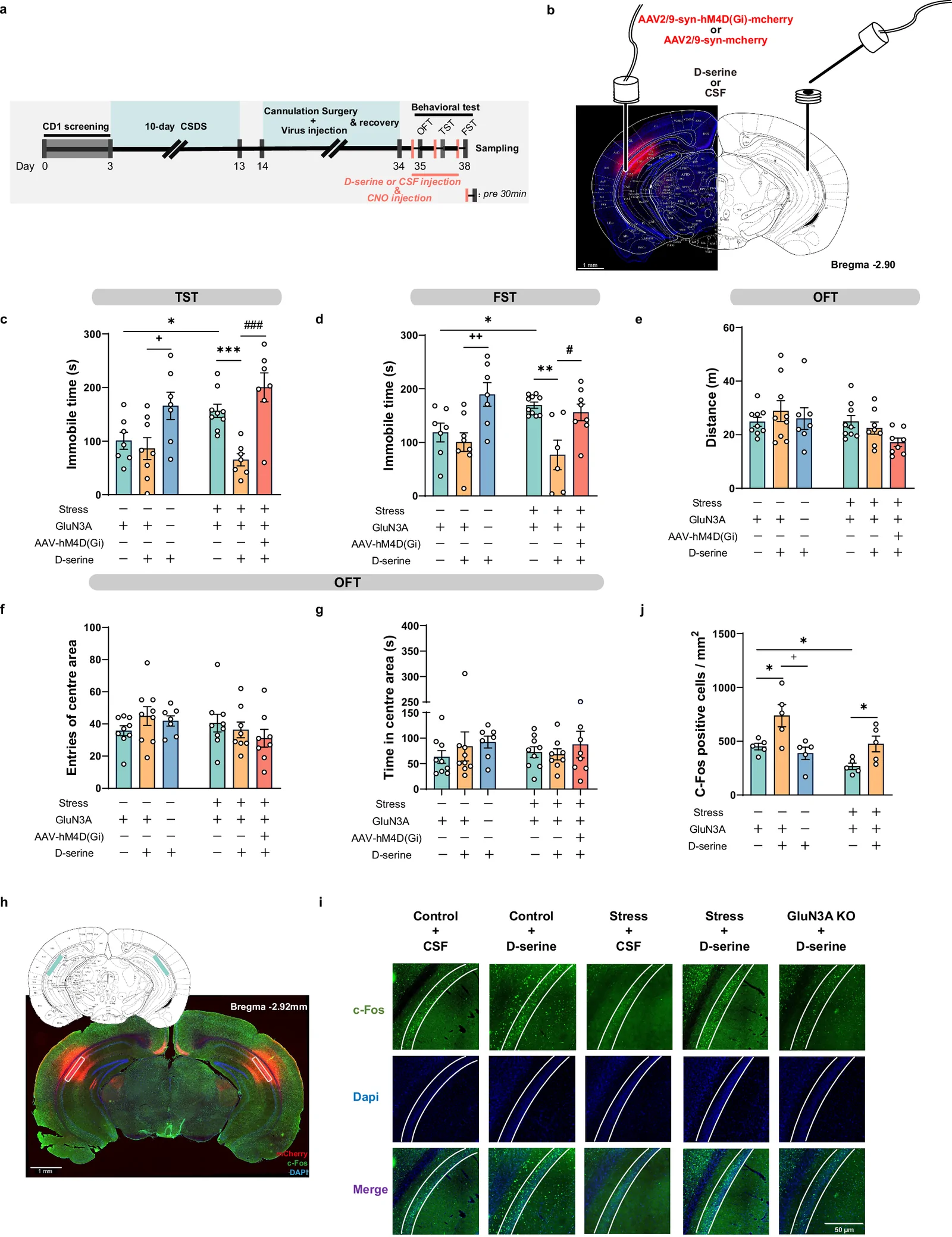
Local D-serine reduced post-stress suspension and swimming immobility and increased CA1i c-Fos. GluN3A-deficient animals did not show equivalent normalization, and concurrent CA1i suppression blocked improvement. Combining pharmacological, genetic and activity conditions clarified the contributions of molecular identity and local activity.
D-serine is involved in NMDA receptor regulation and can act on different receptor forms. Investigating endogenous ligand sources, receptor currents and local synaptic processes will help connect the dependency findings with a more detailed cellular mechanism.
Source: Zhang W et al. · Communications biology · CC BY-NC-ND
Original figure and English caption ↗
CA1i modulation accompanies selective downstream responses
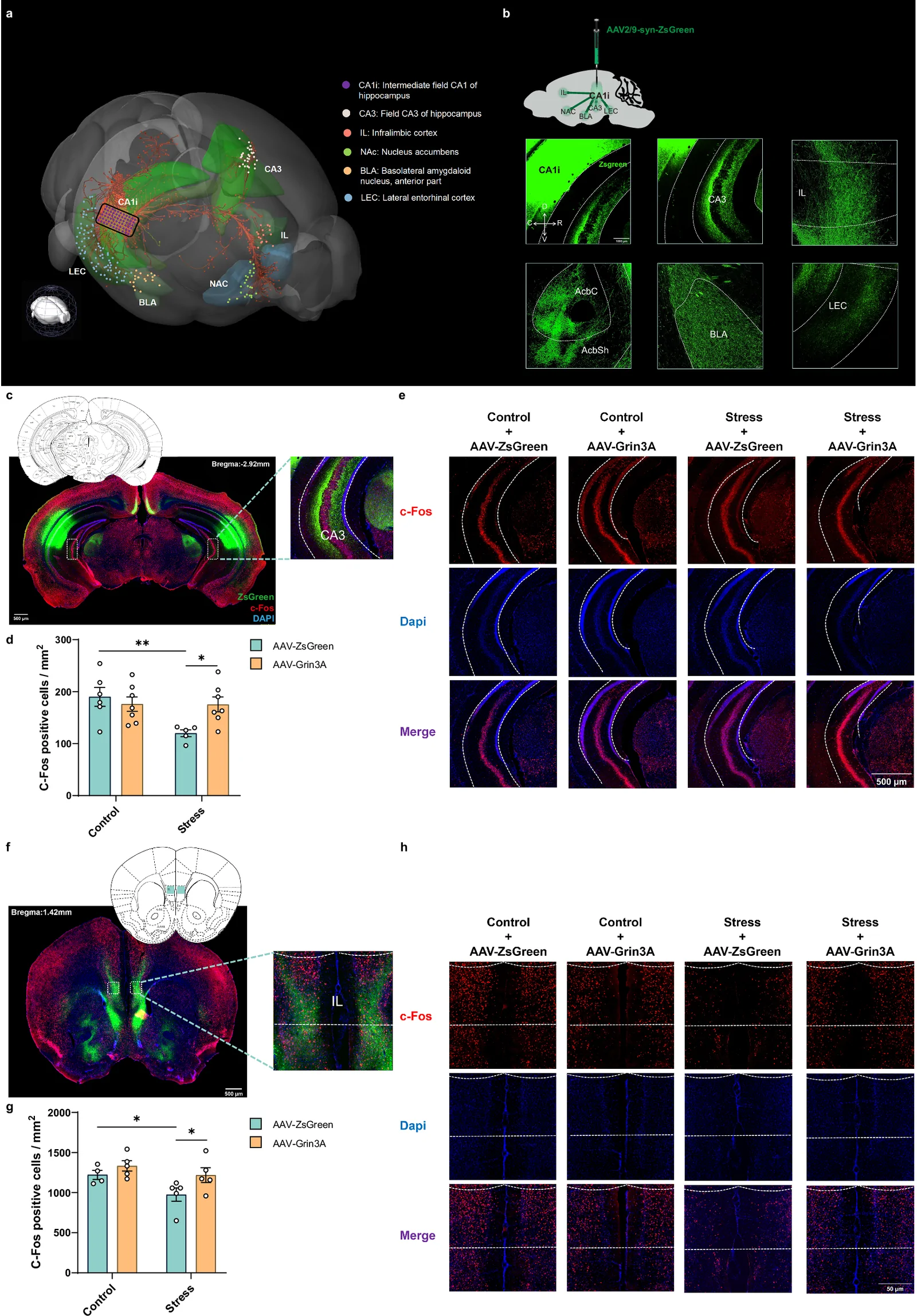
CA1i projects to CA3, infralimbic cortex, or IL, accumbens and other regions. Local GluN3A elevation restored post-task activity markers in CA3 and IL, without significant changes in accumbal core and shell. Selective downstream responses extended the study from a local molecular component to a broader network and identified directions for projection studies.
The findings come from male mice and mainly concern coping in defined tasks. How natural experience recruits local receptors and which downstream connections participate remain questions for further work. The study adds a specific relationship to hippocampal functional diversity, connecting regional molecular changes after stress with cellular recruitment and coping.
Source: Zhang W et al. · Communications biology · CC BY-NC-ND
Original figure and English caption ↗