SST cells at the habenular junction contribute to reward-related behavior
A study in male mice identifies excitatory SST cells receiving inhibitory bed-nucleus input and sending excitatory signals to interpeduncular PENK cells. Associated activity changes multiple behavioral measures.
Mice differ in sucrose preference and in time spent at places associated with sucrose. Which cells accompany these reward-related differences? A study in Nature Communications starts with adult male behavior and identifies a region between medial and lateral habenula. Somatostatin-expressing SST cells there connect with inhibitory input and excitatory output and contribute to several behavioral changes after stress.
Increasing habenular-junction SST activity improves several reward-related and exploratory measures in chronically stressed mice. Reducing upstream CCK inhibition enhances SST responses, while downstream PENK activity also relates to the behavior.
Contents · 7 sections
Sucrose and place preferences accompany one another
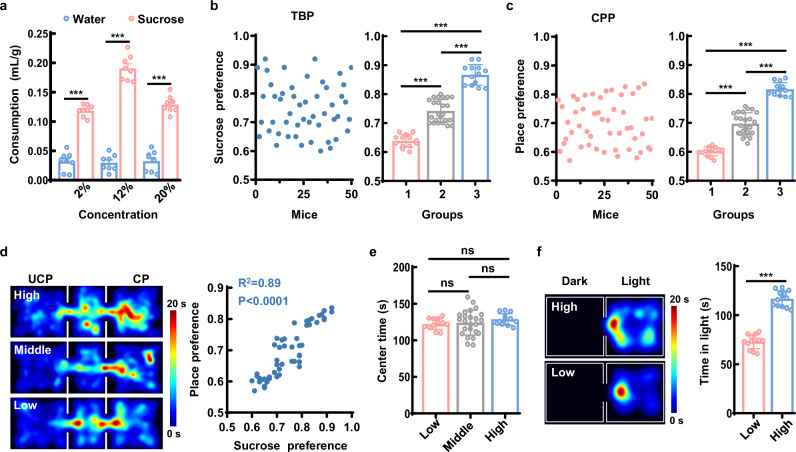
The study first groups unstressed adult males by sucrose preference. The higher group also spends more time in the sucrose-associated place and more time in the light area of a light–dark task. Associations across measures allow reward-related and exploratory behavior to be examined from several perspectives.
The groups arise from existing behavioral differences. Central-area time in the place task is comparable, while choices of reward-associated areas differ. The team next identifies active cells accompanying the behavior, moving from behavioral selection to neuronal populations.
Source: Luo L et al. · Nature Communications · CC BY-NC-ND
Original figure and English caption ↗
SST cells provide excitatory output
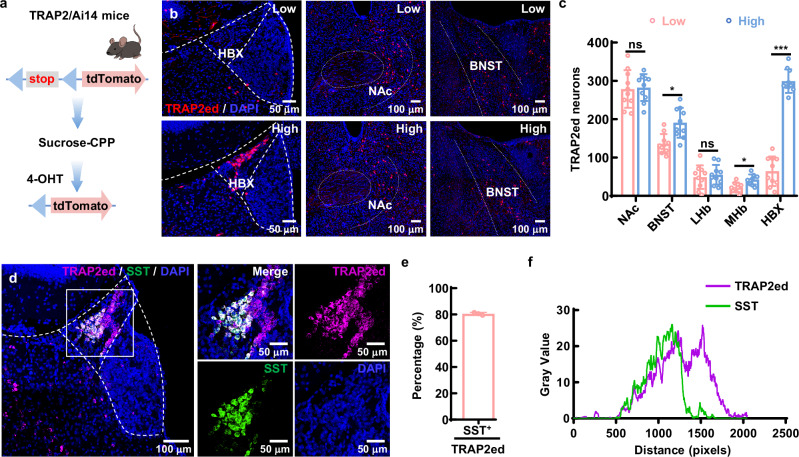
In the junction between medial and lateral habenula, termed HBX by the authors, many behavior-associated active cells express SST. Further identification finds glutamate-associated markers in the population. SST here identifies cells with excitatory output.
The habenula contains different regions and cell types. Locating the behavioral relationship within this population helps explain why overall regional activity does not describe each cell type’s contribution. Subsequent work tests how changing these SST cells’ activity affects behavior.
Source: Luo L et al. · Nature Communications · CC BY-NC-ND
Original figure and English caption ↗
Several behaviors change rapidly
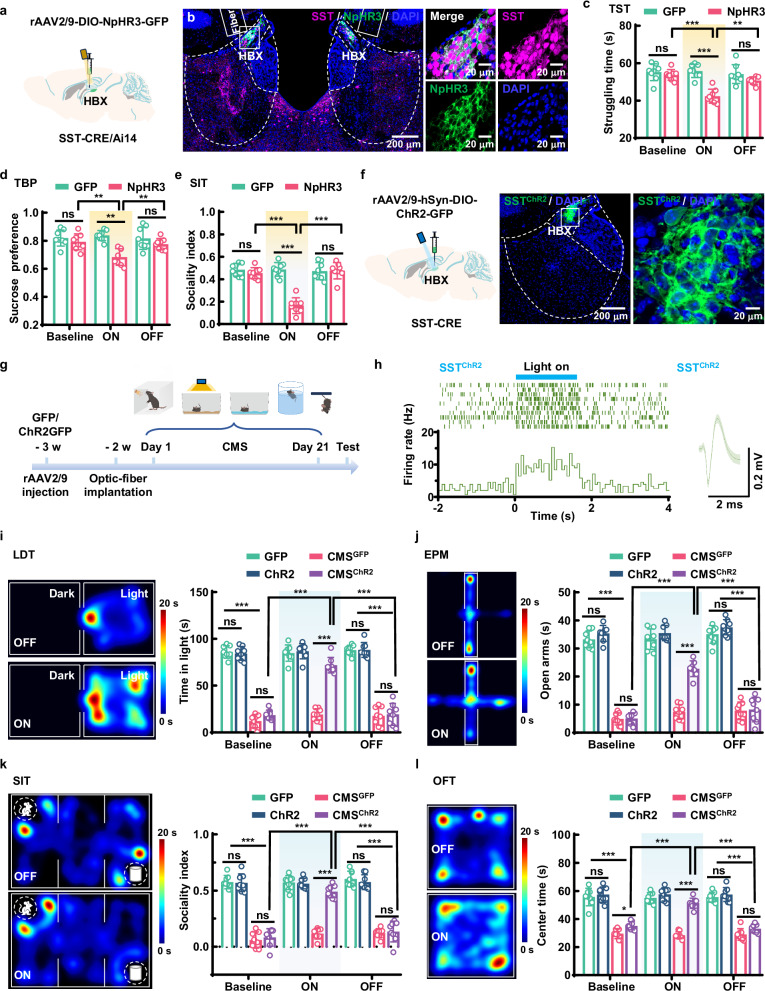
Reducing the population’s activity lowers escape-related behavior, sucrose preference and social interaction in otherwise unstressed mice. General movement and total licking do not decline similarly. The changes center on the measured choices and coping-related behavior and vary across intervention periods.
Increasing SST activity in chronically stressed mice raises light-area and open-arm exploration, social interaction and reward-related measures, with some changes still visible immediately afterward. Total distance remains comparable. The findings reveal effects of a particular population across several short-term behaviors.
Source: Luo L et al. · Nature Communications · CC BY-NC-ND
Original figure and English caption ↗
Inhibitory input connects with excitatory output
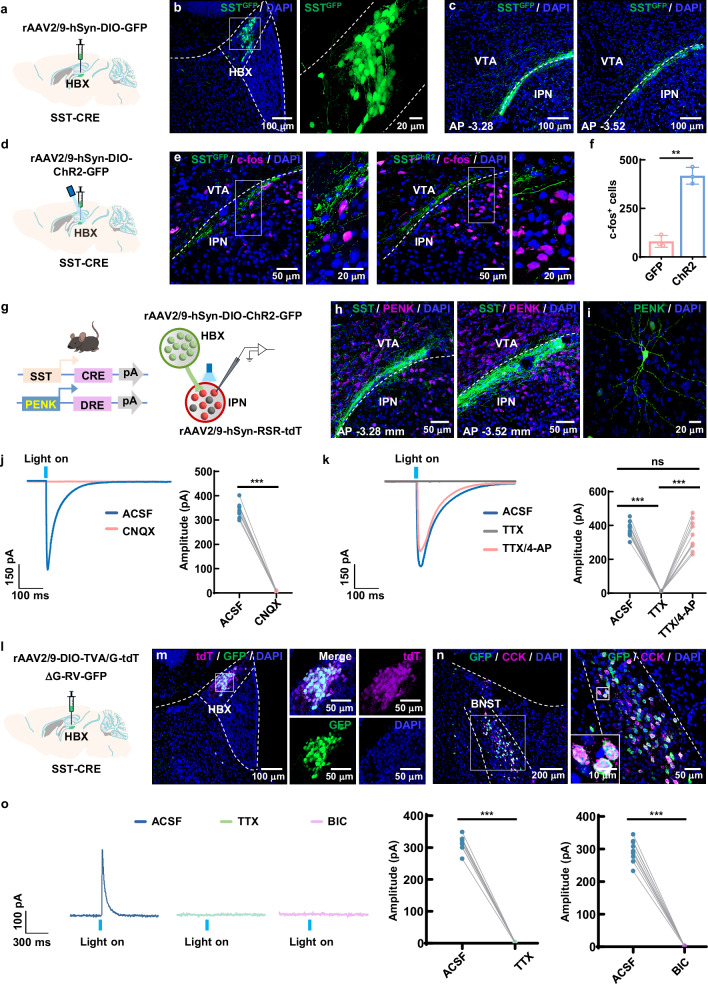
Upstream tracing identifies GABAergic inhibitory input from bed-nucleus CCK cells to SST cells. Downstream, SST cells provide excitatory input to interpeduncular PENK cells. Synaptic electrical responses support direct connections, forming a network with different signal directions.
CCK, SST and PENK identify populations in this study. One component suppresses another, which supplies excitation downstream. The network outcome therefore depends on where activity is changed, leading to comparisons of the nodes’ behavioral effects.
Source: Luo L et al. · Nature Communications · CC BY-NC-ND
Original figure and English caption ↗
SST responses rise as behavior changes
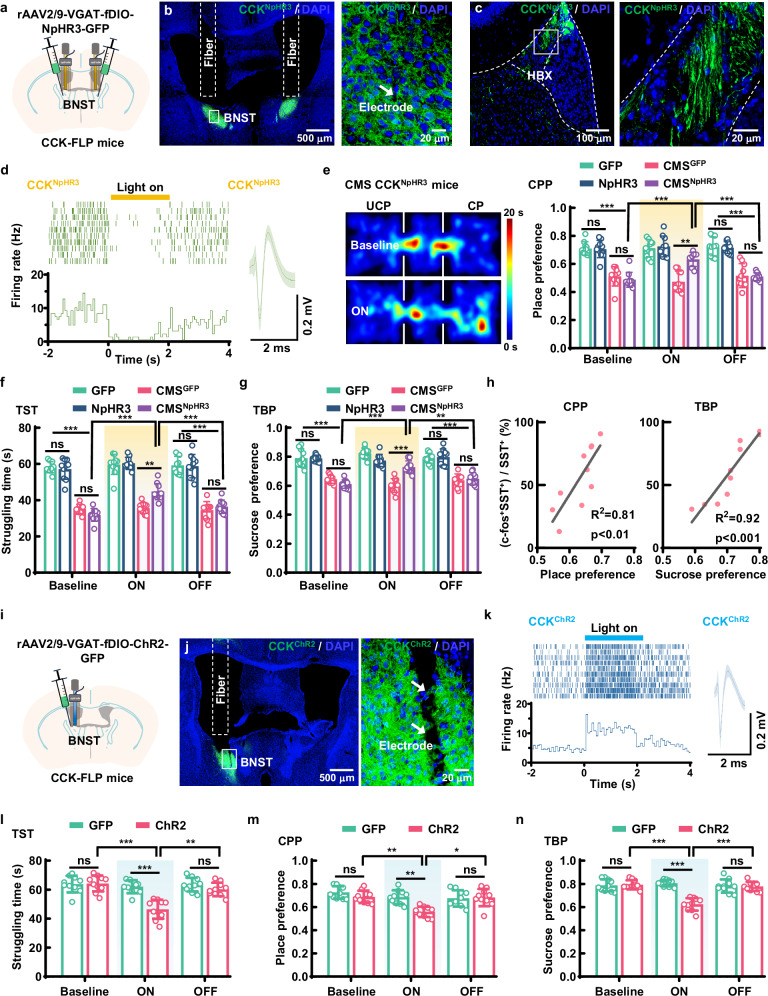
Reducing upstream CCK activity improves sucrose and place preference, escape-related behavior and other measures in stressed mice, alongside more SST activity markers. Reducing CCK terminal influence at the junction also improves associated measures. Increasing CCK activity instead lowers reward-related and investigatory measures.
This direction accompanies the inhibitory connection: reducing upstream activity allows greater SST activity. Movement remains comparable, so the behavioral change does not simply reflect more or less locomotion. Input location and cell identity define the neuronal component involved.
Source: Luo L et al. · Nature Communications · CC BY-NC-ND
Original figure and English caption ↗
Neuronal firing accompanies licking events
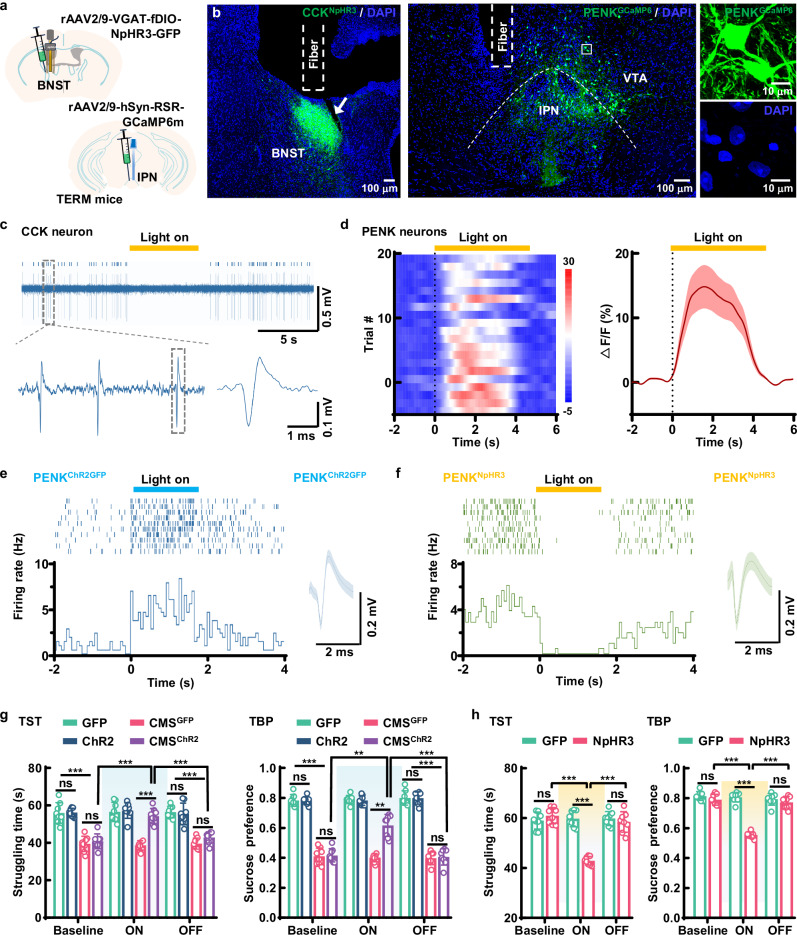
Many SST cells show brief firing increases around sucrose licking. Baseline firing and associated responses are lower after chronic stress, while reducing upstream CCK influence increases them. The relationship between cellular activity and behavioral events changes with input state.
Downstream PENK cells also show licking-associated responses. Increasing PENK activity improves sucrose preference and escape-related behavior in chronically stressed mice; reducing activity lowers these measures. Movement does not change significantly, linking several nodes of the network with reward-related behavior.
Source: Luo L et al. · Nature Communications · CC BY-NC-ND
Original figure and English caption ↗
Cell types and connection direction shape behavior
Starting from reward-preference differences, the study identifies junctional SST cells and connects upstream inhibition with downstream excitation. Changing different elements of the three-node network produces different behavioral directions, providing a more specific cellular and circuit account of habenular function.
The findings arise from male-mouse choice, investigation and coping-related tasks. Behavioral relationships can be resolved into particular inputs and outputs: within one network, inhibiting one population and activating another can contribute to similar behavioral changes.