Remembering an encounter: opposing routes through the lateral septum
Two GABAergic populations have opposing effects on social-memory acquisition. A mouse study follows hippocampal inputs and hypothalamic outputs to uncover their organization.
How does a mouse remember a companion it has just encountered? The hippocampus participates, but its signals also travel through other networks. A 2026 Nature Communications study turns to the lateral septum (LS), where two inhibitory populations have opposing effects on social-memory acquisition. Somatostatin (SST) cells promote it, while calbindin 1 (CB) cells suppress it. Their inputs, local interactions and destinations help explain the difference.
In male mice, SST and CB populations have opposing effects mainly during social-memory acquisition. They preferentially receive inputs from different ventral-CA1 subdivisions, target distinct hypothalamic regions and interact through local inhibition.
Contents · 7 sections
Distinct cellular identities within one region
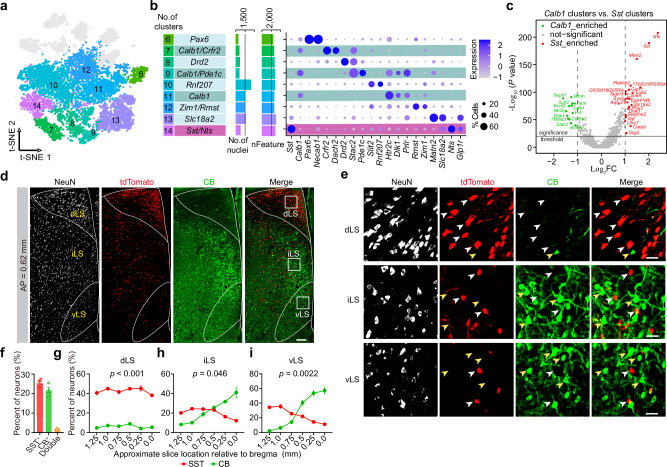
LS GABAergic cells comprise multiple molecular populations. SST and CB are two of them, with about 1.7% coexpression. SST favors dorsal locations and CB intermediate and ventral locations, with rostrocaudal gradients and some intermixing. Molecular identity provides a finer way to examine the region.
Social interaction induced activity labeling in both classes. Single-cell recordings showed a clearer mean firing increase in SST, while CB responses increased or decreased without a clear mean change. These patterns prompted tests of whether the cells influence later recognition.
Source: Zhang L et al. · Nature communications · CC BY-NC-ND
Original figure and English caption ↗
SST acts mainly during acquisition
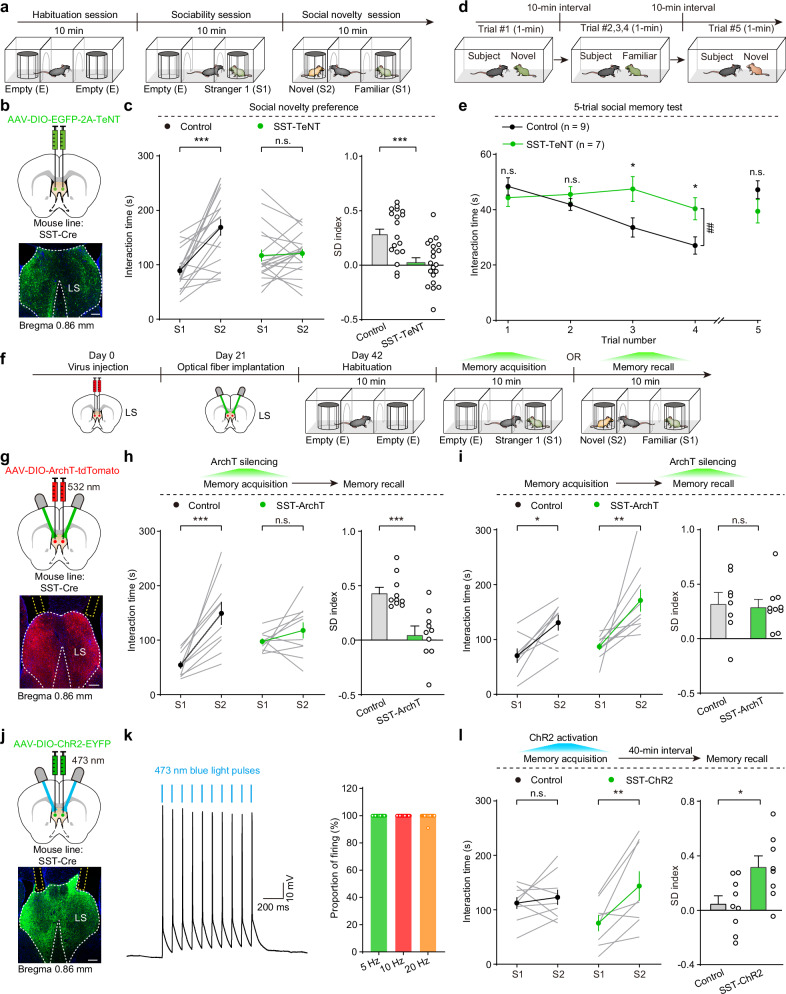
Sustained SST-output blockade impaired novelty preference and repeated-trial social memory while preserving baseline sociability and object recognition. Inhibition restricted to acquisition impaired later discrimination; recall-phase inhibition did not. Activity during the encounter was therefore especially relevant.
Activating SST during acquisition enabled discrimination after forty minutes. Sustained inhibition also altered some anxiety-related maze measures depending on environmental height. Phase-specific memory effects thus coexist with additional context-dependent behavioral roles.
Source: Zhang L et al. · Nature communications · CC BY-NC-ND
Original figure and English caption ↗
CB has the opposite effect at the same stage
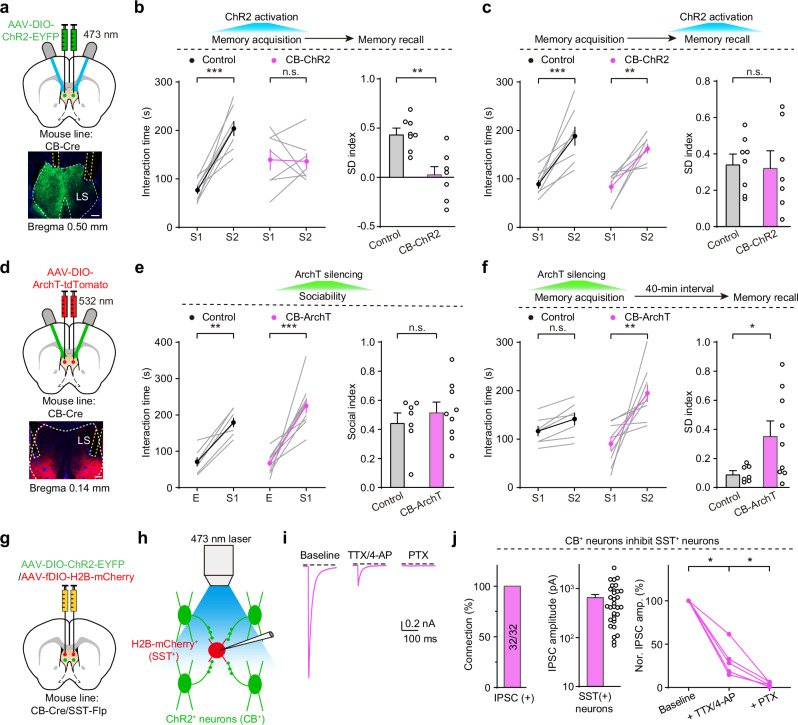
CB activation shifted the result in the opposite direction: acquisition-phase activation weakened memory, while recall-phase activation did not, with several baseline behaviors preserved. Suppressing CB during acquisition improved forty-minute discrimination, opposing SST effects within the tested tasks.
The populations also interact directly. Slice recordings revealed monosynaptic reciprocal GABA inhibition, and in vivo recordings supported interaction. This local organization informs the authors’ balance model, in which changing inputs during social experience may shift relative activity.
Source: Zhang L et al. · Nature communications · CC BY-NC-ND
Original figure and English caption ↗
Theta changes during social interaction
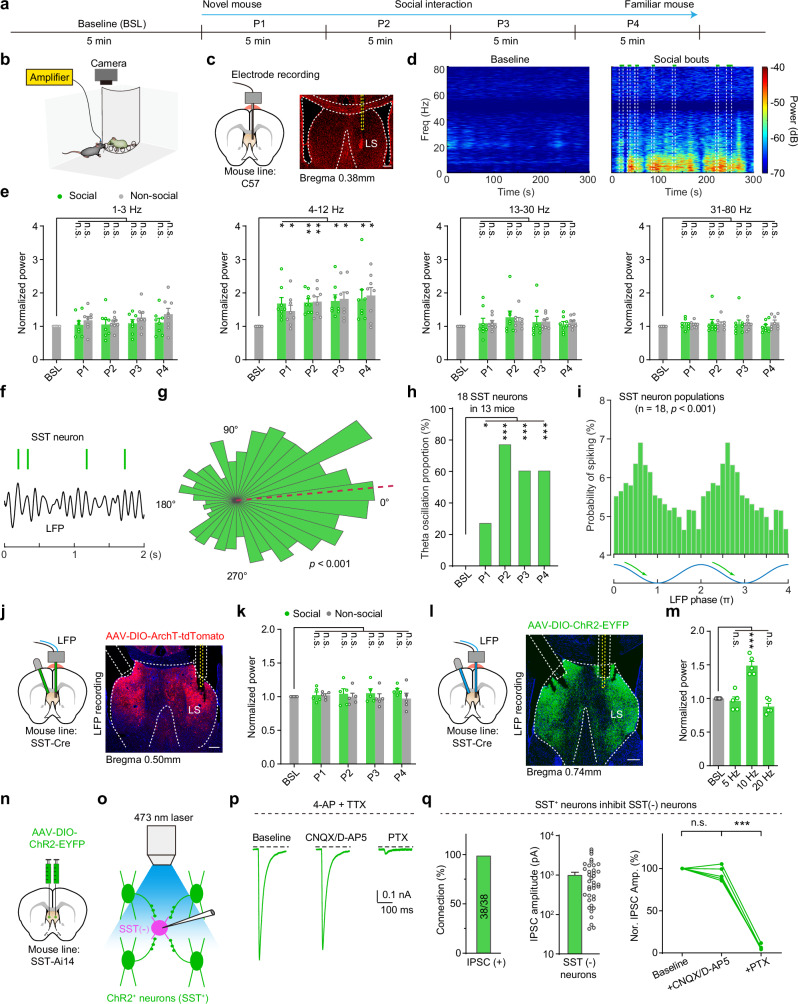
Social interaction increased LS theta power without the same increase in other bands or nonsocial exploration. SST firing also became more phase-locked to theta. Beyond response strength, the timing of cellular activity relative to the network rhythm added another clue.
SST inhibition blocked theta enhancement, while activation increased theta. Phase locking and power describe distinct rhythmic features, with some phase-locking changes also present in nonsocial conditions. These findings link SST with local rhythms and motivate tests isolating their contribution to memory.
Source: Zhang L et al. · Nature communications · CC BY-NC-ND
Original figure and English caption ↗
Ventral-CA1 subdivisions favor different recipients
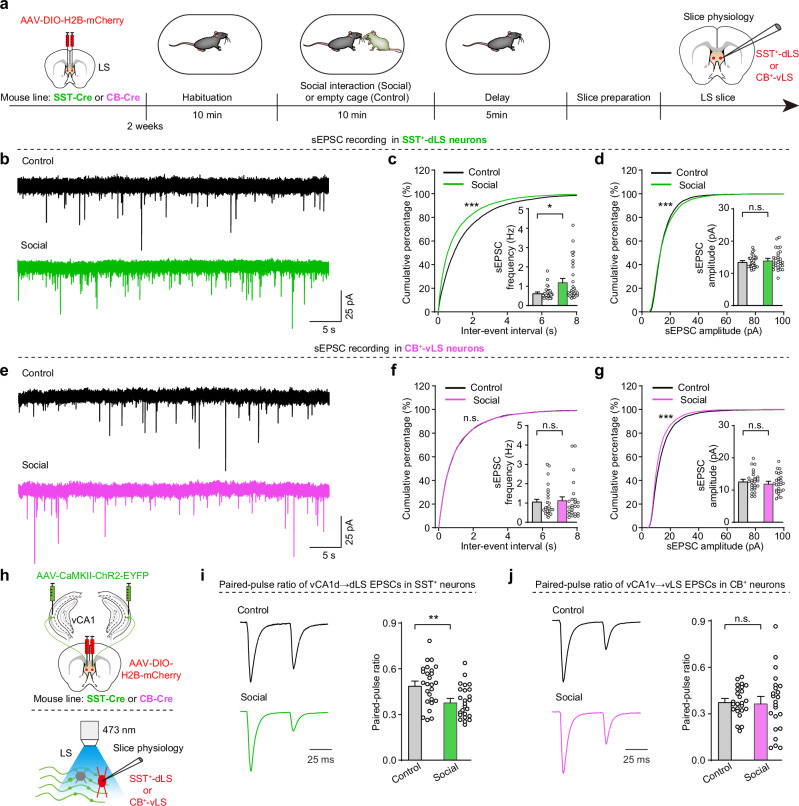
The routes differ upstream too. The relatively dorsal subdivision within ventral CA1 (vCA1d) supplies stronger input to SST-dLS, while its ventral subdivision (vCA1v) favors CB-vLS. Tracing and synaptic currents clarified these distinct sources within ventral CA1.
After interaction, input-event frequency rose in SST cells and hippocampal paired-pulse ratios fell without matching amplitude changes; CB inputs lacked the same plasticity. The authors propose that stronger presynaptic transmission toward SST shifts activity through local mutual inhibition, offering a model of experience-dependent balance.
Source: Zhang L et al. · Nature communications · CC BY-NC-ND
Original figure and English caption ↗
The routes leave LS for different targets
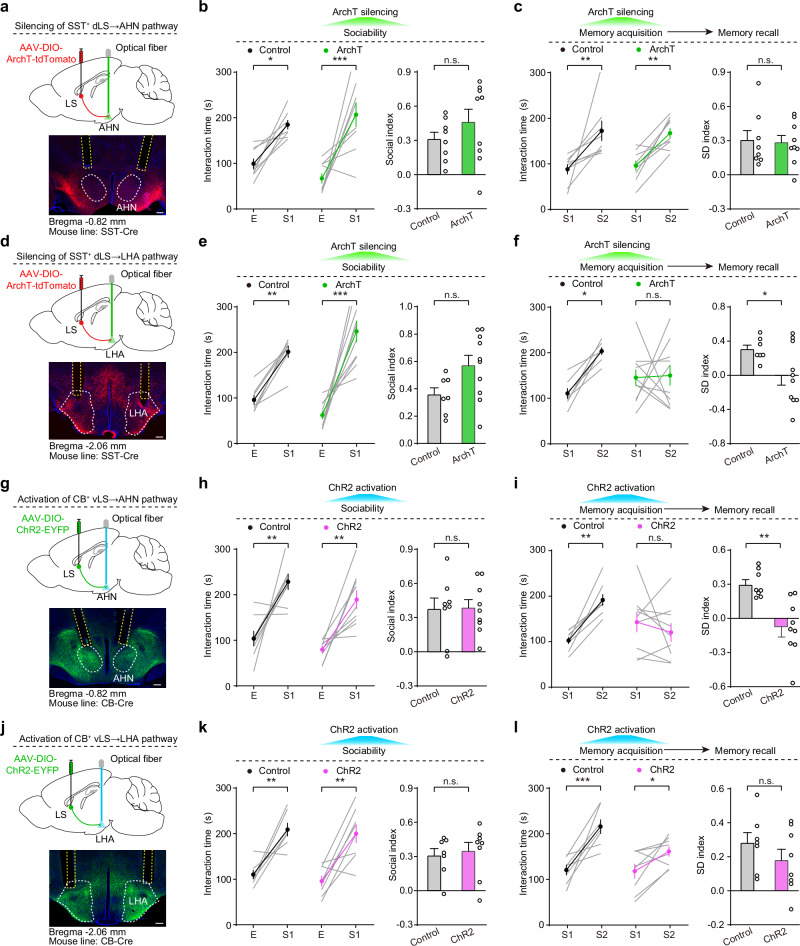
Suppressing SST-dLS output to lateral hypothalamic area (LHA) lowered social discrimination, unlike tested outputs to anterior hypothalamic nucleus (AHN) and preoptic area (POA). Activating CB-vLS output to AHN impaired acquisition, unlike its LHA or POA outputs. Destinations again tracked functional differences.
SST–LHA discrimination-index changes were significant while the omnibus interaction-time test was not. Some anxiety-related measures changed with SST output but not CB. These task-dependent patterns, together with heterogeneous hypothalamic recipients, motivate finer mapping of how inhibitory outputs differ.
Source: Zhang L et al. · Nature communications · CC BY-NC-ND
Original figure and English caption ↗
An encounter’s memory is shaped across network levels
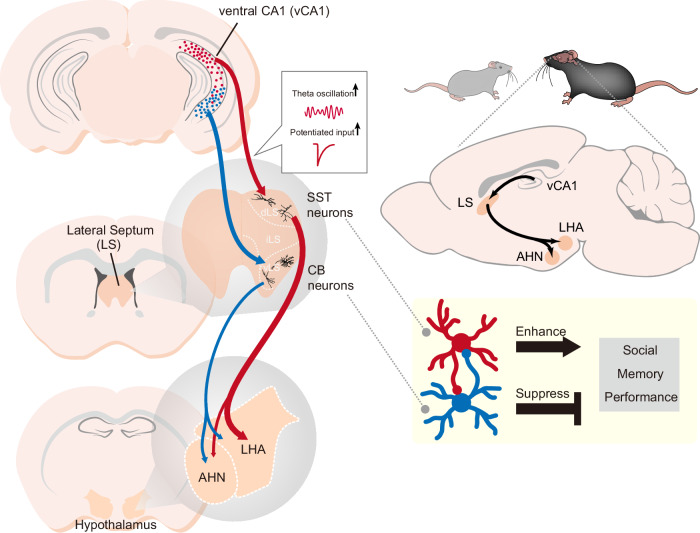
The study connects identity, location, memory phase and projection destination. Hippocampal information reaches LS, interacts with two local populations and continues to distinct hypothalamic targets, influencing acquisition of companion memory. GABAergic populations can differ through their circuit relationships.
The evidence comes from male mice and social tasks with defined delays. Other populations, developmental stages, sex and coordination during natural interaction remain open. Following inputs, rhythms and recipient cells within the same experience may make the circuit story more complete.
Source: Zhang L et al. · Nature communications · CC BY-NC-ND
Original figure and English caption ↗