Lrhcn1: an RNA contributes to social investigation in mice
Prefrontal Htr2c cells become active during social investigation. The noncoding RNA Lrhcn1 regulates Hcn1-associated expression, while neuronal output connects with hypothalamic Nos1 cells.
Approaching, sniffing and following conspecifics are ways mice gather social information. Some investigate a new partner more than others. A study in Science Advances follows this behavioral difference to an excitatory population in prefrontal layer five, then connects it with a noncoding RNA, an ion channel and a hypothalamic output. The groups are defined by investigation measured in the task; the findings center on these specific behaviors.
Lrhcn1 regulates Hcn1 expression and associated electrical responses in Htr2c cells, influencing social investigation. Excitatory connections from this population to supramammillary Nos1 neurons also contribute to the behavior.
Contents · 7 sections
Individuals differ in social investigation
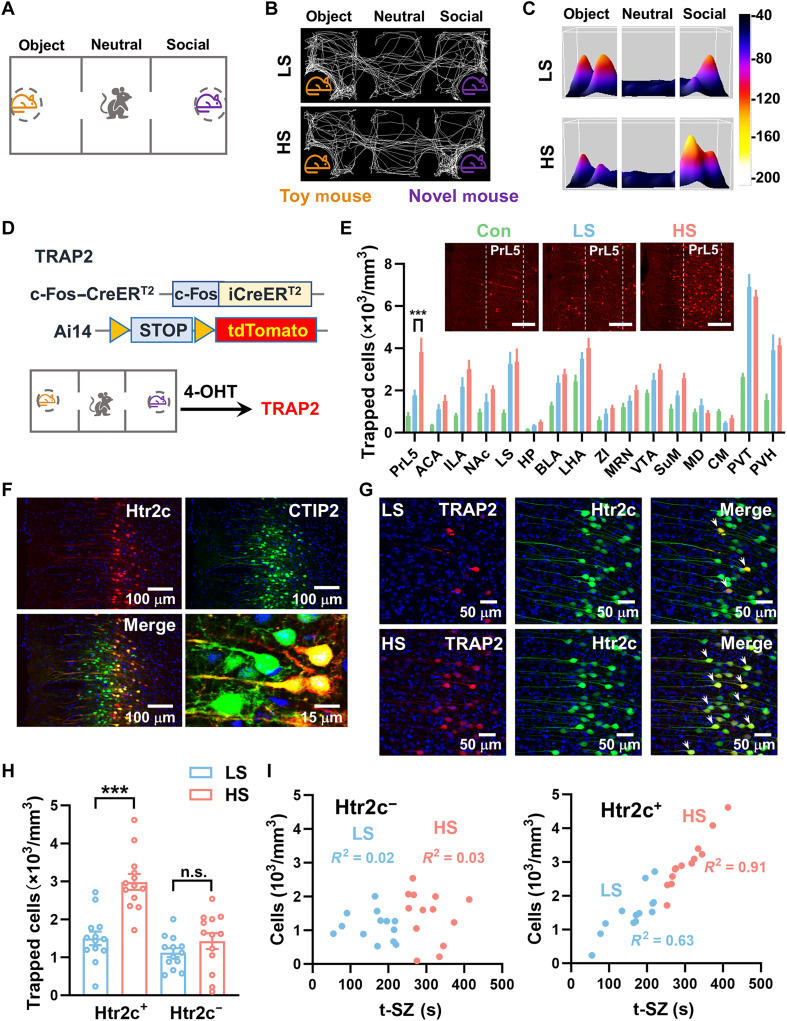
The team groups adult males by interaction, sniffing and time in the social zone, focusing on the higher and lower groups. Higher-group mice have more social events, with comparable duration per event. Object exploration, movement and measured anxiety-like behaviors do not show the same broad difference.
Social interaction engages multiple regions, with more active cells in prelimbic layer five in the higher group. Excitatory cells expressing serotonin receptor Htr2c stand out: the number recruited during interaction correlates closely with time spent in the social zone.
Source: Qin P et al. · Science advances · CC BY-NC
Original figure and English caption ↗
Cellular responses accompany social events
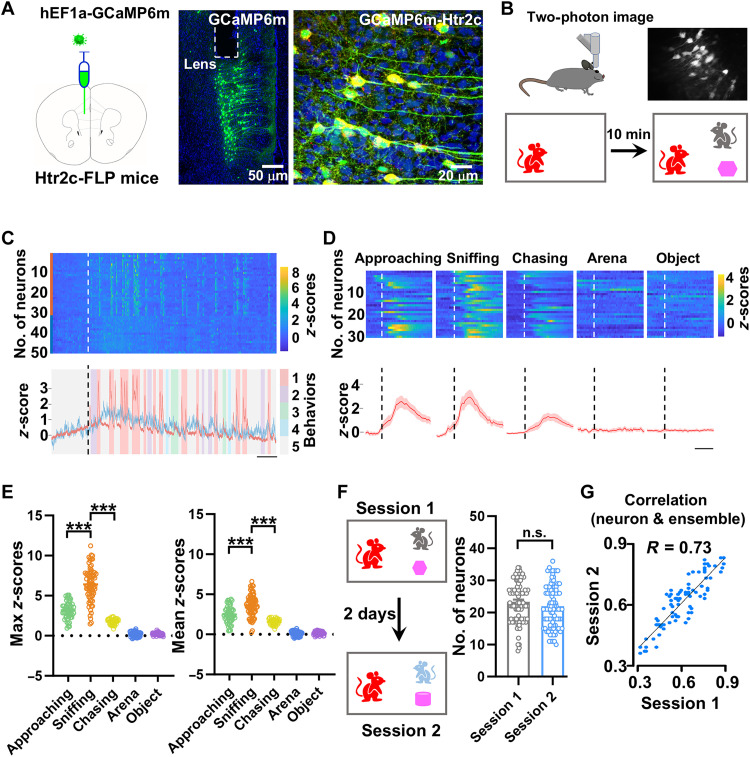
Single-cell calcium observations show increased responses during approaching, sniffing and following, with sniffing producing the strongest response. Mean activity does not change similarly during object or arena exploration. The lower group also has socially responsive cells, but a smaller proportion is recruited.
In a later session with another companion, responses and ensemble membership retain similar features. Social events accompany a relatively stable cellular ensemble. The pattern relates to particular actions and their social context rather than an undifferentiated active state.
Source: Qin P et al. · Science advances · CC BY-NC
Original figure and English caption ↗
Investigation changes with neuronal activity
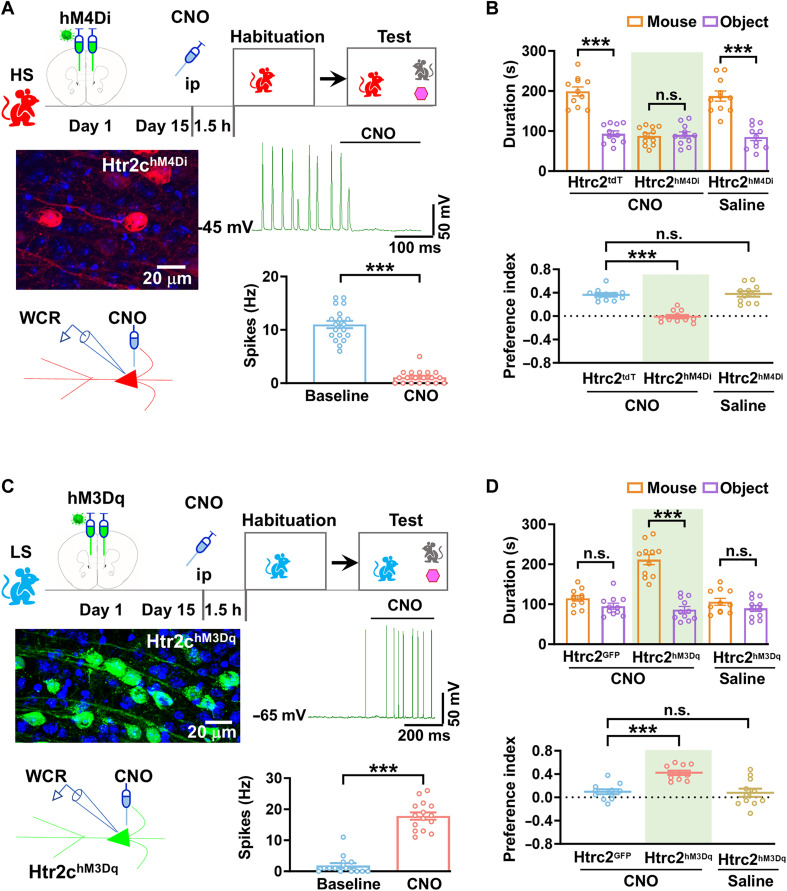
Reducing Htr2c activity in higher-group mice lowers social investigation and preference, while object investigation remains comparable. Increasing activity in lower-group mice increases social investigation and preference. Movement, object novelty preference and measured anxiety-like behaviors do not show broad parallel changes.
Related findings also appear during home-cage observations, extending the activity–investigation relationship to another setting. The team then asks which molecular factors contribute to the population’s different response states.
Source: Qin P et al. · Science advances · CC BY-NC
Original figure and English caption ↗
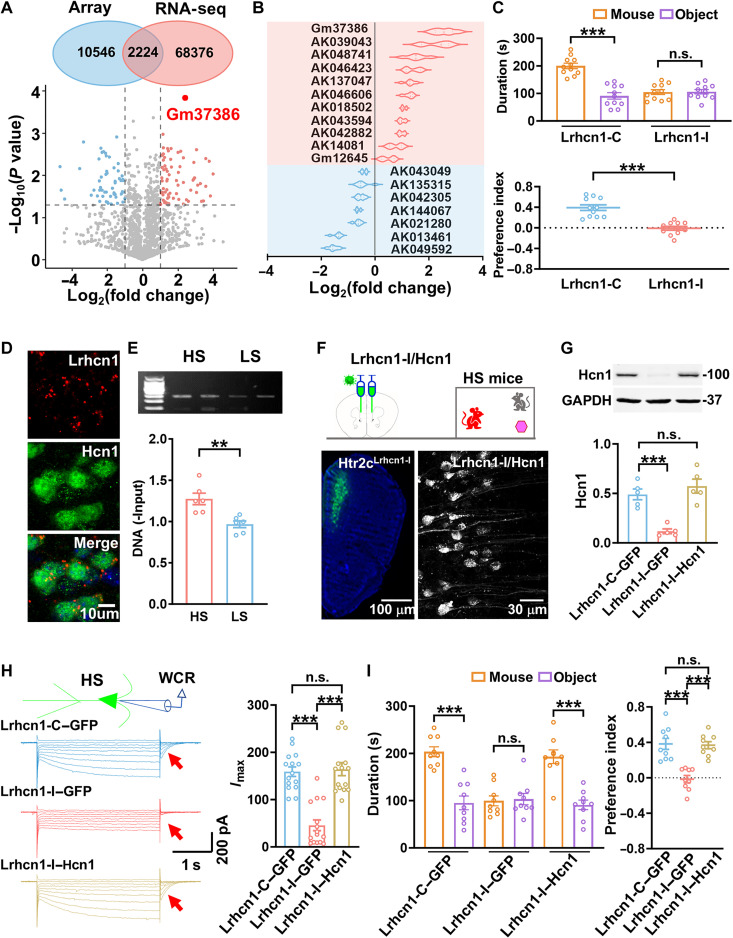
Lrhcn1 links with channel expression
Long noncoding RNAs do not encode proteins but can regulate gene expression. Lrhcn1 is more abundant in higher-group Htr2c cells. Reducing its expression weakens social investigation without the same change in object investigation, providing a molecular link between cell identity and behavior.
Binding and expression measurements support Lrhcn1 association with the Hcn1 transcriptional regulatory region. Hcn1 channels contribute to electrical responses and signal integration. Reducing Lrhcn1 lowers associated expression and currents; increasing Hcn1 expression restores the currents and social investigation.
The cellular difference does not involve every electrical property changing together. Associated channel currents differ between groups, while resting potential and measured spontaneous synaptic currents are comparable. A particular molecular–channel link helps describe the ensemble response at a finer level.
Source: Qin P et al. · Science advances · CC BY-NC
Original figure and English caption ↗
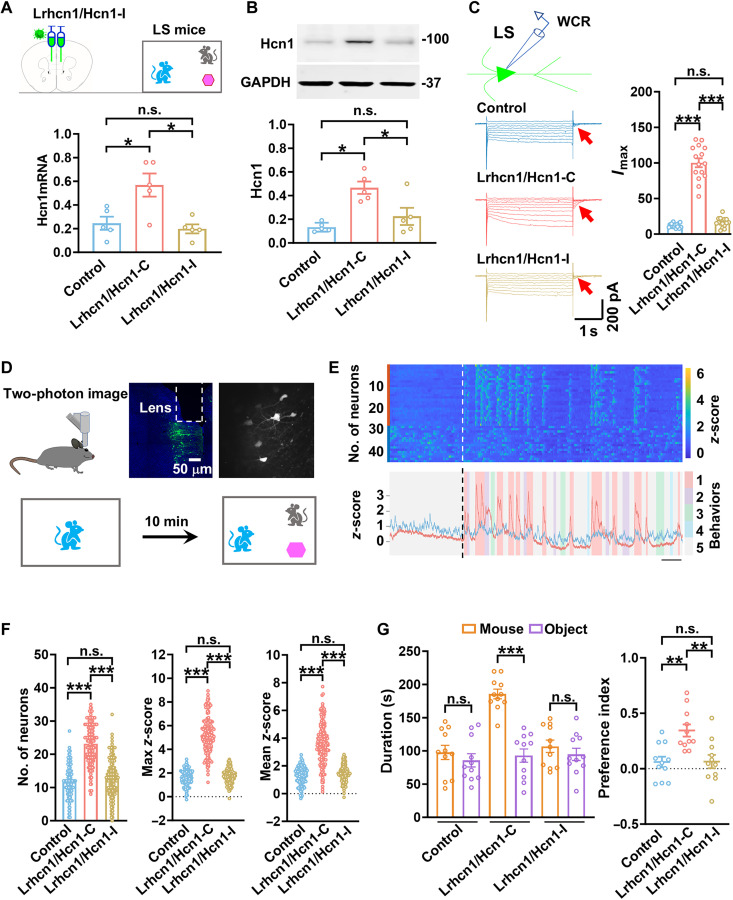
The RNA effect depends on the channel component
Increasing Lrhcn1 in lower-group mice raises Hcn1-associated expression, currents and social responses. Subsequently reducing Hcn1 weakens the enhanced cellular calcium responses and social investigation. The linked interventions connect noncoding RNA, channel function and behavior.
Gene-expression regulation gains an observable behavioral outcome. The RNA acts within an identified prefrontal population, and channel-associated changes accompany its responses to companions and alter social investigation.
Source: Qin P et al. · Science advances · CC BY-NC
Original figure and English caption ↗
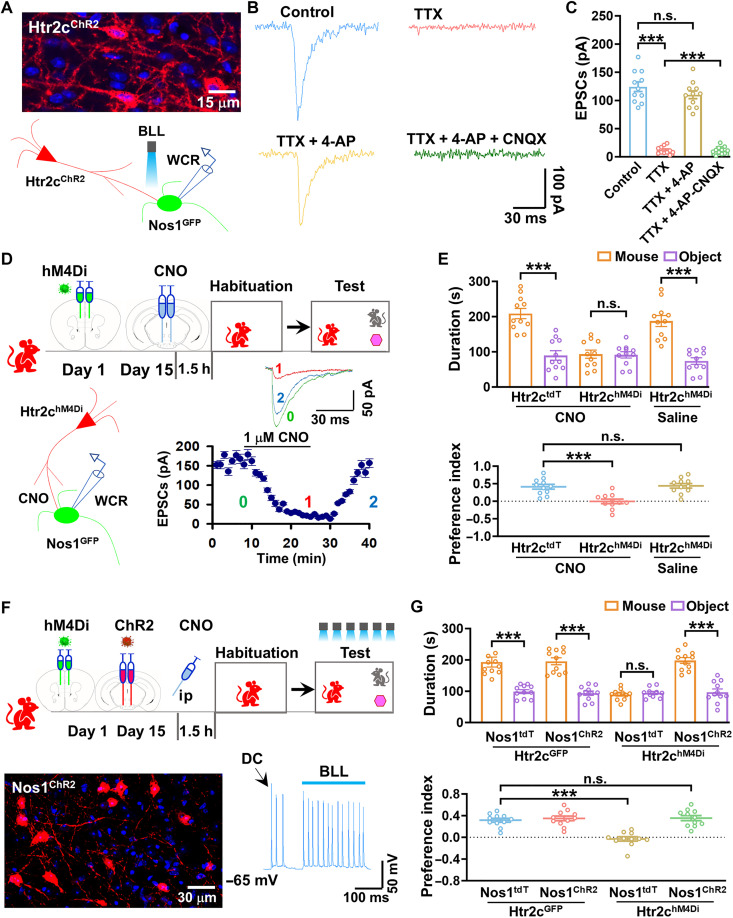
Supramammillary cells receive the excitatory input
The prefrontal population projects to several regions. Increasing terminal activity in the hypothalamic supramammillary nucleus, or SUM, increases social investigation time; comparisons in two other targets do not produce the same effect. SUM Nos1 cells receive direct excitatory input from Htr2c neurons.
Reducing the prefrontal input lowers social investigation and preference. With associated prefrontal activity inhibited, increasing downstream Nos1 activity restores social investigation. Object investigation does not change in parallel, focusing the cortical–hypothalamic relationship on the social behavior measured.
Source: Qin P et al. · Science advances · CC BY-NC
Original figure and English caption ↗
Cell identity, channels and output contribute together
The study links three scales: when a population becomes active, how RNA regulates its electrical responses and where its output can influence behavior. Individual investigation differences gain a cellular and molecular account, revealing contributions from multiple linked components.
The findings come from adult male mice and center on investigating conspecifics. They show how a noncoding RNA, through channel regulation in a particular cell population, connects with a cortical–hypothalamic network to influence how animals gather social information.