How does the brainstem help launch an escape?
Turning, running and reaching shelter require coordinated defense. Male-mouse research links a CCK-marked brainstem population and hypothalamic PVN with flight toward a nest.
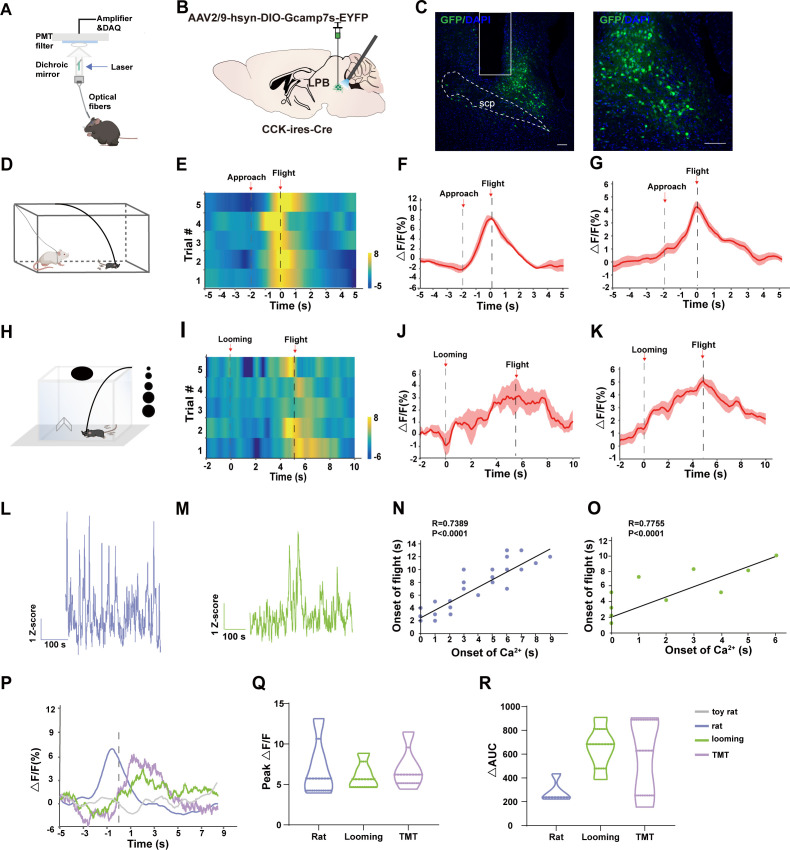
A mouse may approach a threat, then turn abruptly and run to shelter. How does sensory information become action within seconds? A study published in eLife on March 17, 2023 identified an excitatory link from the lateral parabrachial region, LPB, to hypothalamic PVN in male mice. CCK-marked LPB cells responded to several threat cues, with activity closely associated with escape onset. Activating these cells or their PVN terminals elicited flight to a nest, while suppression altered threat avoidance and return to shelter.
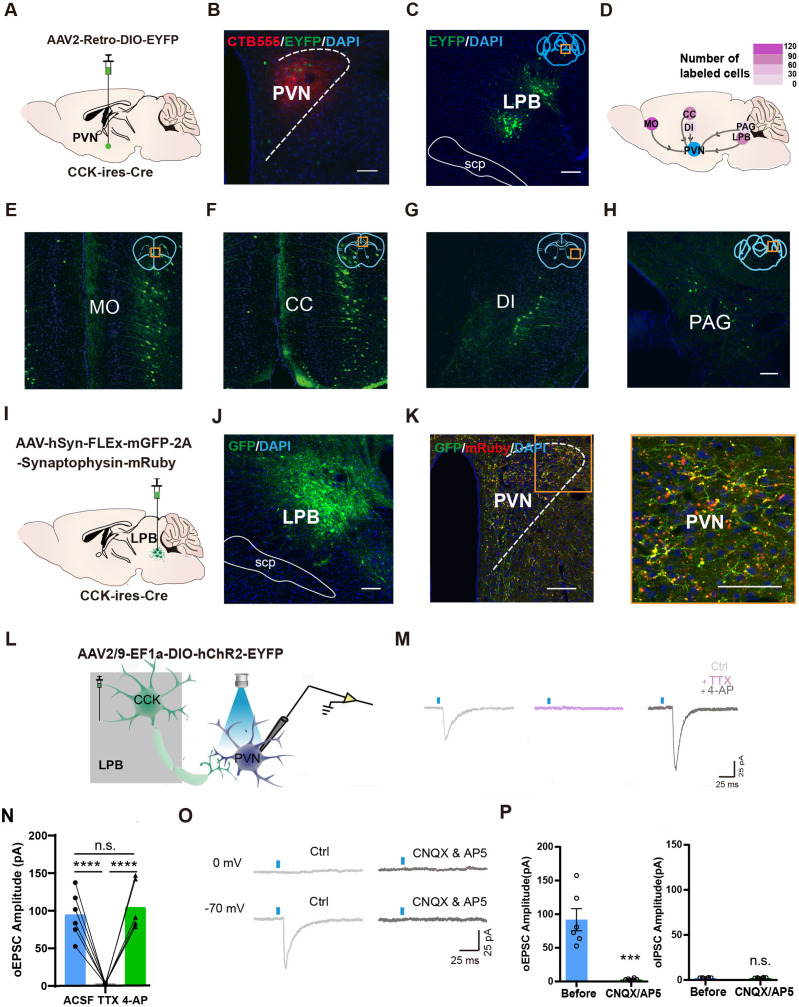
CCK-marked LPB cells form a direct excitatory connection with PVN and contribute to threat-related avoidance and flight to shelter. Local PVN activity and glutamate-receptor signaling support terminal-evoked behavior, whereas CCK-receptor blockade did not significantly change the tested measures.
Contents · 6 sections
A CCK-marked population sends excitation to the hypothalamus
Projection mapping identified axons from CCK-marked LPB cells in PVN. Electrical responses further supported a direct excitatory connection: relevant terminals evoked PVN excitatory currents that were suppressed by glutamate-receptor blockade. Anatomical and functional evidence therefore converged.
A CCK marker does not establish that the peptide itself mediates a behavioral effect. Most of these cells also carry glutamatergic markers and project to several regions beyond PVN, separating cellular identity from transmitter action and output destination.
Source: Wang F et al. · eLife · CC BY
Original figure and English caption ↗
Activation rapidly redirects mice toward a nest
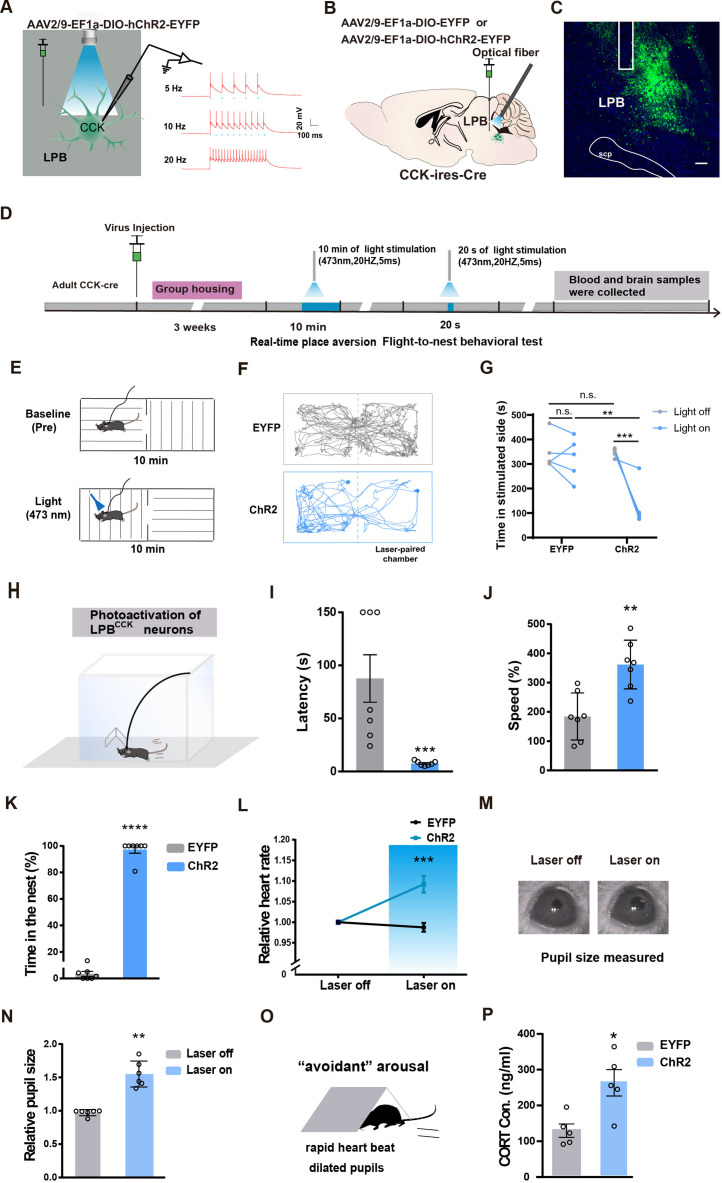
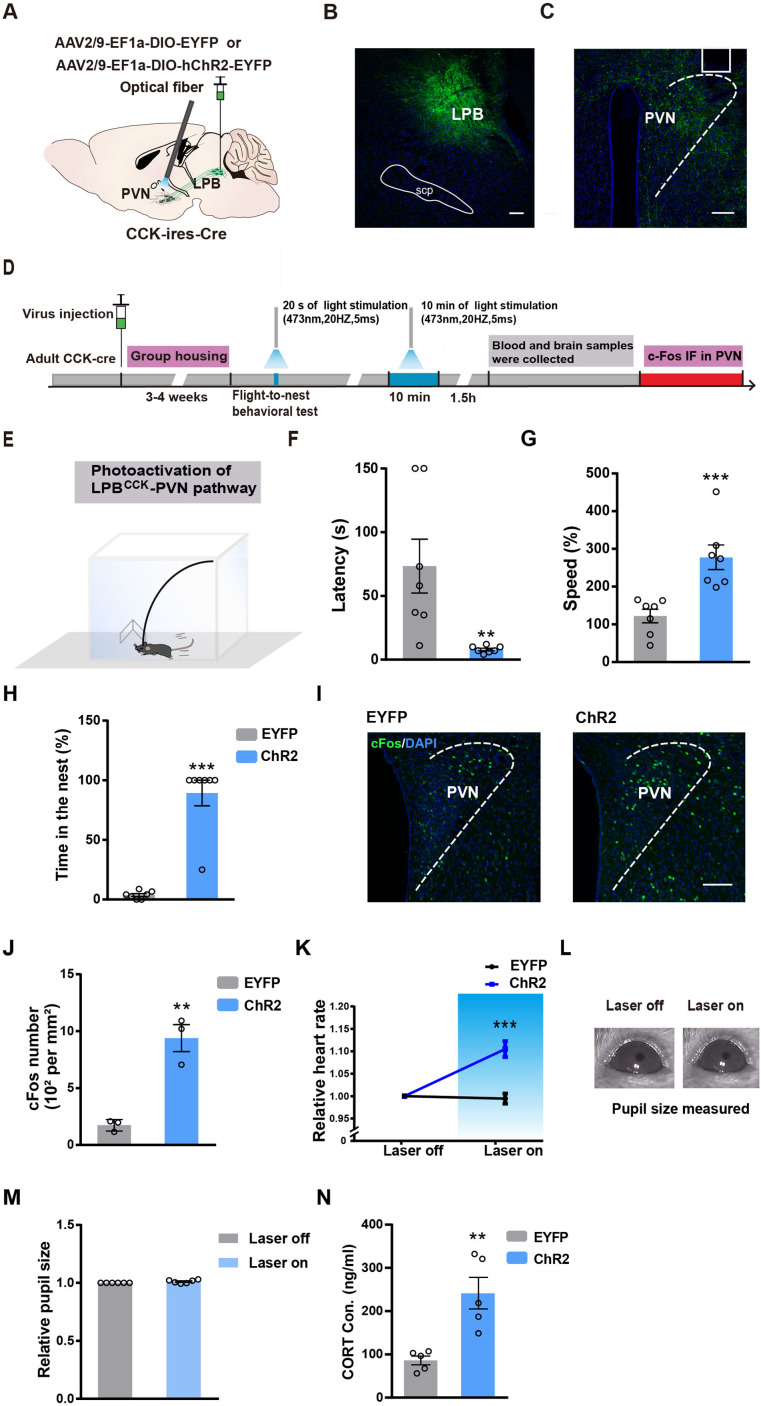
Activation reduced time in a stimulation-associated compartment. With a nest available, mice reached it sooner, ran faster and stayed longer afterward. These changes connect the population with active avoidance and shelter seeking.
Heart rate, pupil size and plasma corticosterone also increased. Behavioral and physiological measures jointly indicate a defense-associated state without directly measuring subjective fear or assigning every defensive response to this population.
Source: Wang F et al. · eLife · CC BY
Original figure and English caption ↗
Activity rises before escape begins
During live-rat exposure, population calcium rose as mice approached, peaked near escape onset and declined with distance. Expanding overhead shadows likewise produced activity increases around escape initiation, followed by a decline after shelter entry.
Different threat cues can therefore recruit the same marked population. Calcium signals relate population timing to behavior without showing that every cell exclusively encodes threat. LPB also processes other sensory and bodily information, leaving room for finer cellular distinctions.
Source: Wang F et al. · eLife · CC BY
Original figure and English caption ↗
Less threat avoidance and slower shelter entry
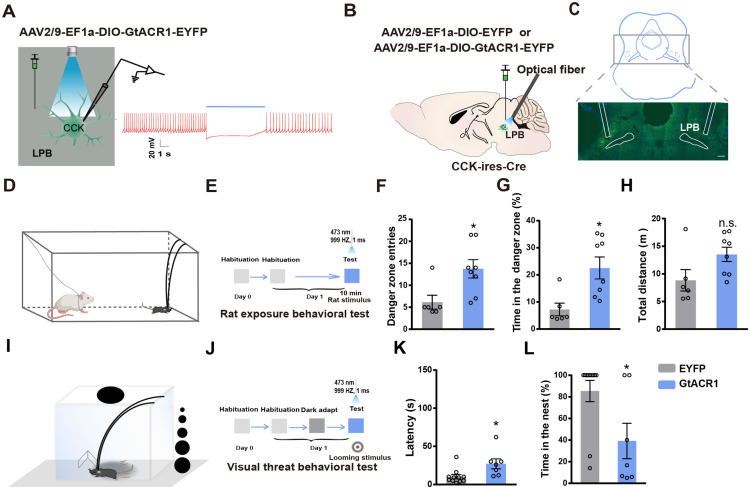
Suppressing the population increased time and entries near the rat without significantly changing total distance. During looming threat, shelter-entry latency increased and subsequent hiding time decreased.
These patterns implicate the population in appropriate avoidance and shelter responses rather than a simple ability to move. Threat-associated activity and behavioral effects of suppression provide complementary evidence for functional involvement.
Source: Wang F et al. · eLife · CC BY
Original figure and English caption ↗
PVN-terminal activation also elicits shelter seeking
Activating the relevant axon terminals in PVN likewise accelerated flight to shelter, increased running speed and prolonged hiding. PVN activity labeling, heart rate and plasma corticosterone increased, linking this output with selected behavioral and physiological changes.
Pupil size did not change significantly this time, unlike during cell-body activation. Because LPB cells have multiple targets, different outputs may contribute to distinct physiological components; terminal activation did not reproduce every somatic-activation effect.
PVN is well known for neuroendocrine and autonomic regulation. Rapid shelter seeking extends its contribution to active defense, connecting a nucleus associated with bodily state to actions directed toward the environment.
Source: Wang F et al. · eLife · CC BY
Original figure and English caption ↗
Local PVN cells and glutamate signaling support the behavior
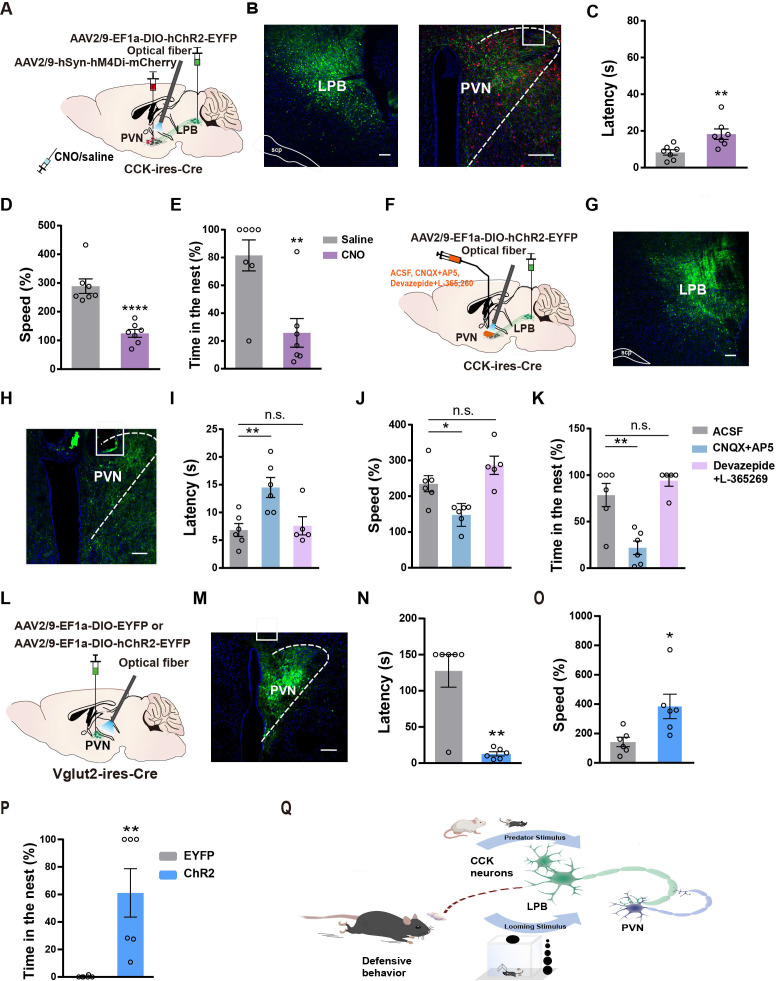
Suppressing local PVN cells delayed terminal-evoked shelter entry, reduced running speed and shortened hiding. Local glutamate-receptor blockade also weakened speed and hiding effects, while CCK-receptor blockade did not significantly change the tested measures, distinguishing the population marker from its fast signaling contribution.
Activating PVN glutamatergic cells also elicited shelter seeking. These findings sharpen the functional brainstem–hypothalamic link while leaving the responsible PVN subpopulations and coordination with other targets unresolved. The male-mouse defense findings do not establish treatment efficacy for human anxiety or other disorders.
Source: Wang F et al. · eLife · CC BY
Original figure and English caption ↗