How can amygdala inhibitory cells soften post-stress behavior?
A male-mouse study links basolateral amygdala excitation and inhibition: recruiting local GABA cells attenuates excitatory-population responses and improves selected stress-related behaviors.
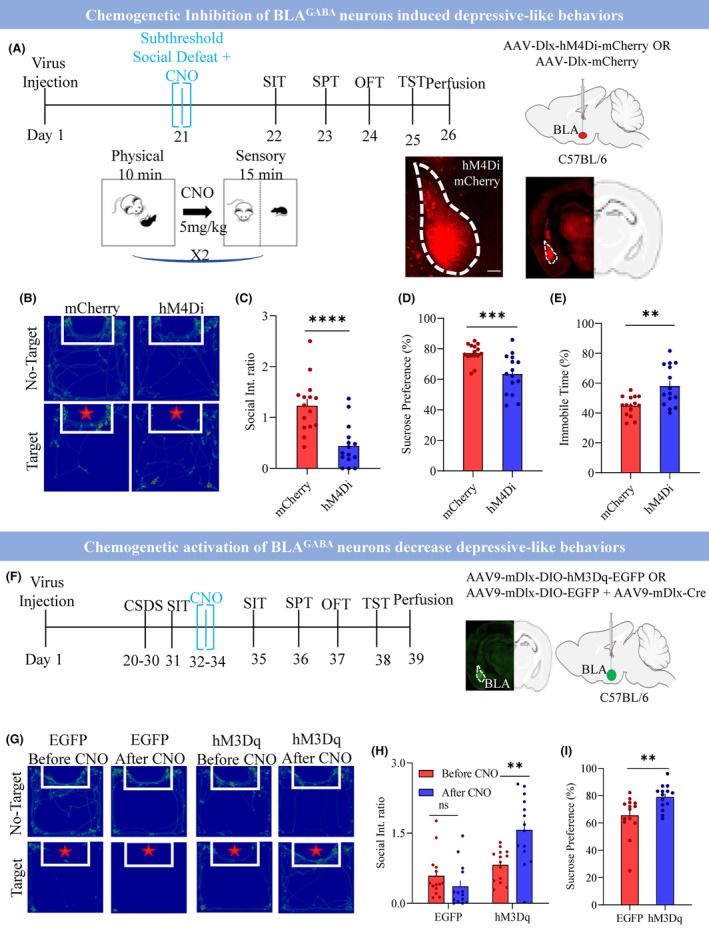
An unpleasant encounter can influence behavior long after it ends. The amygdala frequently features in studies of stress and emotion, but contains both cells conveying excitation and inhibitory cells constraining it. How do these populations cooperate after stress? A study published online in CNS Neuroscience & Therapeutics on September 16, 2023 examines two labeled populations in adult male mice: a CaMKII-promoter-defined excitatory population and a Dlx-related GABAergic population in basolateral amygdala (BLA). Aversive stimuli accompanied increased excitatory-population activity, while recruiting GABA cells attenuated selected excitatory responses and improved behavior following social defeat.
BLA excitatory and GABAergic cells have distinct behavioral effects. Recruiting local GABA cells or suppressing the labeled excitatory population improves selected depression-like outcomes after social defeat, with differing effects on place preference and open-field measures.
Contents · 5 sections
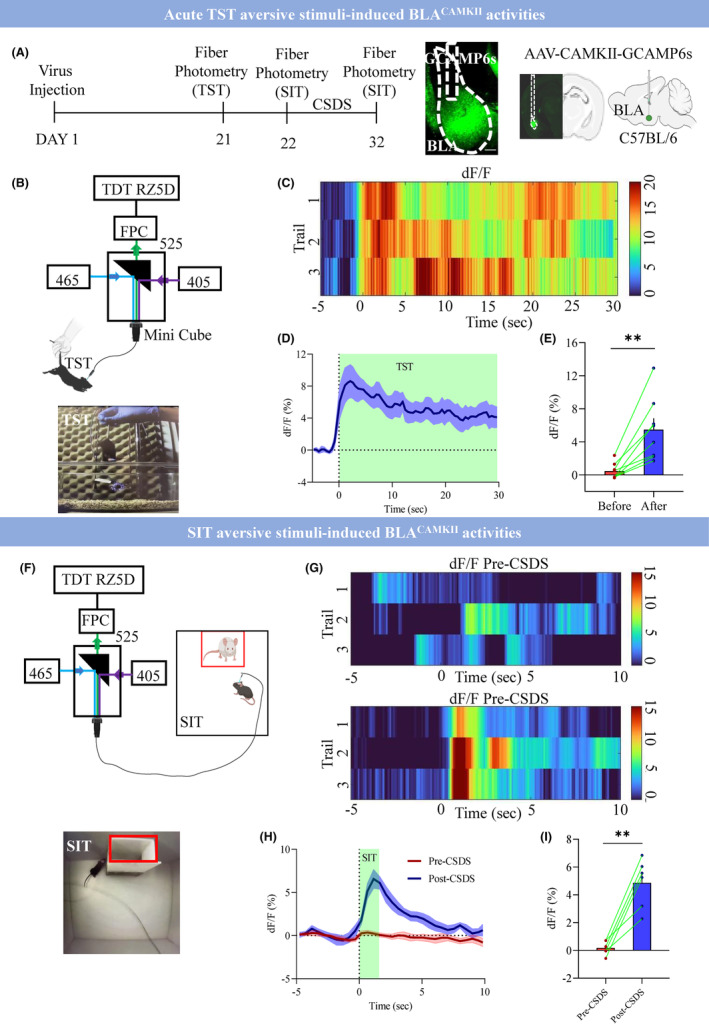
The excitatory population responds to aversive events
Calcium signals rose in the labeled excitatory BLA population during tail suspension. Following chronic social defeat, responses to a social stimulus were greater than before stress. Activity-marker c-Fos findings also indicated altered BLA activity under stress.
Population calcium measurements give these changes a time course, with responses rising around particular stimuli. Individual cells and animals can still differ. Manipulating activity then allows the study to examine its links with context avoidance, social interaction and preference.
Source: Asim M et al. · CNS neuroscience & therapeutics · CC BY
Original figure and English caption ↗
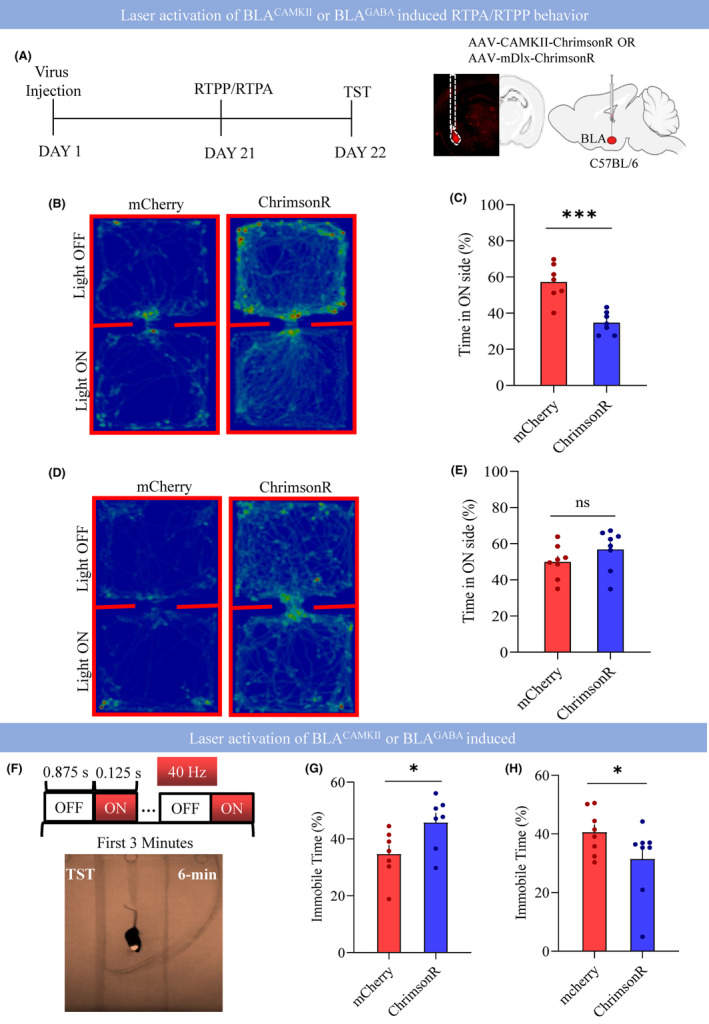
Excitatory and inhibitory populations yield different outcomes
Recruiting the excitatory population reduced time spent on the stimulation-paired side, producing real-time place aversion, and increased the immobile fraction during tail suspension. These outcomes connect the population to aversive and immobility-related behavior.
Recruiting GABAergic cells decreased the immobile fraction during tail suspension without significantly changing occupancy of the stimulation-paired side. Increased local inhibition can affect one behavior without producing place preference. This distinction provides a starting point for examining stress-related outcomes.
Source: Asim M et al. · CNS neuroscience & therapeutics · CC BY
Original figure and English caption ↗
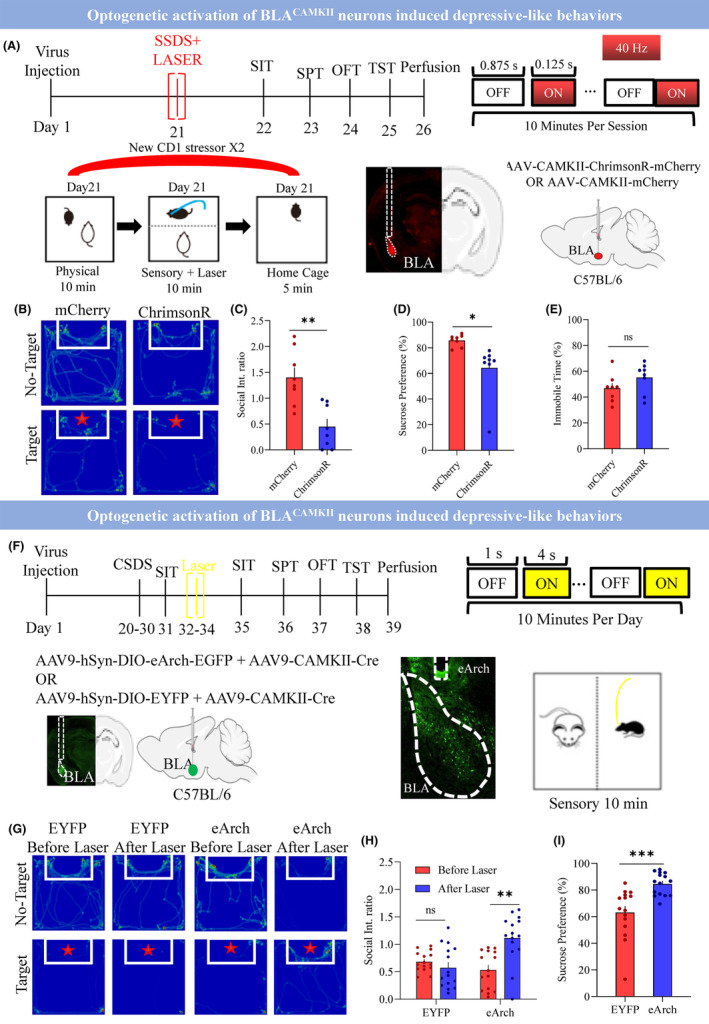
The effects also depend on prior stress
Recruiting the excitatory population during subthreshold social defeat reduced social interaction and sucrose preference. Tail-suspension immobility and open-field center time did not significantly change, revealing different responses across measures.
After chronic social defeat, suppressing these cells over three consecutive days improved social interaction and sucrose preference and reduced tail-suspension immobility in supplementary experiments. Open-field center time did not significantly improve. The intervention affected selected outcomes across tasks.
Source: Asim M et al. · CNS neuroscience & therapeutics · CC BY
Original figure and English caption ↗
Changing inhibitory activity reshapes excitatory responses
Suppressing GABAergic cells increased calcium-event frequency in the labeled excitatory population. Conversely, recruiting GABA cells attenuated foot-shock-evoked excitatory-population calcium responses. These opposite manipulations connect local inhibition with excitatory responses.
GABA is a major inhibitory signal in the brain. Within a local network, inhibitory cells help shape neighboring cells’ responses. Examining them makes the regional description of amygdala hyperactivity more specific by identifying the responding population and cells able to constrain its responses.
This provides a cellular explanation for the behavioral findings: recruiting GABA cells can attenuate local excitatory-population responses to aversive stimulation. These are population calcium measurements; the most affected individual cells and distinct inhibitory subtypes remain to be examined.
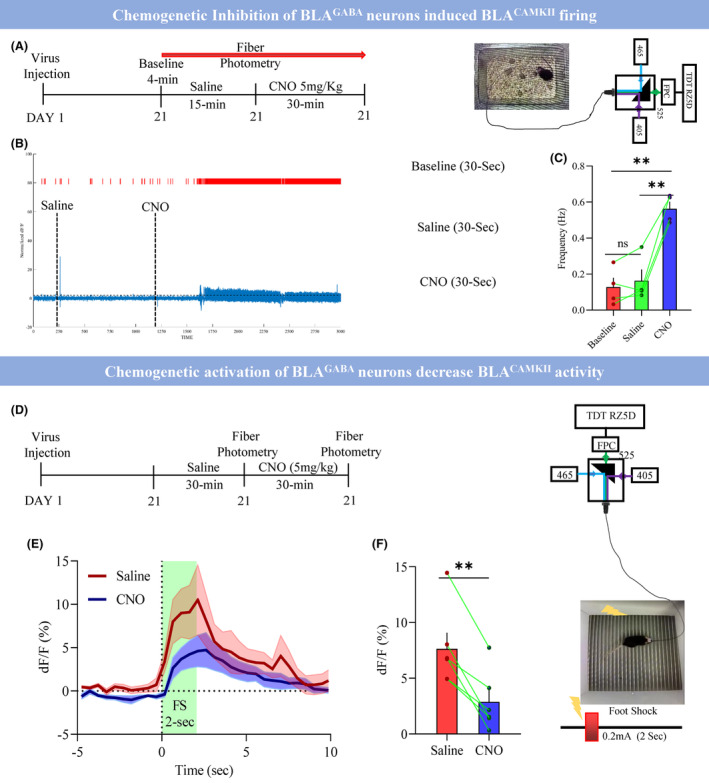
Source: Asim M et al. · CNS neuroscience & therapeutics · CC BY
Original figure and English caption ↗
Recruiting inhibition increases social approach
Suppressing GABA cells during subthreshold social defeat reduced social interaction and sucrose preference and increased tail-suspension immobility; supplementary experiments also found less open-field center time. Lower inhibitory activity promoted selected stress-related outcomes.
Recruiting GABA cells over three days after chronic defeat increased social interaction and sucrose preference in susceptible mice. Supplementary results showed less tail-suspension immobility and more open-field center time. This open-field outcome differs from direct suppression of the excitatory population, highlighting distinct profiles of local manipulations.
BLA receives inputs from multiple cortical areas and can integrate stress-related information. This study focuses on its internal excitatory–inhibitory interactions, identifying local cellular relationships as an entry point into behavioral regulation. The findings concern adult male mice; relevant inhibitory subtypes, effect duration and functions across sexes and human disease remain open.
Source: Asim M et al. · CNS neuroscience & therapeutics · CC BY
Original figure and English caption ↗