From compensation to imbalance: a MANF trajectory during prolonged stress
An early rise followed by a decline links chronic stress, endoplasmic-reticulum homeostasis and synaptic changes; increasing MANF beforehand reduces later behavioral alterations.
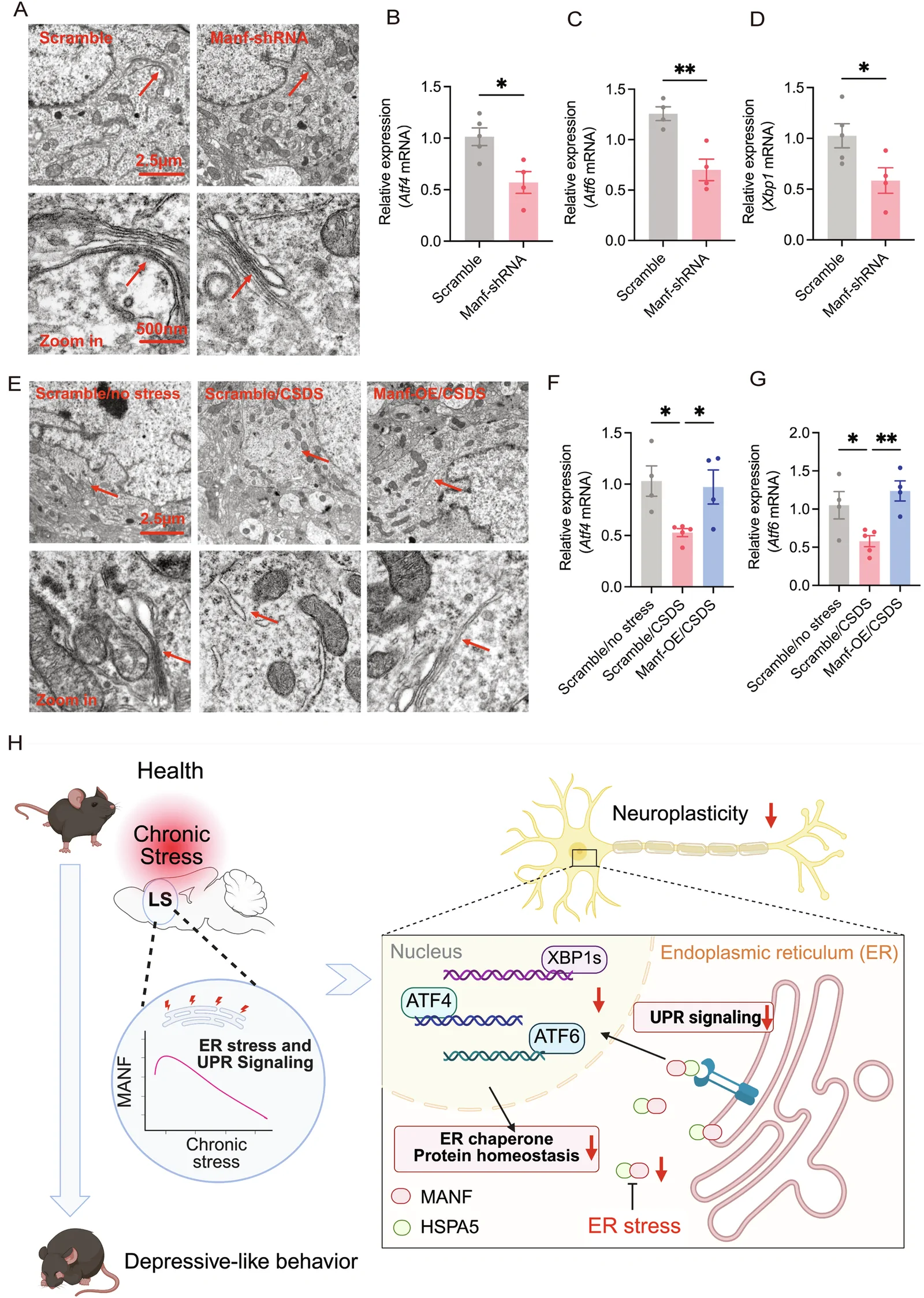
Cells can enter a coping mode under stress, increasing their capacity to handle proteins. How long can that compensation last? Sampling the mouse lateral septum at different points during ten days of social defeat revealed an early rise and later decline in ER-related programs and the protein MANF. Bidirectional MANF manipulation then linked this molecular trajectory with behavior, organelles and synapses, opening clues to cellular adaptation under prolonged stress.
Lateral-septal MANF rises then falls during stress. Its reduction accompanies behavioral and ER abnormalities; increasing it before stress reduces some later changes, while HSPA5 reduction alone does not reproduce the behavior.
Contents · 6 sections
How does the cellular response shift during prolonged stress?
The ER folds proteins and maintains quality control. The unfolded protein response can increase processing capacity temporarily, yet prolonged challenge may change adaptation. End-point measurements can miss this transition, motivating sampling throughout social defeat stress.
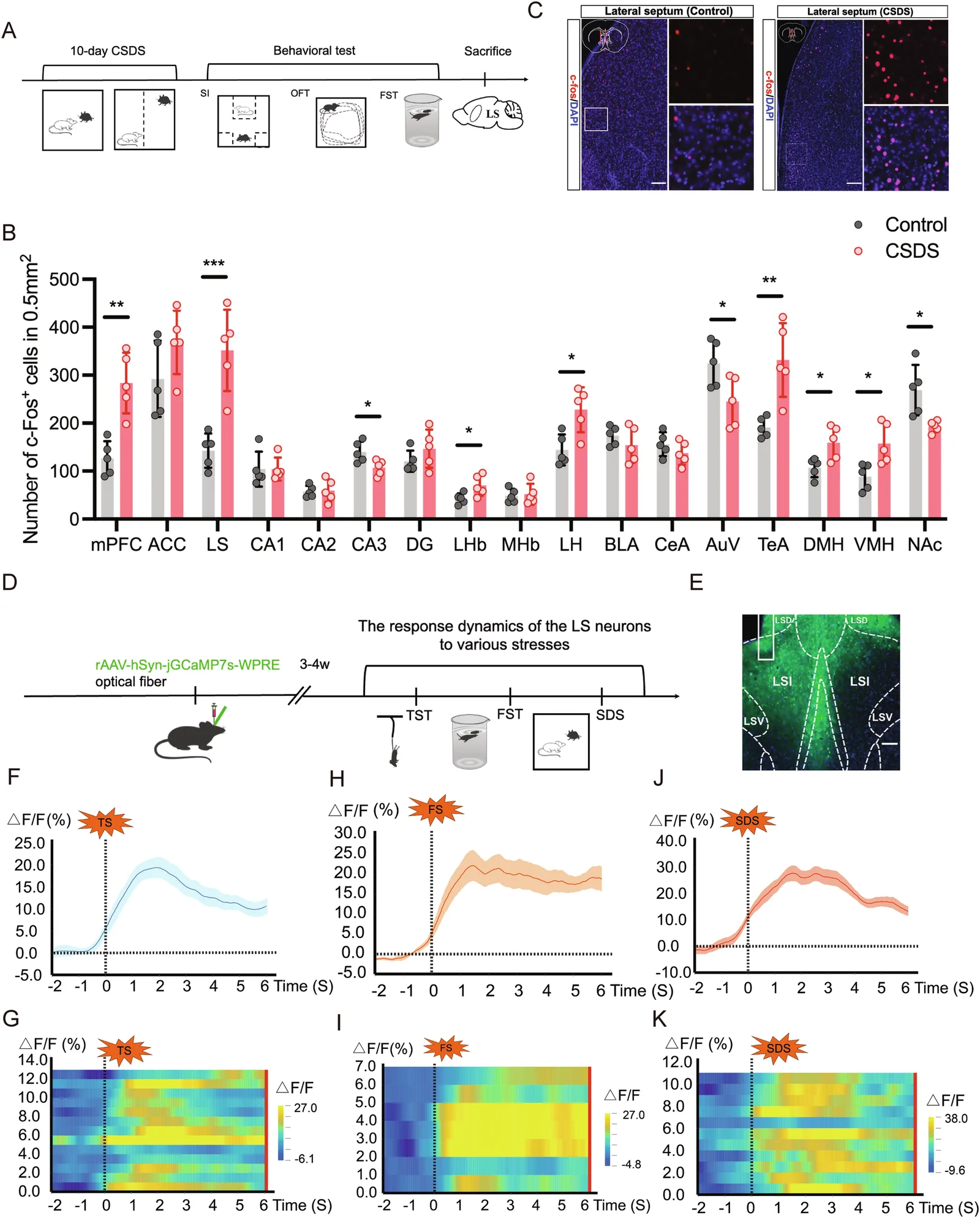
A seventeen-region screen highlighted lateral-septal activity, and acute suspension, swimming and social attack also increased its calcium signals. Regional activation produced some related behaviors, while inhibition improved social and immobility measures in the model, identifying an entry point into cellular adaptation.
Source: Ye J et al. · Translational psychiatry · CC BY-NC-ND
Original figure and English caption ↗
Behavior unfolds as molecular responses rise then fall
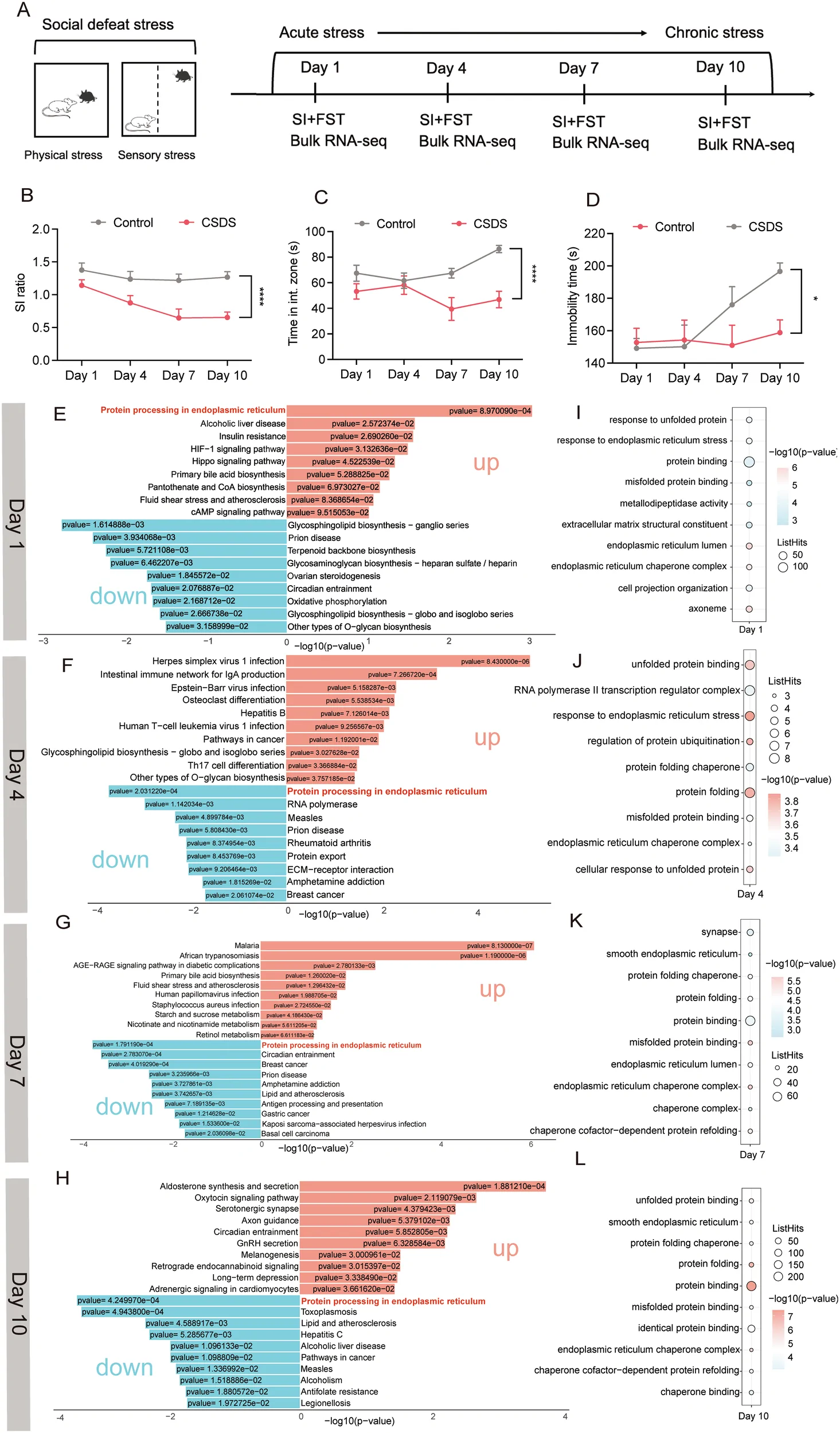
Behavior and tissue transcription were assessed on days 1, 4, 7 and 10. Social interaction deficits emerged by day four, while pronounced swim immobility increased mainly by day ten. Distinct timelines turned an endpoint phenotype into an unfolding process.
Molecular signals highlighted ER protein processing: chaperone and response programs rose early, then multiple homeostatic programs declined. The authors proposed a transition from initial compensation toward inadequate long-term adaptation; the later decline followed an earlier rise.
Source: Ye J et al. · Translational psychiatry · CC BY-NC-ND
Original figure and English caption ↗
MANF tracks a changing proteostasis network
Manf and Hspa5 emerged among genes changing across all four time points, each with a rise-and-fall trajectory. MANF, mesencephalic astrocyte-derived neurotrophic factor, has intracellular and extracellular actions, while HSPA5 is a folding chaperone. Their network relationship extended the investigation from activity to the intracellular protein environment.
Protein changes lagged transcription, with HSPA5 declining earlier than MANF. ER expansion, fewer synapses, thinner postsynaptic densities and lower PSD95 provided correlates. Their alignment motivated direct MANF manipulation beyond candidate ranking.
Reducing MANF and increasing it beforehand have opposite effects
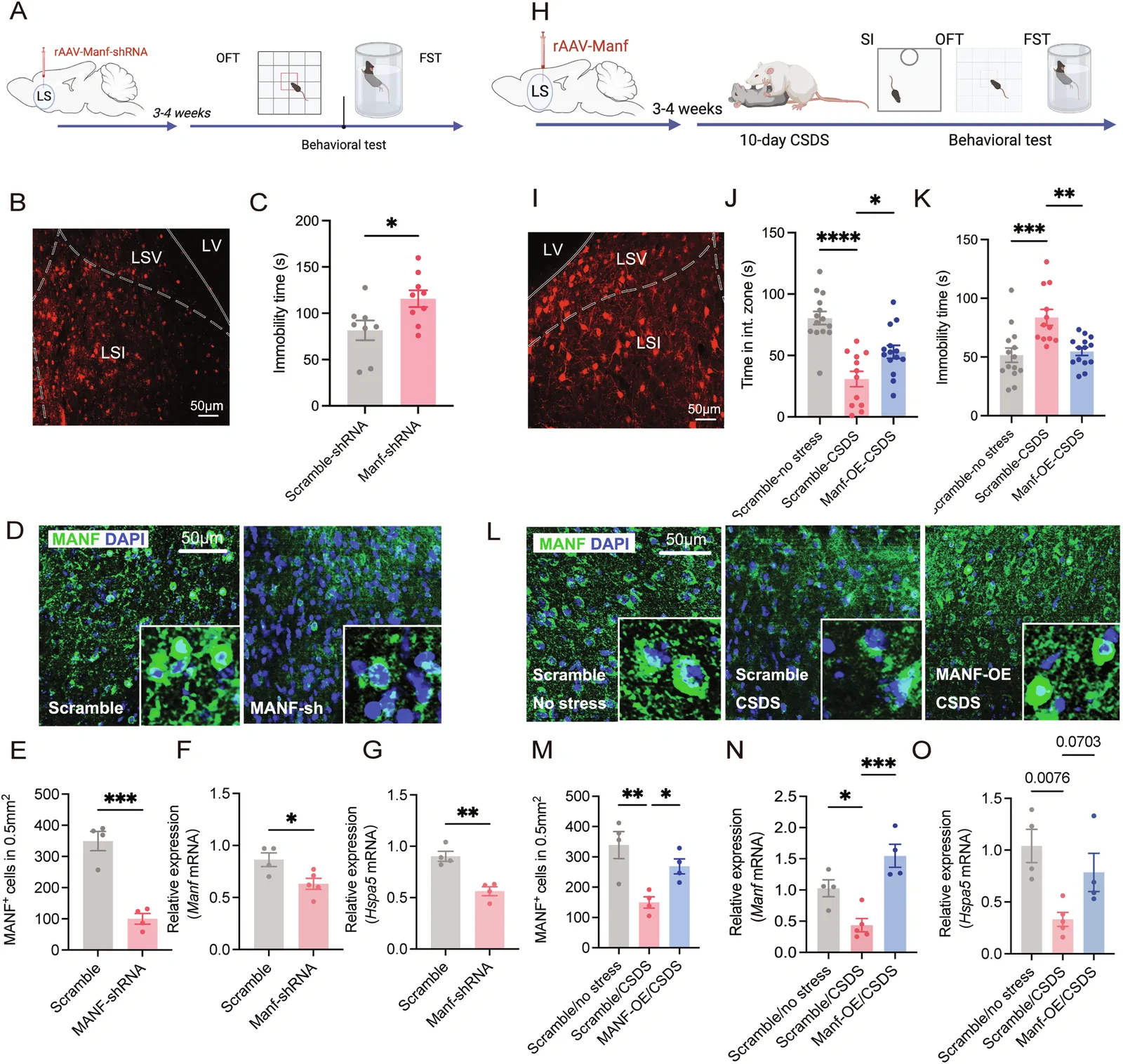
MANF reduction increased immobility and altered open-field exploration, with unchanged total movement and lower HSPA5. Reducing HSPA5 alone did not reproduce the behavior, suggesting broader molecular or extracellular contributions to MANF action.
Increasing MANF before stress reduced later social deficits and immobility and raised HSPA5. Center time and distance remained unchanged, showing partial protection against subsequent stress with differing effects across tasks.
Source: Ye J et al. · Translational psychiatry · CC BY-NC-ND
Original figure and English caption ↗
Molecular intervention changes ER and synapses
MANF reduction reproduced aspects of ER swelling, reduced UPR components and synaptic changes. Prior overexpression improved ER abnormalities and some response and synaptic measures. Bidirectional intervention supports MANF as a functional regulator beyond a temporal correlate.
ER shape, response molecules and synaptic measures changed with MANF manipulation, linking intracellular homeostasis to behavior. Mitochondrial shape also changed, pointing to multiple organelles and motivating tests of how these processes interact.
Source: Ye J et al. · Translational psychiatry · CC BY-NC-ND
Original figure and English caption ↗
Timing makes stress adaptation a more precise question
An early increase and later decrease mean the endpoint captures only part of the story. The time map and MANF experiments sharpen questions about when to intervene, which cells respond and how regulation may differ across stages.
The evidence comes from male mice under social defeat. Cell subsets, secreted MANF and glial contributions remain to be resolved, and human relevance requires independent study. Cell-resolved trajectories may clarify the transition from short-term response to long-term imbalance.