Freeze or seek an exit? Two paraventricular thalamic routes for action
An adult-mouse study finds that two routes reduce freezing, while the ventral-subicular route also increases sniffing and platform exploration, linking recall with action selection.
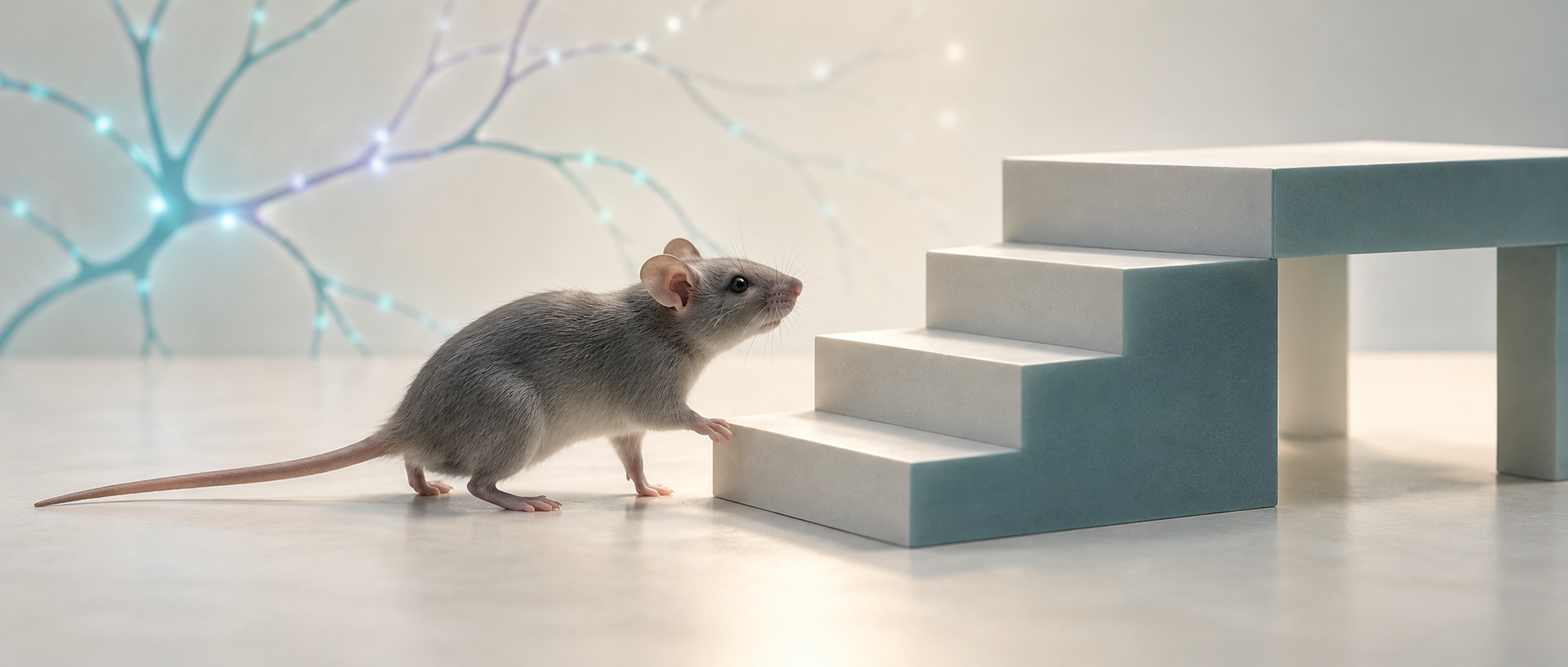
When a previously threatening sound returns, a mouse can freeze or explore for a route toward a platform. Does reduced freezing reflect changed retrieval or a different response? A November 2025 Communications Biology study follows anterior paraventricular thalamic (PVA) outputs to basolateral amygdala (BLA) and ventral subiculum (vSub). Both affect recall-associated freezing, but the subicular route more clearly promotes active exploration, expanding the account from immobility to defensive choices.
PVA is recruited across several recall intervals, and enhancement/suppression bidirectionally changes freezing. Both BLA and vSub outputs contribute, with the vSub route additionally supporting platform exploration under threat cues.
Contents · 6 sections
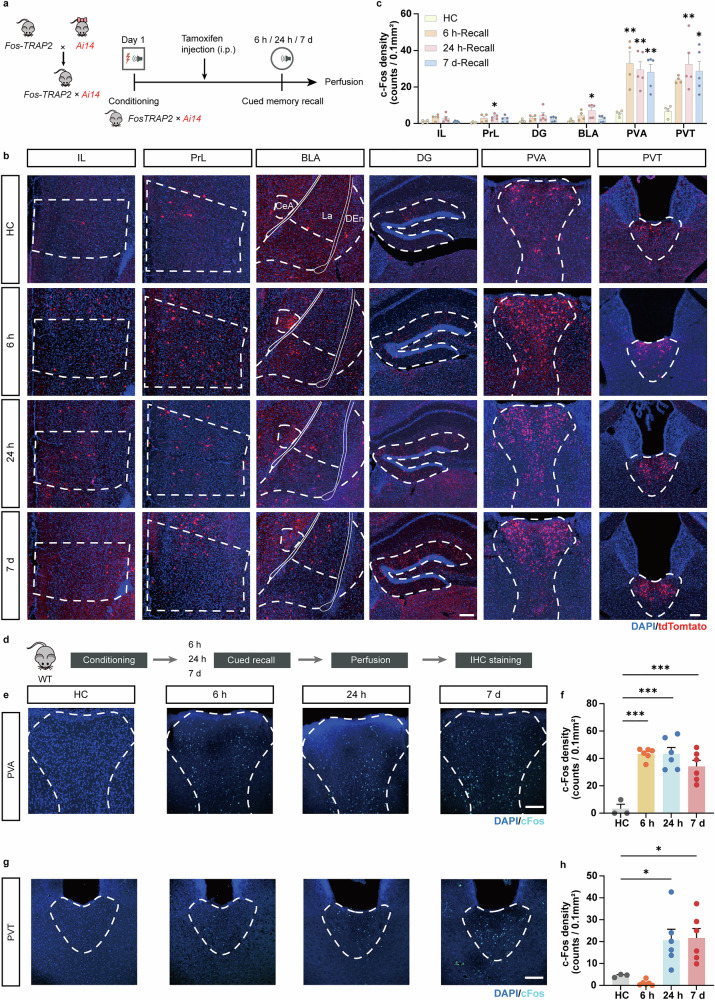
PVA is recruited at several recall intervals
Mapping at six hours, 24 hours and seven days found PVA recruitment throughout, while posterior recruitment favored later recall. In vivo signals decreased during freezing and increased as freezing ended and movement resumed, linking overall recall engagement with moment-to-moment behavior.
Anterior and posterior regions were not functionally equivalent. Posterior suppression reduced cue-recall freezing, while PVA suppression increased it. Opposite effects across the nucleus focused attention on why anterior activity accompanies recall yet limits passive immobility.
Source: Chen J et al. · Communications biology · CC BY-NC-ND
Original figure and English caption ↗
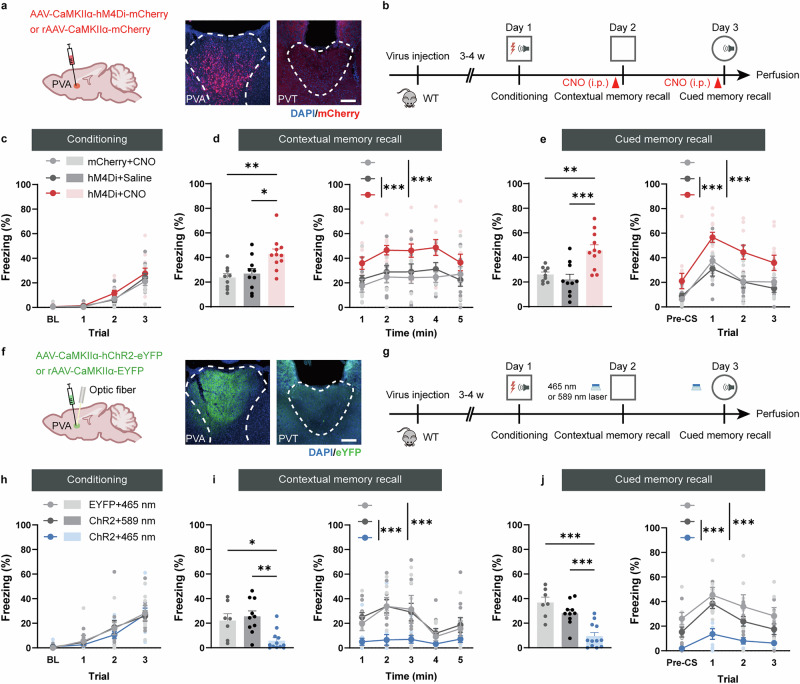
PVA activity shapes recall-associated freezing
Suppressing PVA glutamatergic cells increased contextual and cue-recall freezing, whereas enhancement reduced it at both 24 hours and seven days. General locomotion, several anxiety-related tests and object-location memory were comparable, concentrating effects in learned-threat recall.
Consolidation-period modulation lacked equivalent effects, and innate odor-evoked defense remained broadly unchanged. The PVA role was closely tied to learned-threat recall. Freezing is one response to danger: an animal that starts exploring may still be acting on a remembered cue. Separating downstream outputs becomes the next step toward understanding that change in action.
Source: Chen J et al. · Communications biology · CC BY-NC-ND
Original figure and English caption ↗
One route contributes to limiting freezing
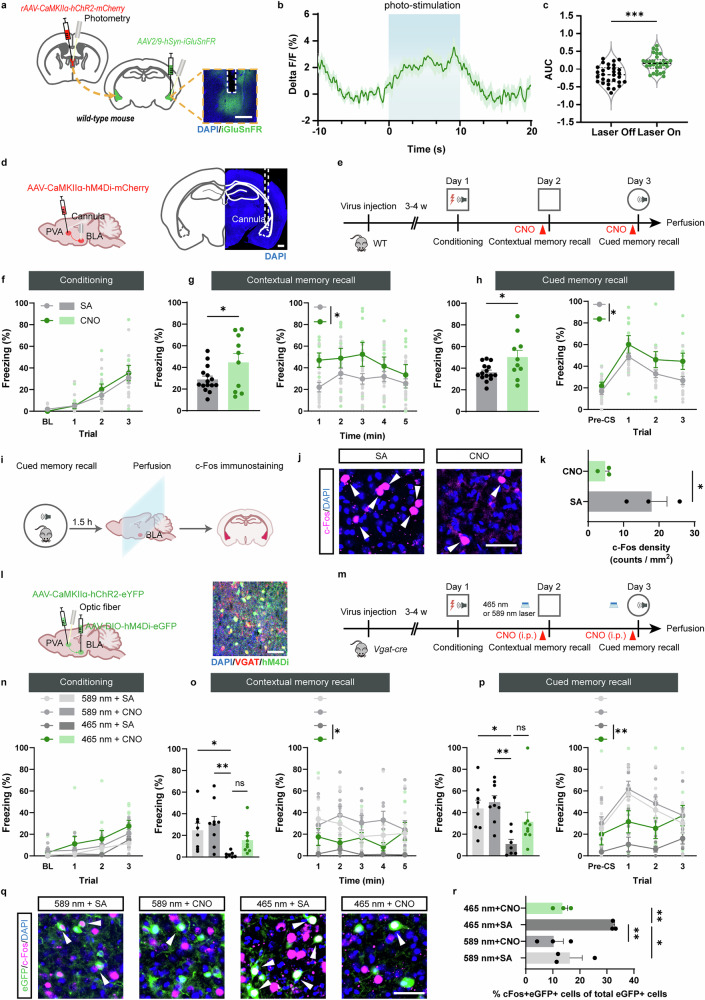
PVA projects to BLA, vSub and accumbens among other sites. PVA enhancement evoked BLA glutamate signals, and terminals were more active as freezing ended. Suppressing the output increased contextual/cue freezing with comparable general motor and anxiety-related measures, supporting a recall-response contribution.
BLA recipients include several classes. Local excitatory suppression did not abolish PVA-induced freezing reduction. GABA suppression altered the recall freezing time course without an equivalent clear total-duration change. This partial effect suggested more complex downstream cooperation and motivated other-output analysis.
Source: Chen J et al. · Communications biology · CC BY-NC-ND
Original figure and English caption ↗
A second route changes the same response
PVA enhancement also evoked vSub glutamate responses, and output suppression increased recall freezing. Recipients were predominantly excitatory; simultaneous suppression reversed the PVA-induced decrease. Suppressing the studied accumbal output lacked matching behavioral effects.
PVA populations projecting to BLA and vSub were largely separate. Both could reduce freezing without necessarily producing the same subsequent action. The study therefore moved from whether animals moved to how they moved, examining sniffing and stair-platform exploration.
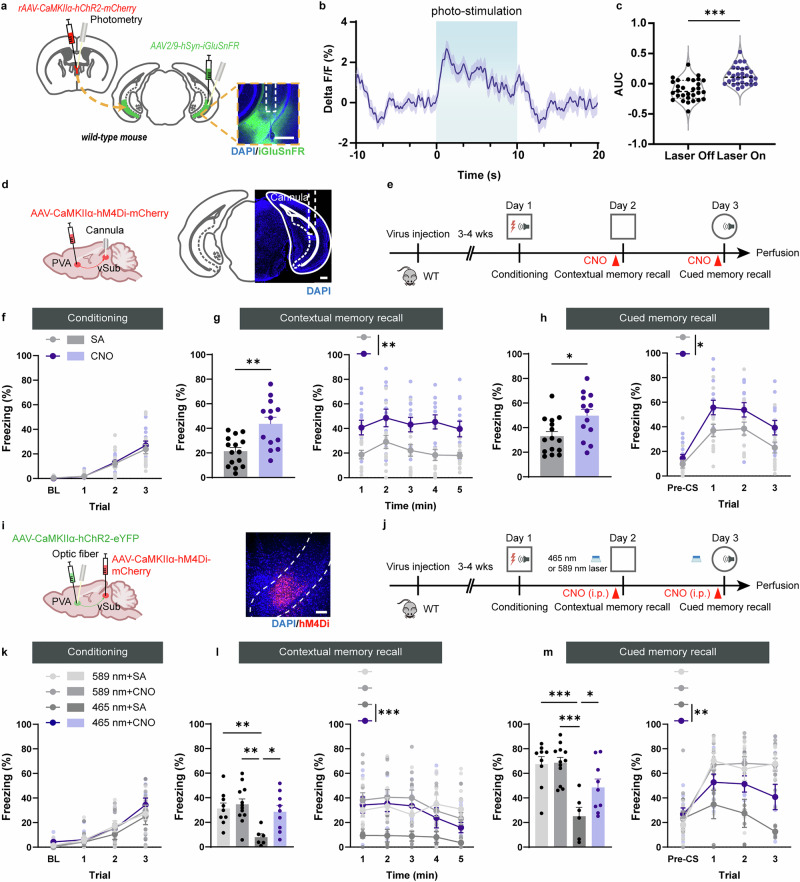
Source: Chen J et al. · Communications biology · CC BY-NC-ND
Original figure and English caption ↗
The subicular route more clearly promotes exploration
Enhancing either route reduced contextual freezing, but vSub enhancement also increased sniffing. With a stair and platform available during cue testing, vSub enhancement increased time in motion, shortened platform latency and increased stair occupancy, while total distance remained comparable. Action organization changed beyond simply more running.
BLA enhancement did not produce matching platform effects. vSub enhancement did not increase baseline locomotion without conditioning or clearly alter novel-object exploration. The active response was threat-recall dependent: mice approached an available exit sooner rather than becoming generally more exploratory.
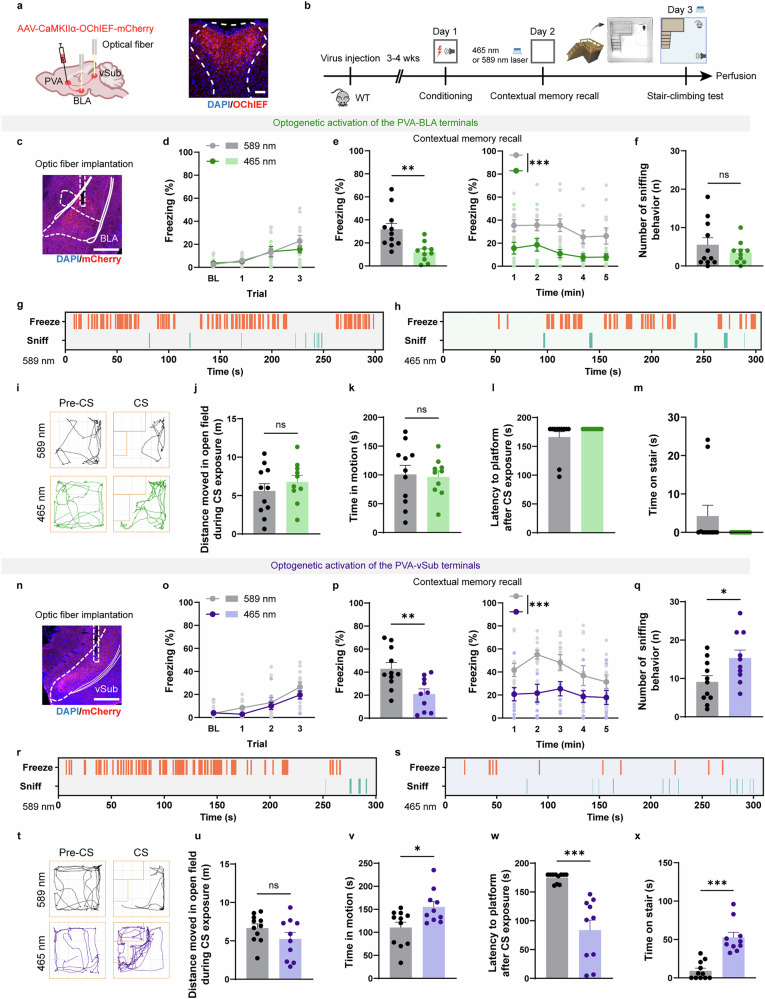
Source: Chen J et al. · Communications biology · CC BY-NC-ND
Original figure and English caption ↗
One recalled threat can lead to different defenses
The study places two PVA outputs in one behavioral account: the amygdala route contributes to freezing regulation, while the subicular route also promotes active exploration. A learned threat can evoke less passive immobility alongside selection of an available route. Following subsequent actions reveals different circuit contributions behind similar freezing reductions.
The work uses adult mice in contextual and auditory conditioning, with recall tested through seven days. Exploratory effects relate to those task contexts. It reveals part of how recall organizes responses beyond one fear-intensity scale: recalling a past threat also shapes current action choices.