Can breathing continue after a seizure? Clues to cooperation between two monoamine systems
A DBA/1 mouse study links serotonin and norepinephrine to a brainstem respiratory-rhythm region, finding that joint enhancement reduces seizure-induced respiratory arrest.
The danger of a seizure extends beyond visible convulsions. Networks that sustain breathing may also be disrupted, making seizure-induced respiratory arrest an important focus of research into sudden unexpected death in epilepsy. A study published on October 10, 2025 in International Journal of Biological Sciences examines serotonin (5-HT) and norepinephrine (NE), two modulatory systems often considered separately. In respiratory-arrest-prone DBA/1 mice, it follows links among dorsal raphe, locus coeruleus and pre-Bötzinger complex to ask how cooperation helps the respiratory network withstand seizures.
Two monoaminergic interventions that individually fail to reduce respiratory arrest become effective in combination. Cellular modulation and local receptor experiments further connect this cooperation to a brainstem respiratory-rhythm region.
Contents · 7 sections
Ineffective alone, effective together
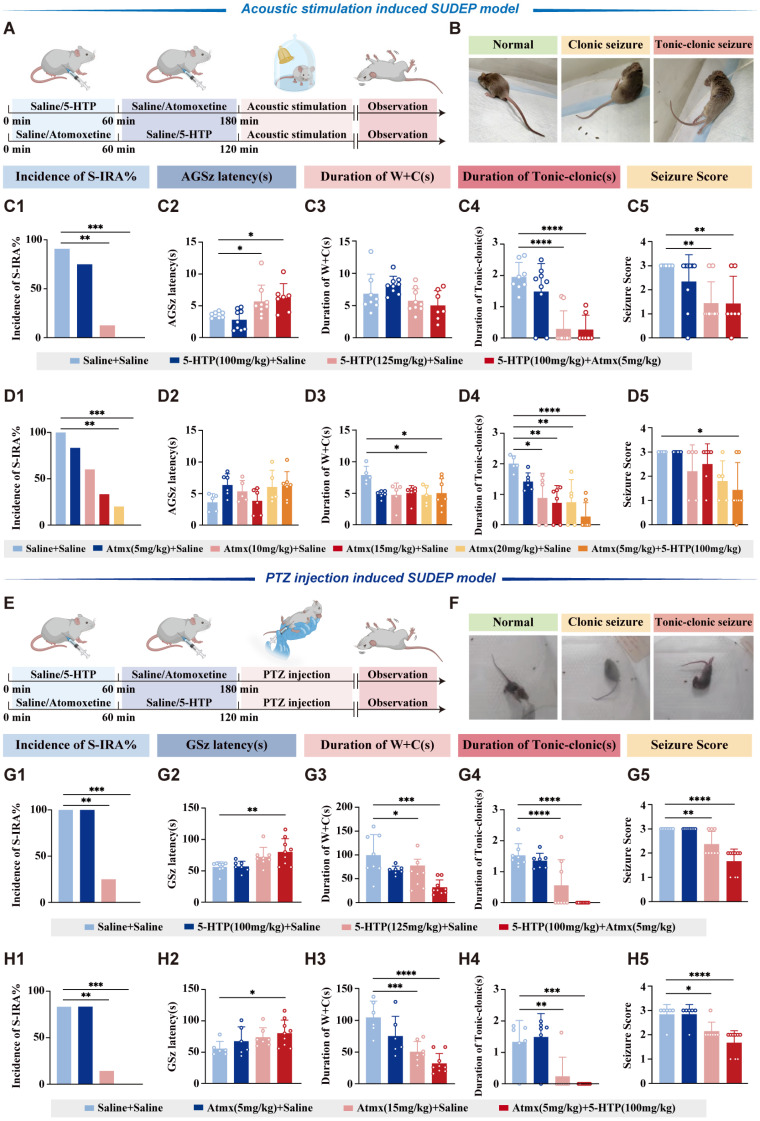
The study first asks a simple question: if both systems contribute to respiratory protection, what happens when they are recruited together? Interventions enhancing serotonin synthesis or NE availability individually fail to noticeably reduce respiratory arrest at lower levels. Combined, they reduce arrest incidence in both sound-triggered and PTZ-triggered seizure models.
Combination also improves some seizure behaviors, with effects varying across models and comparisons. Respiratory arrest is the central outcome, while running, clonic and tonic components respond differently. Cooperation can therefore influence post-seizure danger without uniformly reducing every visible seizure feature.
Source: Xu Q et al. · International journal of biological sciences · CC BY
Original figure and English caption ↗
Dual modulation reveals a nonlinear response
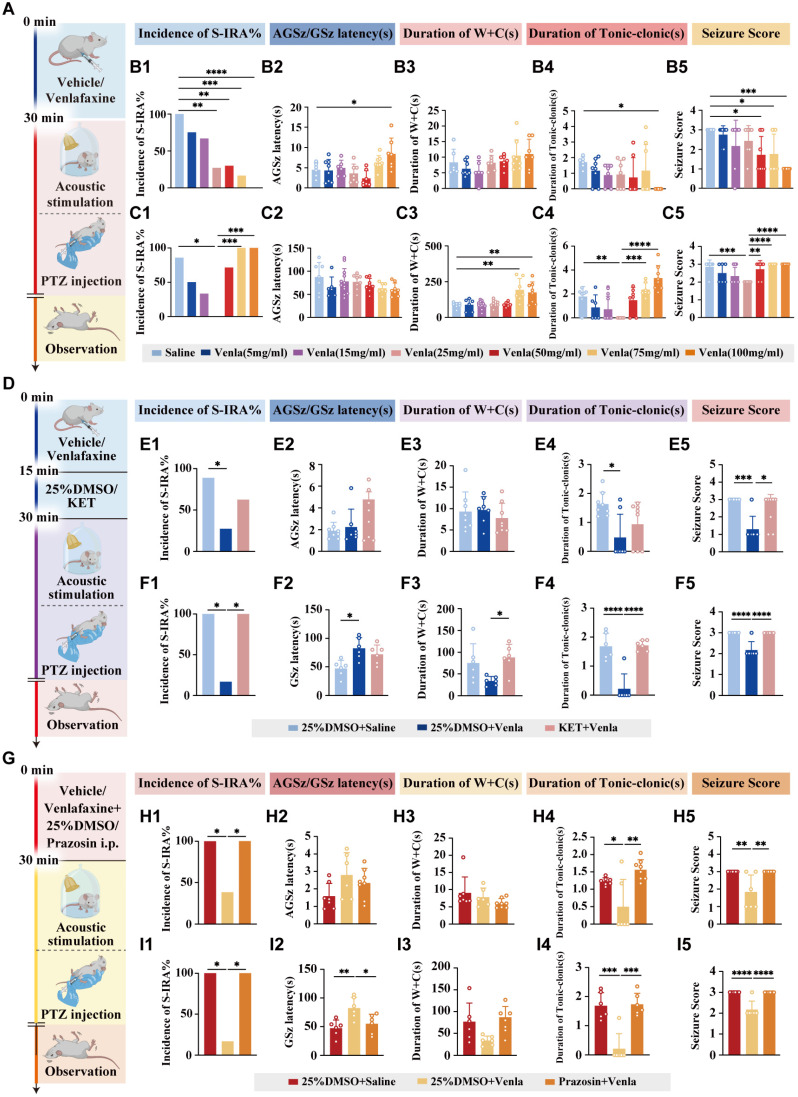
The study next uses venlafaxine, which affects both serotonin and NE reuptake. Under effective experimental conditions it lowers respiratory arrest, but PTZ-model outcomes do not improve continuously with stronger intervention. Protection weakens at higher levels, and some seizure behaviors increase; the two triggering models also differ.
Calcium signals and activity markers show recruitment of dorsal-raphe serotonergic and locus-coeruleus noradrenergic cells, varying with intervention intensity. The pattern suggests a network requiring coordination: involving both systems does not mean unlimited signal enhancement yields greater benefit.
Source: Xu Q et al. · International journal of biological sciences · CC BY
Original figure and English caption ↗
Cells at both brainstem sites influence respiratory arrest
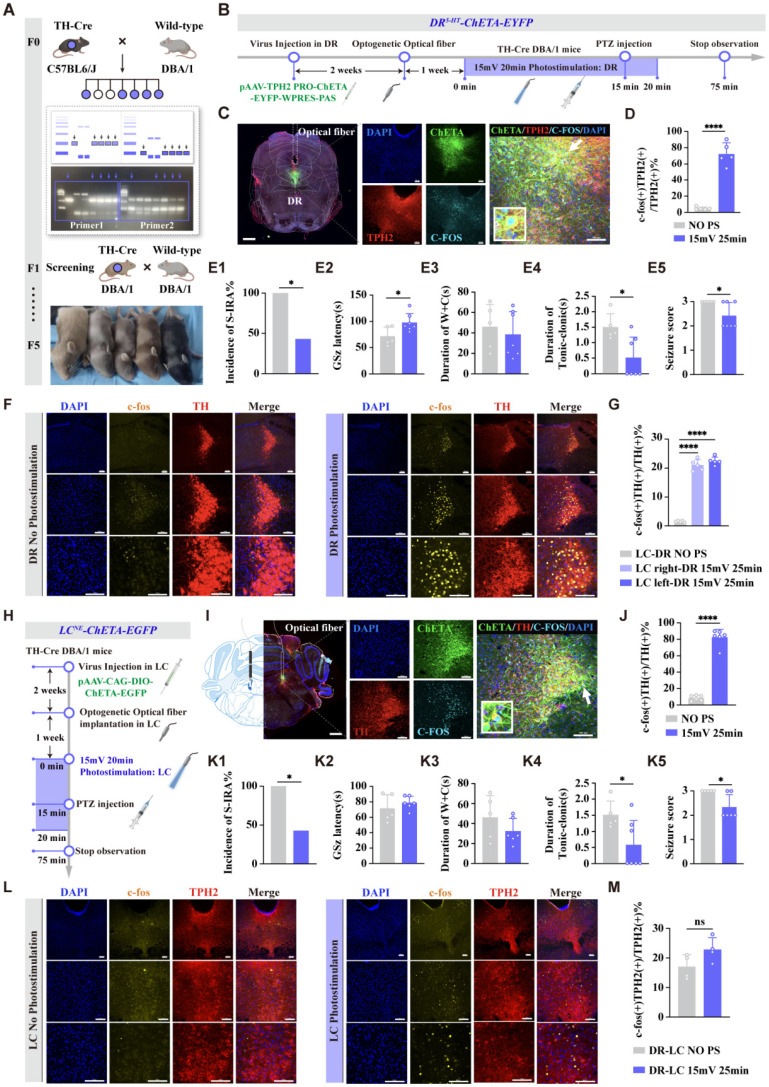
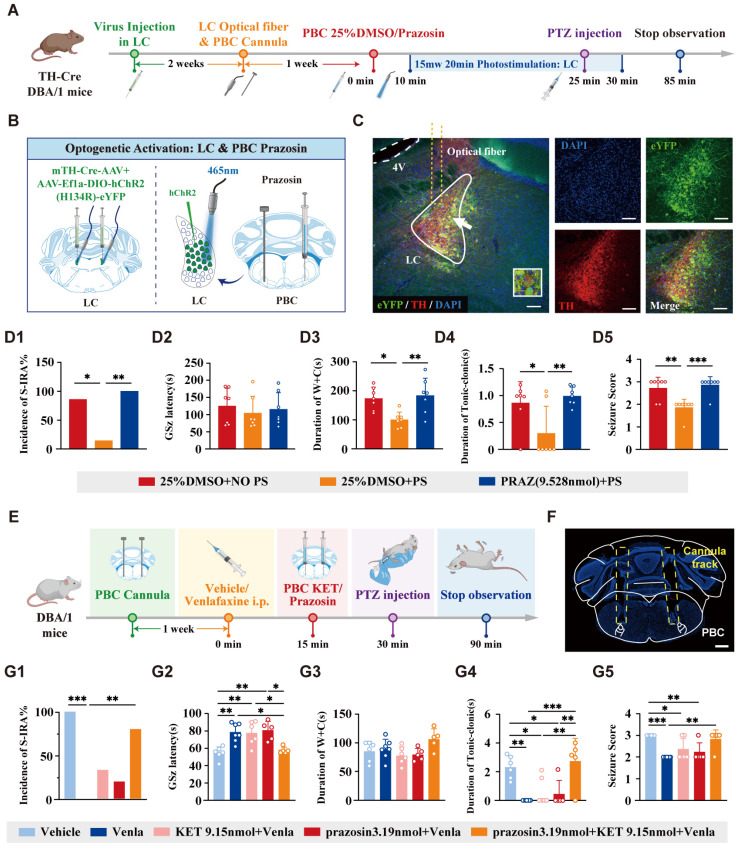
Because drugs act at multiple sites, the study next modulates cellular activity directly. Enhancing dorsal-raphe serotonergic cells reduces respiratory arrest while increasing activity markers in locus-coeruleus NE cells. Directly enhancing locus-coeruleus NE cells also reduces arrest, shortens tonic seizures and lowers seizure scores.
After locus-coeruleus enhancement, onset latency and running/clonic duration remain broadly unchanged while respiratory outcomes improve. The experiment thus separates respiratory arrest from some overt seizure behaviors: reducing respiratory danger need not suppress every component of a seizure.
Source: Xu Q et al. · International journal of biological sciences · CC BY
Original figure and English caption ↗
Modulatory signals reach pre-Bötzinger complex
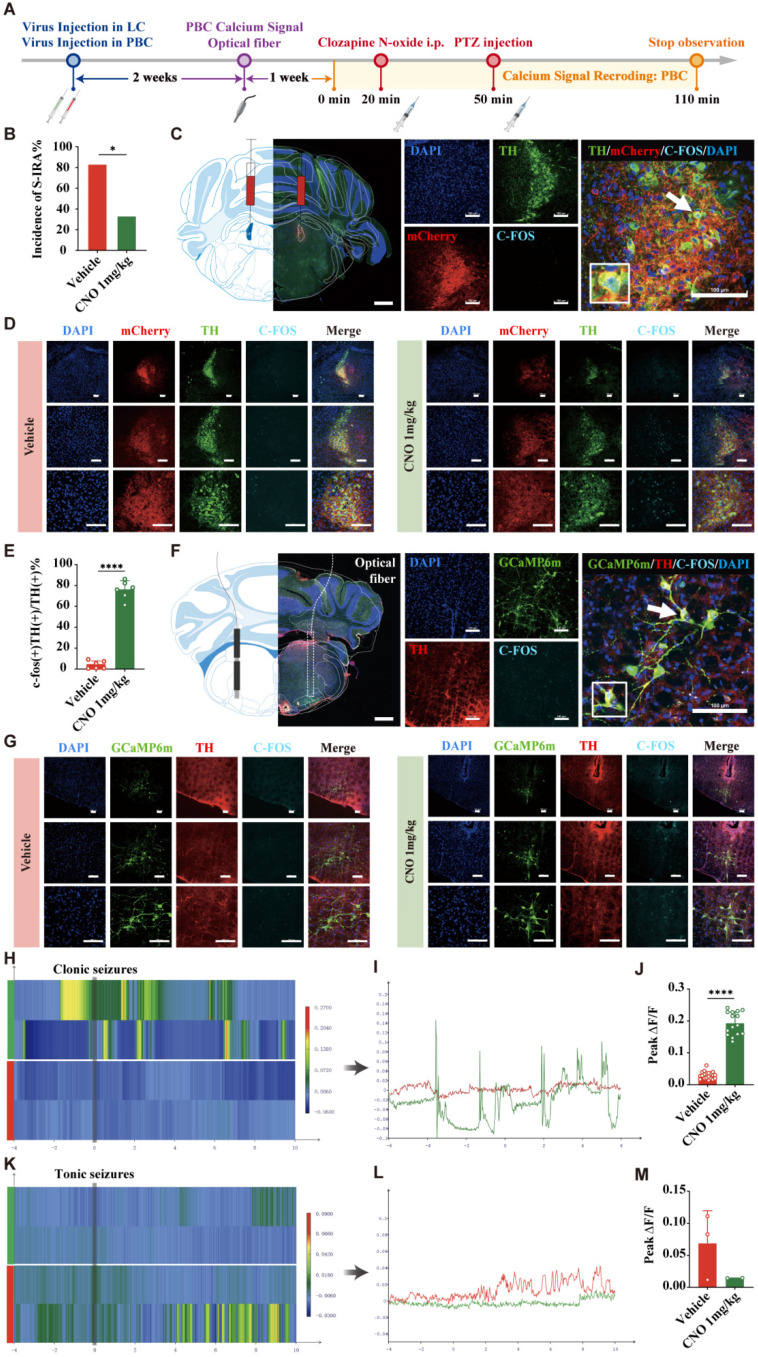
How do the monoaminergic nuclei relate to networks organizing respiratory rhythm? Anterograde and retrograde tracing links dorsal raphe, locus coeruleus and pre-Bötzinger complex (PBC). This medullary region contributes importantly to respiratory-rhythm generation and becomes the focus for examining convergence of the two modulatory signals.
Enhancing locus-coeruleus cells increases PBC activity markers and elevates seizure-associated calcium signals during the clonic phase, while the tonic phase remains broadly unchanged. Modulation of the respiratory network therefore differs across seizure stages; following the behavioral sequence reveals this distinction.
Source: Xu Q et al. · International journal of biological sciences · CC BY
Original figure and English caption ↗
Serotonergic protection depends on NE-system participation
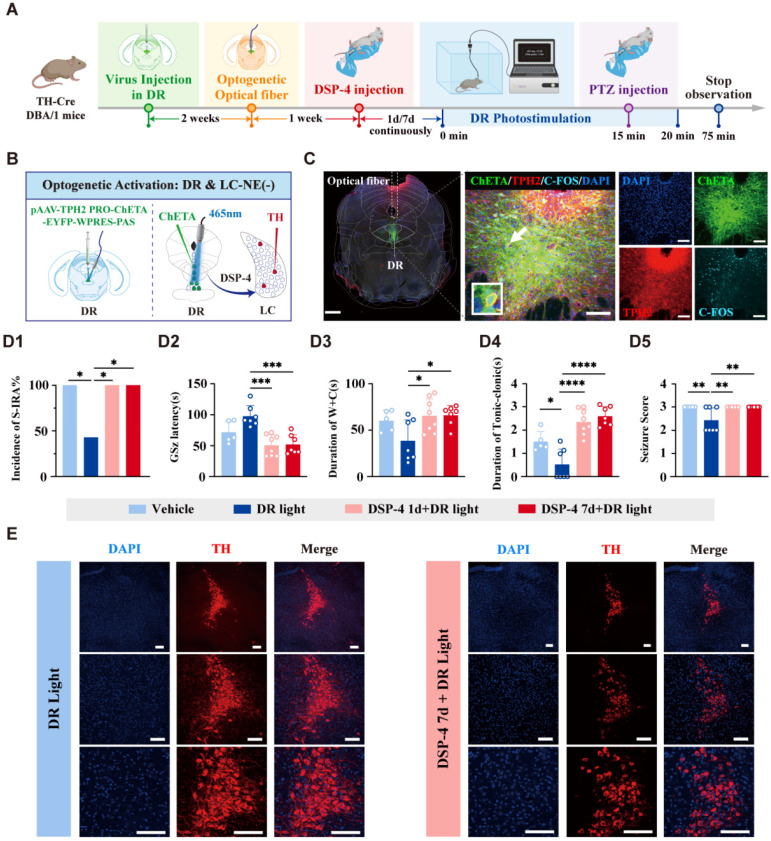
Cooperation can mean that one system’s effect requires participation by another. When dorsal-raphe serotonergic cells are enhanced alongside an intervention disrupting the central NE system, their respiratory-arrest reduction disappears. Longer disruption also reduces TH-positive cells in locus coeruleus.
This links two parallel protective leads into a network with functional dependence. The effect of dorsal-raphe activity is related to the state of the NE system as well as its own output. Respiratory protection arises under conditions in which several nodes work together rather than one nucleus accounting for the entire effect.
Source: Xu Q et al. · International journal of biological sciences · CC BY
Original figure and English caption ↗
Two receptor classes in PBC contribute to protection
To ask how signals act in the respiratory-rhythm region, the study examines PBC serotonin 5-HT2A and NE α1 receptors. Local α1 blockade counteracts the reduction in respiratory arrest produced by locus-coeruleus enhancement. Blocking both receptor classes markedly weakens venlafaxine-associated protection.
Tracing indicates where signals may originate, while local receptor experiments identify molecular sites at which they act. The receptor classes connect monoaminergic modulation with the respiratory network, taking cooperation beyond effective combined interventions toward mechanisms testable in a specific brain region.
Source: Xu Q et al. · International journal of biological sciences · CC BY
Original figure and English caption ↗
Seizure severity and respiratory danger are different dimensions
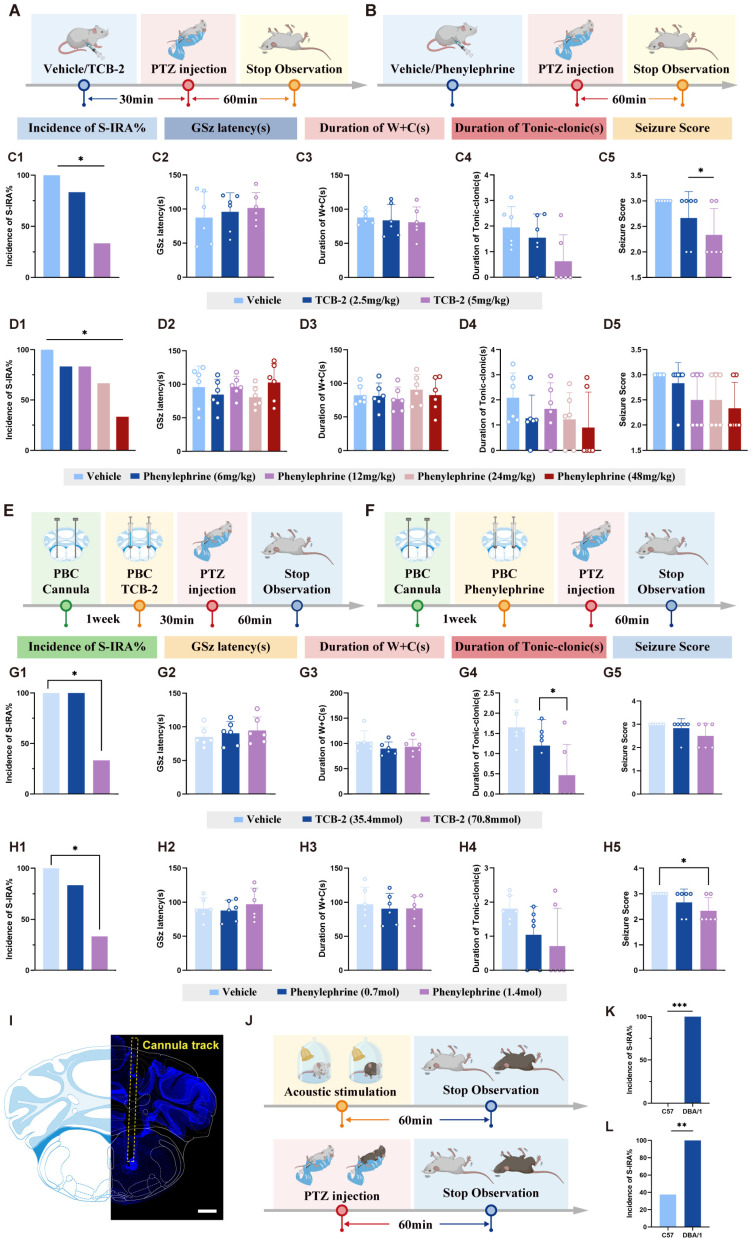
Local activation of either PBC 5-HT2A or α1 receptors also reduces respiratory arrest, while onset latency and some behavioral durations remain comparable. Overt convulsions and respiratory arrest are related yet incompletely overlapping; examining respiratory regulation reveals changes that seizure behavior alone can miss.
The study uses male and female DBA/1 mice and two acute induced-seizure models, focusing on the hazardous step of seizure-induced respiratory arrest. Its account joins monoaminergic nuclei, interdependent activity and a respiratory-rhythm region: continued breathing relates not only to the seizure but also to the state of networks sustaining rhythm.
Source: Xu Q et al. · International journal of biological sciences · CC BY
Original figure and English caption ↗