Beyond the dangerous room: CRH neurons tune the reach of fear
A mouse study links BNST CRH neurons and CRHR1 signaling to the spread of fear into similar environments.
After danger, remembering where it happened matters. Yet another room with a similar smell, shape or layout can also evoke defense. Contextual fear generalization extends a protective memory beyond its original setting. A 2026 Neurobiology of Stress study follows conditioning, neural activity and local signaling to identify corticotropin-releasing hormone (CRH) neurons in the dorsal BNST as a node that tunes the reach of defense.
Pretraining modulation of dBNST CRH neurons and local CRHR1 changes freezing in a similar setting while largely preserving defense in the training context.
Contents · 6 sections
How far should the alarm extend?
The BNST belongs to the extended amygdala and is associated with sustained threat and uncertainty. Its rich CRH signaling links stress to defensive regulation. Recognizing a setting and deciding how strongly to respond are connected steps as environmental information becomes action.
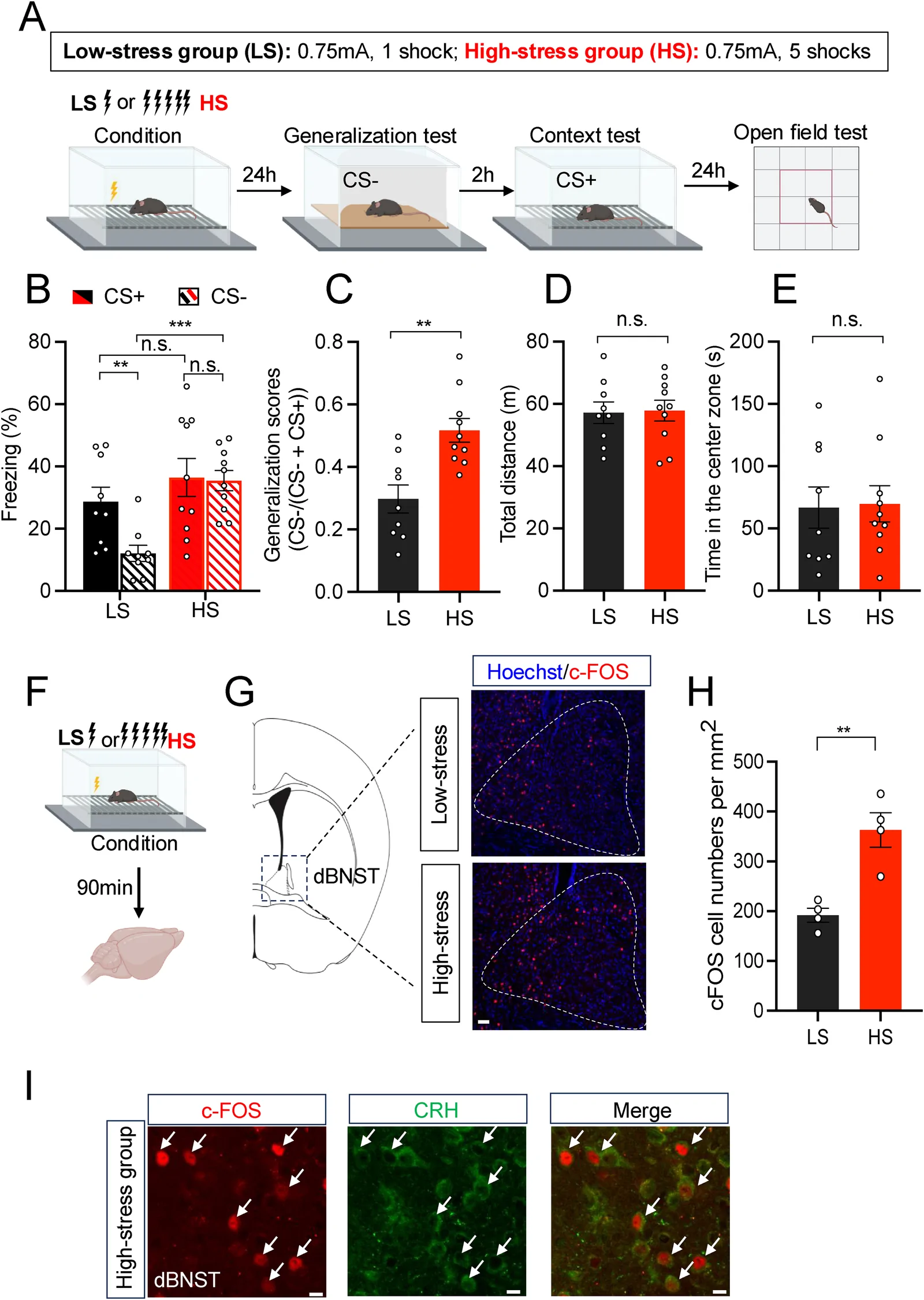
Mice received either one shock or five shocks of equal strength at randomized intervals. They then visited an unshocked similar chamber before the training chamber. This reveals where defense is directed: toward the original danger, or toward another setting as well.
Stronger conditioning extends defense beyond its origin
Weak conditioning produces more freezing in the original than the similar chamber. Strong conditioning brings the responses closer, mainly by increasing similar-chamber freezing and generalization scores while training-chamber freezing remains comparable. The memory’s reach changes.
Open-field distance and center time remain stable, separating the pattern from general immobility. Strong conditioning recruits more c-Fos-positive dBNST cells, including CRH neurons, connecting the behavioral pattern to a candidate population.
Source: Chen M et al. · Neurobiology of stress · CC BY-NC-ND
Original figure and English caption ↗
From shock to freezing, the cells remain involved
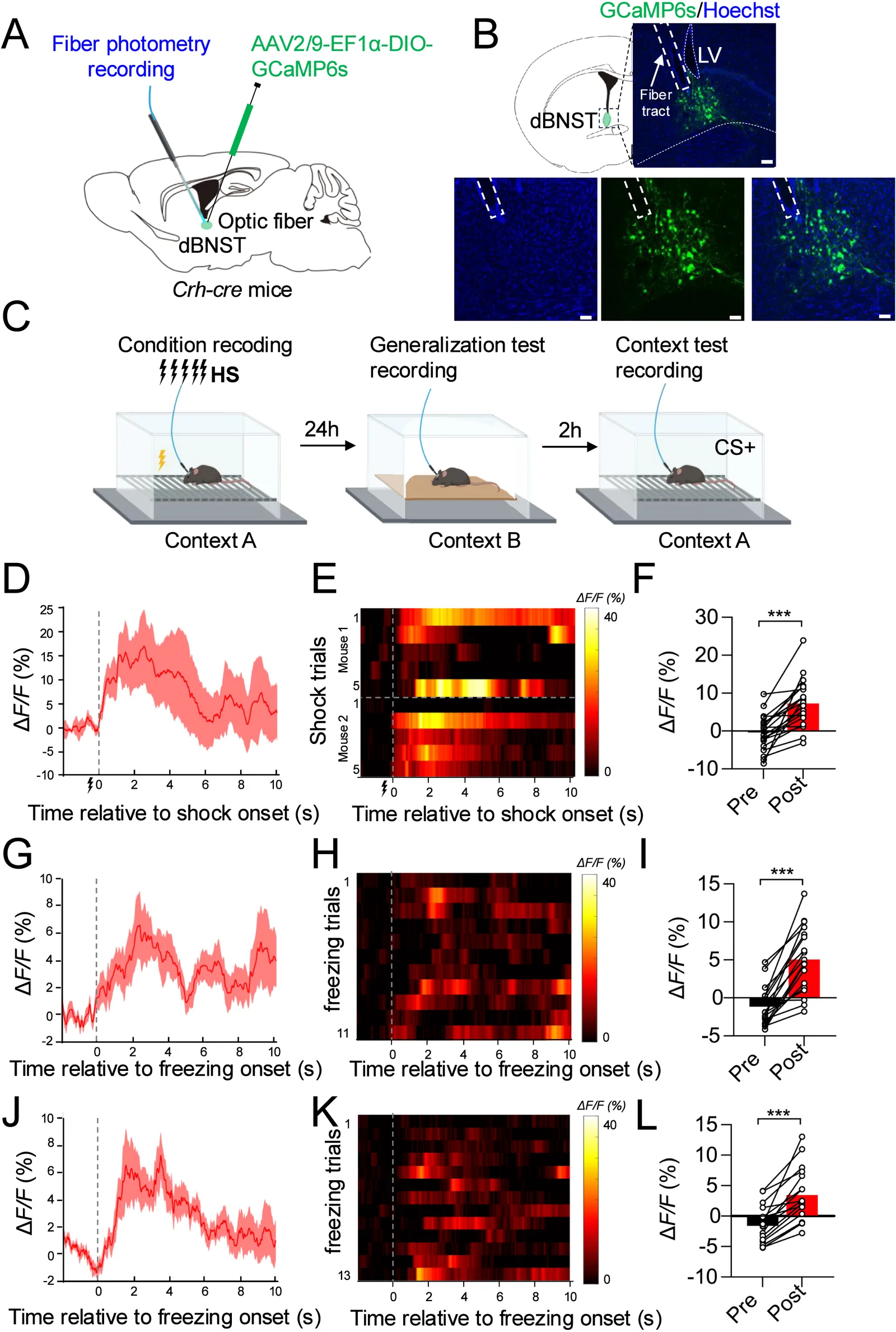
Calcium indicators reveal activity in freely moving mice. Signals rise promptly after shock and again around freezing onset during later tests in both chambers, placing these neurons across conditioning and defensive expression.
This continuity links the original stimulus with later responses to environmental cues. Having established when the population is recruited, the team uses opposing interventions to ask how it shapes the distribution of defense across chambers.
Source: Chen M et al. · Neurobiology of stress · CC BY-NC-ND
Original figure and English caption ↗
Opposing interventions shift responses in the similar room
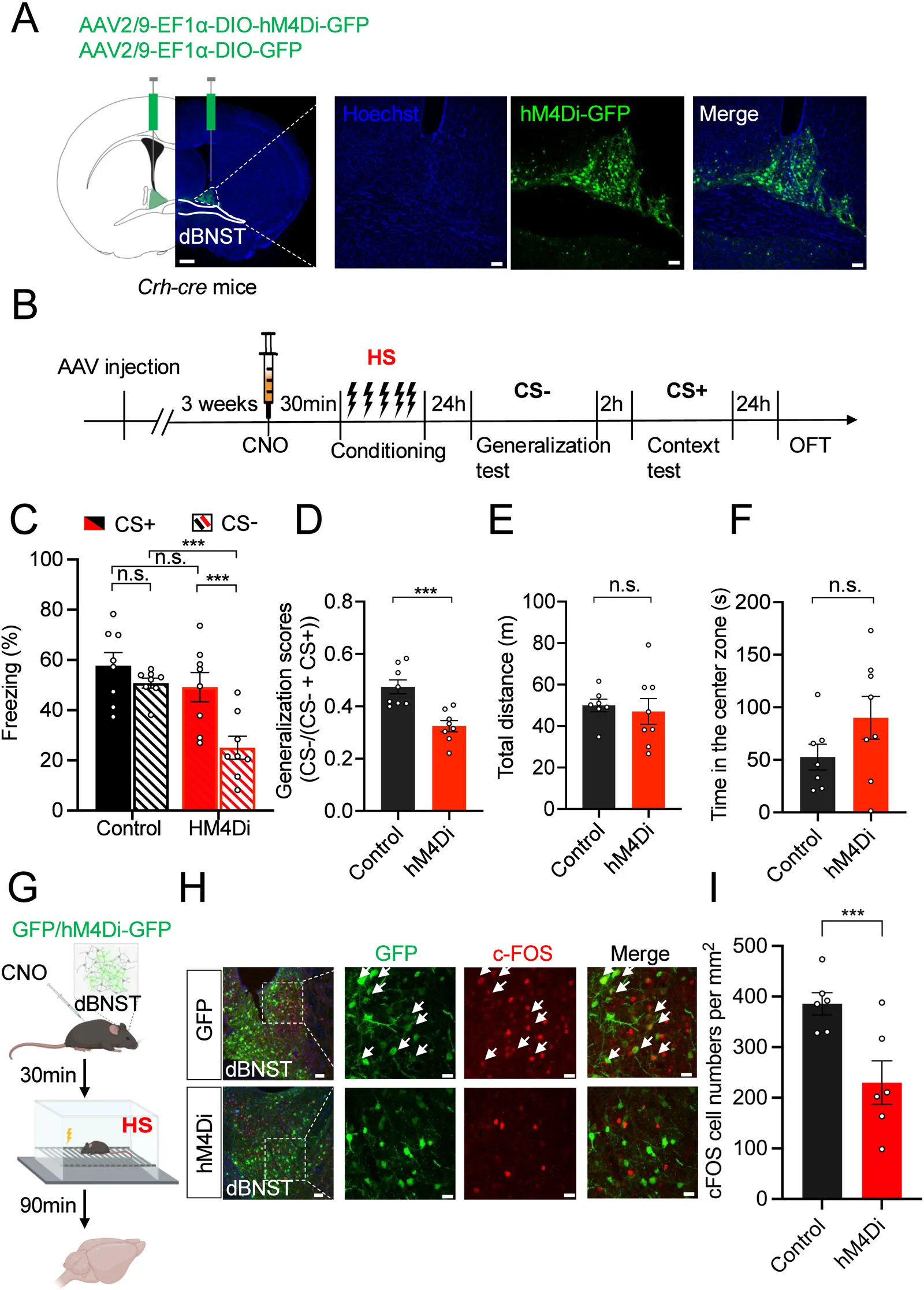
Inhibition before strong conditioning reduces similar-chamber freezing and generalization; activation before weak conditioning increases both. Together, the interventions show that CRH populations tune how conditioned fear extends to similar settings.
Training-chamber responses and open-field movement remain largely stable. The selectivity is revealing: local modulation changes how much defense a similar context receives rather than shifting every response together. Experience and cellular state jointly shape later behavior.
Source: Chen M et al. · Neurobiology of stress · CC BY-NC-ND
Original figure and English caption ↗
CRHR1 connects the cells to local molecular signaling
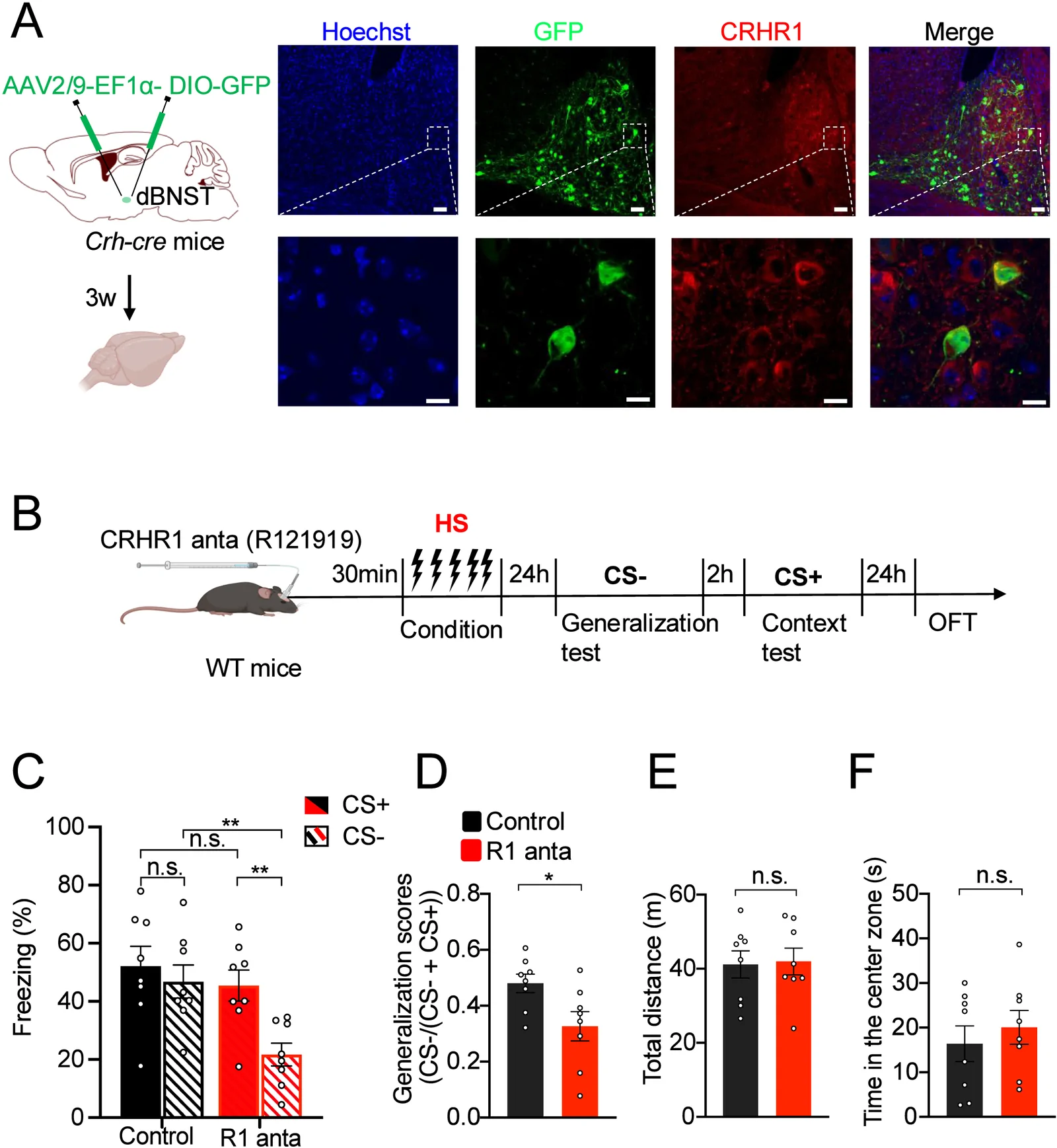
Local pretraining CRHR1 blockade with R121919 again reduces similar-chamber freezing/generalization while largely preserving training-chamber responses, distance and center time. Cellular and receptor interventions converge in the same region.
CRH and CRHR1 now provide connected mechanistic leads. Mapping contextual inputs, receptor-bearing recipient cells and behavioral outputs can refine how this local network controls defense.
Source: Chen M et al. · Neurobiology of stress · CC BY-NC-ND
Original figure and English caption ↗
From remembering danger to regulating fear’s boundary
The work separates the content of a danger memory from the range of settings that evoke defense. dBNST CRH neurons and CRHR1 supply a cellular/molecular node, making generalization a tractable network process.
The study centers on adult males with pretraining interventions. Testing this node after memory formation and tracing its connections can reveal how experience establishes, maintains and revises the boundary of fear.