ARVCF and nicotine reward: following a gene to dopamine signals
In mice, changing Arvcf expression in ventral tegmental dopamine cells bidirectionally alters nicotine-associated place preference, alongside accumbal dopamine responses and a dopamine-synthesis enzyme.
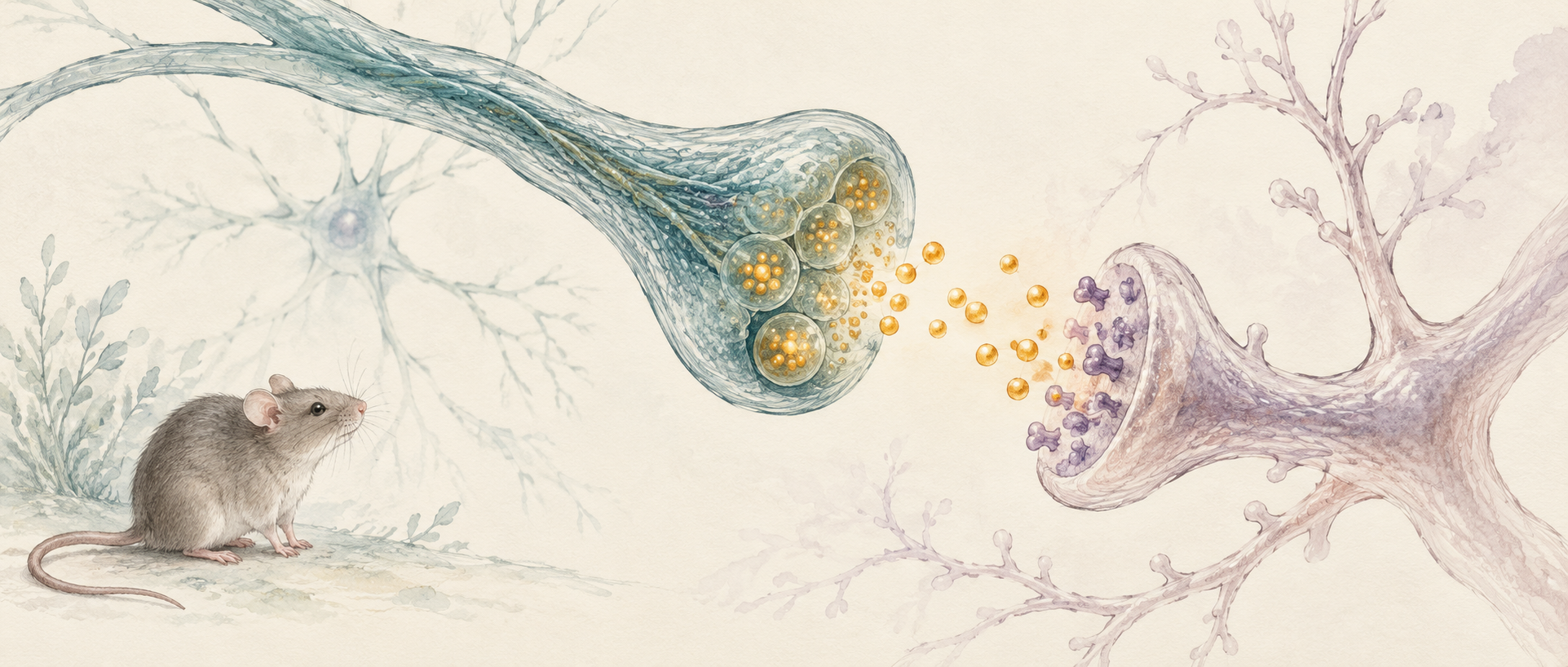
How does nicotine-associated reward enter the brain’s learning systems? Earlier human genetic studies drew attention to ARVCF, but a genetic association needs cellular and behavioral evidence for interpretation. A study in Communications Biology connects mouse Arvcf, ventral tegmental dopamine cells, and accumbal signals, showing that this molecular relationship influences preference for a nicotine-associated place.
Reducing Arvcf in VTA dopamine cells weakens nicotine-associated place preference and accumbal dopamine responses; increasing expression has opposite effects. Dopamine responses during feeding, drinking, and social investigation are also affected.
Contents · 7 sections
Reward learning needs a molecular account
The ventral tegmental area, or VTA, sends dopaminergic projections to the nucleus accumbens. This system contributes to reward-related learning, while signaling depends on synthesis, transport, and release. Arvcf encodes a catenin-family member, and the study seeks its connection with this signaling system.
The team uses place preference to ask whether mice spend more time in an area associated with nicotine after experiencing that context. This makes reward association a comparable behavioral measure. The study concerns this learning stage; withdrawal and relapse concern other stages.
Place preference weakens while dopamine still responds
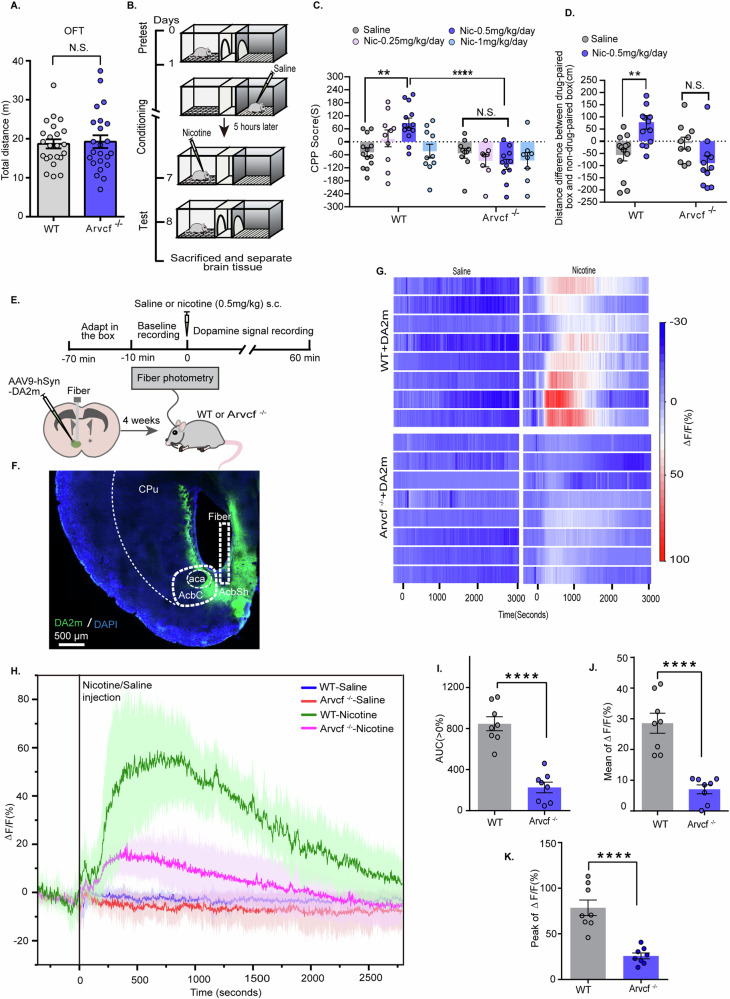
Normal mice develop significant place preference under one of three tested nicotine conditions, but not the other two. Arvcf-deficient mice show no clear preference under any of the three. Sex-stratified analyses also show affected reward learning, without a significant difference in total open-field distance.
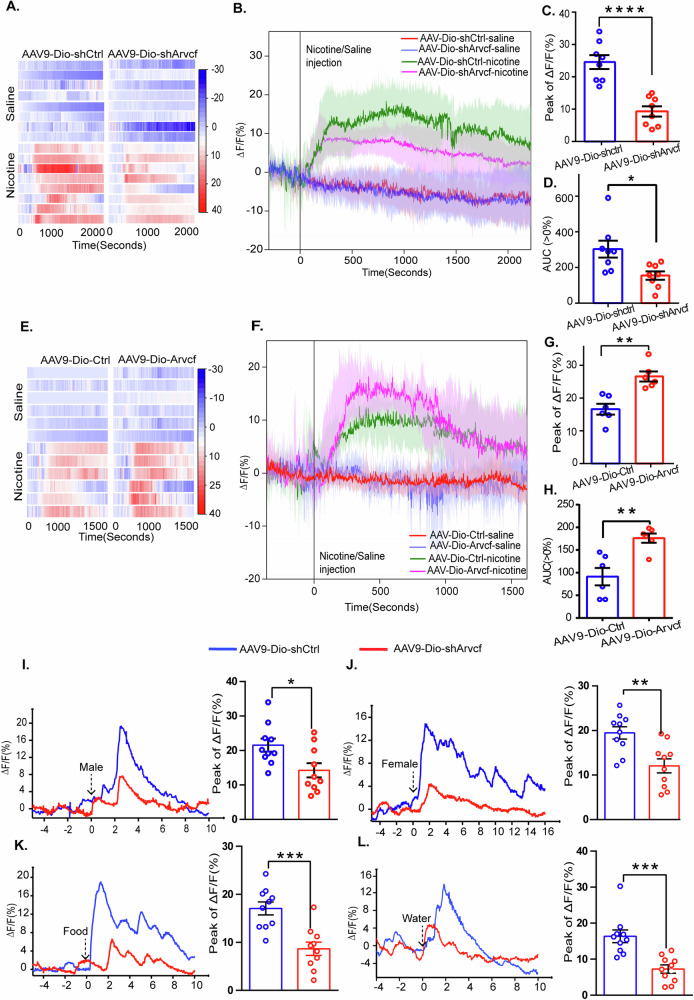
Dopamine signals in the accumbens shell provide another level of observation. Nicotine raises signals in both groups, but the deficient group shows a smaller increase, faster decay, and lower peak and overall response. Gene loss changes the response’s magnitude and duration without eliminating it.
Source: Wang Y et al. · Communications biology · CC BY-NC-ND
Original figure and English caption ↗
Arvcf is enriched in VTA dopamine cells
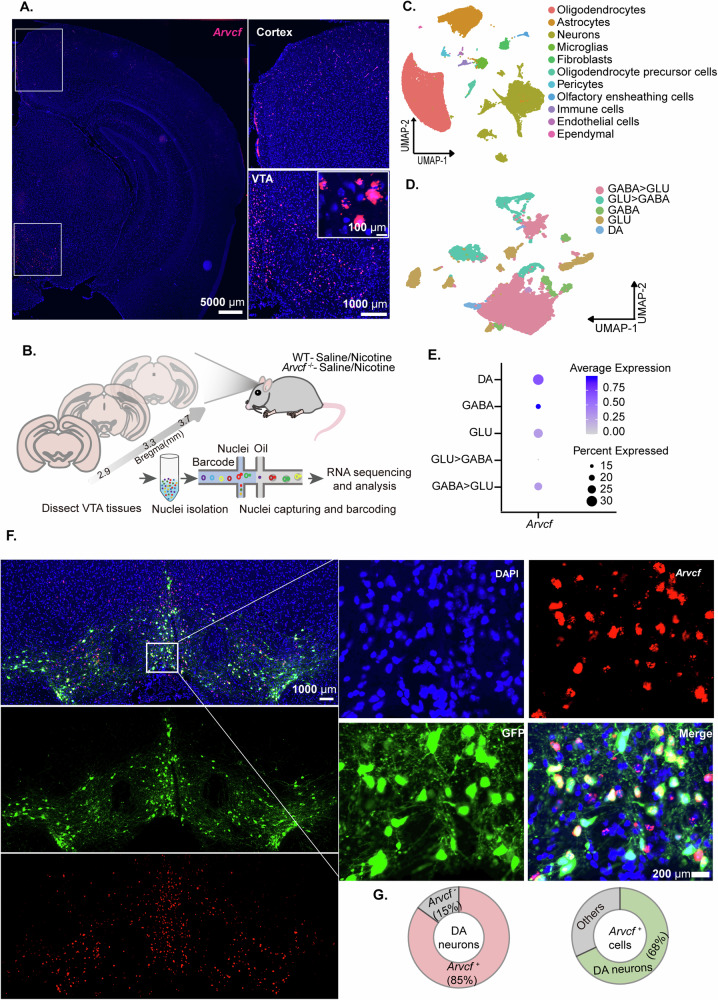
The team next asks which cells express Arvcf. Single-nucleus RNA analysis detects it in several cell types, with notable expression in neurons, ependymal cells, and oligodendrocyte precursors. Among neuronal populations, dopamine cells show higher expression. Tissue colabeling supports this enrichment.
After nicotine exposure, Arvcf expression increases in dopamine cells and in most other neuronal subtypes. The expression pattern guides the next analysis: following whether molecular changes in VTA dopamine cells relate to dopamine synthesis.
Source: Wang Y et al. · Communications biology · CC BY-NC-ND
Original figure and English caption ↗
Expression of a key synthesis enzyme decreases
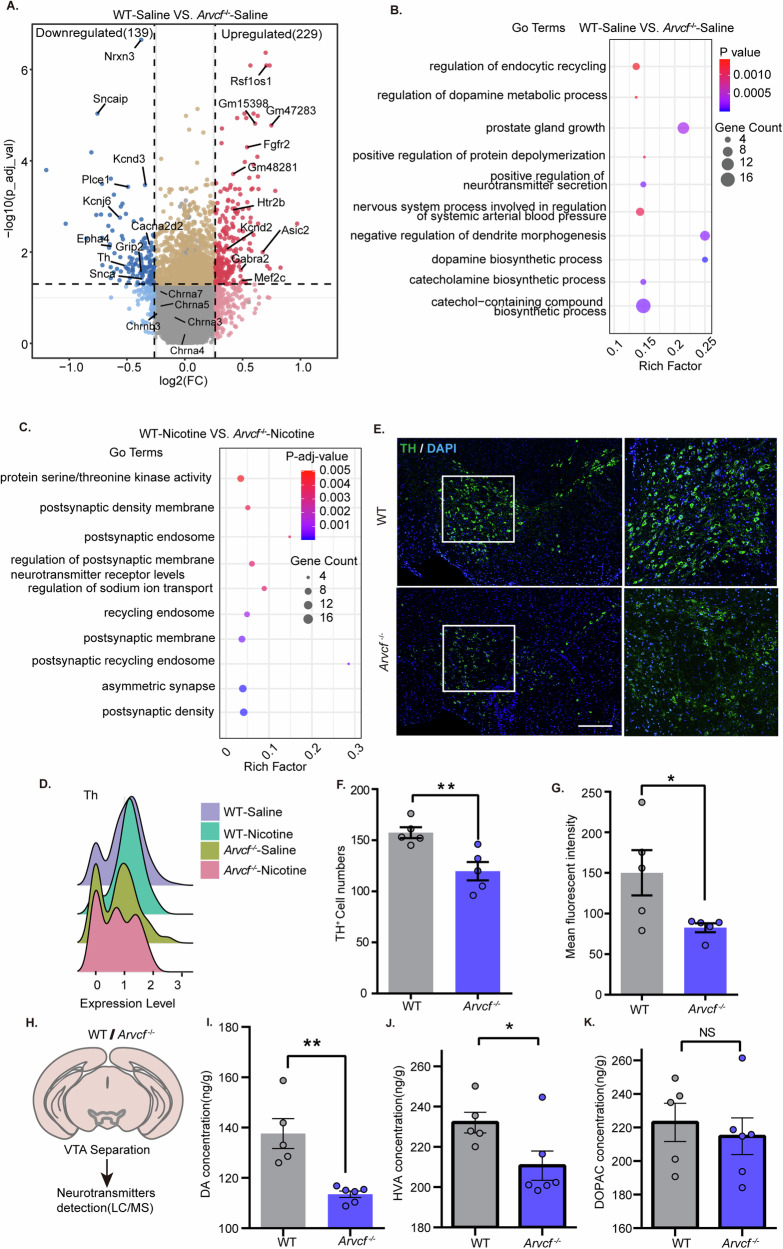
After Arvcf loss, dopamine-cell gene expression changes, including lower expression of tyrosine hydroxylase, or TH, an enzyme involved in dopamine synthesis. Several examined transport- and metabolism-related genes, as well as nicotinic-receptor genes, do not show the same significant change.
Tissue analysis likewise shows lower TH fluorescence and fewer TH-labeled cells. VTA dopamine and its metabolite homovanillic acid decrease, whereas DOPAC does not change significantly. These observations link synthesis-related changes with weaker signaling.
Source: Wang Y et al. · Communications biology · CC BY-NC-ND
Original figure and English caption ↗
Changing Arvcf expression shifts reward association in both directions
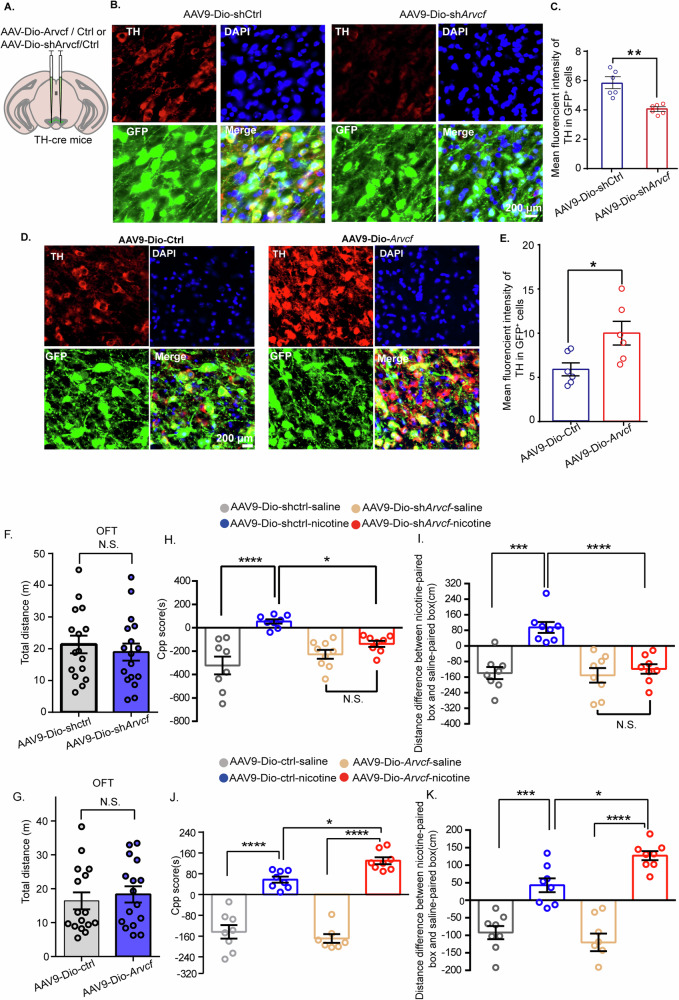
Whole-body gene loss can have broad effects, so the team next reduces or increases Arvcf expression in VTA dopamine cells. Reducing expression weakens TH labeling and nicotine-associated place preference; increasing it strengthens both. This localizes findings from whole-body deficiency to a defined cellular population in adult animals.
Neither manipulation discernibly changes total open-field distance. Accumbal dopamine responses also shift bidirectionally: reducing Arvcf lowers the nicotine-induced peak and overall response, while increasing it enhances these measures.
Source: Wang Y et al. · Communications biology · CC BY-NC-ND
Original figure and English caption ↗
Signals associated with natural rewards are also affected
The effect extends beyond nicotine. During initial investigation of unfamiliar male or female mice, male subjects show transient accumbal dopamine increases. Reducing Arvcf in VTA dopamine cells lowers the peaks for both social encounters. Peaks during feeding and drinking are also lower than in corresponding controls.
These observations suggest that Arvcf contributes to broader dopamine-response regulation. Preference for a nicotine-associated place is one behavioral outcome, while food, water, and other mice reveal signaling changes across different natural stimuli.
Source: Wang Y et al. · Communications biology · CC BY-NC-ND
Original figure and English caption ↗
A genetic lead connects with cells and behavior
The study advances a genetic lead to the cellular level: Arvcf-expression changes accompany TH expression, dopamine responses, and reward-associated behavior. This makes a gene’s contribution to learning more concrete and shows how molecular regulation can influence downstream signals across regions.
The insight comes from converging mouse reward-learning and dopamine-response observations. Arvcf is not a nicotine-specific label: its association with responses to natural stimuli makes the finding relevant to both drug reward and everyday signaling capacity.