Approaching food does not mean pressing the lever again
Rats make different choices when food and threat memories compete. Prelimbic findings distinguish reduced defense, food approach and completion of a rewarded action, alongside heterogeneous prefrontal activity.
A food cue appears, but an odor evokes a remembered threat. Will a rat continue pressing for food or retreat? A study published in eLife on December 16, 2021 examines approach–avoidance conflict in male Long–Evans rats while following prelimbic cortex (PL) activity. It reveals a behavioral distinction: suppressing PL excitatory neurons can reduce defense and increase food approach in animals that stopped pressing, without significantly restoring lever pressing. Approaching a goal and completing an action need not change together.
Rats continuing to press retain more sustained food-cue responses during conflict. With PL glutamatergic inhibition, non-pressers show within-group reductions in defense and increased approach, but direct between-group comparisons and lever-press measures remain nonsignificant.
Contents · 7 sections
Shared learned cues, different immediate choices
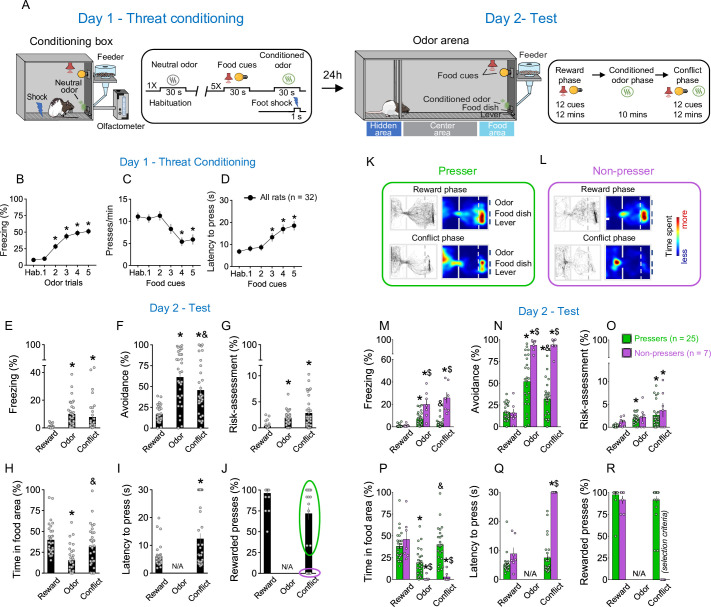
With food cues alone, rats generally approach the food area and press the lever. A threat-associated odor increases freezing, avoidance and risk assessment. When both cues appear, some animals continue pressing while others stop completely, defining Pressers and Non-pressers in this test.
These groups describe conflict behavior rather than predefined brave or timid traits. Several earlier food-seeking and threat-conditioning measures, and behavior during reward alone, are similar. Differences become prominent when threat and opportunity must be weighed together. Threat during the test is remembered from cues rather than delivered as ongoing punishment.
Source: Fernandez-Leon JA et al. · eLife · CC BY
Original figure and English caption ↗
Food-cue responses do not fade equally across animals
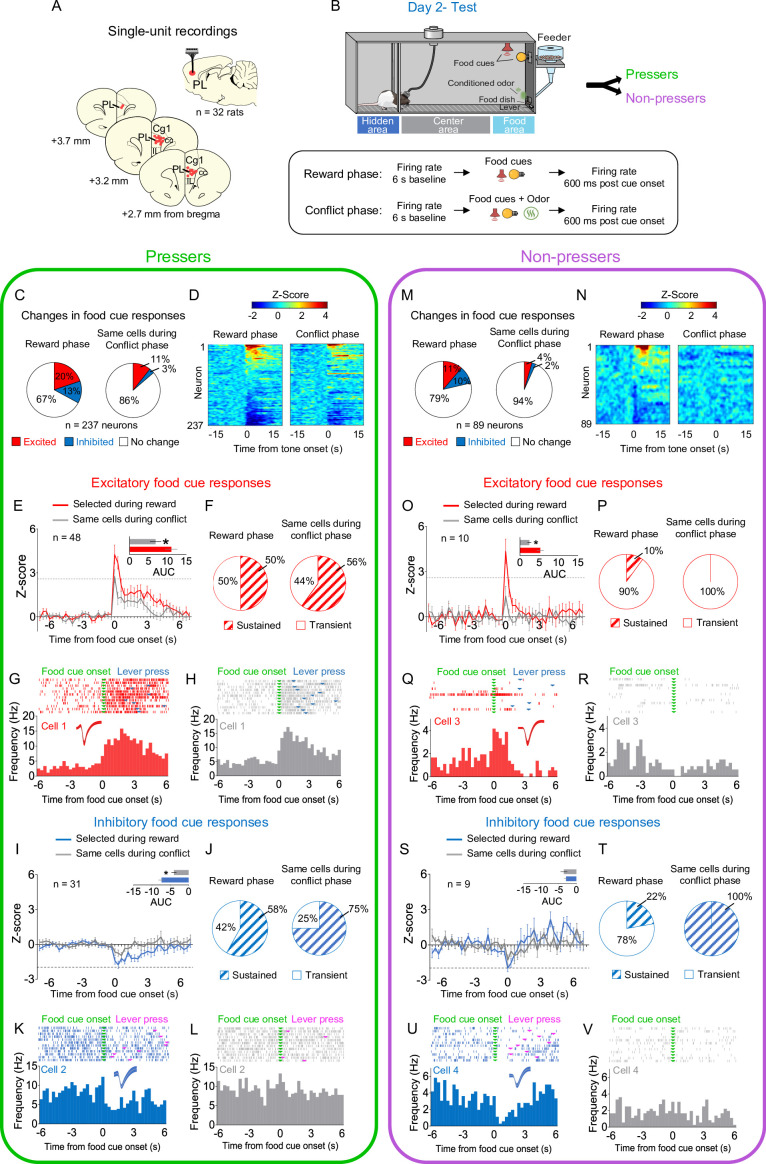
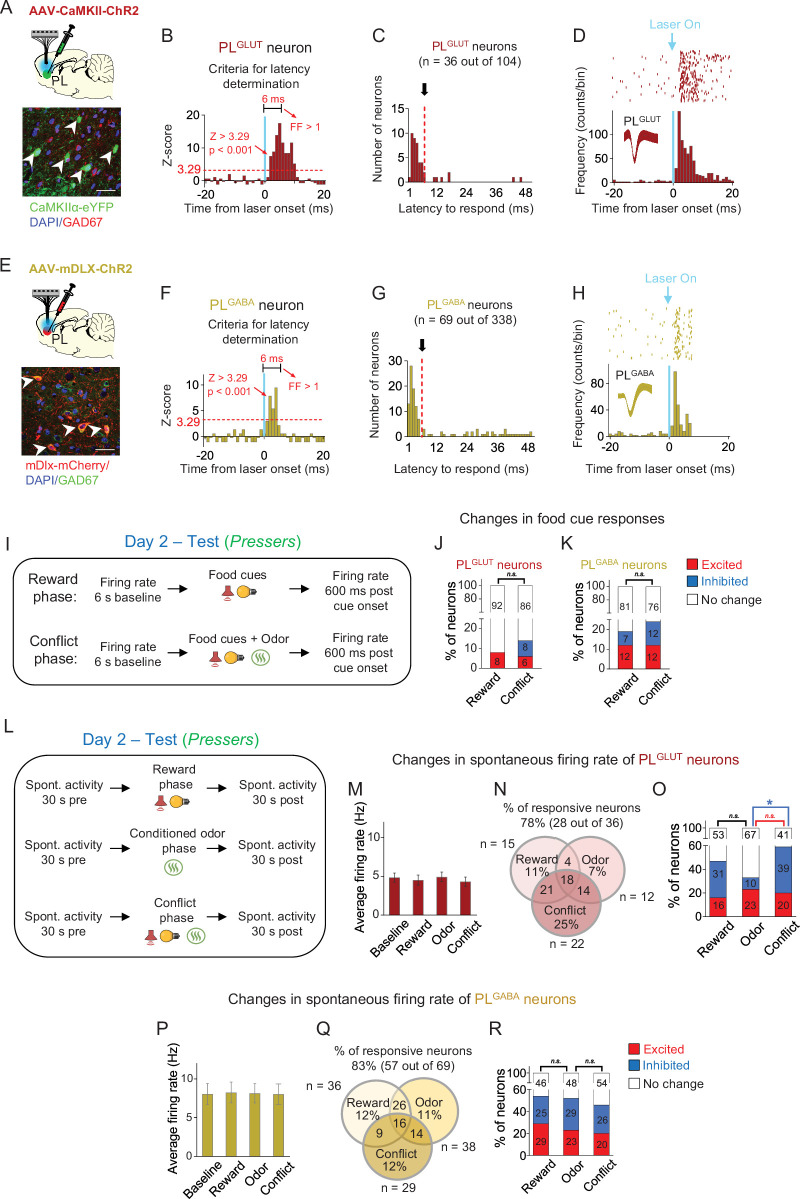
From reward alone to conflict, both groups show fewer food-cue-responsive PL cells and weaker excitatory responses. Rats that keep pressing nevertheless retain more sustained excitatory responses, whereas responses in non-pressers are more transient.
Among pressers, stronger cue-evoked excitation is associated with shorter pressing latency. This is a correlation between cue responses and behavior, rather than evidence that increasing all PL activity promotes feeding. Later interventions distinguish population-wide activity from cue-specific responses.
Source: Fernandez-Leon JA et al. · eLife · CC BY
Original figure and English caption ↗
Freezing, avoidance and risk assessment have distinct activity patterns
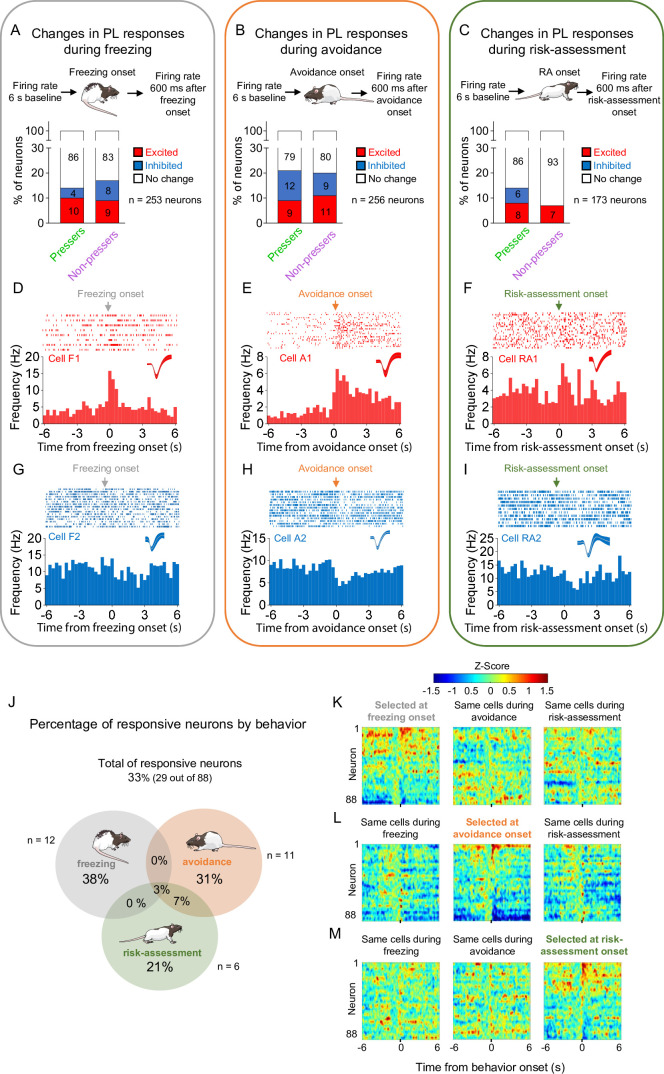
PL does not emit a single uniform danger signal. Subsets change firing around the onset of freezing, avoidance or risk assessment, and most responsive cells predominantly track one behavior. Both groups contain excitatory and inhibitory responses, resisting a simple division into approach versus avoidance by firing direction alone.
Behavioral differences therefore resemble combinations of activity patterns rather than a single switch. Remaining distant, freezing and cautiously inspecting the environment can involve distinct neural processes even when none ends in obtaining food.
Source: Fernandez-Leon JA et al. · eLife · CC BY
Original figure and English caption ↗
Similar mean firing can conceal cellular redistribution
In pressers, identified PL glutamatergic neurons show no significant phase-to-phase change in mean spontaneous firing. Yet more cells become inhibited when the odor phase gives way to conflict. Population averages can conceal such redistribution among cells.
The GABAergic population does not show the same redistribution. Cue-evoked responses and spontaneous activity also describe different levels: one concerns what happens when a cue arrives, the other the background around it.
Source: Fernandez-Leon JA et al. · eLife · CC BY
Original figure and English caption ↗
Increasing PL activity can suppress pressing without a threat cue
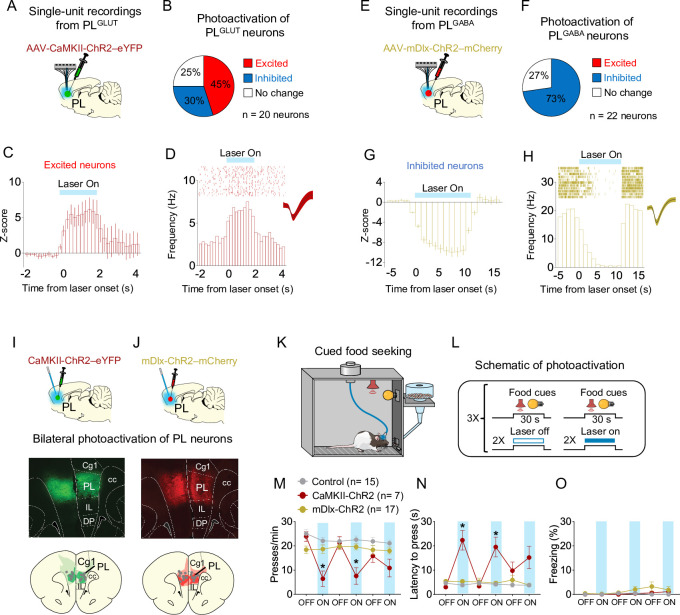
In a neutral context, activating PL glutamatergic neurons reduces pressing frequency and prolongs first-press latency without significantly increasing freezing. Food seeking can therefore decrease without a full defensive posture emerging.
Activating GABAergic neurons alters recorded local activity but does not produce the same food-seeking change. These differing outcomes show why a local network intervention cannot be interpreted solely through the amount of overall activity suppression.
Source: Fernandez-Leon JA et al. · eLife · CC BY
Original figure and English caption ↗
Approach increases without a significant return of pressing
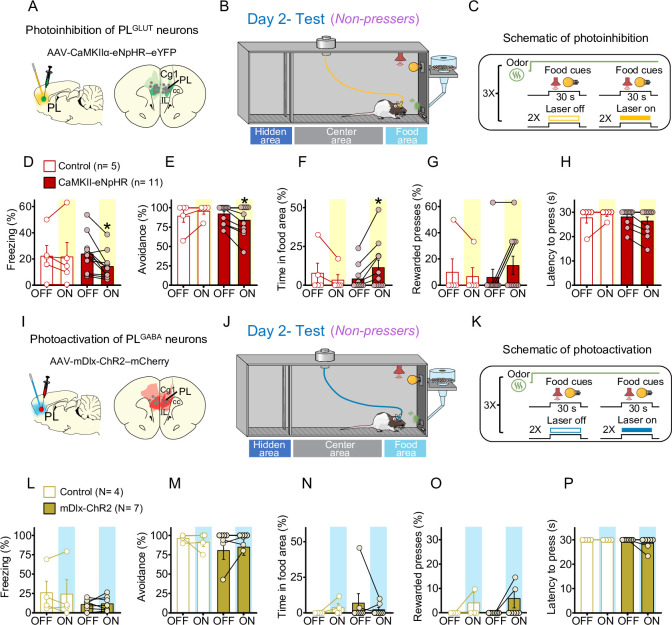
In non-pressers, PL glutamatergic inhibition produces within-group reductions in freezing and avoidance and increased food-area time. Direct treatment-versus-control comparisons of these measures are nonsignificant, as are rewarded-press proportions and pressing latency. Increased approach therefore does not amount to restored completion of the rewarded action.
The same inhibition does not significantly alter pressing or freezing in a neutral setting. GABAergic activation also leaves the tested defensive and food-seeking measures unchanged during conflict. Context and population therefore delimit the behavioral effect.
Source: Fernandez-Leon JA et al. · eLife · CC BY
Original figure and English caption ↗
A choice unfolds through multiple steps
These findings in male rats separate the trade-off between threat memory and reward cues into defense, approach and completed action. The authors propose that the relationship between sustained cue responses and background activity may influence choice. This signal-versus-background account remains a model rather than a fully measured mechanism.
Pressers and non-pressers describe behavior in the test rather than lifelong personality. Which inputs and outputs shift retreat toward approach, and approach toward completed action, remains to be determined.