After prolonged isolation, how do social responses change? Oxytocin and multiple brain–body clues in mice
In male mice isolated from adolescence, oxytocin intervention improves several behavioral measures alongside changes in prefrontal activity, inflammatory markers and gut-community composition.
How do social experiences leave traces in the nervous system, and do other parts of the body change as well? A Translational Psychiatry study follows male mice isolated for about three months from adolescence, examining affect-related behavior, social discrimination, prefrontal activity and gut microbiota. Oxytocin intervention improves some behavioral measures alongside neural and peripheral differences. Beyond a single “social hormone,” the study spans unfamiliar-peer discrimination, neural activity, inflammation and microbial communities.
Oxytocin intervention accompanies behavioral improvements and changes across biological levels, with distinct patterns in social processing, prefrontal markers and gut-community composition.
Contents · 6 sections
Approaching peers persists while novelty discrimination changes
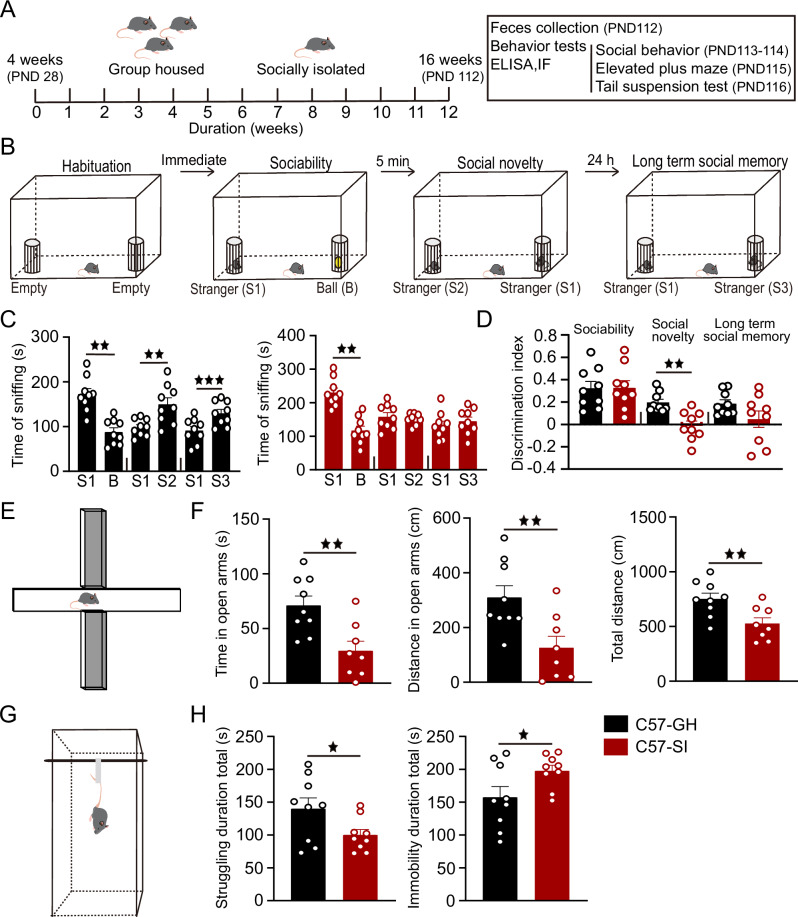
Isolated mice still prefer a peer to an object, retaining basic sociability in this task. The difference appears in unfamiliar-versus-familiar comparisons: group-housed mice prefer the unfamiliar peer, while isolated mice lack the same clear preference and have a lower social-novelty index. Between-group long-term-memory discrimination indices do not differ significantly, separating aspects of social behavior.
Isolated mice explore open arms less and travel a shorter total distance; tail-suspension observations show less struggling and more immobility. These affect-related behaviors occur alongside social-discrimination changes but have distinct readouts. The study then asks how prefrontal cortex responds to the same situations.
Source: Li J et al. · Translational psychiatry · CC BY-NC-ND
Original figure and English caption ↗
Prefrontal responses to familiar and unfamiliar information differ
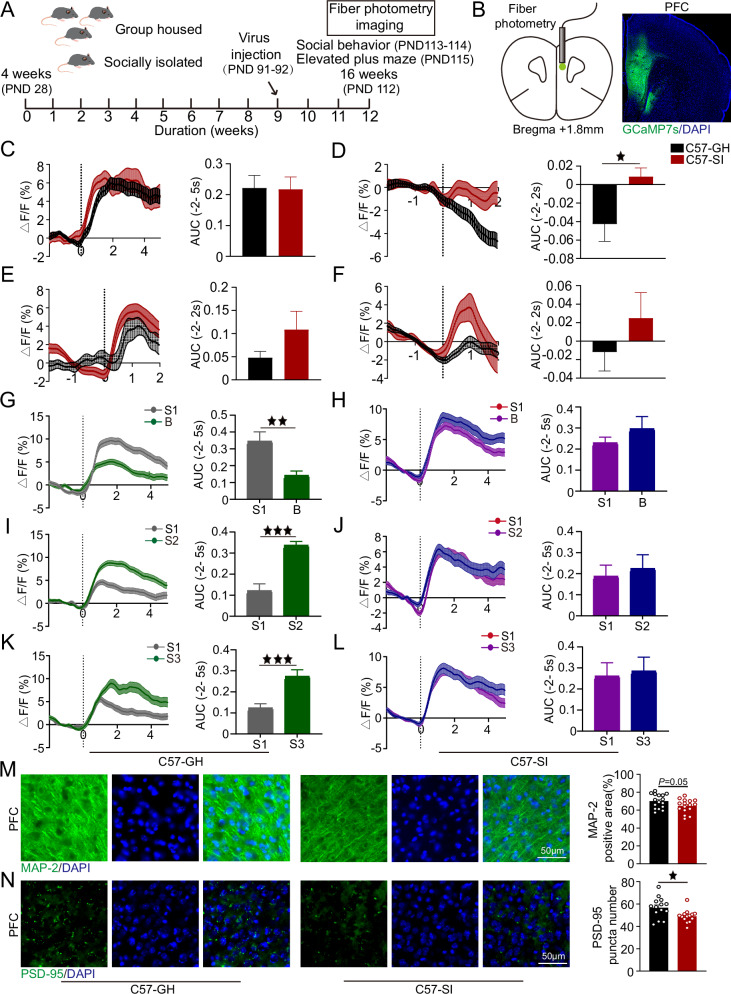
Prefrontal calcium signals in group-housed mice are stronger for a peer than an object and for unfamiliar than familiar peers. Isolated mice lack the same significant distinctions. These recordings connect behavioral differences with context-dependent activity rather than a region being uniformly stronger or weaker.
Maze transitions show selective differences: calcium-signal area is higher in isolated mice on returning to a closed arm, while other tested locations show no significant group difference. MAP-2 labeling is lower and PSD-95 puncta fewer. Activity and structure-associated molecules provide complementary clues across contexts and cellular markers.
Source: Li J et al. · Translational psychiatry · CC BY-NC-ND
Original figure and English caption ↗
Similar cell counts with different signals and receptors
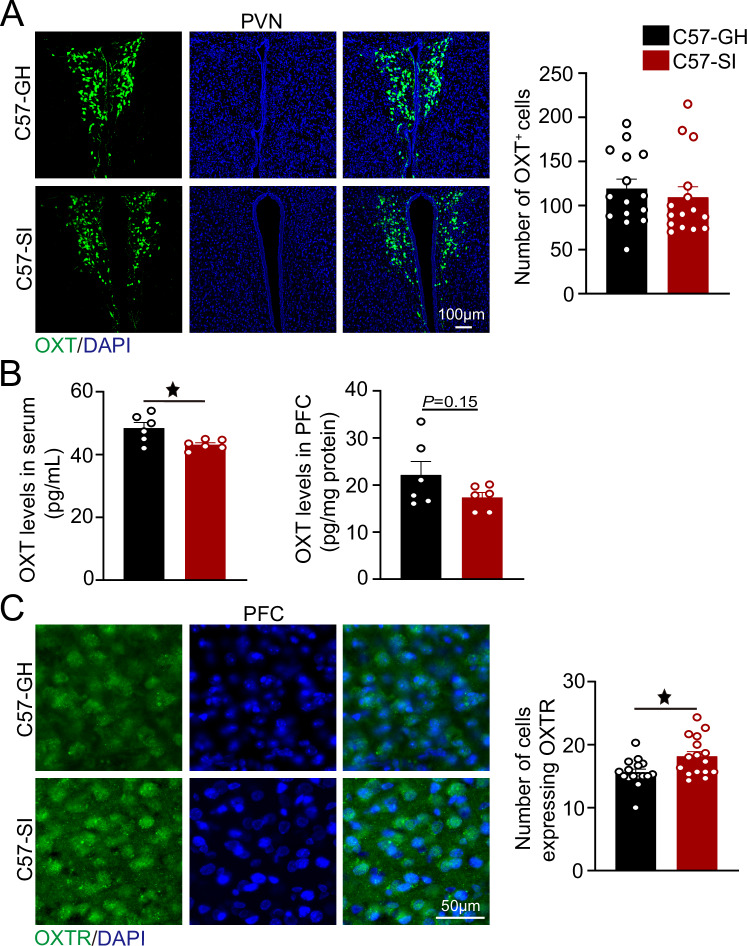
Because oxytocin (OXT) participates in social regulation, the team examines source cells, levels and receptors. Isolation leaves paraventricular OXT-cell counts unchanged, lowers serum OXT and produces only a downward trend in prefrontal levels, while local OXTR labeling increases. Counts, peptide levels and receptor expression do not move together.
The combination makes the oxytocin system a testable clue. Similar source-cell counts need not mean similar output, while receptor expression and peptide concentration occupy different levels. Intervention then tests whether OXT-related changes accompany altered behavior and neural readouts in the isolated state.
Source: Li J et al. · Translational psychiatry · CC BY-NC-ND
Original figure and English caption ↗
Several measures improve after intervention
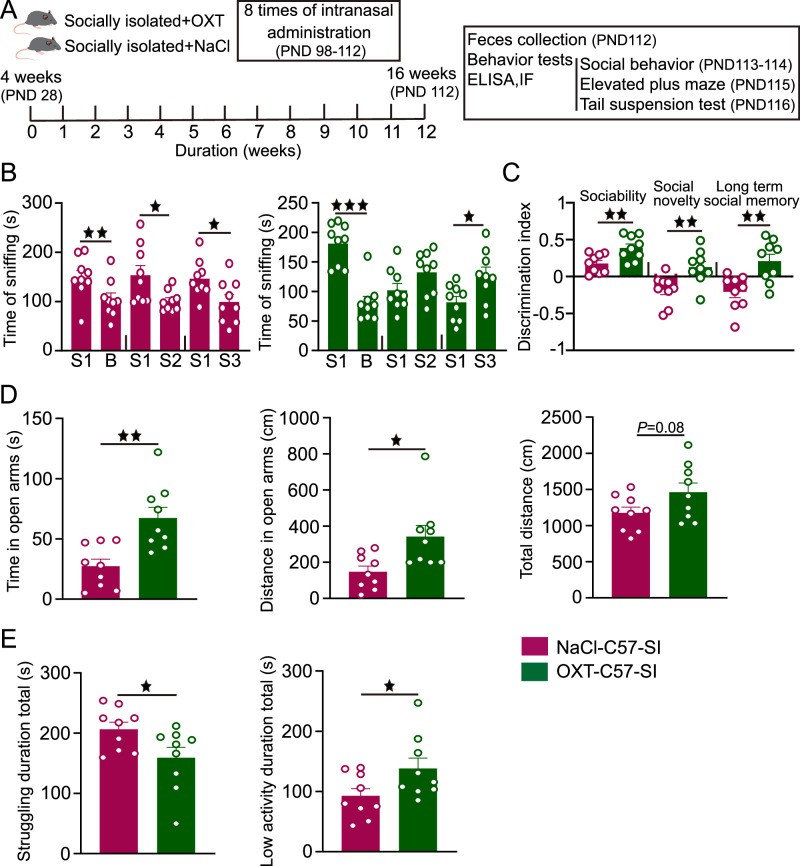
Compared with isolated controls, OXT-treated mice have higher sociability, social-novelty and long-term-memory discrimination indices. Open-arm exploration increases, and tail-suspension struggling is longer with less immobility. Total distance does not differ significantly. Improvements span tasks without every readout changing equally.
Within the treated group, unfamiliar-peer preference during social novelty remains a trend, while the between-group discrimination index improves significantly. These comparisons describe different aspects of change. Prefrontal recordings then ask whether the organization of activity also shifts alongside behavior.
Source: Li J et al. · Translational psychiatry · CC BY-NC-ND
Original figure and English caption ↗
Behavior changes accompany activity and molecular shifts
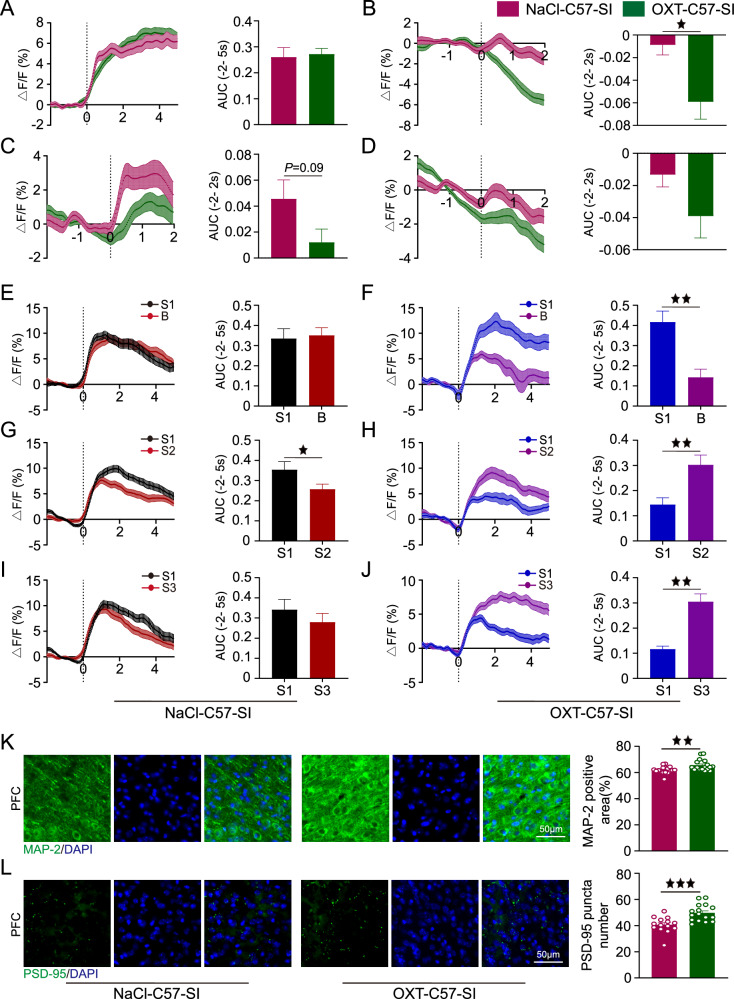
After intervention, prefrontal calcium distinctions for peers and unfamiliar peers reappear. Signals on returning to closed arms differ from isolated controls, while other locations retain nonsignificant comparisons. MAP-2 and PSD-95 labeling rise, and OXT levels and OXTR expression also change. Behavioral improvement accompanies multiple neural readout shifts.
The findings link OXT-related changes with prefrontal cortex, while a complete causal relay remains unresolved. PSD-95 remains below the group-housed reference in supplemental comparisons, showing that improvement can coexist with residual differences. Activity, receptors and structure-associated markers each contribute to the picture.
Source: Li J et al. · Translational psychiatry · CC BY-NC-ND
Original figure and English caption ↗
Microbial composition changes alongside other levels
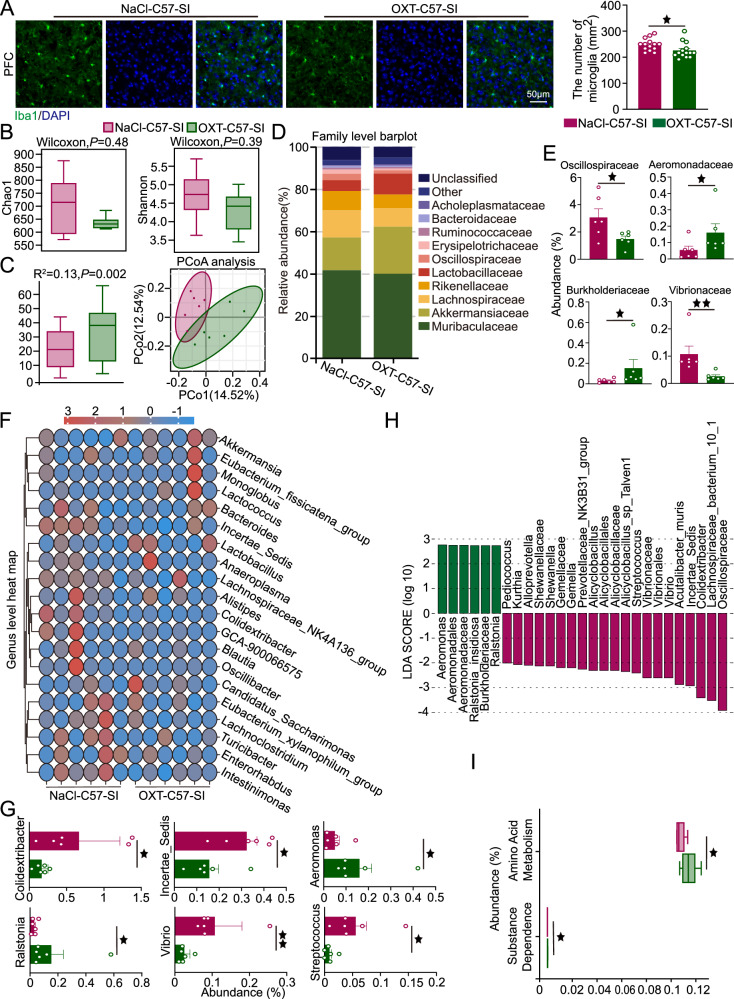
Isolation increases prefrontal microglial labeling; OXT intervention lowers counts and tested inflammatory cytokines in serum and prefrontal cortex. Gut communities differ in composition, while richness and diversity indices show no significant group changes. Who makes up a community and how diverse it is can yield different answers.
Some taxa decrease and others increase, rather than all members moving in one direction. The study does not establish microbial mediation of behavioral effects, but shows concurrent neural, immune and gut changes. In these male mice, prolonged social environment leaves a multilayered pattern, making brain and body relevant to the same behavioral question.
Source: Li J et al. · Translational psychiatry · CC BY-NC-ND
Original figure and English caption ↗