How can a hepatic clearance task affect brain synapses? A bilirubin–microglia link
Clinical associations and mouse studies connect bilirubin load, TRPM2–SYK signaling and microglial engulfment with anterior cingulate activity and affect-related behavior.
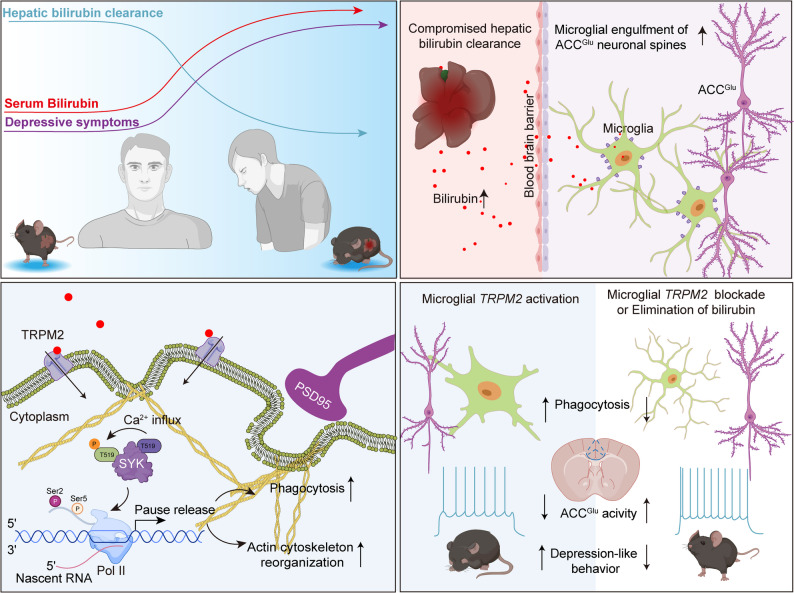
The liver handles metabolites while brain cells maintain neural connections. How can those jobs intersect? A Journal of Neuroinflammation study begins with higher bilirubin levels in clinical records and follows hepatic clearance, anterior cingulate cortex and microglia in mice. Increased bilirubin load accompanies stronger engulfment-related changes, fewer neuronal spines and altered activity and affect-related behavior. TRPM2–SYK signaling provides a mechanistic link between metabolism and synapses.
Impaired bilirubin clearance in mice relates to anterior cingulate microglial and synaptic changes; targeting microglial TRPM2 or SYK attenuates these changes and improves several behavioral measures.
Contents · 7 sections
A clearance function becomes a brain–body starting point
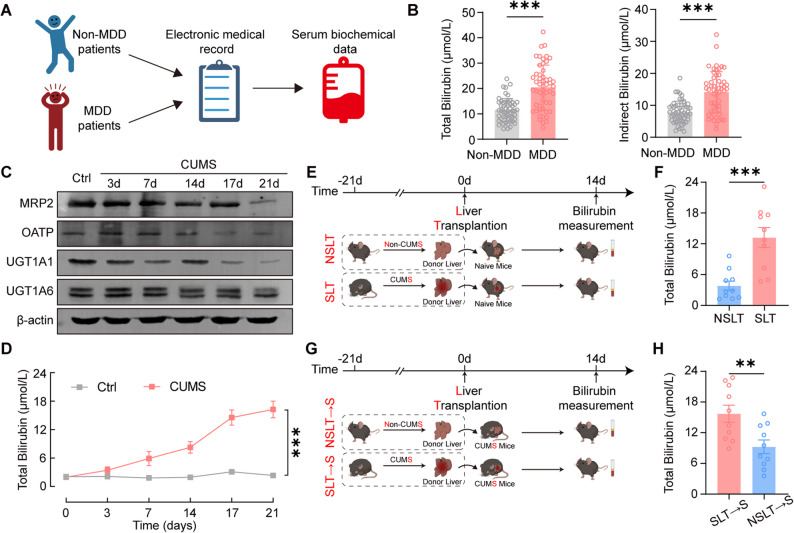
Bilirubin arises from hemoglobin metabolism, and the liver participates in uptake, conjugation and excretion. Records from 58 patients with depression and 58 contemporaneous nondepressed patients show higher average total and indirect bilirubin in the former. The human association motivates animal questions about how changed clearance affects brain cells.
In chronically stressed mice, selected clearance-related transporters and enzymes decline as serum bilirubin rises. Recipients of stressed donor livers also have higher bilirubin, whereas nonstressed donor livers partly reduce accumulation in stressed recipients. Hepatic state connects with persistent metabolic changes.
Source: Sun S et al. · Journal of neuroinflammation · CC BY-NC-ND
Original figure and English caption ↗
Synapses and activity differ with metabolic changes
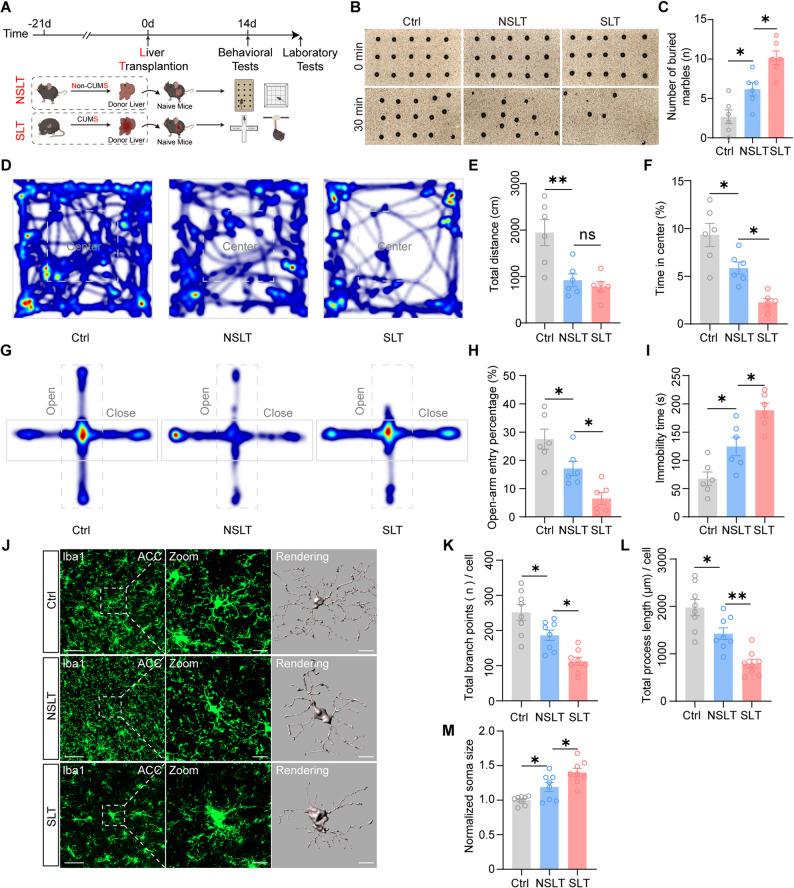
Recipients of stressed livers explore center and open arms less and remain immobile longer, alongside lower anterior cingulate cortex (ACC) activity labeling and fewer microglial branches with larger somata. Transplantation also affects locomotion; total distance does not clearly differ between nonstressed and stressed donor groups, making bodily state relevant to behavior.
Independent bilirubin-loading and reduced hepatic-clearance-enzyme models also change ACC activity and behavior. Nonstressed donor livers partly improve related outcomes in stressed recipients. Tissue reconstructions show increased synaptic labeling within microglia alongside weaker neuronal synaptic and activity readouts, focusing attention on cells that maintain brain connections.
Source: Sun S et al. · Journal of neuroinflammation · CC BY-NC-ND
Original figure and English caption ↗
TRPM2 links bilirubin load with microglial effects
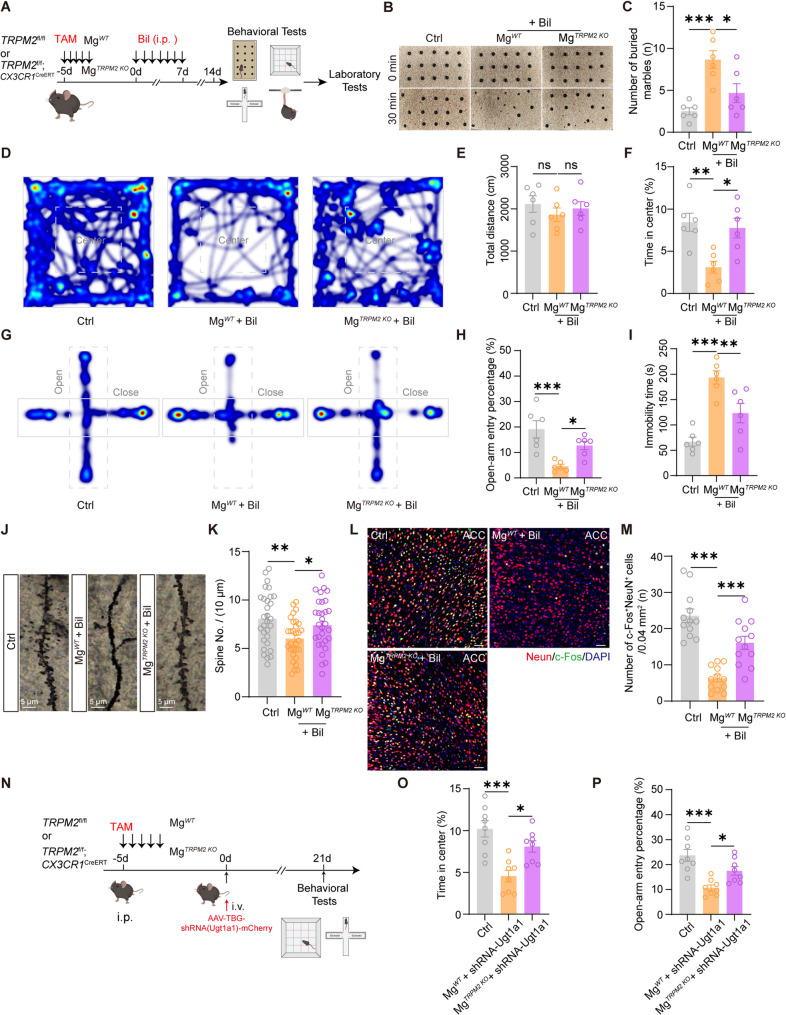
TRPM2, a calcium-permeable cation channel, becomes the mechanistic focus. Targeting microglial TRPM2 attenuates behavioral abnormalities and partly improves spine loss and ACC hypoactivity in the bilirubin model. Total distance does not differ significantly, distinguishing these findings from locomotor effects in the transplant model.
Local ACC microglia-associated interventions and hepatic-clearance-enzyme models point in the same direction. Reducing microglia-related responses improves some outcomes, with larger improvements when combined with increasing ACC excitatory-population activity. Metabolic signals, immune cells and neurons form several linked steps.
Source: Sun S et al. · Journal of neuroinflammation · CC BY-NC-ND
Original figure and English caption ↗
Changes focus on an engulfment-associated microglial state
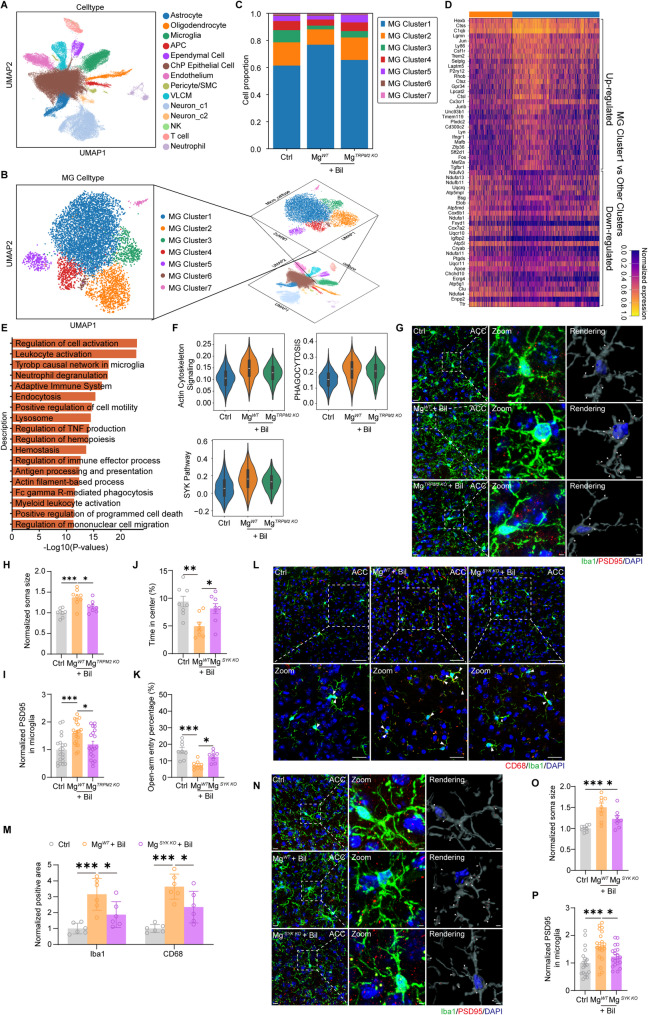
Single-cell expression separates several microglial states. One increases with bilirubin and decreases after TRPM2 targeting, while other tested subgroup proportions do not change similarly. Its expression relates to endocytosis, lysosomes and cytoskeleton, alongside more synaptic labeling within microglia in tissue reconstructions.
SYK enters the route: activation-related labeling increases with bilirubin and weakens after TRPM2 targeting. Targeting microglial SYK reduces engulfment-associated readouts and improves exploration. The channel and intracellular signaling connect, providing a molecular account of microglial responses to metabolic load.
Source: Sun S et al. · Journal of neuroinflammation · CC BY-NC-ND
Original figure and English caption ↗
From pausing to continuing: expression changes
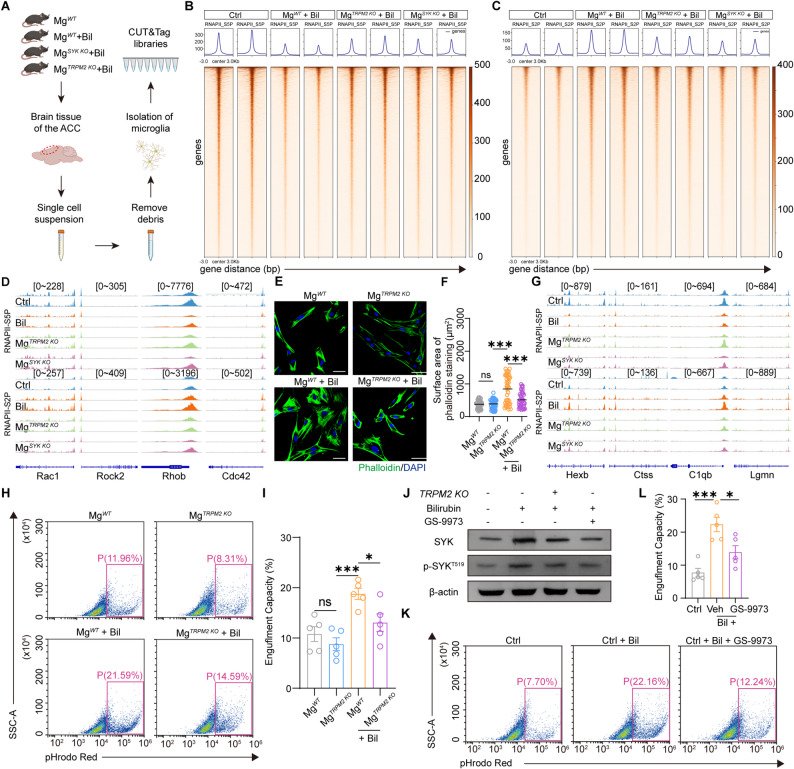
Transcription need not proceed continuously from the start. RNA polymerase can pause before productive elongation. Bilirubin alters the distribution of markers associated with these stages at cytoskeletal and engulfment-related genes; TRPM2 or SYK targeting changes the pattern. The authors propose that pause release contributes to the altered cell state.
In cultured cells, bilirubin accompanies larger cell area, altered processes and increased engulfment, with attenuation when the corresponding channel or signaling is affected. Molecular expression connects with cellular behavior, involving cytoskeletal and engulfment programs as well as a channel.
Source: Sun S et al. · Journal of neuroinflammation · CC BY-NC-ND
Original figure and English caption ↗
Pharmacological and genetic observations converge
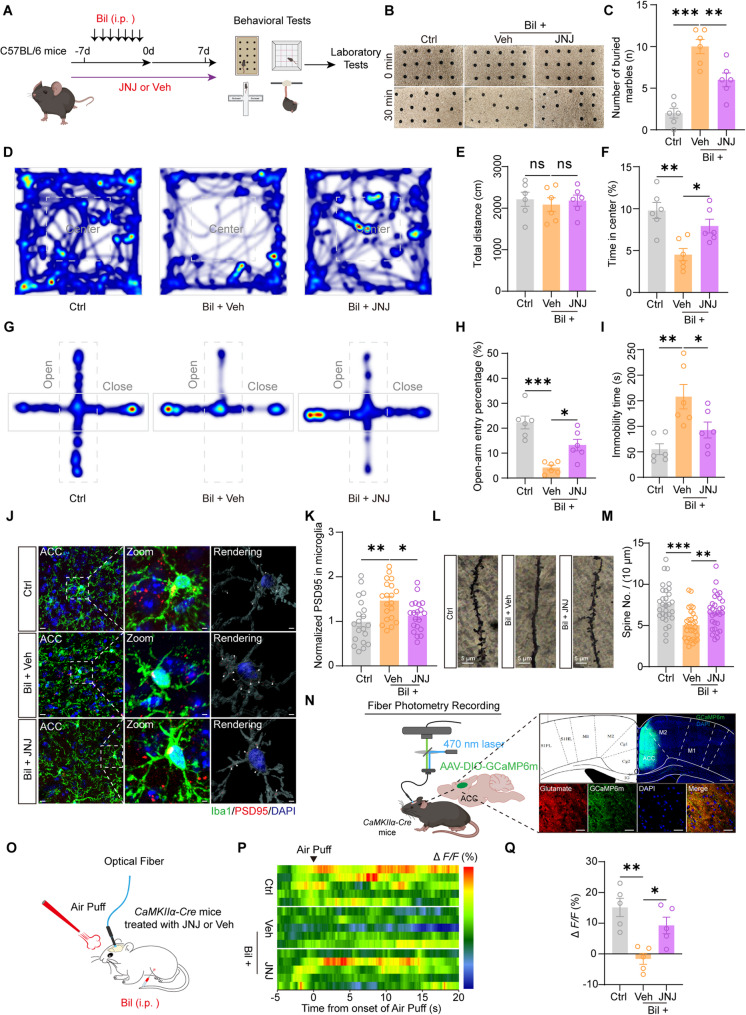
Under a TRPM2-related pharmacological intervention, behavioral measures improve, microglial synaptic labeling decreases and spine density is higher. ACC excitatory-population calcium responses partly improve, with corresponding electrical readouts. Total distance does not clearly change, allowing structure, activity and behavior to provide complementary observations.
Source: Sun S et al. · Journal of neuroinflammation · CC BY-NC-ND
Original figure and English caption ↗
Metabolite clearance can intersect with neural maintenance
Clinical records provide an associative starting point, while mechanistic work mainly in male mice shows how metabolic load connects with microglia and synapses. Models and interventions converge on this route under their specific conditions. The central insight is that neural connections can intersect with hepatic clearance, with immune cells participating between the two functions.