A lasting feeding-time aftereffect: IGF2 and KCC2 in the mouse circadian system
After feeding was restricted to a particular daily window, male mice retained an extended activity span even with food freely available again. The study links this aftereffect to SCN activity and IGF2–KCC2-related changes.
Can a daily feeding schedule leave a lasting trace in the brain? A male-mouse study published in iScience on April 18, 2022 found that restricting feeding near light onset delayed the daily end of activity even after unrestricted feeding resumed. The aftereffect persisted for weeks. Further work in the suprachiasmatic nucleus, the SCN circadian center, identified altered activity and gene expression, with IGF2 and the ion transporter KCC2 providing molecular leads.
A particular restricted-feeding experience leaves lasting activity and sleep aftereffects. SCN IGF2-related changes, lower KCC2 and altered population activity provide converging evidence, while the complete molecular causal chain remains unresolved.
Contents · 7 sections
The timing of restricted feeding matters
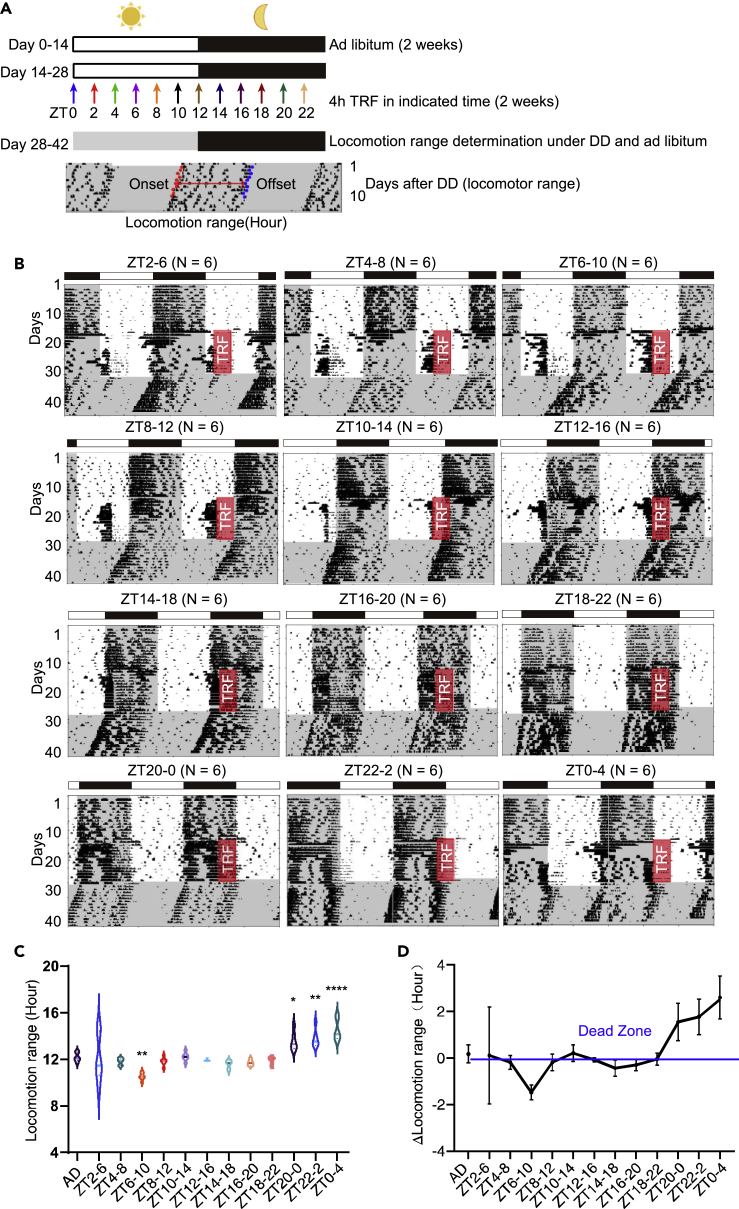
The study compared feeding windows across the day. The clearest extension of the daily activity span followed feeding near light onset, when nocturnal mice would normally move toward rest. Other windows had weaker or different effects, linking feeding experience to circadian state.
Activity span means the interval between daily activity onset and offset, not total movement or distance. Corresponding free-running period comparisons were not significant. Restricted groups also ate less and changed weight, so the findings concern the feeding arrangement as a whole rather than isolating timing from every nutritional effect.
Source: Zhai Q et al. · iScience · CC BY-NC-ND
Original figure and English caption ↗
The schedule ends, but the behavioral trace persists
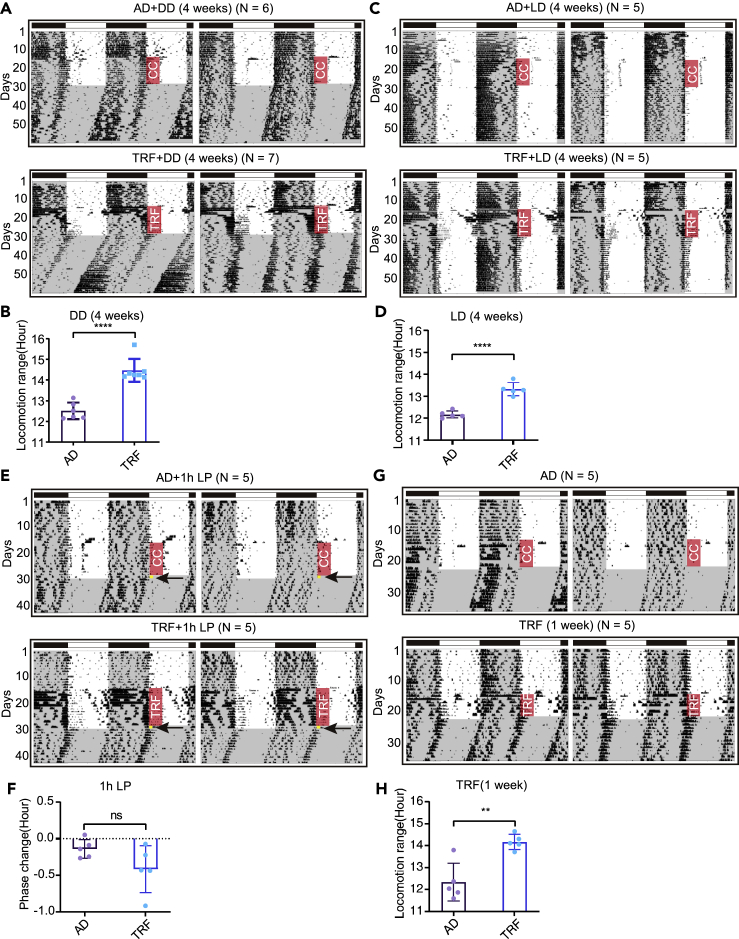
If the effect were only anticipation of an imminent meal, it should fade quickly once food became continuously available. Instead, the extended activity span persisted for at least a month in constant darkness and also appeared in a separate cohort under a light–dark cycle.
Persistence shifts the question from immediate hunger to behavioral adaptation: how can a repeated schedule influence daily activity after it ends? It suggests a relatively stable change, without identifying a specific memory process or establishing permanent irreversibility.
Source: Zhai Q et al. · iScience · CC BY-NC-ND
Original figure and English caption ↗
SCN population activity also changes
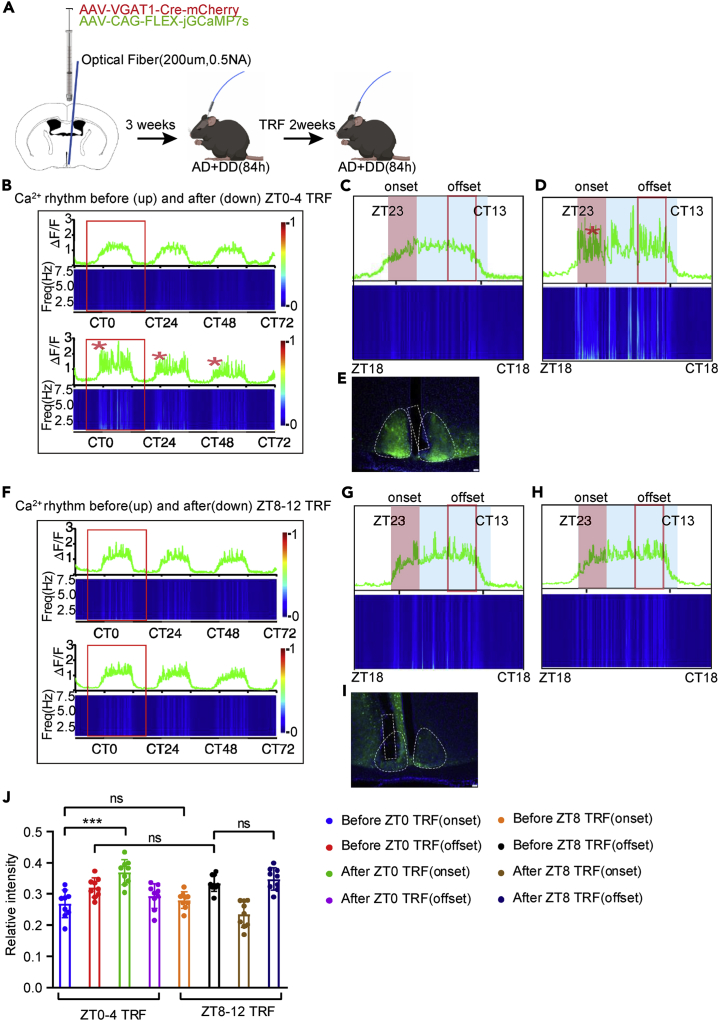
After the early feeding schedule ended, the relative spectral intensity of calcium signals in the SCN GABAergic population increased around the former feeding window. The corresponding comparison after a later feeding window was not significant. The neural change therefore accompanied the post-feeding behavioral aftereffect.
Calcium signals capture one aspect of population activity and do not directly specify individual-cell firing rates. The results indicate a time-dependent SCN response to feeding experience, extending the questions asked of a center usually associated with light-driven rhythms.
Source: Zhai Q et al. · iScience · CC BY-NC-ND
Original figure and English caption ↗
More wakefulness around the former feeding window
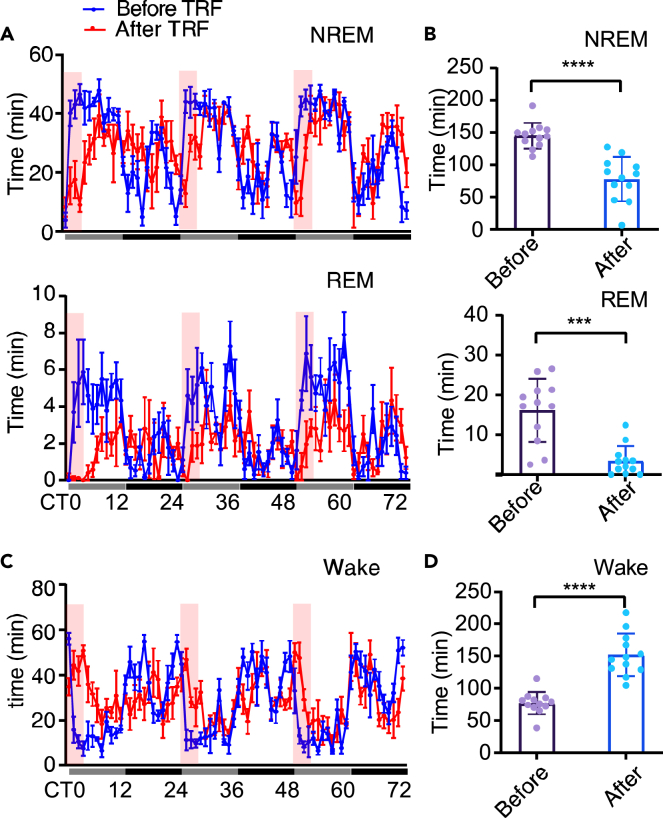
After unrestricted feeding resumed, mice spent more time awake and less time in both NREM and REM sleep during the subjective period corresponding to the former feeding window. This complements the delayed activity offset and extends the effect beyond wheel-running records.
These findings concern sleep allocation within a particular window, not a demonstrated reduction in whole-day sleep need or improvement in sleep quality. Scheduling food near the resting phase of nocturnal animals may affect how activity and rest are organized.
Source: Zhai Q et al. · iScience · CC BY-NC-ND
Original figure and English caption ↗
IGF2 and KCC2 show different temporal patterns
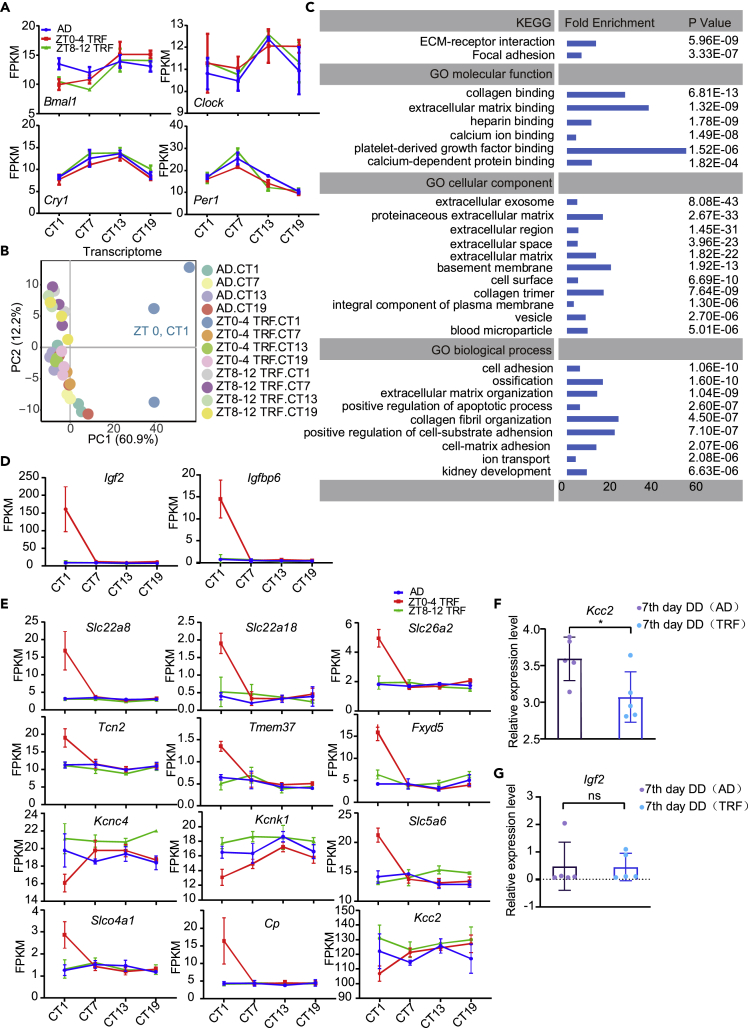
Expression analysis highlighted Igf2, a related binding protein and multiple ion-transport genes. Igf2 rose at an early sampling phase, while Kcc2 decreased. KCC2 contributes to cellular chloride regulation and may connect network state with behavioral output, but it was not the only molecule altered.
On the seventh day after unrestricted feeding resumed, Kcc2 remained lower, whereas the Igf2 group difference was not significant. Molecular changes therefore had distinct time courses. Core clock genes did not all change consistently, pointing toward broader network regulation of behavioral output.
Source: Zhai Q et al. · iScience · CC BY-NC-ND
Original figure and English caption ↗
Changing KCC2 alters the activity span
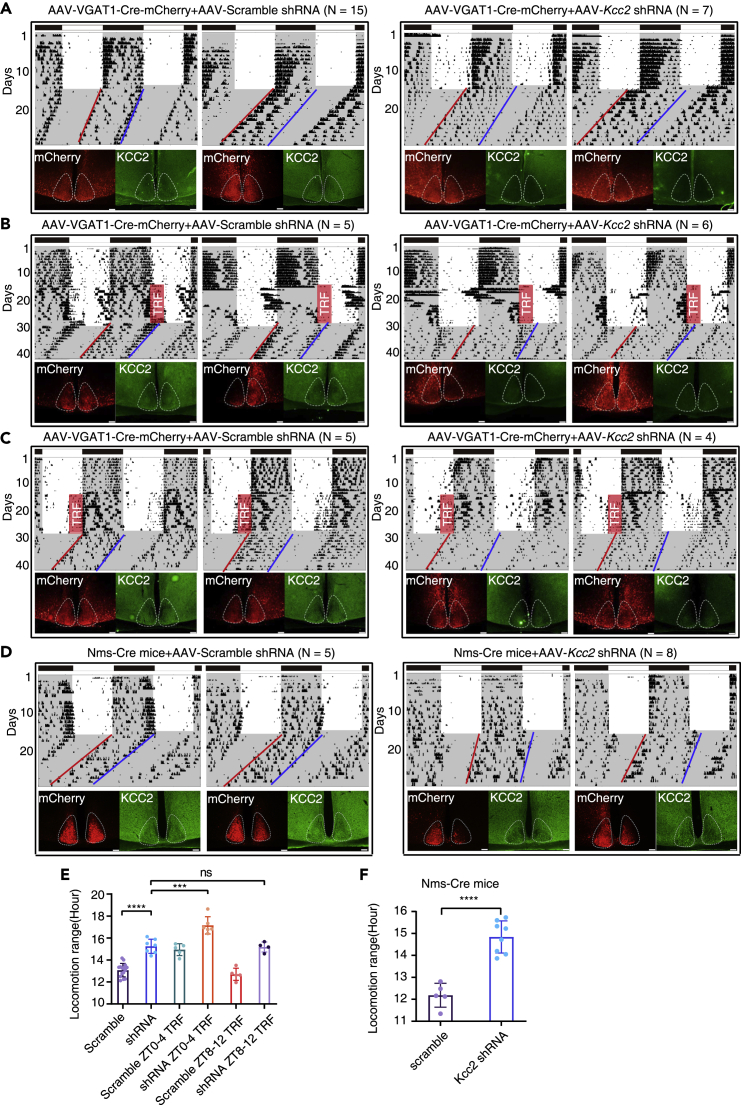
Reducing Kcc2 in targeted SCN cells extended daily activity span even without prior restricted feeding, and the early feeding schedule further enlarged it. A comparison targeting the NMS population showed a similar direction, providing additional support for KCC2 involvement.
These interventions support a role for KCC2 in activity organization, without directly measuring all intercellular coupling or fully establishing a reversal of GABA action. How altered ion regulation determines daily activity offset remains to be resolved.
Source: Zhai Q et al. · iScience · CC BY-NC-ND
Original figure and English caption ↗
How feeding experience persists remains an open question
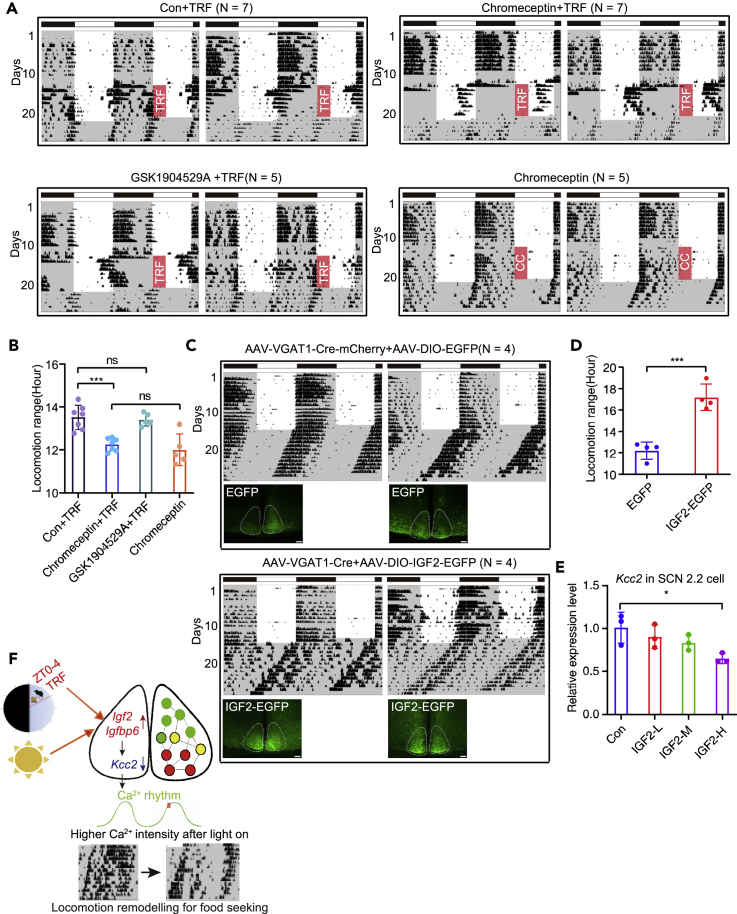
Increasing IGF2 expression in targeted SCN cells enlarged activity span, while an IGF2-related pharmacological intervention weakened the feeding aftereffect. In a cultured rat SCN cell line, higher IGF2 conditions reduced Kcc2 expression. These complementary findings support a link across experimental levels without closing the gap between a cell line and mouse behavior.
Reducing Igf2 also affected SCN cell survival and rhythmicity, complicating a clean necessity test. How feeding experience acts through IGF2, KCC2 and other changes to reshape activity remains unresolved. These nocturnal male-mouse findings inform circadian plasticity without establishing a human feeding-time recommendation.
Source: Zhai Q et al. · iScience · CC BY-NC-ND
Original figure and English caption ↗